
Short Answer
In the summer of 1948, Berlin stood at the heart of a deepening Cold War. The Soviet Union had severed all land and water routes into the Western-held sectors of the city, isolating over two million people. But to Moscow, this was not a siege—it was a defensive response to a Western violation of wartime agreements. On July 14, 1948, the Soviet Ambassador to Washington delivered a note declaring that the situation in Berlin had arisen “as a result of violation by the Governments of the United States of America, Great Britain, and France of agreed decisions taken by the four powers in regard to Germany and Berlin.” This note framed the Soviet narrative: the blockade was not an act of aggression but a necessary countermeasure against a separate currency reform and the “policy of the dismemberment of Germany.” For the next eleven months, this justification would be repeated in official communications and in the Soviet press, shaping how contemporaries on both sides understood the crisis.
What Happened?
The immediate trigger for the Berlin Blockade was a currency reform. In June 1948, the Western Allies introduced a new Deutsche Mark in their occupation zones of Germany, and then extended it to the western sectors of Berlin. The Soviet Union, which had occupied eastern Germany and the eastern part of Berlin, saw this as a direct violation of the four-power control agreements established after World War II. According to a Soviet note of October 3, 1948, “The very question of the situation in Berlin did not exist before the Governments of the USA, Great Britain and France proceeded to carry through a separate monetary reform in the Western zones of Germany and in the three sectors of Berlin.”
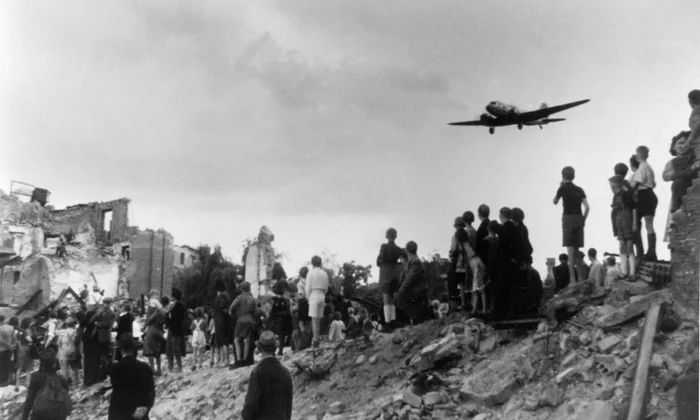
In response, the Soviet Union closed all rail, road, and canal access to Berlin on June 24, 1948. The Western powers, led by the United States, began an airlift to supply the city. The Soviet government, however, maintained that it was not a blockade but a necessary defensive measure. The Soviet note of July 14, 1948, argued that the Western powers had broken the “agreed decisions” of the four-power occupation and that the Soviet measures were therefore justified. The Soviet Union also insisted that any negotiations on Berlin must be conducted within the broader context of “the general question of four-power control in regard to Germany.”
Key events in the Soviet narrative:
- June 1948: Western powers introduce a separate currency reform in West Germany and the western sectors of Berlin.
- June 24, 1948: Soviet Union cuts all land and water access to Berlin.
- July 6, 1948: United States, Britain, and France send a note protesting the blockade.
- July 14, 1948: Soviet Union replies, blaming the Western powers for the crisis.
- October 3, 1948: Soviet Union rejects Western proposals and reiterates that responsibility rests entirely on the Three Powers.
- October 5, 1948: Marshal Sokolovsky publicly explains the Soviet position in an interview with East German journalists.
How It Was Seen at the Time
To the Soviet government and its supporters, the blockade was not an act of aggression but a necessary defense of the four-power agreements that had been established at the end of the war. The Soviet notes repeatedly used the language of “violation” and “dismemberment” to describe Western actions. The July 14 note stated that the Western powers had “violated” the agreed decisions, and that their separate currency reform was a “policy of the dismemberment of Germany.” The Soviet Union portrayed itself as the guardian of a unified Germany, while the Western powers were seen as seeking to divide the country and Berlin.
The Soviet Government cannot agree with this statement of the Government of the United States and considers that the situation which has been created in Berlin has arisen as a result of violation by the Governments of the United States of America, Great Britain, and France of agreed decisions taken by the four powers in regard to Germany and Berlin.
The Soviet press echoed this line. In an interview published in Soviet News on October 5, 1948, Marshal Vassili Sokolovsky, the Commander-in-Chief of the Soviet zone of occupation in Germany, outlined the causes of the Berlin Crisis, reiterating that the Western powers had provoked the situation by their separate currency reform and their refusal to accept four-power control. For Soviet citizens, the blockade was a just response to Western encroachment.
Historical Snapshot
| Aspect | Detail |
|---|---|
| Date | June 24, 1948 – May 12, 1949 |
| Place | Berlin, Germany |
| People | Joseph Stalin (Soviet leader), Marshal Vassili Sokolovsky (Soviet commander), Western Allied commanders |
| What Happened | Soviet Union blocked all land and water routes to West Berlin, forcing an airlift |
| Why It Mattered | It was the first major crisis of the Cold War, nearly leading to direct confrontation |
Official Reports
The Soviet Union’s official position was articulated in a series of diplomatic notes. The July 14, 1948 note to the United States was the first comprehensive statement of the Soviet justification. It accused the Western powers of carrying out a “separate currency reform” and introducing a “special currency for the western sectors of Berlin,” and of pursuing a “policy of the dismemberment of Germany.” The note also stated that the Soviet government had “more than once warned” the Western powers of the consequences of such actions.
In the October 3, 1948 note, the Soviet Union rejected the Western note of September 26 and asserted that “the responsibility for the situation which has arisen in Berlin rests entirely on the governments of the Three Powers.” The Soviet Union also insisted that the Berlin question could not be discussed separately from the general question of four-power control of Germany. This demand for a broader negotiation was a key element of the Soviet diplomatic strategy.
Contemporary Newspaper Coverage
The Soviet press, particularly the official newspaper Soviet News, played a crucial role in presenting the blockade to the Soviet public and to international audiences. On October 5, 1948, Soviet News published an interview with Marshal Vassili Sokolovsky, conducted by correspondents of the ADN agency (East German news agency). In the interview, Sokolovsky explained the causes of the Berlin Crisis, laying the blame on the Western powers for introducing the separate currency reform and for undermining the four-power control system. The interview was part of a broader Soviet media effort to portray the blockade as a defensive measure.
“The situation in Berlin” — Marshal Sokolovsky’s statement to the ADN correspondents.
This kind of official interview was a common means of communicating Soviet policy to the world, and it reflected the tone of the Soviet press, which rarely deviated from the official line.
Different Perspectives
The Soviet Perspective
From the Soviet point of view, the blockade was a just response to Western provocation. The Soviet notes and Sokolovsky’s interview all emphasized that the Western powers had broken the four-power agreements by introducing a separate currency and by attempting to divide Germany. The Soviet government claimed that it was only taking measures to protect its own zone and the broader interests of Germany. This perspective was consistent and was repeated in every diplomatic exchange.
The Western Perspective (as reported in Soviet documents)
The Soviet notes also reveal the Western position, which they explicitly rejected. The Western powers argued that the Soviet Union had created the crisis by cutting off access to Berlin. The Soviet Union dismissed this, saying that the Western powers had themselves created the situation by their unilateral actions. The Soviet note of October 3, 1948, states: “The Government of the USSR has familiarized itself with the note of the Governments of the USA, Great Britain and France of the 26th September of this year and considers it necessary to state that the responsibility for the situation which has arisen in Berlin rests entirely on the governments of the Three Powers.” This exchange shows that the two sides held irreconcilable views, with each blaming the other for the crisis.
What People Expected Would Happen Next
The Soviet Union’s official position in 1948 was that the crisis could only be resolved by addressing the broader question of four-power control of Germany. The Soviet note of July 14, 1948, stated that the Soviet government was willing to enter into negotiations, but only if they covered “the general question of four-power control in regard to Germany.” This suggested that the Soviet Union expected a comprehensive negotiation that would reorder the occupation of Germany and possibly reverse the Western currency reform. Many contemporaries, especially in the West, feared that the blockade could lead to a direct military confrontation. The Soviet Union, however, maintained that it was not seeking war but rather a return to the agreed four-power framework. The Soviet leadership likely expected that the Western powers would eventually concede and negotiate on Soviet terms, as they had done in other disputes. The actual outcome—a prolonged airlift and the eventual lifting of the blockade in May 1949—was not what the Soviet Union had anticipated.
How Historians See It Today
Modern historians generally view the Berlin Blockade as a pivotal event in the early Cold War, and they recognize that the Soviet justification was part of a larger diplomatic and ideological confrontation. While the Soviet government presented the blockade as a defensive measure, historians today note that it was an aggressive attempt to force the Western powers out of Berlin. The Soviet narrative of Western violation was based on a real disagreement over the currency reform, but it also served as a pretext for a larger geopolitical struggle. The blockade ultimately failed, as the Western airlift proved the determination and capability of the Western Allies. Historians also point out that the Soviet demand for negotiations on the whole German question was a way to undermine the emerging West German state. The primary sources from the Soviet side are valuable for understanding the Soviet worldview, but they must be read critically, as they present a one-sided account of the events.
In the end, the Berlin Blockade of 1948–49 was a defining moment of the early Cold War. The Soviet justification, rooted in the language of four-power agreements and Western betrayal, did not convince the Western powers, but it did rally support within the Soviet bloc. The primary sources—the diplomatic notes, the official interviews—reveal the rigid and uncompromising nature of the Soviet position. They also show how the Soviet Union viewed the Western powers as the aggressors, a view that persisted throughout the Cold War. For historians, these documents offer a window into the mentalities and arguments that shaped one of the first great confrontations of the post-war world.
FAQ
Why did the Soviet Union justify the Berlin Blockade?
The Soviet Union justified the blockade as a response to the Western powers' separate currency reform in West Germany and West Berlin, which the Soviet Union considered a violation of the four-power agreements on the occupation of Germany. The Soviet notes of July 14 and October 3, 1948, repeatedly blamed the Western powers for creating the crisis.
What was the Soviet Union's official position on the blockade?
The Soviet Union maintained that it had not initiated the crisis, but that the Western powers had done so by introducing a separate currency and pursuing a policy of 'dismemberment of Germany.' The Soviet government insisted that any resolution must be negotiated within the broader context of four-power control of Germany.









Leave a Reply