
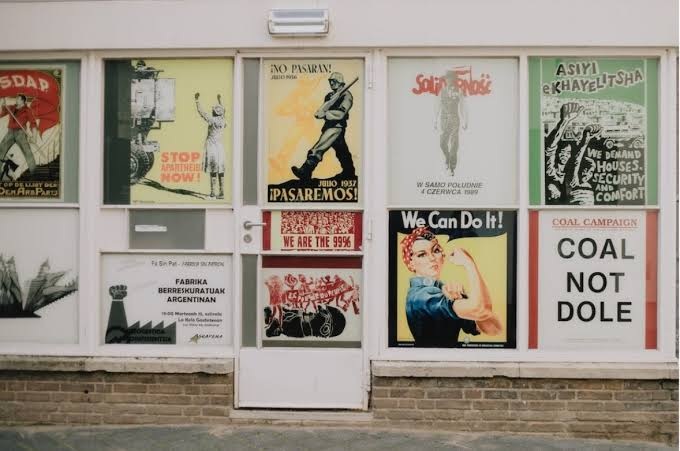
Short Answer
Propaganda presents historians with an apparent contradiction.
It is often created specifically to persuade, manipulate, mobilize, reassure, frighten, or mislead.
Yet precisely because it was designed to influence people, propaganda can be one of the richest sources for understanding a historical society.
A wartime poster may exaggerate the danger posed by an enemy.
A government film may hide military setbacks.
A political cartoon may reduce an entire population to a stereotype.
A newspaper campaign may repeat accusations that historians later establish were false.
If we ask only:
Is this propaganda factually accurate?
we may conclude that the source is unreliable.
But historians ask additional questions:
Who produced this message?
Who was supposed to receive it?
What did its creators want people to think, feel, or do?
Which fears or assumptions did they expect the audience already to understand?
What information was selected, distorted, exaggerated, or omitted?
How widely was the message distributed?
Did people actually respond as propagandists hoped?
Those questions transform propaganda from suspicious information into historical evidence.
The U.S. National Archives describes World War II propaganda as a deliberate effort to win the “hearts and minds” of civilians through posters, films, words, and other media. Government agencies actively studied which kinds of messages attracted attention and generated enthusiasm.
The Library of Congress similarly notes that governments on opposing sides of World War I distributed posters widely to obtain support, encourage action, and strengthen morale.
Propaganda therefore tells historians something important even before we determine whether its claims were true:
someone wanted an audience to see the world in a particular way.
The task of the historian is to understand why.
What Is Propaganda?
For historical research, propaganda can be understood as communication deliberately created and distributed to influence attitudes, beliefs, emotions, or behavior in support of a political, military, ideological, social, or institutional objective.
It can appear in many forms:
posters, speeches, newspapers, radio programs, films, photographs, cartoons, pamphlets, books, songs, exhibitions, school materials, advertisements, and public ceremonies.
Propaganda does not always consist entirely of lies.
That distinction is essential.
A propaganda message may contain:
true information,
false information,
half-truths,
carefully selected facts,
emotional imagery,
or some combination of these.
A government might accurately announce that enemy troops attacked a particular position while hiding its own losses.
A recruiting poster might accurately describe military service as patriotic while omitting the likelihood of injury or death.
A political campaign might use genuine economic statistics while selecting only those figures favorable to its argument.
The historical problem is therefore more complicated than separating truth from propaganda.
Propaganda often works precisely because it combines recognizable reality with persuasive selection and framing.
Propaganda Is a Primary Source
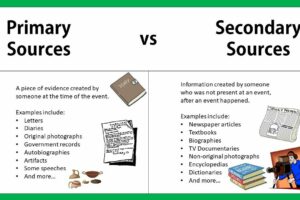
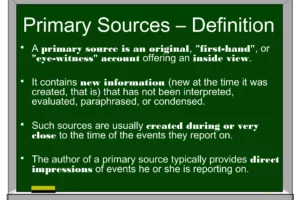
When propaganda was produced during the period being investigated, historians can often use it as a primary source.
A recruitment poster from 1915 might provide evidence about:
patriotism,
gender expectations,
wartime mobilization,
ideas about duty,
and the government’s assumptions about potential recruits.
The Library of Congress preserves approximately 1,900 World War I posters created between 1914 and 1920. It notes that posters became an especially powerful mass-communication medium during the conflict and were widely used to inspire, inform, and persuade.
A propaganda poster is therefore not merely an illustration of history.
It is something created inside history.
The Most Important Rule: Do Not Ask Only Whether It Is True
Suppose a wartime poster declares:
THE ENEMY IS COLLAPSING — VICTORY IS NEAR
Historians later determine that the enemy was nowhere near collapse.
The poster is inaccurate as battlefield intelligence.
But it might be excellent evidence for studying:
government morale campaigns,
public anxiety,
wartime censorship,
or
attempts to maintain civilian support during military difficulty.
That leads to a fundamental rule:
A propaganda source can be factually unreliable and historically extremely valuable at the same time.
Reliability always depends on the question.
Read Propaganda for What Its Creator Wanted to Accomplish
Propaganda is usually action-oriented.
Its creators want something to happen.
A World War I poster might encourage a man to enlist.
A World War II poster might encourage workers to increase production.
Another might urge civilians to buy war bonds.
Another might warn people against discussing military information.
The National Archives’ poster-analysis framework consequently asks researchers to identify the intended audience, determine why the poster was created, and examine whether persuasion operates primarily through words, images, or both.
When reading propaganda, therefore ask:
What behavior does this source seek to produce?
That question is often more revealing than the literal message alone.
Start With the Creator
Before analyzing slogans or images, determine who produced the source.
Was it created by:
a government ministry,
a military organization,
a political party,
a revolutionary movement,
a commercial company,
a newspaper,
an activist organization,
or an occupying regime?
The answer immediately changes how the material should be interpreted.
A government recruiting poster carries different institutional authority from an underground revolutionary leaflet.
A newspaper editorial differs from a state-controlled radio broadcast.
A pamphlet produced by a political opposition group operates under different constraints from propaganda backed by an authoritarian state.
The identity of the creator helps answer:
Who had the power and resources to distribute this message?
Find the Institution Behind the Message
Sometimes an individual artist or writer is identified.
But the institution that commissioned the work may matter more.
During World War II, for example, the U.S. government produced and distributed extensive propaganda designed to mobilize civilians around production, secrecy, military service, and financial support. The National Archives describes public persuasion as a substantial wartime enterprise involving artists, filmmakers, intellectuals, and government agencies.
During World War I, the U.S. Committee on Public Information used numerous channels to encourage public support. Its Four Minute Men delivered short patriotic speeches in movie theaters and other venues, including appeals connected with Liberty Loan drives.
Knowing the institution tells us that a source was not simply one person’s opinion.
It may have been part of an organized campaign.
Identify the Audience
Propaganda is rarely designed for “everyone.”
Different messages target different groups.
A government may create one campaign for soldiers and another for civilians.
Different propaganda might target:
workers,
women,
children,
ethnic communities,
foreign governments,
or occupied populations.
The U.S. Holocaust Memorial Museum’s analysis of Nazi propaganda shows how messages were adapted for different audiences, including Germans at home, ethnic Germans outside Germany, soldiers, police, collaborators, and foreign governments.
This matters enormously.
Ask:
Who was expected to see this?
Then:
What did the creator assume about that audience?
The Audience Tells You What the Propagandist Thought Might Work
Imagine a recruitment poster showing a father being asked by his children what he did during the war.
The message assumes something about its audience:
that future shame might motivate men to enlist,
that fatherhood carries expectations of masculine duty,
and that military participation can be presented as something children will later admire.
Imperial War Museums preserves the famous British World War I poster built around precisely this imagined family scenario.
The poster does not prove that every British man felt such pressure.
It does demonstrate that propagandists believed family honor and anticipated judgment could be persuasive.
That distinction is crucial.
Propaganda Reveals Assumptions About Society
Sometimes the most historically revealing part of propaganda is not its explicit slogan.
It is what the slogan assumes.
A poster portraying women as guardians of the home may reveal ideas about gender.
An image representing the nation as a family may reveal assumptions about citizenship.
A poster depicting all social classes marching together may present an ideal of national unity.
Imperial War Museums describes one British recruitment poster as representing a united Britain in which members of multiple social groups contribute to the war effort while carrying symbols of their occupations.
The important historical question becomes:
Why would this particular image of society have been considered persuasive?
Separate the Message From the Technique
Every propaganda source contains at least two analytical layers.
The first is:
What does it want the audience to believe or do?
The second is:
How does it attempt to produce that reaction?
A poster might encourage enlistment.
Its technique might involve:
fear,
shame,
patriotism,
social pressure,
or
heroic imagery.
The National Archives’ poster-analysis method explicitly asks researchers to examine both verbal and visual persuasion and identify what action the creator expects from the audience.
Do not stop after identifying the slogan.
Study the machinery of persuasion.
Look for Emotional Appeals
Propaganda frequently appeals to emotion because emotion can motivate action.
Common appeals include fear, anger, pride, shame, hope, resentment, belonging, sacrifice, and disgust.
During World War II, the U.S. government even studied poster effectiveness. A government-commissioned study cited by the National Archives concluded that posters making direct emotional appeals and using realistic imagery tended to attract more attention than symbolic or humorous alternatives.
That finding itself is historical evidence.
Governments were not simply producing posters.
They were attempting to understand how persuasion worked.
Fear
Fear can be used to persuade audiences that danger is immediate.
The message may imply:
The enemy is coming.
Spies are listening.
Your family is threatened.
Failure to act will bring disaster.
National Archives material on American World War II posters includes campaigns warning civilians that careless conversation about troop movements or logistics could aid enemy spies and saboteurs.
Whether the depicted danger was proportional to reality is one historical question.
What the campaign wanted civilians to fear is another.
Shame
Propaganda can make inaction appear dishonorable.
Recruitment material may suggest that a person who refuses to enlist lacks courage.
Savings campaigns may imply that failing to buy bonds betrays soldiers.
Such messages tell historians something about the social values propagandists believed they could activate.
Shame propaganda works only when the audience recognizes the social expectation behind it.
Pride and Belonging
Another powerful strategy tells the audience:
People like you support this cause.
The message creates an imagined community of patriots, workers, mothers, soldiers, citizens, or believers.
Library of Congress materials on mass persuasion note that war propaganda sometimes encouraged audiences to join a collective movement and presented national unity as something everyone should share.
The message is not merely:
Do this.
It is:
People who belong with us do this.
Create the Ideal Citizen
Propaganda frequently constructs models of correct behavior.
The ideal citizen:
works harder,
buys bonds,
joins the military,
keeps secrets,
supports the government,
or sacrifices personal comfort.
Such images can reveal what governments or movements expected from the population.
But historians must distinguish:
the ideal citizen portrayed by propaganda
from
how people actually behaved.
A poster showing enthusiastic factory workers does not prove that real workers were enthusiastic.
It proves that enthusiasm was something the campaign wanted to display.
Propaganda Creates Enemies Too
Propaganda often defines not only who belongs but who does not.
Enemies may be represented as:
dangerous,
inhuman,
diseased,
secretive,
greedy,
violent,
or conspiratorial.
This is particularly important when propaganda prepares populations to tolerate discrimination or violence.
The U.S. Holocaust Memorial Museum documents how Nazi propaganda drew upon antisemitic stereotypes, portrayed Jews as dangerous enemies, and helped create a climate in which persecution could be normalized or accepted.
In such cases propaganda is not merely inaccurate communication.
It can participate directly in processes of dehumanization and persecution.
Dehumanization Is Historical Evidence
When propaganda depicts a group as animals, parasites, disease, monsters, or some other supposedly subhuman category, historians should examine the imagery carefully.
The important question is not:
Did the targeted group actually possess these characteristics?
Obviously the representation is ideological.
The historical questions are:
Why was this imagery chosen?
Which pre-existing prejudices did it activate?
What actions might become easier to justify after people accepted the image?
USHMM emphasizes that many stereotypes used by Nazi propagandists were not newly invented; they drew upon ideas already familiar to intended audiences.
That point is crucial.
Propaganda often succeeds by attaching itself to beliefs that already exist.
Context Is Essential
A propaganda source removed from its historical moment is easy to misunderstand.
Suppose you find a poster demanding:
DEFEND THE NATION NOW
You need to know:
When was it produced?
Was the country already at war?
Had an invasion occurred?
Was an election underway?
Had the government recently suffered a defeat?
Did enlistment numbers decline?
The U.S. Holocaust Memorial Museum’s teaching materials explicitly emphasize that propaganda analysis must go beyond identifying persuasive techniques and examine what was happening in society at the time the message appeared.
Historical context explains why a message appeared when it did.
Timing Can Reveal Political Strategy
Propaganda campaigns often intensify around particular moments:
before elections,
after military defeats,
during economic crises,
before controversial legislation,
or after political violence.
USHMM notes that Nazi propaganda campaigns sometimes preceded or accompanied measures against Jews, contributing to an atmosphere in which discrimination and violence could be presented as acceptable or necessary.
The date is therefore not a minor metadata detail.
It can reveal the source’s political function.
Ask What Problem the Propaganda Was Trying to Solve
Suppose a government produces hundreds of posters encouraging citizens to save food.
Why?
Perhaps food supplies were genuinely constrained.
Perhaps military demand had increased.
Perhaps the government feared public resentment.
Propaganda often points indirectly toward problems authorities were worried about.
A campaign urging people to remain calm may suggest that officials feared panic.
A campaign demanding greater production may suggest shortages.
A campaign urging secrecy may indicate concern about information leaks.
The message can therefore provide clues about the anxieties of the propagandist, not just the beliefs of the audience.
Read Words and Images Separately
Visual propaganda often combines text and imagery.
Analyze each layer first.
Imagine a poster showing a heroic soldier above the words:
YOUR COUNTRY NEEDS YOU
The words create a direct obligation.
The image might convey strength, confidence, masculinity, authority, or patriotism.
Then ask how the two work together.
The National Archives explicitly asks whether a poster persuades mainly through words, visuals, or both, and encourages researchers to identify people, objects, symbols, activities, and printed instructions.
This is visual source criticism.
Symbols Require Historical Context
Flags, religious symbols, uniforms, animals, colors, maps, national personifications, and historical figures may communicate meanings obvious to contemporary viewers but less obvious today.
Do not assume modern meanings are identical.
Ask:
What would this symbol have meant to the intended audience at the time?
A symbol may invoke:
national history,
religion,
military tradition,
regional identity,
or racial mythology.
Understanding those associations can reveal how propaganda compressed complicated political arguments into recognizable imagery.
Slogans Simplify
Propaganda usually prefers simple messages.
Complexity makes mobilization harder.
A conflict involving economics, diplomacy, ideology, territory, class, religion, and historical grievances may be reduced to:
GOOD AGAINST EVIL
or
THE NATION IS IN DANGER
This simplification is historically useful.
It shows which narrative propagandists wanted audiences to remember.
Ask:
What complexity has been removed to make the message persuasive?
That missing complexity can be as informative as the slogan.
Repetition Matters
One poster tells us that someone produced a message.
Thousands of posters distributed nationwide tell us something more.
Scale matters.
So does repetition across media.
The Library of Congress notes that World War I governments used posters extensively to mobilize support.
The Nazi regime later used a much broader communications system. USHMM documents propaganda disseminated through art, theater, film, books, radio, educational materials, newspapers, and other channels under the Propaganda Ministry.
When the same message appears across many media, historians may be looking at a coordinated campaign rather than an isolated artifact.
Media Systems Matter
A propaganda poster in a pluralistic media environment is different from propaganda operating where opposing voices have been suppressed.
USHMM emphasizes this distinction in its educational materials on propaganda and media: propaganda becomes particularly dangerous where competing voices are silenced.
Under Nazi rule, press freedom was systematically dismantled. By the wartime period, surviving German newspapers operated under strict government controls and directives.
The existence of alternative information therefore becomes part of propaganda analysis.
Ask:
Could the audience easily hear competing interpretations?
Censorship and Propaganda Often Work Together
Propaganda amplifies favored messages.
Censorship restricts unwanted ones.
When both operate together, audiences encounter a carefully structured information environment.
This matters because historians should not measure propaganda influence merely by counting posters or broadcasts.
A message repeated everywhere while alternatives are suppressed has a different social position from one competing with dozens of critical voices.
Propaganda Can Hide Reality
Some propaganda does not merely reinterpret events.
It actively constructs a deceptive appearance.
USHMM provides an especially stark example from Theresienstadt during the Holocaust. Nazi authorities prepared portions of the ghetto for a 1944 Red Cross visit by reducing visible overcrowding, renovating selected areas, and controlling what visitors would see. Propaganda film footage subsequently presented this staged environment in ways intended to conceal the brutal reality of persecution and deportation.
For historians, such a film is false as a representation of normal life in the ghetto.
Yet it is extraordinarily powerful evidence of:
what Nazi authorities wanted outsiders to believe,
what they wanted to conceal,
and
how deception was organized.
A deceptive source can document the deception itself.
Omissions Are Part of the Message
Propaganda works partly through selection.
Ask not only:
What does the source show?
but:
What does it refuse to show?
A recruitment poster may show uniforms and honor but not amputees.
A production campaign may show enthusiastic workers but not labor disputes.
A wartime newsreel may show victories but omit defeats.
A regime celebrating national unity may exclude groups it defines as outsiders.
Omission does not automatically prove malicious deception.
Every message is selective.
But consistent patterns of omission can reveal the boundaries of an official narrative.
Fact-Check the Claims
Propaganda should still be checked against independent evidence.
Suppose a poster claims:
OUR PRODUCTION HAS DOUBLED
Find:
industrial records,
government statistics,
business reports,
or secondary scholarship.
If the claim is accurate, that tells you something.
If it is exaggerated, that tells you something else.
Either outcome can improve the interpretation.
The objective is not merely to catch propaganda lying.
It is to discover how the message relates to historical reality.
A True Propaganda Claim Is Still Propaganda
Suppose wartime authorities accurately report that an enemy submarine sank a civilian vessel.
If they use that true event selectively to generate public anger and encourage enlistment, the message still has a propagandistic function.
Truth and propaganda are not opposites.
The better analytical distinction is between:
information itself
and
the persuasive use of that information.
Compare Propaganda With Private Sources
One of the strongest historical techniques is comparing public propaganda with private documents.
Suppose official posters declare:
MORALE HAS NEVER BEEN HIGHER
Now examine:
soldiers’ letters,
workers’ diaries,
police reports,
government surveys,
private political correspondence.
Perhaps those sources reveal widespread exhaustion.
The contrast is historically significant.
It may show what authorities wanted publicly projected versus what internal evidence suggested.
Compare Opposing Propaganda
If two sides produced propaganda about the same conflict, compare them.
Ask:
How did each side represent itself?
How did each side represent the enemy?
Which accusations overlap?
Which fears differ?
What does each side consider heroic?
The Library of Congress World War I poster collection contains material from multiple participating nations, making such comparative analysis possible.
Propaganda becomes even more revealing when sources speak against one another.
Do Not Assume Propaganda Worked
This is one of the most important cautions.
Historians find a poster.
The poster says:
BUY WAR BONDS
It is tempting to write:
The poster convinced citizens to buy war bonds.
But the poster itself does not prove that.
It proves that someone wanted people to buy bonds.
To determine effectiveness, you need additional evidence.
Perhaps:
sales records,
surveys,
letters,
diaries,
government reports,
or contemporary commentary.
The National Archives’ documentation of wartime poster research demonstrates that governments themselves worried about effectiveness and studied which designs attracted attention.
If propagandists had to research effectiveness, historians should not assume it automatically.
Production Is Not Reception
This distinction is fundamental:
Production asks what propagandists wanted.
Reception asks what audiences actually did with the message.
People may:
accept propaganda,
ignore it,
mock it,
reinterpret it,
or resist it.
An authoritarian government’s poster may be displayed everywhere without being privately believed everywhere.
A popular slogan may genuinely inspire some people while irritating others.
Historical research should keep intended effect separate from demonstrated effect.
Look for Audience Responses
To study reception, search for evidence such as:
letters to newspapers,
private diaries,
public-opinion surveys,
police reports,
sales data,
enlistment numbers,
or enemy intelligence assessments.
Such evidence can help determine whether messages resonated.
Even then, causation is difficult.
If enlistment rises after a poster campaign, propaganda may have contributed.
But other factors may also matter.
Historical claims about propaganda’s effectiveness should therefore be proportional to the available evidence.
Propaganda Can Help Historians Study Power
Propaganda is not only about persuasion.
It also reveals which institutions possessed the ability to communicate widely.
Consider the resources required to produce:
millions of posters,
national radio programming,
newsreels,
school textbooks,
or mass newspapers.
Who controlled printing presses?
Who controlled broadcast networks?
Who could compel schools to distribute material?
Who could censor competitors?
Propaganda therefore helps historians study the infrastructure of political power.
It Can Reveal Government Priorities
Campaign frequency can matter.
Suppose a government repeatedly creates propaganda about:
food conservation,
production,
national unity,
and enemy spies.
That cluster tells historians what authorities considered important enough to require mass persuasion.
Propaganda can therefore function as an indirect map of official concerns.
It Can Reveal Prejudices
Propaganda is especially valuable for studying stereotypes.
Governments and political movements often rely on images they expect audiences to recognize immediately.
That can reveal:
racism,
antisemitism,
class prejudice,
xenophobia,
gender stereotypes,
religious hostility,
or colonial assumptions.
But researchers should handle such material carefully.
Historical accuracy requires explaining harmful imagery without needlessly reproducing or normalizing it.
Do Not Repeat Propaganda as Your Own Language
This is particularly important when propaganda attacks ethnic, racial, religious, or political groups.
Instead of writing:
The group was a threat to the nation,
write:
The propaganda portrayed the group as a threat to the nation.
Instead of:
Enemy agents controlled society,
write:
The campaign promoted a conspiracy narrative claiming that enemy agents controlled society.
Small wording choices maintain the distinction between:
the historical source’s claim
and
the historian’s conclusion.
Example: Reading a Recruitment Poster
Imagine a fictional wartime poster showing a soldier pointing toward the viewer beneath the words:
YOUR FAMILY IS COUNTING ON YOU
A weak interpretation is:
Men enlisted because they wanted to protect their families.
The poster cannot prove that.
A better analysis might proceed this way.
The intended audience appears to be military-age men.
The message connects enlistment with family obligation.
The direct gaze creates personal pressure.
The wording suggests that refusing to participate could be interpreted as failing one’s family.
The historian can therefore conclude:
The campaign attempted to mobilize men by connecting military service with family responsibility and personal duty.
Whether the strategy actually increased enlistment requires separate evidence.
Example: Reading an Enemy Caricature
Imagine a poster depicting an enemy soldier as a monstrous creature threatening women and children.
The source may tell us little about the real appearance or behavior of enemy troops.
But it could reveal several things about the campaign.
The enemy is dehumanized.
Civilian vulnerability is emphasized.
The conflict is framed morally rather than merely strategically.
Fear and protective obligation are used to encourage action.
Now compare that representation with:
enemy propaganda,
military reports,
newspapers,
private letters.
The caricature is not reliable evidence about the enemy.
It may be excellent evidence about the propagandist’s construction of the enemy.
Example: Reading Nazi Antisemitic Propaganda
Nazi antisemitic propaganda requires particularly careful handling because it participated in a system of persecution that culminated in genocide.
USHMM documents how Nazi propaganda repeatedly portrayed Jews using conspiracy theories and dehumanizing stereotypes, attempting to characterize them simultaneously as racially inferior and as dangerous enemies controlling forces opposed to Germany.
Such material should never be used as factual evidence about Jews.
Instead it provides evidence about:
Nazi ideology,
antisemitism,
state communication,
mechanisms of dehumanization,
and the political preparation of society for persecution.
USHMM concludes that Nazi propaganda played an integral role in advancing persecution and fostering a climate of hatred and indifference toward Jewish victims.
This demonstrates that propaganda can have consequences extending far beyond persuasion in an abstract sense.
Example: Reading American World War II Propaganda
Propaganda analysis should not be limited to enemy governments or dictatorships.
Democratic governments have also used mass persuasion during crises and wars.
The National Archives’ Powers of Persuasion collection documents U.S. World War II campaigns encouraging production, bond purchases, secrecy, military support, and other wartime behavior.
Reading these sources historically means asking the same questions:
Who made them?
Who was targeted?
What emotions did they invoke?
What stereotypes did they employ?
What sacrifices did they normalize?
Historical method should not change simply because the historian sympathizes with the government that produced the material.
Propaganda vs Advertising
Advertising and propaganda frequently use similar persuasive techniques.
Both may rely on:
repetition,
emotional imagery,
aspirational identity,
fear,
simplification,
and memorable slogans.
USHMM’s educational materials note that propaganda often draws upon methods associated with advertising, public relations, communications, and mass psychology.
The distinction often lies primarily in purpose.
Commercial advertising usually aims to sell a product or service.
Political propaganda seeks to influence political, ideological, or social attitudes and behavior.
Historically, however, the techniques can overlap substantially.
Propaganda vs Ordinary Political Persuasion
Not every political argument should automatically be labeled propaganda.
The term is often used as an accusation against messages people dislike.
For historical research, it is more useful to investigate the source before assigning a label.
Ask:
Is the communication part of an organized campaign?
Is information systematically selected?
Is emotional manipulation central?
Are opposing views excluded?
Is the message intended to mobilize behavior?
Even then, classification may remain debatable.
The analysis matters more than winning a vocabulary argument.
A Practical Propaganda Analysis Framework
When studying a propaganda source, investigate these elements:
| Question | What It Can Reveal |
|---|---|
| Who created it? | Institutional or political origin |
| When was it created? | Relationship to events and crises |
| Who was the audience? | Target group and assumptions |
| What is the message? | Desired belief |
| What action is requested? | Desired behavior |
| What emotions are invoked? | Persuasive strategy |
| What symbols appear? | Cultural assumptions |
| Who is represented positively? | Ideal identities |
| Who is represented negatively? | Construction of enemies |
| What information is omitted? | Limits of the narrative |
| How was it distributed? | Scale and communication infrastructure |
| Were competing voices available? | Media environment |
| What independent evidence says? | Relationship between message and reality |
| How did audiences respond? | Reception and effectiveness |
This combines the kinds of questions emphasized by the National Archives—audience, purpose, visual and verbal persuasion, and historical context—with USHMM’s focus on message, audience, context, technique, and consequences.
Common Mistakes When Reading Propaganda
The most common error is treating propaganda as either completely true or completely useless.
Other mistakes follow from that same oversimplification: assuming that widespread distribution means widespread belief, treating a stereotype as evidence about the targeted group, ignoring the institution that financed the campaign, analyzing imagery without reconstructing historical context, or identifying persuasive techniques without investigating their political consequences.
Another serious mistake is studying only enemy propaganda.
Propaganda is a method of communication, not a label reserved for governments we oppose.
Historical analysis should apply comparable standards to competing sides.
Where to Find Historical Propaganda
Major archives provide extensive collections.
The Library of Congress holds large World War I poster collections and numerous other political posters, cartoons, campaign materials, films, recordings, and government publications. Its World War I poster collection alone makes approximately 1,900 items available online.
The National Archives preserves U.S. government propaganda materials, including World War II poster artwork and campaigns produced through agencies such as the Office of War Information and War Production Board.
The U.S. Holocaust Memorial Museum maintains extensive collections and educational resources concerning Nazi propaganda, antisemitic imagery, press control, film, indoctrination, and public deception.
Imperial War Museums also preserves major collections of British and German wartime posters that can be used comparatively.
Frequently Asked Questions
Is propaganda a primary source?
Yes. Propaganda produced during the historical period being studied can function as a primary source. World War I posters, World War II government films, political pamphlets, radio broadcasts, and similar materials provide direct evidence about historical communication and persuasion. The Library of Congress and National Archives preserve extensive propaganda collections specifically as historical primary materials.
Is propaganda always false?
No.
Propaganda may contain accurate facts, misleading claims, selective evidence, exaggeration, emotional framing, or outright falsehoods.
What defines its historical significance is often how information was deliberately used to influence an audience.
Can propaganda be reliable?
It depends on the claim.
A propaganda poster may be poor evidence that its description of an enemy is accurate but excellent evidence that a government wanted citizens to view the enemy in that way.
Always ask:
Reliable for what?
Why is propaganda useful to historians?
Propaganda can reveal political goals, government priorities, stereotypes, fears, social expectations, ideas about citizenship, constructions of enemies, and strategies used to mobilize populations.
How do historians identify propaganda techniques?
They examine language, imagery, symbolism, audience, emotional appeals, repetition, simplification, stereotypes, and calls to action. National Archives guidance asks researchers to analyze visual and verbal persuasion as well as intended audience and purpose.
Does propaganda prove what ordinary people believed?
No.
It primarily demonstrates what propagandists wanted audiences to believe.
Historians need reception evidence—such as diaries, letters, surveys, behavior, or internal reports—to determine how messages were received.
Why should historians analyze propaganda in context?
Because messages respond to particular historical circumstances. USHMM’s educational guidance stresses that understanding propaganda requires looking beyond techniques to what was happening in society at the time.
Can propaganda have real historical consequences?
Yes.
Propaganda can contribute to mobilization, prejudice, persecution, acceptance of violence, or public compliance. USHMM documents the integral role Nazi propaganda played in advancing persecution and fostering a climate conducive to the destruction of Europe’s Jews.
Can democratic governments produce propaganda?
Yes.
The National Archives documents extensive U.S. government propaganda campaigns during World War II designed to influence civilian attitudes and behavior.
Is propaganda the same as censorship?
No.
Propaganda distributes favored messages.
Censorship restricts information or opposing messages.
The two can operate together, particularly under authoritarian regimes.
How do you know whether propaganda was effective?
The propaganda itself cannot establish its own effectiveness.
Historians need other evidence, such as public-opinion research, behavior, sales, enlistment, diaries, letters, or official evaluations. The U.S. government itself conducted studies into which World War II poster designs were most effective at gaining attention and enthusiasm.
The Most Useful Question: What Does This Propaganda Reveal?
Imagine a poster is demonstrably false.
The historian should not stop with:
The poster lied.
Ask instead:
Why was this particular lie useful?
Why might people have believed it?
Which existing fears did it exploit?
Who benefited from the belief?
What behavior was the message trying to produce?
Which realities did it hide?
What happened after the campaign?
Those questions lead much deeper into history.
Propaganda Tells Us About the Propagandist Before It Tells Us About the Target
This principle is worth remembering.
An antisemitic poster tells us far more reliably about the ideology of the people who produced it than about Jewish people.
A caricature of an enemy soldier tells us more securely about how propagandists wanted the enemy perceived than about the soldier.
A poster depicting every worker enthusiastically supporting wartime production tells us more immediately about the government’s ideal of worker behavior than about actual morale.
When reading propaganda, begin by turning the source back toward its creator.
Ask:
What does this message reveal about the people who needed it to exist?
Final Takeaway: Propaganda Is Evidence of an Attempt to Shape Reality
Propaganda should never be read as a simple factual account of the past.
But it should not be discarded simply because it was designed to persuade.
Its persuasive purpose is precisely what makes it historically valuable.
A propaganda poster can show us:
what authorities feared,
what behavior they wanted,
what identities they celebrated,
which enemies they constructed,
which stereotypes they expected audiences to recognize,
what information they emphasized,
and what realities they preferred to hide.
The National Archives’ approach to poster analysis emphasizes audience, purpose, imagery, words, context, and desired action.
The Library of Congress’s wartime collections demonstrate the scale on which governments used visual persuasion to mobilize populations.
And the U.S. Holocaust Memorial Museum demonstrates why studying propaganda can be far more than an exercise in identifying clever persuasion: propaganda can help normalize prejudice, mobilize populations, disguise atrocities, and prepare societies to accept persecution and violence.
So when you encounter historical propaganda, do not ask only:
Is it true?
Ask:
Who made it?
For whom?
Why at this moment?
What does it want the audience to feel?
What does it want them to do?
What does it show?
What does it hide?
Which assumptions make the message work?
What independent evidence says?
And did the audience actually respond as intended?
Propaganda rarely gives us an unbiased description of reality.
Instead, it gives us something historians may find just as important:
evidence of an attempt to shape how people saw reality.
And that attempt—who made it, why they made it, how they constructed it, and what happened afterward—is itself part of history.



Leave a Reply