
Short Answer
History does not arrive as a finished story.
Before historians write biographies, textbooks, documentaries, or accounts of wars and revolutions, they work with traces left behind by people and institutions: letters, photographs, court records, diaries, newspapers, maps, government files, objects, recordings, statistics, speeches, and countless other pieces of evidence.
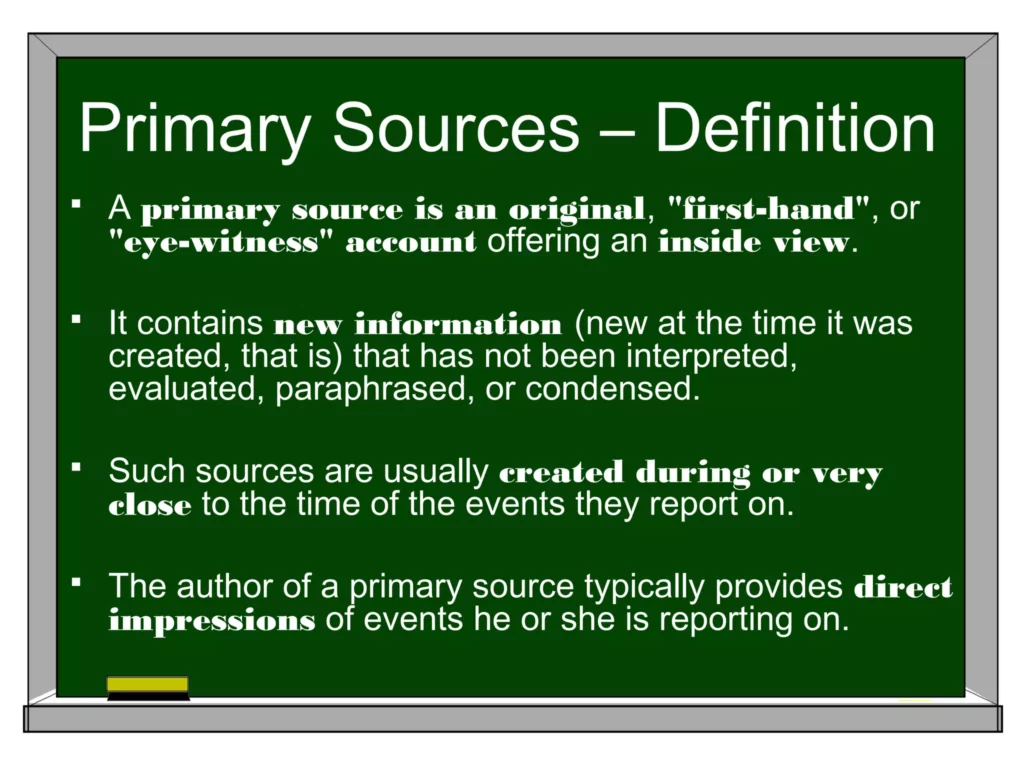
These materials are commonly called primary sources.
The Library of Congress describes primary sources as the raw materials of history: original documents and objects associated with the period being studied. The National Archives similarly treats letters, reports, photographs, notes, records, and other firsthand materials as evidence through which researchers can investigate the past.
But identifying a primary source is only the beginning.
A primary source does not automatically tell us exactly what happened. It tells us what a particular person, institution, camera, record-keeping system, or object preserved about what happened. Understanding the difference is one of the foundations of historical research.
This guide explains what primary sources are, how they differ from secondary sources, how historians evaluate them, and how you can use them to investigate the past critically.
What Is a Primary Source?
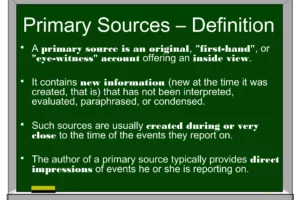
A primary source is original or direct evidence relevant to the historical question you are investigating.
It may have been produced by someone who participated in an event, witnessed it, recorded it, administered it, photographed it, experienced its consequences, or created something that later became evidence about it.
The Library of Congress defines a primary source as a firsthand record of an event or topic created by a participant or witness and notes that primary sources can include documents, letters, diaries, recordings, statistical data, manuscripts, books, articles, and works of art.
For historians, therefore, primary sources can include far more than famous documents.
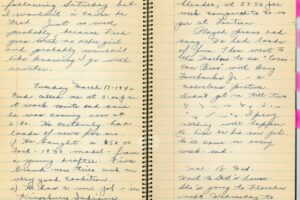
A soldier’s letter from the front can be a primary source.
So can a census form, an advertisement, a factory payroll, a courtroom transcript, a political poster, a newspaper printed during an election campaign, a family photograph, an architectural plan, an oral-history interview, a ship’s log, a government memorandum, or an everyday household object.
Yale’s manuscript collections, for example, describe primary-source holdings that include documents, photographs, audiovisual material, digital files, websites, ephemera, and records created by individuals, families, and organizations.
The important question is not simply:
Is this old?
The better question is:
What evidence can this source provide for the question I am asking?
Primary Sources Are Evidence, Not Automatic Truth
One of the most important principles in historical research is that primary does not mean accurate, neutral, complete, or trustworthy.
A diary writer can misunderstand an event.
A government report can hide embarrassing information.
A newspaper can repeat rumors.
A politician can exaggerate.
A photograph can be staged.
An eyewitness can remember something incorrectly.
An official statistic can reflect flawed categories or incomplete data.
None of these problems automatically makes the source useless.
In fact, a biased or misleading document may be extremely valuable evidence if the research question concerns propaganda, political attitudes, prejudice, institutional priorities, public persuasion, or the beliefs of the person who created it.
The National Archives explicitly encourages researchers to identify the creator’s perspective, ask why a source was produced, determine its intended audience, consider what else was happening when it was created, verify factual claims against other evidence, and seek perspectives missing from the source.
The historian’s task is therefore not merely to find primary sources, but to interrogate them.
Examples of Primary Sources
Primary sources exist in many formats. The format itself does not determine historical value; what matters is how the source relates to the research question.
| Type of Primary Source | Examples | What It Might Reveal |
|---|---|---|
| Personal writings | Diaries, letters, memoirs, journals | Experiences, attitudes, relationships, perceptions |
| Government records | Census schedules, legislation, military files, reports | Administration, population, policy, institutions |
| Legal records | Court testimony, depositions, wills, contracts | Disputes, property, social relationships, legal systems |
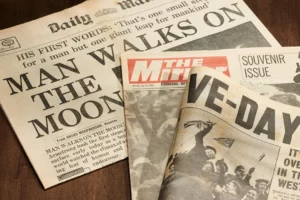
| Newspapers | News reports, editorials, advertisements | Public debate, contemporary information, media framing |
| Images | Photographs, paintings, posters, cartoons | Appearance, representation, symbolism, propaganda |
| Maps | Military maps, property maps, city plans | Geography, ownership, borders, planning |
| Audio and video | Speeches, broadcasts, interviews, films | Voice, performance, messaging, public communication |
| Material objects | Clothing, tools, buildings, coins, weapons | Technology, craftsmanship, consumption, daily life |
| Business records | Ledgers, invoices, payrolls, correspondence | Trade, employment, prices, commercial networks |
| Quantitative records | Census data, election returns, registers | Demographics, voting, migration, economic patterns |
| Digital records | Emails, websites, social-media posts | Communication, online culture, contemporary events |
The Library of Congress and National Archives both teach primary-source analysis across numerous formats, including letters, maps, photographs, posters, cartoons, sound recordings, films, artwork, statistical material, and artifacts.
Primary Sources vs. Secondary Sources
The easiest distinction is this:
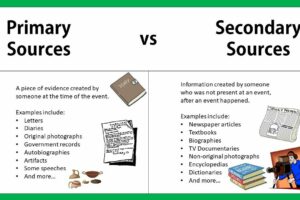
A primary source provides evidence to be analyzed. A secondary source analyzes, interprets, or explains evidence.
A historian’s scholarly book about the American Civil War is generally a secondary source because the historian has studied documents, records, photographs, previous scholarship, and other evidence and then constructed an interpretation.
A soldier’s 1863 letter describing his experience during the war may be a primary source.
Cornell University Library describes secondary sources as works created using information from primary sources, while primary sources provide firsthand testimony or direct evidence concerning the topic under investigation.
The distinction is useful—but it is not absolute.
The Same Source Can Be Primary or Secondary
Whether something functions as a primary source often depends on the research question.
Imagine a history book published in 1955 about the American Revolution.
For a researcher studying the American Revolution itself, that book would normally be a secondary source.
But for a researcher studying how Americans interpreted the Revolution during the 1950s, the same book could become primary evidence.
Cornell’s historical research guidance emphasizes precisely this point: what counts as a primary source depends on the topic and research problem.
This is why historians usually classify sources according to how they are being used rather than relying only on the type of publication.
Primary, Secondary, and Tertiary Sources
It can also be useful to distinguish a third category.
Primary sources provide the evidence.
Secondary sources interpret or analyze that evidence.
Tertiary sources summarize established information from primary and secondary materials.
Encyclopedias, general reference works, timelines, introductory handbooks, and some databases often function as tertiary sources. Cornell University Library describes tertiary sources as materials that summarize and digest information from primary and secondary sources to provide background on a subject.
Tertiary sources can be excellent starting points.
They are usually not where historical investigation ends.
Contemporary Does Not Always Mean Primary
A common mistake is assuming that anything published during a historical event must be a reliable primary account of that event.
Suppose a newspaper in Boston reported a battle occurring hundreds of miles away.
The newspaper itself is undoubtedly an artifact of its time. It may be excellent primary evidence for studying what Boston readers were being told.
But its battle report may have been based on rumors, copied dispatches, partisan correspondents, or information several days old.
The historian must therefore separate two questions:
What does this source tell us about the event?
and
What does this source tell us about how the event was reported, understood, or represented?
Those questions can produce very different answers.
What About Memoirs Written Years Later?
Primary sources do not always have to be created at the exact moment an event happened.
A memoir written thirty years afterward can still provide firsthand testimony from someone who participated in the event.
However, it presents a different type of evidence from a diary written that same evening.
Memory changes. Later experiences influence interpretation. Public reputations develop. Authors may know how events eventually turned out.
That does not disqualify memoirs.
It means historians must consider the time between experience and recollection as part of the source’s context.
The Library of Congress’s definition accommodates firsthand records associated with participants or witnesses, while archival practice includes many forms of personal testimony alongside records created contemporaneously.
Why Primary Sources Matter
Primary sources allow historians to move beyond simply accepting someone else’s interpretation of the past.
The National Archives explains that documents created by people who witnessed or participated in past events can communicate things even an excellent later history cannot reproduce, while also teaching readers to recognize that historical narratives themselves involve interpretation.
Primary sources allow researchers to investigate questions such as:
What did people believe?
What did governments know?
How did ordinary people experience an event?
How did language change?
What information was publicly available?
How were minority groups represented?
How did institutions actually function?
How much did something cost?
What did a city look like?
How did people describe themselves?
Which voices were recorded—and which were not?
Instead of encountering only a historian’s final argument, readers can examine some of the evidence from which interpretations are constructed.
That is one reason primary sources are central to historical thinking.
How Historians Analyze a Primary Source
Finding a document is not the same thing as understanding it.
Professional historical analysis involves repeatedly asking questions about where evidence came from, why it exists, and what conclusions it can reasonably support.
The Library of Congress organizes primary-source analysis around three broad activities: observe, reflect, and question. Researchers first notice details, then develop interpretations about the source, and finally generate questions requiring additional investigation.
A deeper investigation can be organized around the following principles.
1. Identify the Source
Begin with the object itself.
What exactly are you looking at?
Is it a handwritten letter, newspaper article, photograph, census entry, transcript, poster, map, government report, memoir, artifact, or later reproduction?
Basic identification matters because different source types require different methods of interpretation.
A photograph records different information from a diary. A tax register was produced for a different reason from a political speech.
Before interpreting meaning, understand what the source actually is.
2. Establish Provenance
Next ask:
Who created it?
The identity of the creator can radically change how a source should be interpreted.
A report about factory working conditions written by a factory owner may differ from testimony given by a worker, an inspector, a journalist, or a labor organizer.
Where possible, determine the creator, institution, date, place of creation, collection, and chain through which the document survived.
Archival context matters because records are often parts of larger collections rather than isolated objects. The National Archives, for example, describes archival materials at multiple hierarchical levels ranging from broad record groups to individual items.
3. Determine When It Was Created
Timing affects historical value.
Was the source created while events were happening?
The next day?
Twenty years afterward?
Before or after important information became publicly known?
A wartime diary and a postwar autobiography may describe the same event but reflect very different informational environments.
Dating the source helps reveal what its creator could realistically have known.
4. Identify the Intended Audience
People communicate differently depending on who they expect to read or hear them.
A private letter to a spouse may differ dramatically from a public speech.
An internal government memorandum may differ from a press release.
A confidential corporate report may reveal concerns absent from advertisements directed at customers.
The National Archives specifically recommends asking who the intended audience was because audience helps explain both the content of a source and the way its creator presented information.
5. Ask Why the Source Was Created
Sources are created for reasons.
A census records populations for administrative purposes.
An advertisement tries to sell something.
A petition attempts to persuade authorities.
A military report communicates information through a command structure.
A propaganda poster attempts to influence behavior.
Understanding purpose does not tell you that a source is truthful or false. It tells you what pressures may have shaped what was included, emphasized, softened, exaggerated, or omitted.
6. Reconstruct the Historical Context
Documents do not exist in isolation.
Ask what political, social, military, economic, technological, religious, or cultural circumstances surrounded the source’s creation.
Words that appear ordinary today may have carried different meanings.
Actions that seem unusual now may have been conventional.
Events mentioned casually by the creator may have been enormously important to contemporaries.
The Library of Congress and National Archives both emphasize contextualizing sources by asking what was happening when they were made and how that background affects interpretation.
Perspective and Bias in Primary Sources
Every source comes from somewhere.
Its creator had experiences, interests, assumptions, limitations, knowledge, relationships, and perhaps incentives that shaped what was recorded.
This is often discussed as bias, but perspective is a more useful starting concept.
Bias does not automatically invalidate evidence.
Suppose a politician publishes an extremely partisan campaign speech.
The speech may be poor evidence for determining whether every accusation against an opponent was objectively correct.
But it may be excellent evidence for studying:
political rhetoric,
campaign strategy,
issues considered important to voters,
public fears,
ideological divisions,
or how political leaders wanted events to be understood.
The National Archives’ guidance on perspective emphasizes that background, beliefs, and experiences shape a creator’s point of view and recommends analyzing those factors explicitly rather than assuming a source is perspective-free.
The right question is rarely:
Is this source biased?
A more productive question is:
How does the creator’s perspective shape what this source can tell us?
Corroboration: Never Depend on One Source When More Evidence Exists
A single document can be compelling.
It can also be misleading.
Historians therefore compare evidence.
If one witness says a crowd contained 20,000 people, can contemporary photographs, police reports, newspaper accounts, transportation records, organizers’ correspondence, or other witnesses help test that estimate?
When independent sources converge, confidence in a conclusion may increase.
When sources conflict, the disagreement itself becomes something to investigate.
Who had better access to information?
Who recorded events first?
Were the writers trying to persuade different audiences?
Did one have reasons to conceal something?
Could both accounts describe different parts of the same event?
National Archives guidance explicitly encourages researchers to verify evidence against other sources and ask whether other records support or contradict the claims under examination.
Historical research is therefore less like finding a document that contains “the answer” and more like assembling and testing evidence.
What Sources Leave Out Can Matter Too
Every source is incomplete.
A census may record occupation but not personal ambition.
A military report may describe casualties but barely mention civilians.
A photograph shows what appeared inside the frame, not what stood behind the photographer.
An official archive may preserve extensive records from government officials while leaving far fewer records created by people with little access to literacy, political power, or institutional record keeping.
These absences matter.
When analyzing a source, ask not only what it says but also:
Whose perspective is present? Whose perspective is missing?
The National Archives explicitly recommends treating each primary source as only one perspective within a larger story and looking for other perspectives needed to understand the subject.
Sometimes historians must reconstruct those missing experiences indirectly through court files, material culture, demographic records, archaeological evidence, hostile observers, oral traditions, or fragments preserved within records created by more powerful institutions.
Can Photographs Be Trusted?
Photographs often feel unusually convincing because they appear to capture reality directly.
But photographs also require source criticism.
Who took the picture?
Why?
Was the scene staged?
What occurred immediately before and afterward?
What lies outside the frame?
Was the photograph cropped?
Was a caption added later?
Who selected the image for publication?
A photograph is not simply a window into the past. It is an object created through choices involving subject, position, timing, framing, technology, preservation, and sometimes editing.
That does not reduce its historical value.
It makes careful interpretation necessary.
The National Archives treats photographs as primary sources that must be analyzed within the same broader process of observation, contextualization, interpretation, and comparison used with written records.
Are Newspapers Primary Sources?
Newspapers are among the most valuable—and most frequently misunderstood—historical sources.
A newspaper published during the period being researched can provide primary evidence about contemporary reporting, advertising, language, political debates, cultural attitudes, prices, public notices, social events, and information circulating among readers.
But individual newspaper claims still require verification.
Newspapers can contain mistakes, political agendas, sensationalism, anonymous sources, inaccurate battlefield reports, copied stories, propaganda, or information that later proved false.
So a newspaper may simultaneously be:
excellent evidence for what readers were told, and
imperfect evidence for what actually happened.
That distinction is essential.
Are Transcriptions and Digital Scans Still Primary Sources?
Much historical research now takes place through digital archives rather than physical reading rooms.
Researchers may encounter scanned letters, digitized newspapers, photographed manuscripts, OCR text, database entries, or typed transcriptions.
The historical document represented by a faithful scan does not suddenly become a secondary source merely because you view it on a screen. The Library of Congress notes that researchers and students frequently work with digitized primary sources from its collections.
However, the representation introduces another layer that should be evaluated.
A transcription may contain errors.
OCR can misread damaged print.
Images may omit the reverse side of a document.
Metadata may be incomplete.
A digital collection may include only selected materials from a much larger archive.
When details matter, researchers should compare transcriptions with images of the original and examine archival metadata whenever possible.
Primary Sources Do Not Speak for Themselves
A frequently repeated idea is that historians should “let the documents speak.”
Documents certainly deserve careful attention.
But documents cannot explain themselves.
Someone must decide which document is relevant, what its language means, how it relates to other evidence, what context surrounds it, and which conclusions can reasonably be drawn.
The National Archives notes that working with firsthand historical records also helps readers recognize that written history reflects interpretation.
Historical knowledge therefore emerges from a relationship between evidence and interpretation.
Good history does not ignore interpretation.
It makes interpretation accountable to evidence.
A Practical Primary Source Test
When you encounter a potential primary source, ask four questions.
First: What is my research question?
Without a question, the label “primary” can become meaningless.
Second: What relationship does this source have to that question?
Was it created by a participant, observer, institution, community, or system directly connected to what you are studying?
Third: What can this source actually demonstrate?
Avoid claiming more than the evidence supports.
Fourth: What additional evidence would I need?
Strong historical conclusions rarely depend on one isolated document.
This approach turns primary-source identification from a vocabulary exercise into historical reasoning.
Where to Find Primary Sources
Major archives and libraries increasingly make historical material available online.
The U.S. National Archives provides access to primary-source documents through its catalog, educational collections, DocsTeach, exhibits, and major-document collections.
The Library of Congress provides digitized collections and curated primary-source sets covering major subjects and periods, as well as tools for finding and analyzing material.
University archives, state and municipal archives, historical societies, museums, newspaper repositories, libraries, religious archives, company archives, and specialized digital collections can provide additional evidence.
Secondary scholarship can also help locate primary material. Footnotes, endnotes, bibliographies, archival abbreviations, and source notes often point researchers toward collections worth investigating.
Common Mistakes When Using Primary Sources
The most serious mistakes usually result from asking too little of the evidence rather than too much.
A researcher may accept an eyewitness account simply because the witness “was there,” treat an official document as neutral because it came from a government agency, assume an old newspaper article is factual because it was printed at the time, or quote a dramatic passage without investigating its context.
Another common error is presentism: interpreting historical language and behavior entirely through today’s assumptions without reconstructing the circumstances in which the source was produced.
Cherry-picking presents a different danger. If ten surviving documents contradict an argument and one supports it, selecting only the convenient document does not create strong historical evidence.
Good source analysis therefore requires curiosity even when the evidence complicates the story you expected to find.
How to Read a Primary Source Like a Historian
The goal is not to approach every document with suspicion so extreme that nothing can be known.
The goal is disciplined curiosity.
Look closely at what the source contains.
Determine where it came from.
Understand who created it.
Consider the intended audience.
Reconstruct the circumstances of its creation.
Identify the creator’s perspective.
Separate observation from inference.
Compare the source with other evidence.
Notice what remains unanswered.
Then revise your interpretation when new evidence requires it.
That general process closely resembles the Library of Congress’s observe-reflect-question model and the National Archives’ progression from identifying a source through contextual analysis and finally using it as historical evidence.
Primary Sources and the Meaning of As They Saw It
Primary sources bring us closer to the worlds people inhabited, but they do not transport us there without mediation.
They show us events as someone saw them.
A general describing a battle saw something different from a private soldier.
A factory owner saw industrialization differently from a child laborer.
A colonial administrator described an empire differently from the people being governed.
A newspaper editor, photographer, migrant, politician, prisoner, merchant, activist, and ordinary family could encounter the same historical moment from radically different positions.
That is precisely why multiple primary sources matter.
No single witness owns the past.
By placing voices, documents, objects, photographs, and records beside one another, historians can reconstruct a richer picture of what people experienced, believed, feared, misunderstood, concealed, remembered, and hoped for.
Frequently Asked Questions
What is the simplest definition of a primary source?
A primary source is original or direct evidence relevant to a research question, often created by a person, institution, or system connected to the event, period, or subject being investigated. The Library of Congress commonly describes such materials as the raw materials from which history is studied.
What are five examples of primary sources?
Letters, diaries, photographs, government records, and contemporary newspapers are common examples. Primary sources can also include maps, artifacts, audio recordings, films, statistical datasets, court records, websites, and many other formats.
Is a diary always a primary source?
Not automatically. A diary is usually primary evidence about the writer’s experiences, beliefs, or period, but whether it functions as a primary source ultimately depends on the research question. Cornell’s research guidance emphasizes that source classification depends on the subject under investigation.
Is a textbook a primary source?
Usually not when it is being used to learn about the historical events it describes. It generally functions as a secondary or tertiary source. However, an old textbook could become primary evidence for a study of education, historical memory, ideology, or how a particular generation understood the past.
Are eyewitness accounts reliable primary sources?
They can be valuable without being completely reliable. Eyewitnesses may have limited viewpoints, mistaken memories, personal interests, or incomplete information. Historians therefore contextualize eyewitness accounts and compare them with other evidence.
Can an artifact be a primary source?
Yes. Objects can provide direct evidence about manufacturing, technology, consumption, status, culture, daily life, warfare, religion, trade, and many other historical subjects. Libraries, archives, and museums regularly treat artifacts and material objects as forms of primary evidence.
Is a primary source better than a secondary source?
No. They serve different purposes.
Primary sources provide evidence. Secondary scholarship helps researchers interpret that evidence, understand existing debates, discover context, and locate additional sources. Serious historical research normally benefits from both.
Does a primary source have to be old?
No.
An email written yesterday could become a primary source for someone studying an event that happened yesterday. “Primary” describes a source’s relationship to a research question, not its age.
Final Takeaway
A primary source is not simply an old document.
It is evidence.
Letters reveal what people chose to write. Photographs preserve selected moments. Newspapers reveal information and arguments circulating in public. Government documents record the activities and priorities of institutions. Objects preserve traces of everyday life. Diaries reveal personal experiences. Statistical records transform human lives into categories and numbers.
Every source illuminates something.
Every source also has limits.
The historian’s craft lies in understanding both.
Before accepting a historical source at face value, ask who created it, when it was created, why it was created, who was expected to see it, what circumstances shaped it, what perspective it represents, what it leaves unsaid, and whether other evidence confirms or challenges its claims.
Primary sources bring us unusually close to past lives.
But understanding the past requires more than hearing a voice from history.
It requires discovering who was speaking, why they spoke, what they could see—and what they could not.
Research Sources
This guide draws on primary-source research and educational guidance from the Library of Congress, U.S. National Archives and Records Administration, Yale University Library, and Cornell University Library. The Library of Congress provides definitions, digitized collections, and its Observe–Reflect–Question framework for primary-source investigation.
The National Archives provides document-analysis resources emphasizing context, creator, audience, perspective, purpose, corroboration, and missing viewpoints when interpreting historical evidence.
Cornell University Library’s research guides provide useful clarification that distinctions among primary, secondary, and tertiary sources depend partly on the research question and academic context.
Yale University Library’s archival guidance illustrates the breadth of primary-source collections, including manuscripts, photographs, audiovisual recordings, digital files, websites, organizational records, and ephemera.


Leave a Reply