
Short Answer
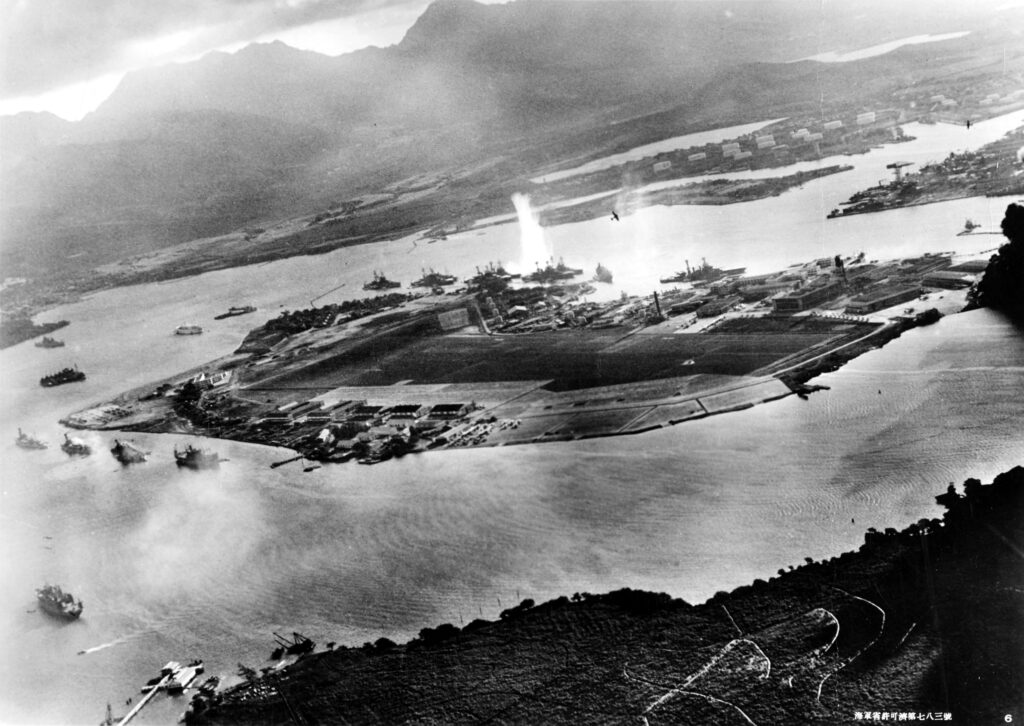
On the night of December 7, 1941, the Imperial Japanese Navy’s First Air Fleet steamed silently through the North Pacific. At 6:00 a.m., the first wave of 183 fighters, bombers, and torpedo planes began launching from six carriers under the command of Vice Admiral Chuichi Nagumo. In the lead plane was Commander Mitsuo Fuchida, who would later write, “It was still dark on the flight decks, however, when the first wave of 183 fighters, bombers, and torpedo planes took off from the six carriers in the original attack.” Fuchida was the man who would utter the legendary signal “Tora! Tora! Tora!” over the radio, telling the fleet that surprise had been achieved. This article reconstructs the attack as the Japanese attackers themselves saw it—through their own reports, memoirs, and official announcements.
What Happened?
On 2 November 1941, the Japanese government and Imperial General Headquarters agreed to prepare for war against the United States and the United Kingdom. Following that decision, Admiral Isoroku Yamamoto, Commander in Chief of the Combined Fleet, ordered Vice Admiral Chuichi Nagumo to prepare an attack on the American fleet anchored at Pearl Harbor. The plan was not conceived overnight; it had been rehearsed for months. Fuchida recalled that it was at Kagoshima on the southern tip of Kyushu that he first learned the magnitude of events in store for him: “My good friend Commander Genda, air operations officer on the staff of the First Air Fleet,” revealed the plan to him.
The attack unfolded in two waves:
- First Wave (7:55 a.m. Hawaiian time): 183 aircraft—fighters, dive bombers, and torpedo planes—struck the U.S. fleet anchored in Pearl Harbor, targeting battleships and airfields.
- Second Wave (8:55 a.m.): A second force of 167 aircraft attacked additional targets, including the naval yard and the battleship USS Nevada.
In his interrogation by U.S. officers in October 1945, Fuchida described his role: “I was the strike leader at Pearl Harbor.” The attack sank or damaged 19 U.S. Navy ships, destroyed over 180 aircraft, and killed more than 2,400 Americans. The Japanese lost only 29 aircraft and 55 airmen.
How It Was Seen at the Time
To the Japanese public and military, the attack was not a “sneak attack” but a necessary preemptive strike against a powerful adversary. Lieutenant General Masatake Okumiya, a retired Japanese Air Self-Defense Force officer, wrote in 1991: “Many people, including both Japanese and Americans, still believe that the attack by the Carrier Task Force of the Imperial Japanese Navy on Pearl Harbor on 7 December 1941 was intended as a sneak attack. This is not true.” He explained that the misunderstanding arose from an unusual mistake by the Japanese Foreign Office, which failed to deliver the final diplomatic note before the attack began. The attack was intended to follow the delivery of a declaration of war, but the note was delayed—a mistake that changed the attack’s moral character.
“The misunderstanding resulted from an unusual mistake made by the Japanese Foreign Office staff concerned.” — Lieutenant General Masatake Okumiya, Naval History Magazine, December 1991
For the attackers themselves, the mood was one of duty and excitement. Fuchida later wrote that as he led the first wave, he felt a sense of fulfillment: “I was the leader of the attack, and I was proud of my men.”
Historical Snapshot
| Aspect | Detail |
|---|---|
| Date | December 7, 1941 (Hawaiian time) |
| Place | Pearl Harbor, Territory of Hawaii, U.S. |
| People | Admiral Isoroku Yamamoto (planner), Vice Admiral Chuichi Nagumo (task force commander), Commander Mitsuo Fuchida (strike leader) |
| What Happened | Two waves of Japanese carrier aircraft attacked the U.S. Pacific Fleet at anchor |
| Why It Mattered | Brought the United States into World War II; the attack’s “sneak” character shaped American resolve and the Japanese diplomatic failure |
Eyewitness Accounts
Commander Mitsuo Fuchida, the air group commander of the aircraft carrier Akagi, led the first wave and provided the most detailed Japanese eyewitness account. In his 1952 memoir, he described the launch: “It was still dark on the flight decks, however, when the first wave of 183 fighters, bombers, and torpedo planes took off from the six carriers in the original attack.” He also recalled the moment of surprise: “We knew that the American fleet was in the harbor, but we did not know if they were ready. The fact that we achieved complete surprise was a great relief.”
Fuchida later testified in an official U.S. Strategic Bombing Survey interrogation in Tokyo on 10 October 1945. He described his role: “I was the Air Force Group Commander of the Akagi and strike leader at Pearl Harbor.” When asked about the attack’s planning, he explained the Japanese expectation that the U.S. would be caught unprepared.
Official Reports
The Japanese government issued a formal announcement of the attack, which was transmitted by radio and published in the press. The Gilder Lehrman Institute’s collection holds a copy of this announcement, which was broadcast on December 8, 1941 (Japanese time). It declared that the Japanese Empire had “been forced to take action” against the United States and the United Kingdom because of their “insistence on their own selfish point of view.” The announcement framed the attack as a defensive measure and claimed that the Japanese Navy had “begun operations against the American and British fleets in the Pacific.”
“The Japanese announcement of the attack at Pearl Harbor, 1941” — Gilder Lehrman Institute of American History
Notably, the announcement did not use the word “war” but rather “operations,” reflecting the Japanese government’s legalistic view that a state of war would exist only after a formal declaration.
What the Sources Got Wrong
The most significant error in contemporary reporting—and one that persists—is the claim that the attack was a “sneak attack.” Both American and Japanese sources have since corrected this. Lieutenant General Okumiya wrote that the Japanese intended to deliver a formal declaration of war before the attack, but the Foreign Office staff’s mistake delayed the note. The Japanese government’s own announcement of December 8 also avoided the word “war,” suggesting that the attack was a preemptive strike, not a surprise attack.
Another error in some early Japanese reports was the overestimation of the damage inflicted. Fuchida later admitted that the attack did not achieve its full objective: the American aircraft carriers were not in port, and the oil storage facilities remained intact. This was a significant operational failure that the Japanese public did not learn about until later.
Aftermath
In the immediate aftermath, the Japanese forces withdrew after two waves. Fuchida reported that he was “exhausted” but relieved. The attack was followed by a formal declaration of war by the Japanese government on December 8, 1941 (Japanese time). The Japanese public was told of a great victory, but the strategic reality was different. The attack failed to destroy the American carriers or the oil tanks, and it united the American people as nothing else could have. As Fuchida later reflected in his interrogation, “We expected to destroy the American fleet and to be able to take the Pacific without opposition. We were wrong.”
The Japanese forces then turned to other targets in Southeast Asia and the Pacific, but the momentum of the war would slowly turn against them.
Common Misconceptions
How Historians See It Today
Modern historians, relying on both Japanese and American primary sources, have shifted away from the simple “sneak attack” narrative. They emphasize the Japanese military’s strategic intent and the diplomatic failure. Okumiya’s 1991 article is a key text that corrects the record. However, historians also note that the Japanese government’s own announcement was deliberately vague, and the timing of the attack—even if the note had been delivered on time—was still a surprise. The attack’s moral and strategic consequences are now understood as a preemptive strike that backfired, uniting the United States against Japan.
Concluding Reflection
The Japanese perspective on Pearl Harbor, as captured in the memoirs of Mitsuo Fuchida, the official announcements, and the later defense by Okumura, reveals a complex picture: a military that believed it was executing a necessary strike, yet that was undone by a diplomatic blunder. The primary sources show us that the attackers saw themselves as warriors carrying out orders, not as villains. They also show the human cost of miscommunication and the long shadow of a single morning. The lesson from these sources is that history is not only about what happened, but about how the actors themselves understood and justified their actions.
FAQ
Did the Japanese intend to attack Pearl Harbor without a declaration of war?
According to Japanese sources, the attack was intended to follow a formal declaration of war, but the Japanese Foreign Office failed to deliver the note before the attack. Lieutenant General Masatake Okumiya wrote in 1991 that the misunderstanding of a 'sneak attack' resulted from this diplomatic mistake.
What did Mitsuo Fuchida say about the attack?
Fuchida, the strike leader, described the attack in detail in a 1952 Proceedings article and in a 1945 interrogation. He said the first wave of 183 aircraft took off in the dark and achieved complete surprise. He later admitted that the attack failed to destroy the American carriers and oil facilities, which was a strategic failure.


Leave a Reply