
Short Answer
An old letter can look deceptively simple.
A date.
A greeting.
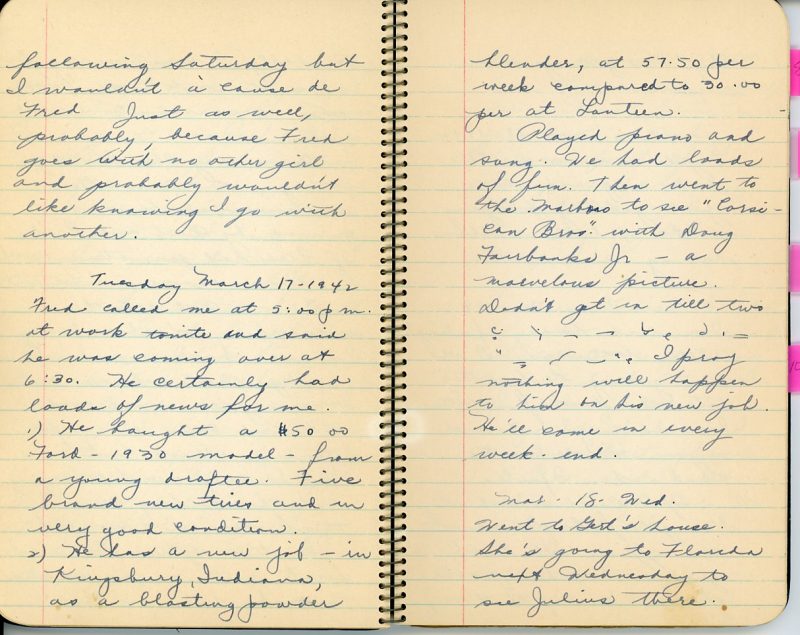
Several pages of handwriting.
A signature.
Yet those pages may contain clues about war, migration, relationships, work, politics, illness, money, religion, family conflict, travel, or the ordinary routines of a life lived generations ago.
Diaries can be even more revealing. They may record thoughts never intended for newspapers, governments, or official reports: frustration with an employer, anxiety about money, disagreements within a family, rumors heard in town, changing political opinions, or observations that seemed completely ordinary to the writer.
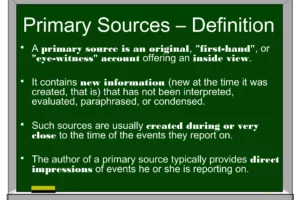
The U.S. National Archives describes diaries and letters created by participants or witnesses as primary sources that can communicate dimensions of historical experience that later accounts cannot reproduce. It also stresses that such sources embody particular viewpoints rather than providing neutral windows onto the past.
The difficulty is that reading an old letter or diary involves much more than deciphering handwriting.
You must determine:
Who wrote it?
When?
To whom?
Why?
What did the writer actually know?
What did particular words mean at the time?
Was the writer recording observation, rumor, memory, or interpretation?
What is missing?
What other evidence confirms or challenges the account?
Learning to read old letters and diaries therefore combines two skills:
transcription — determining what the document actually says,
and
historical interpretation — determining what those words can tell us about the past.
This guide explains how to do both.
Why Letters and Diaries Matter to Historians
Official records tend to preserve what institutions needed to record.
A tax document records taxes.
A military report records information needed by a military organization.
A census classifies households according to categories selected by government officials.
Personal writings can preserve a different layer of historical experience.
Letters and diaries may reveal:
- relationships,
- personal beliefs,
- daily routines,
- rumors,
- fears,
- aspirations,
- family economics,
- travel,
- health,
- work,
- social attitudes,
- religious practices,
- reactions to public events.
The Library of Congress describes diaries as personal narratives capable of preserving everything from private thoughts and routines to observations of public events and apparently mundane details.
Those mundane details are often precisely what makes diaries valuable.
A diarist may consider it ordinary to mention the price of food, how long a journey took, what clothing someone wore, which street flooded, or who visited for dinner.
A century later, those remarks may become historical evidence.
Letters and Diaries Are Not the Same Kind of Source
Although historians often group letters and diaries together as personal writings, they should not automatically be read in the same way.
A Letter Has a Recipient
Most letters were written to someone.
That relationship matters.
A soldier writing to a parent may minimize danger.
The same soldier writing to a close friend may complain openly.
A businessperson writing to a customer may sound formal.
A letter to a sibling may contain jokes or references outsiders cannot understand.
Before interpreting a letter, always ask:
Who was supposed to read this?
A Diary Has a Different Audience Problem
A diary may appear private.
Sometimes it was.
But do not assume that every diary was written with absolutely no expectation of another reader.
Some diaries functioned as:
- personal records,
- spiritual exercises,
- travel journals,
- family chronicles,
- professional notebooks,
- material intended for possible later publication.
Even a private diarist may write with an imagined future reader in mind.
The important question is therefore not simply:
Was this private?
Ask:
What kind of writing practice was this, and how might that have shaped what was recorded?
Start With the Document Before Reading the Story
A common mistake is immediately trying to understand the narrative.
Instead, first examine the document as an object.
Record whatever metadata is available:
- writer,
- recipient,
- date,
- location,
- collection,
- archive,
- folder,
- page numbers,
- catalog description.
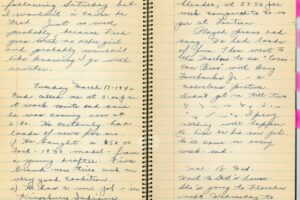
Look at the physical or digital image.
Is it:
- one sheet,
- several sheets,
- a notebook,
- a postcard,
- stationery,
- a later copy,
- a typed transcription?
Are there:
- crossed-out words,
- insertions,
- writing in margins,
- different inks,
- annotations,
- stamps,
- postmarks,
- later notes?
The National Archives recommends beginning primary-source analysis by identifying what the source is, who created it, when it was made, and who the intended audience was before moving into interpretation.
Those apparently basic details can fundamentally change what the text means.
Original, Copy, Transcript, or Published Edition?
Before doing detailed analysis, determine what version you are reading.
You might be looking at:
The original manuscript
The handwritten document itself or a high-quality digital image.
A contemporary copy
Someone copied the original at roughly the same time.
A later transcription
Someone converted the handwriting into typed text.
A published edition
An editor selected and transcribed documents for publication.
These forms can all be useful, but they are not identical.
A transcription may remove physical clues.
An editor may silently expand abbreviations.
A published collection may include only selected letters.
A transcript can contain reading errors.
When an important word matters to your interpretation, compare the transcription with an image of the manuscript whenever possible.
Step 1: Do Not Try to Read Every Word Immediately
Difficult handwriting becomes harder when you stare at one mysterious word for too long.
Begin with what you can read.
Identify:
- the date,
- greeting,
- signature,
- repeated names,
- common words,
- familiar phrases.
The National Archives specifically recommends using familiar sections of letters to learn a writer’s handwriting. A conventional phrase such as “Dear Sir,” for example, can show how that writer forms several common letters.
Think of the document as a puzzle.
Each word you solve provides a key for solving another.
Step 2: Build a Handwriting Alphabet
Historical handwriting often looks impossible because writers formed letters differently from modern readers.
The solution is not guessing.
It is comparison.
Suppose you cannot determine whether a letter is:
e
or
c.
Find another word where the letter is obvious.
If you know the word is December, examine how the writer forms the e and c there.
Now return to the uncertain word.
The National Archives recommends this exact comparative method: letters written by the same hand often have consistent forms, so researchers can use clearly identifiable examples elsewhere in the document to decode difficult passages.
For difficult writers, create a small reference alphabet:
a = [writer’s form]
b = [writer’s form]
e = [writer’s form]
and so forth.
After several paragraphs, the handwriting usually becomes much easier.
Old Handwriting Is a Skill: Paleography
The systematic study and reading of historical handwriting is called paleography.
The UK National Archives provides dedicated paleography training because handwriting from earlier centuries can look nearly illegible to readers accustomed to modern handwriting. Its English tutorial focuses particularly on documents written between 1500 and 1800.
You do not need to become a professional paleographer to read nineteenth- or twentieth-century correspondence.
But the same basic habits help:
- compare letter forms,
- work slowly,
- use context,
- learn period abbreviations,
- recognize unfamiliar writing conventions.
Practice with multiple documents from the same writer is especially valuable.
After reading twenty pages of someone’s handwriting, a page that initially looked impossible may become surprisingly clear.
Watch for the Long S
Older documents contain letter forms that modern readers may mistake for something else.
One famous example is the long s.
It resembles an f and appears in handwritten and printed materials from earlier periods.
A modern reader might initially see:
Congrefs
where the historical word is:
Congress.
The National Archives notes that the long s appears in handwritten and typeset documents into the early nineteenth century and recommends using context to distinguish it from an actual f.
This is why you should resist concluding that a word is nonsense until you understand the writer’s alphabet.
Step 3: Transcribe Before You Modernize
Once you begin reading successfully, create a transcription.
The safest rule is:
Write what the document says, not what you think the writer should have written.
The National Archives’ transcription guidance instructs transcribers to preserve the writer’s wording, capitalization, names, dates, abbreviations, misspellings, and punctuation rather than silently correcting them.
If the document says:
I recieved your leter yesterday
transcribe:
I recieved your leter yesterday
not:
I received your letter yesterday.
Why?
Because original spelling can itself contain historical information.
It may reveal:
- education,
- dialect,
- language change,
- phonetic spelling,
- writing habits.
Correcting everything too early can erase evidence.
What to Do With an Unreadable Word
Do not invent the word.
If you cannot read it confidently, mark the uncertainty.
A common convention is:
[illegible]
The National Archives specifically recommends using [illegible] when a word cannot be deciphered and using brackets for transcriber-added descriptions or notes.
For your own research transcription, you might use:
[?]
for uncertainty,
or:
[possibly Thompson]
when you have a tentative reading.
The important principle is transparency.
Readers should be able to distinguish the writer’s text from your intervention.
Preserve Crossed-Out Words
Do not automatically ignore text the author crossed out.
Consider:
I was
terrifiedsomewhat concerned by the news.
The revision is interesting.
Why did the writer replace terrified with somewhat concerned?
Perhaps the writer reconsidered the emotion.
Perhaps the letter’s recipient influenced the wording.
Perhaps the writer was trying to sound calm.
The National Archives recommends noting crossed-out wording during transcription because alterations can contain useful information about a document.
Edits are evidence too.
Pay Attention to Different Inks and Hands
Sometimes a letter contains writing from more than one person.
You may encounter:
- a later archivist’s note,
- a recipient’s annotation,
- a secretary’s writing,
- a postal mark,
- an official endorsement,
- handwriting added years later.
Do not merge all of this into one voice.
If possible, identify:
original author
versus
later annotation.
The National Archives recommends using bracketed descriptions when features such as handwritten additions, stamps, or differently colored ink need to be represented in a transcription.
Step 4: Learn Historical Abbreviations
Old letters contain abbreviations that may initially look mysterious.
For eighteenth- and nineteenth-century English-language documents, you might encounter:
inst.
meaning a date in the current month,
and
ult.
meaning a date in the previous month.
For example:
Your letter of the 12th inst.
means approximately:
your letter dated the 12th of this month.
The National Archives lists these and numerous military, personal-name, and administrative abbreviations in its guidance for reading historical records.
Names can also appear in unfamiliar abbreviated forms:
Wm. = William
Jno. = John
Thos. = Thomas
Geo. = George
Saml. = Samuel
Do not assume an unfamiliar abbreviated form represents a different person.
Do Not “Correct” Historical Spelling Too Quickly
Old writing may include spellings such as:
evry
instead of every,
or:
thare
instead of there.
The National Archives warns researchers to recognize contemporary spelling conventions while preserving the original wording in transcription rather than silently replacing it with standardized modern spelling.
This also applies to names.
A person’s surname may appear with several spellings across documents.
That variation is common enough that historical researchers should search for multiple possible forms.
Step 5: Work Out the Date Carefully
Dates seem straightforward until they are not.
A letter may say:
Monday evening
or:
the 5th ult.
A diary may use only:
Thursday 12
because the writer already knew the month and year.
Your task is to reconstruct dates without introducing false certainty.
Look for evidence from:
- earlier pages,
- later pages,
- envelopes,
- postmarks,
- archival metadata,
- references to recognizable events.
For much older material, dating can become more complicated because historical documents may use unfamiliar calendar conventions or regnal dating systems. The UK National Archives’ paleography resources include specific guidance on historical calendar and dating practices for precisely this reason.
Never silently convert an uncertain date into a precise one.
If necessary, write:
[probably March 1863]
rather than pretending certainty.
Step 6: Identify Everyone Mentioned
Personal letters are full of people who require no introduction to the writer or recipient:
Tell Mary I received it.
Uncle has returned.
Mr. Thompson was here again.
To us, these references can be frustrating.
Who is Mary?
Which uncle?
Which Thompson?
Start building a person index.
Record:
| Name in Document | Possible Identity | Evidence |
|---|---|---|
| Mary | Writer’s sister? | Mentioned with Mother |
| Mr. Thompson | Employer? | Appears in discussions of wages |
| Uncle John | Mother’s brother | Identified in later letter |
Do not lock uncertain identities too early.
Use:
possibly
probably
unknown
until enough evidence accumulates.
A series of letters often solves mysteries that a single letter cannot.
Step 7: Build a Place List Too
Do the same for places.
A writer might use:
home
the city
camp
the farm
Washington
without further explanation.
Record each place and how you identified it.
Maps, gazetteers, census records, military records, city directories, and contemporary newspapers may help.
Sometimes understanding a single place name transforms the meaning of an entire letter.
Step 8: Reconstruct the Relationship Between Writer and Reader
This step is especially important with correspondence.
Ask:
Who is writing?
Who is receiving?
How well did they know each other?
Was the relationship equal?
A letter between:
husband and wife
works differently from one between:
employee and employer,
soldier and commander,
or:
citizen and government official.
Relationships influence tone.
They influence what writers explain.
They also influence what writers leave unsaid.
The National Archives’ perspective framework makes intended audience one of the central questions in source analysis because audience affects how creators present themselves and their information.
Read What the Writer Assumes the Recipient Already Knows
Personal correspondence often contains sentences such as:
You know what happened with Henry.
Unfortunately, you do not.
Yet that sentence reveals something.
The recipient already knew the story.
Therefore there may have been:
- earlier correspondence,
- shared experience,
- another channel of communication.
Instead of filling the gap with imagination, mark it as a research question:
What happened with Henry?
Then search surrounding letters.
Historical research frequently progresses through unanswered questions rather than immediate answers.
Step 9: Establish Historical Context
Once you can read the document, ask what was happening around it.
A letter dated October 1918 might have been written during:
- World War I,
- a global influenza pandemic,
- economic disruption.
A diary entry from October 1929 takes on different significance once placed near the Wall Street crash.
Context should not be imposed mechanically, however.
Do not assume the writer cared about every major event historians now associate with that date.
Ask instead:
What circumstances actually affected this person?
The National Archives recommends explicitly researching what was happening when a primary source was created and asking how that context helps explain its content and purpose.
Step 10: Separate Observation From Hearsay
This distinction is essential.
Consider:
I watched two regiments leave town this morning.
That sounds like direct observation.
Now:
We hear that the entire army has surrendered.
That is different.
The writer reports hearing a claim.
The diary itself is genuine primary evidence.
But it does not prove the army surrendered.
It proves most directly that the rumor reached the writer.
When transcribing or taking notes, you can mark statements mentally as:
Direct observation
I saw…
Reported information
We heard…
Interpretation
I believe…
Prediction
I expect…
This prevents a common historical mistake: turning everything written in a primary source into fact.
Step 11: Pay Attention to Emotional Language
Personal writings can preserve emotions unusually well.
Look for words suggesting:
- fear,
- anger,
- affection,
- resentment,
- embarrassment,
- excitement,
- grief,
- boredom,
- anxiety.
But do not extract emotional words without context.
A person may write:
We were all terrified.
That supports the conclusion that the writer perceived widespread fear.
It does not automatically establish that everyone felt terrified.
A better historical formulation might be:
The writer described the household as terrified by the news.
This keeps the claim proportional to the evidence.
Step 12: Notice Revisions and Changes Over Time
A diary becomes especially powerful when read as a sequence rather than a collection of isolated quotations.
Suppose entries change:
January
I am certain the war will end by spring.
April
The newspapers still insist victory is near, but nobody here believes them.
September
I can no longer imagine when this will finish.
The value lies not simply in three quotations.
The diary documents changing expectations.
Letters can reveal similar developments.
Track:
- changing political opinions,
- relationships,
- health,
- finances,
- morale,
- attitudes toward events.
Historical change can occur inside one person’s notebook.
Do Not Assume a Diary Is Automatically More Honest
A common assumption is:
The diary was private, so the writer must have told the truth.
That is too simple.
A diarist can:
- misunderstand events,
- repeat rumors,
- rationalize decisions,
- exaggerate,
- misremember,
- deceive themselves.
Private writing removes some pressures associated with public communication.
It does not remove human perspective.
The National Archives emphasizes that every primary-source creator brings background, beliefs, experiences, and point of view into what they create.
The stronger question is therefore not:
Is this diary unbiased?
but:
What can this diary reliably tell me?
Letters Can Conceal as Much as They Reveal
Imagine a soldier writes:
Dear Mother,
I am perfectly safe and there is nothing for you to worry about.
Perhaps the soldier genuinely feels safe.
Perhaps the writer knows the family is anxious and deliberately minimizes danger.
Perhaps military censorship restricts discussion.
Perhaps all three factors matter.
Now imagine the soldier’s private diary says:
The shelling continued all night. I have never been so frightened.
The contradiction is not necessarily evidence of dishonesty.
It may reveal how the writer communicated differently to different audiences.
This is why letters should always be read relationally.
Who was receiving the message?
What did the writer want that person to think or feel?
Sometimes Silence Matters
Suppose someone writes hundreds of diary pages but never mentions an event you expected to dominate their life.
That silence might matter.
But be cautious.
Absence can have many explanations:
- missing pages,
- lost volumes,
- deliberate avoidance,
- irrelevance to the writer,
- communication elsewhere.
Do not claim:
The writer did not care because the diary never mentions it.
A more defensible conclusion is:
The event does not appear in the surviving diary entries examined.
Historical silence should be described before it is explained.
A Collection Is Better Than a Single Letter
One letter provides a snapshot.
A correspondence provides relationships and change.
Whenever possible, look for:
the letters before it
the reply
later letters
letters from other family members.
A strange sentence in one document may become obvious once you read five surrounding letters.
Large manuscript collections also reveal patterns unavailable from isolated quotations. The Library of Congress maintains collections containing thousands of items of correspondence, journals, memoranda, and related papers, illustrating why archival context can be as important as any single document.
Never assume the first digitized letter you find represents the entire correspondence.
Check the Archive’s Description
Archival metadata can answer questions the manuscript cannot.
Look for:
- collection name,
- creator,
- date range,
- series,
- folder title,
- scope note,
- provenance.
For example, the National Archives uses scope-and-content information to describe the breadth and character of archival materials and to help researchers understand what a collection contains.
Knowing that a letter belongs to:
Family Correspondence, 1861–1865
rather than:
Business Correspondence
may immediately clarify names and references.
Compare Personal Writing With Other Evidence
Letters and diaries become stronger historical evidence when corroborated.
Suppose a diary says:
Bread doubled in price this week.
Check:
- newspapers,
- advertisements,
- store ledgers,
- government price reports,
- other diaries.
Suppose a letter says:
Everyone here supports the strike.
Check:
- other letters,
- union records,
- company records,
- newspapers,
- police reports.
The National Archives explicitly recommends asking which claims in a primary source should be fact-checked, whether other evidence supports or contradicts them, and which additional perspectives are needed.
Corroboration does not destroy the personal character of a source.
It tells you how far its claims can travel.
A Contradiction Is Not a Problem to Hide
Imagine two sisters write about the same family event.
One records:
Father’s decision shocked everyone.
The other writes:
We had all expected Father to do this for months.
Which is correct?
Possibly neither completely.
Maybe the sisters belonged to different conversations.
Maybe one noticed hints the other did not.
Their disagreement may reveal the family’s internal communication.
Historians should not automatically force conflicting accounts into agreement.
Sometimes the disagreement is the evidence.
Historical Language May Not Mean What You Think
Words change.
An apparently familiar term may have carried a different meaning a century ago.
When a phrase seems important or confusing:
- Do not immediately impose its modern meaning.
- Examine how the writer uses it elsewhere.
- Compare other texts from the same period.
- Consult a historical dictionary when necessary.
The same applies to:
- occupations,
- medical terminology,
- political labels,
- racial classifications,
- military vocabulary,
- slang.
Reading an old document means entering someone else’s language as well as someone else’s handwriting.
Avoid Presentism
It can be tempting to read old correspondence and immediately judge the writer according to modern assumptions.
Historical interpretation requires something more demanding.
First understand:
What did the writer believe?
What social environment shaped those beliefs?
What options seemed available at the time?
Understanding historical context does not require endorsing harmful beliefs.
It means explaining them accurately before evaluating their significance.
The National Archives’ source-analysis framework encourages researchers to consider both the creator’s perspective and their own perspective as readers living in another time.
Harmful or Offensive Historical Language
Old letters and diaries may contain language that is racist, antisemitic, sexist, colonial, ableist, or otherwise offensive today.
If that language matters to your research:
- identify who used it,
- preserve necessary wording accurately,
- explain its historical context,
- avoid adopting it as your own terminology.
You do not need to reproduce every offensive phrase merely because it appears in a historical document.
Quote when the precise language is analytically important.
Otherwise paraphrase responsibly.
How to Quote an Old Letter
Suppose the manuscript reads:
we recieved yr letter & was verry glad to here from you
If the original wording matters, quote it faithfully.
If spelling errors might distract readers unnecessarily, you may choose to paraphrase instead.
Do not silently rewrite a quotation into modern English and still present it as an exact quotation.
When necessary, add clarification in square brackets:
I received your letter from Mr. T[homas] yesterday.
Editorial additions should remain visibly separate from the original words.
The National Archives follows the same underlying principle in its transcription guidance: the historical wording should remain intact, while transcriber additions or explanations should be explicitly distinguished.
What Does Sic Mean?
In scholarly writing you may encounter:
[sic]
after an unusual spelling or apparent error.
It indicates that the wording appears that way in the source rather than being a transcription mistake.
For example:
We recieved [sic] the package.
Use [sic] sparingly.
Filling quotations with [sic] after every historical spelling difference can make the writer appear foolish and distract readers from the evidence.
Often preserving the wording without comment is enough.
A Practical Transcription Workflow
For a difficult handwritten document, try this sequence.
First Pass: Orientation
Read what you can without stopping.
Identify:
- date,
- greeting,
- names,
- signature,
- obvious sentences.
Second Pass: Create a Rough Transcription
Leave spaces or mark:
[illegible]
rather than guessing.
Third Pass: Build the Writer’s Alphabet
Use known words to identify unfamiliar letter forms.
Fourth Pass: Resolve Repeated Words
Names and recurring phrases are particularly useful.
Fifth Pass: Research Abbreviations
Do this only after trying to understand the document internally.
Sixth Pass: Verify Against the Image
Make sure your transcription actually matches the manuscript.
Seventh Pass: Create a Clean Research Copy
Preserve original wording while clearly marking:
- illegible words,
- insertions,
- deletions,
- editorial notes.
This workflow reflects several of the practical methods recommended by the National Archives, including comparing repeated letter forms, transcribing exactly what is present, preserving unusual spelling and punctuation, and marking unreadable text explicitly.
Example: Deciphering a Difficult Letter
Imagine a letter appears to say:
Dr Mry
I recd yr letr of the 5th inst & was vry glad…
At first this looks cryptic.
Break it apart.
Dr Mry
probably represents:
Dear Mary
recd
likely means:
received
yr
means:
your
letr
means:
letter
5th inst.
means:
the fifth day of the current month.
vry
probably represents:
very.
A normalized reading would therefore be:
Dear Mary,
I received your letter of the fifth of this month and was very glad…
But your transcription should still preserve the historical forms if fidelity to the manuscript is important.
Then Read It Like a Historian
Deciphering the sentence is only half the task.
Now ask:
Who is Mary?
What earlier letter is being acknowledged?
Where was the writer?
Why does this correspondence matter?
What happened next?
A perfect transcription without historical interpretation gives you text.
It does not yet give you history.
Example: A Diary Entry During a Crisis
Imagine an entry reads:
March 14
We heard this afternoon that the bank has failed. Father says all our money may be lost. Mother cried after supper. Nobody seems to know anything certain.
What can this source tell us?
Direct evidence
The writer recorded hearing that a bank had failed.
The writer recorded the father’s fear about family savings.
The writer described the mother crying.
The writer emphasized uncertainty.
What it does not prove by itself
That the bank actually failed.
That all the family’s savings were lost.
That the entire town reacted in the same way.
Historical value
The diary may provide excellent evidence of:
- rumor,
- household anxiety,
- uncertainty,
- perceptions of financial danger.
Now consult banking records and newspapers to reconstruct the broader event.
That is how personal writing becomes historical evidence.
Read Diaries Longitudinally
When possible, do not mine diaries only for useful quotations.
Follow the writer across time.
Create a timeline:
| Date | Event | Writer’s Reaction |
|---|---|---|
| March 1 | Rumors begin | Skeptical |
| March 14 | Bank crisis | Fear |
| March 18 | Bank reopens | Relief |
| April 2 | Savings restricted | Anger |
This can reveal developments invisible in one isolated entry.
You are no longer merely asking:
What did the writer think?
You can ask:
How did the writer’s understanding change?
Build a Research Log
For serious work, keep a simple record for each letter or diary entry.
Include:
Document ID
Date
Writer
Recipient
Location
Key people
Key places
Important quotation
Major subjects
Uncertain readings
Claims to verify
Related documents
This prevents an enormous problem later:
remembering an excellent quotation but having no idea where you found it.
Cite the Document as You Work
Do not postpone citations until the end.
Record enough information to return to the source.
For manuscript materials that usually means details such as:
- writer,
- recipient,
- date,
- collection,
- repository,
- folder or item identifier.
The Library of Congress provides specific citation guidance for manuscript materials including letters, diaries, and recollections because identifying the underlying item matters even when researchers access it digitally.
Your future self will thank you.
Where to Find Historical Letters and Diaries
Major archives and libraries increasingly provide manuscript collections online.
The Library of Congress offers extensive access to correspondence, diaries, journals, recollections, and manuscript collections; some presidential collections contain tens of thousands of digitized items.
The U.S. National Archives also maintains digitized government records and encourages public transcription of handwritten letters, memoranda, reports, and other documents.
Depending on your subject, also search:
- national archives,
- state archives,
- university special collections,
- historical societies,
- presidential libraries,
- military archives,
- local museums,
- family collections.
Search both the individual person’s name and the larger collection.
Sometimes a relevant letter is cataloged under its recipient rather than its writer.
Common Mistakes When Reading Old Letters and Diaries
Mistake 1: Guessing difficult words
Mark uncertainty instead.
One incorrectly guessed surname can send research in the wrong direction.
Mistake 2: Modernizing while transcribing
Preserve the source first.
Interpret later.
The National Archives specifically recommends retaining original spelling, abbreviations, capitalization, dates, and punctuation in faithful transcription.
Mistake 3: Reading one letter in isolation
Find the surrounding correspondence whenever possible.
Mistake 4: Assuming private means truthful
Private writers can still be mistaken.
Mistake 5: Ignoring audience
Letters exist within relationships.
Mistake 6: Treating rumor as observation
“We hear…” is not equivalent to “I saw….”
Mistake 7: Ignoring crossed-out words
Revisions can reveal the writing process.
Mistake 8: Assuming modern word meanings
Investigate period vocabulary.
Mistake 9: Quoting without recording the source
Capture citation details immediately.
Mistake 10: Believing one person’s experience represents everyone
A diary shows one perspective.
The National Archives explicitly recommends finding other perspectives and comparing the creator’s assertions with additional evidence.
A Historian’s Checklist for Reading Letters and Diaries
Before using a personal document as historical evidence, ask:
The Document
Is this the original, a scan, a transcript, or an edited publication?
Is the document complete?
The Writer
Who wrote it?
What do I know about their background?
Date and Place
When and where was it written?
How certain is that dating?
Audience
For a letter:
Who was the recipient?
For a diary:
Was the writing purely private, or might others have been expected to read it?
Purpose
Why was this being written?
Text
Have I transcribed the wording accurately?
Have I preserved uncertainties rather than guessing?
Historical Language
Do unusual words, abbreviations, or spellings require explanation?
Evidence
Which statements describe direct observations?
Which report hearsay?
Which are opinions or predictions?
Perspective
How might the writer’s background and relationships shape the account?
Context
What was happening when the document was created?
Corroboration
What other documents support or contradict it?
Limits
Finally:
What can this particular letter or diary entry actually prove?
The National Archives’ general framework for primary-source analysis follows the same logic: identify the creator and audience, place the source in context, examine perspective and purpose, fact-check claims, and seek additional viewpoints.
Frequently Asked Questions
Why is old handwriting so difficult to read?
Letter forms, spelling conventions, abbreviations, and handwriting styles have changed over time. Paleography is the discipline devoted to reading and interpreting historical handwriting. The UK National Archives maintains training specifically for learning to read older English documents.
What is the easiest way to decipher old handwriting?
Start with words you can identify confidently and compare the writer’s letter forms throughout the document. The National Archives recommends comparing repeated letters because individual writers often form them consistently.
Should I correct spelling when transcribing an old letter?
Usually no. A faithful transcription should preserve the original wording, spelling, capitalization, abbreviations, names, dates, and punctuation. The National Archives explicitly follows this practice for its Citizen Archivist transcriptions.
What should I write when I cannot read a word?
A standard solution is [illegible]. The National Archives recommends this rather than guessing at an unreadable word.
What does inst. mean in an old letter?
In many eighteenth- and nineteenth-century letters, inst. means the current month. Therefore “the 10th inst.” refers to the tenth day of the month in which the writer was writing.
What does ult. mean in an old letter?
Ult. refers to the previous month. If a letter dated June mentions “the 20th ult.,” the writer is generally referring to May 20.
Why does an old s sometimes look like an f?
Older English handwriting and printing sometimes used the long s, whose form resembles an f. The National Archives notes that the character remained in use in handwritten and printed documents into the early nineteenth century.
Are diaries reliable historical sources?
They can be extremely valuable, especially for studying personal experiences, routines, attitudes, and contemporary reactions. But diaries still reflect individual perspective and may contain mistakes, rumors, exaggerations, or incomplete information. Primary-source guidance from the National Archives emphasizes that personal viewpoint is part of every historical source.
Are letters more reliable because they were written at the time?
Contemporary letters can preserve immediate knowledge and reactions, but writers may have incomplete information or may shape their message for the recipient. Their reliability depends on the particular historical claim.
Is a published collection of letters still a primary source?
The letters themselves may remain primary evidence, but the published edition introduces an editorial layer. Researchers should determine whether letters were selected, shortened, modernized, translated, or annotated and compare important passages with manuscript images when possible.
Why should I read several diary entries instead of one?
A sequence can reveal changing attitudes, expectations, relationships, and reactions over time. A single entry provides only one moment.
Can a wrong statement in a diary still be useful?
Yes. Suppose a diarist records a false rumor about an approaching army. The entry may be poor evidence that the army was actually approaching but excellent evidence that the rumor circulated and influenced people’s expectations.
From Deciphering Words to Understanding Lives
The first victory in reading an old manuscript may be simply discovering what a difficult sentence says.
But historical research begins after that.
Imagine deciphering:
Dear Sarah, we have heard nothing from Thomas since Tuesday and Mother fears the worst.
You now know the words.
The next questions are:
Who was Sarah?
Who was Thomas?
Where had Thomas gone?
Why was Tuesday significant?
What did “the worst” mean in this context?
Does Thomas appear again?
Does Sarah’s reply survive?
Was there a public event that explains the family’s fear?
Each answer can produce another question.
That is not a failure.
It is the normal movement of historical investigation.
Final Takeaway: Read the Words, Then Read Around Them
Old letters and diaries create an extraordinary feeling of proximity to the past.
You may see:
the writer’s handwriting,
the words they crossed out,
the abbreviations they used,
the names of people they loved,
the rumors they believed,
the events that frightened them,
and the ordinary details they never imagined historians would care about.
That immediacy is powerful.
But it can also create an illusion.
The document is not the past itself.
It is a surviving trace produced by a particular person at a particular moment.
The National Archives describes primary sources such as letters and diaries as profoundly valuable precisely because they bring readers into contact with the lives and viewpoints of people in the past, while simultaneously requiring us to recognize subjectivity, contradiction, and the need to evaluate reliability.
So begin slowly.
Identify the document.
Learn the handwriting.
Transcribe what is actually there.
Preserve historical spelling.
Mark uncertainty instead of guessing.
Decode unfamiliar abbreviations.
Identify writers, recipients, people, and places.
Reconstruct historical context.
Separate observation from rumor.
Notice what was revised.
Compare entries across time.
Find other perspectives.
Corroborate important claims.
And above all, keep asking:
What can this particular document really tell me?
A faded letter may contain only four pages.
A diary entry may occupy half a sheet.
Neither gives us an all-seeing view of history.
Instead, they give us something more personal:
a fragment of the past recorded by someone who was living through it before they knew how the story would end.
And when those fragments are read carefully, compared with other evidence, and placed back into their historical world, they allow us to encounter history much closer to how the people themselves saw it.




Leave a Reply