
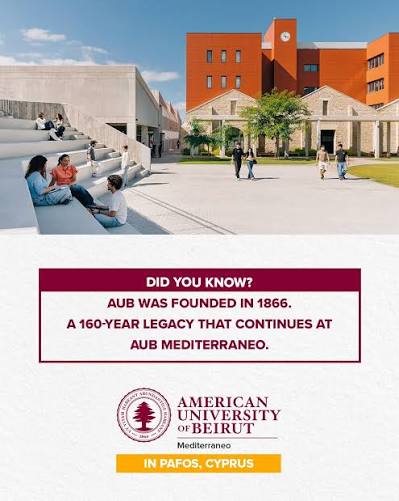
Short Answer
In the spring of 1866, the Ottoman port city of Beirut was emerging from a decade of upheaval. The sectarian massacres of 1860 had devastated the nearby mountains, and the American Protestant missionaries who had worked in Syria for more than thirty years felt a new urgency. They had already established thirty-three schools, a press, and a learned society, but they now believed the region needed a higher institution to train “honest, intelligent, and courageous men” who could lead their country. On December 3, 1866, the Syrian Protestant College (SPC) opened its doors to sixteen students in a rented building overlooking the Mediterranean. The founder, Dr. Daniel Bliss, a Vermont-born missionary, had spent four years raising funds in the United States and England. The college was chartered by the State of New York on April 24, 1863, but its first class met only after a global fundraising campaign and the arrival of Bliss in Beirut with a small library and a handful of faculty. To the missionaries, this was a providential undertaking; to the Ottoman authorities, it was a novel experiment in foreign education; and to the sixteen young men who enrolled, it was the beginning of a new chapter in their lives.
What Happened?
The founding of the Syrian Protestant College was the culmination of a decade of planning and fundraising. In 1862, the American Board of Commissioners for Foreign Missions (ABCFM) asked Dr. Daniel Bliss, a missionary and educator, to withdraw from evangelistic work to found a college of higher learning that would include medical training. The board insisted that the college have an American educational character, be administered independently from the mission, and be maintained by its own funds. Bliss travelled to the United States in the summer of 1862 to solicit funds. By August 1864 he had raised $100,000, but because of inflation during the Civil War, it was decided to raise a sterling fund in England to start operations, leaving the dollar fund to appreciate. After collecting $4,000 in England, he returned to Beirut in March 1866.
While Bliss was raising money, the State of New York granted a charter on April 24, 1863, under the name of the Syrian Protestant College. The cornerstone was laid in 1865, and the college opened its first class of sixteen students on December 3, 1866. The first faculty included Bliss, Dr. Cornelius Van Dyck, David Stuart Dodge, Edwin Lewis, Harvey Porter, Dr. George Edward Post, and Dr. John Wortabet, an Armenian from Aleppo who had earned his MD from the United States. Instruction was conducted in Arabic and English, and the curriculum included mathematics, science, languages, and religious studies. The college was explicitly Protestant in its founding, but it admitted students of all faiths and nationalities, and it was designed to be a centre of liberal learning.
How It Was Seen at the Time
Contemporaries understood the founding of the SPC as a direct response to the social and political needs of the region. In a statement recorded by the founders, the missionaries wrote: “That training must be such as to provide honest, intelligent, and courageous men, liberal in point of view, devoted to the true interest of the country.” This sentiment reflected a belief that the educated leadership of the region was essential for its future. The missionary press in the United States reported on the venture with optimism, seeing it as a way to spread Protestant values and Western learning. In Beirut, the local community viewed the college with a mixture of curiosity and suspicion. Some Ottoman officials feared it might challenge traditional authority, while others saw it as an opportunity for young men to acquire useful skills. The first students, many of whom came from the Christian and Druze communities, were described as eager and disciplined. The college’s early years were marked by a strong sense of purpose, as Bliss and his colleagues worked to build a curriculum that balanced religious instruction with scientific and humanistic studies.
Historical Snapshot
| Aspect | Detail |
|---|---|
| Date | Charter granted April 24, 1863; first class opened December 3, 1866 |
| Place | Beirut, Ottoman Syria (now Lebanon) |
| People | Daniel Bliss, Cornelius Van Dyck, David Stuart Dodge, Edward Lewis, Harvey Porter, George Edward Post, John Wortabet, and 16 first students |
| What Happened | American missionaries founded the Syrian Protestant College, a higher education institution with medical training, after a four-year fundraising campaign. |
| Why It Mattered | The college provided the first Western-style higher education in the region, trained future leaders, and later evolved into the American University of Beirut. |
What People Knew at the Time
| What People Knew Then | What We Know Now |
|---|---|
| That the college was a Protestant missionary institution, with a religious and moral mission. | That the college was also a modern educational experiment that admitted students of all faiths and emphasized liberal arts and sciences. |
| That the college was funded by American and British donors, and that it was independent from the mission. | That the college’s financial independence allowed it to grow and eventually become a major university with a global reputation. |
| That the college would train “leaders” for Syria and the Ottoman Empire. | That the college would indeed produce many political, intellectual, and cultural leaders across the Middle East. |
| That the college was a “Syrian” institution, but with an American character. | That the institution would be renamed the American University of Beirut in 1920, reflecting its broader regional role. |
Eyewitness Accounts
The founders themselves left a record of their vision. In an early statement, they wrote:
“That training must be such as to provide honest, intelligent, and courageous men, liberal in point of view, devoted to the true interest of the country.”
Daniel Bliss, in his memoirs and letters, described the opening day: “Sixteen young men presented themselves for entrance. They were of different nationalities and creeds—Christians, Muslims, and Druze—all eager for knowledge.” He also recalled the challenge of building a college in a city where “the name of Protestant was often a badge of suspicion.” The faculty member Cornelius Van Dyck, a physician and linguist, wrote about the medical department, which he hoped would “bring the blessings of modern science to the people of this land.” These accounts give us a vivid picture of the hopes and anxieties of the founders.
Timeline
- 1862 – The American Board of Commissioners for Foreign Missions asks Daniel Bliss to found a college.
- April 24, 1863 – The State of New York grants a charter to the Syrian Protestant College.
- 1864 – Bliss raises $100,000 in the United States; later raises £4,000 in England.
- March 1865 – Bliss returns to Beirut with funds and plans.
- 1865 – The cornerstone of the first building is laid.
- December 3, 1866 – The college opens with 16 students.
- 1870s – The college adds medical and pharmacy programs.
- 1920 – The college is renamed the American University of Beirut.
Aftermath
In the years following the opening, the college grew rapidly. The first class graduated in 1871, and the curriculum expanded to include medicine, pharmacy, and engineering. The college became a centre for intellectual life in the Ottoman Empire, attracting students from across the region. Its independence from missionary control allowed it to develop a strong liberal arts tradition, and it gradually shifted from a purely religious identity to a more secular one. The American University of Beirut, as it was renamed in 1920, continues to operate today, with over 9,000 students and a global reputation. The original founding vision—to train honest, intelligent, and courageous men and women—remains at the heart of its mission.
How Historians See It Today
Contemporary observers saw the founding of the SPC as a religious and educational mission, but modern historians view it as a complex product of the nineteenth-century missionary movement and the development of modern education in the Middle East. Scholars emphasise the college’s role in creating a new class of educated leaders, its early adoption of Arabic as a language of instruction, and its later transformation into a secular university. The founders’ original vision of “training leaders” is now seen as a precursor to the modern educational systems in Lebanon and the wider region. Historians also point out that the college, despite its name, was not a purely Protestant institution; it admitted students of all faiths and eventually became a symbol of pluralism. The history of AUB is thus a story of how a small missionary school evolved into a major university, reflecting the changing roles of education and religion in the Middle East.
In conclusion, the founding of the Syrian Protestant College in 1866 was a landmark event that combined missionary zeal with a genuine commitment to education. The primary sources—letters, charters, and early reports—reveal a group of dedicated individuals who believed that educated leadership could transform a region. Their legacy is the American University of Beirut, an institution that has educated generations of Middle East leaders and continues to embody the founders’ vision of “honest, intelligent, and courageous men” (and now women) devoted to the true interest of their country.
FAQ
When was the American University of Beirut founded?
It was founded as the Syrian Protestant College on December 3, 1866, after receiving a charter from the State of New York on April 24, 1863. It was renamed the American University of Beirut in 1920.
Who was Daniel Bliss?
Daniel Bliss (1823-1916) was an American missionary and educator who founded the Syrian Protestant College (later AUB). He raised funds in the United States and England and served as its first president.














Leave a Reply