
Short Answer
A historical photograph can feel unusually convincing.
A letter tells us what someone wrote.
A diary tells us what someone remembered or believed.
A newspaper tells us what was reported.
But a photograph appears to show us the past directly.
There are the people.
There is the street.
There are the buildings, clothes, vehicles, signs, weapons, machines, or ruins.
For a moment, it can feel as if no interpretation is necessary.
Yet historians know that a photograph is not simply a transparent window onto history.
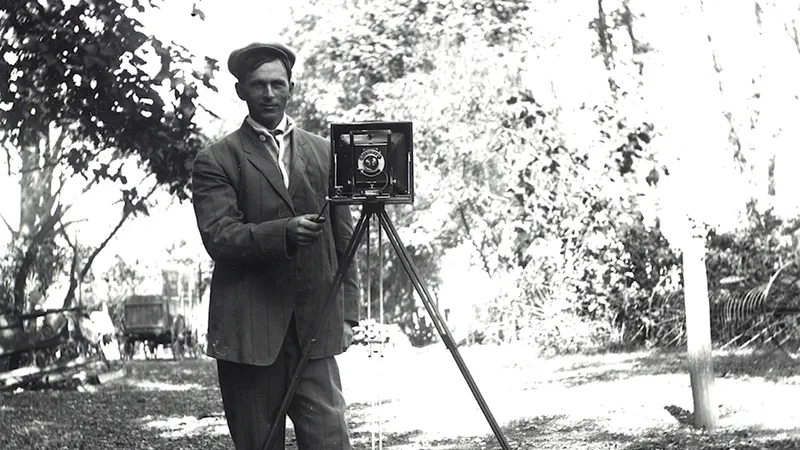
Someone stood somewhere.
Someone chose when to press the shutter.
Someone decided what belonged inside the frame.
The technology determined what could be photographed.
A person or institution may have commissioned the picture for a particular purpose.
A caption may have been written by the photographer—or decades later by someone who never witnessed the scene.
The photograph may then have been selected, cropped, reproduced, published, filed, digitized, and reused in settings the photographer never imagined.
That does not make photographs unreliable.
It makes them historical evidence that must be interpreted.
The U.S. National Archives treats photographs as primary sources requiring the same systematic analysis applied to documents, maps, artifacts, films, and other records. Its recommended process moves from identifying the source and observing its parts to interpreting it and finally using it alongside other historical evidence.
The Library of Congress likewise encourages researchers analyzing photographs to move among observation, reflection, questioning, and further investigation rather than accepting an image’s apparent meaning immediately.
So the historian’s first question should not be:
What does this photograph prove?
It should be:
What exactly am I looking at, who created it, why does it exist, and what evidence can it reasonably provide?
Are Photographs Primary Sources?
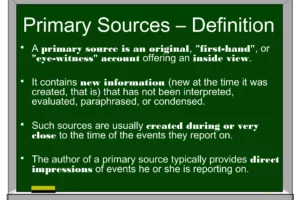
Photographs often function as primary sources when they were created during or directly connected to the people, places, events, or conditions being investigated.
A photograph taken in a factory in 1908 might provide primary evidence about:
- workers,
- machinery,
- clothing,
- workplace organization,
- architecture,
- industrial conditions.
A street photograph might preserve:
- shop signs,
- transportation,
- advertisements,
- buildings,
- road surfaces,
- public behavior.
A wartime photograph might record:
- military equipment,
- uniforms,
- fortifications,
- physical destruction,
- prisoners,
- civilian conditions.
The National Archives maintains dedicated photograph-analysis tools precisely because photographs can be used as historical evidence, while the Library of Congress’s Prints and Photographs collections contain extensive visual records of people, places, buildings, events, and everyday life.
But being a primary source does not mean the photograph automatically explains itself.
A Photograph Records Something That Was in Front of a Camera
At the most basic level, a photograph records visual information from a particular place and moment.
That makes photographs extraordinarily powerful.
Suppose you find an image of a city intersection in 1910.
You may be able to observe:
- the width of the road,
- architectural styles,
- businesses operating there,
- transportation,
- utility poles,
- street signs,
- advertisements,
- clothing,
- patterns of pedestrian movement.
Some of these details may not have been the photographer’s intended subject at all.
Perhaps the photographer wanted to document a parade.
A historian studying urban transportation might instead concentrate on the streetcars visible behind the parade.
A historian studying advertising might notice storefront signs.
A historian of clothing might focus on the crowd.
Photographs frequently preserve evidence that their creators never consciously intended future historians to study.
But a Photograph Records Only One View
Every photograph has boundaries.
Look at an historical image and ask:
What is outside the frame?
A photograph showing a peaceful group of demonstrators does not prove the entire demonstration was peaceful.
A photograph showing damaged buildings does not tell us automatically who damaged them.
A photograph showing smiling factory workers does not establish that working conditions were good.
The Library of Congress explicitly encourages photograph researchers to ask not only what can be learned from an image but also what is missing from it.
The frame is therefore part of the evidence.
It tells us what the camera included.
It also reminds us that the photograph excluded much more.
The Camera Has a Position
Imagine a political demonstration.
One photographer stands behind the speakers and points the camera toward a huge crowd.
The resulting image makes the gathering appear enormous.
Another photographer stands several blocks away and photographs empty streets beyond the gathering.
That image may make the same demonstration look much smaller.
Neither photograph must be fake.
The difference may result entirely from position and framing.
When historians examine photographs, they therefore ask:
- Where was the photographer standing?
- How close was the camera?
- What direction was it facing?
- What appears in the foreground?
- What occupies the center?
- What has been pushed to the edge?
- What might exist immediately beyond the frame?
Visual perspective is not merely an aesthetic issue.
It affects historical interpretation.
Start With Observation, Not Interpretation
A useful way to prevent premature conclusions is to separate what you see from what you think it means.
The Library of Congress begins photograph analysis with observation: identify people, objects, arrangements, setting, words, and other visible details before developing hypotheses about the image.
Suppose you examine a photograph.
Observation
Twenty people are standing near a damaged building.
Several are wearing uniforms.
A vehicle is visible at the right edge.
Smoke appears in the background.
Interpretation
The photograph shows soldiers immediately after an enemy bombing.
The interpretation might be correct.
But the photograph alone may not establish:
- who the uniformed people are,
- what damaged the building,
- when the damage occurred,
- whether the smoke is connected to the damage.
Separating observation from inference makes the reasoning visible.
A Simple Rule: Describe Before You Explain
Before checking the caption, try describing the image in neutral language.
Instead of:
Angry workers confront police.
write:
A group of approximately thirty people faces several uniformed officers.
Instead of:
A starving family waits for food.
write:
Two adults and three children stand near a line of people carrying containers.
You can interpret later.
This discipline prevents captions, assumptions, or prior knowledge from controlling what you notice.
Step 1: Identify the Photograph
Before drawing conclusions, determine what kind of image you have.
The National Archives suggests identifying whether an image is a portrait, landscape, aerial photograph, event photograph, family picture, posed scene, candid image, documentary photograph, or another type before interpreting it further.
Ask:
Is this an original print?
A negative?
A scan?
A reproduction from a newspaper?
A photograph of another artwork?
A cropped version?
The distinction can matter.
A low-resolution copy posted online may omit information visible in the original.
A reproduction in a newspaper may have been cropped differently.
A photograph of a painting provides evidence about that painting but is not the same thing as a photograph of the historical event represented by it.
Step 2: Identify the Photographer
Whenever possible, determine who created the image.
Knowing the photographer can reveal:
- professional role,
- employer,
- political interests,
- access,
- photographic practices,
- intended audience.
Was the photographer:
- a newspaper photographer,
- government employee,
- military photographer,
- commercial studio operator,
- reform activist,
- tourist,
- family member?
The National Archives’ photograph-analysis framework explicitly asks researchers to identify who took the photograph and why it may have been created.
Authorship matters because photographs are made by people.
Step 3: Ask Why the Photograph Was Taken
Photographs exist for reasons.
A photograph may have been created to:
- document,
- advertise,
- persuade,
- commemorate,
- investigate,
- identify,
- entertain,
- record family life,
- demonstrate government activity,
- support reform.
The Library of Congress’s photograph-analysis guide asks researchers to consider both why an image was made and who its intended audience may have been.
Purpose does not automatically make a photograph unreliable.
It tells you how to use the photograph.
Lewis Hine: Photographs as Evidence and Argument
Lewis Hine provides an especially useful example.
In the early twentieth century, Hine worked as an investigative photographer for the National Child Labor Committee and photographed children working in mines, mills, factories, canneries, streets, and other workplaces. The National Archives notes that Hine carefully documented his photographs with factual information and sometimes had to enter workplaces covertly because factory managers did not want the conditions photographed.
But Hine was not pretending his camera had no purpose.
His photographs formed part of a reform campaign against child labor.
The National Archives records that Hine himself referred to his approach as “photo-interpretation,” recognizing that photography involved the photographer’s own impressions even while he insisted on accurate supporting data and rejected fakery.
This is an excellent historical lesson.
A photograph can be simultaneously:
documentary evidence
and
an attempt to persuade an audience.
Those functions do not cancel each other out.
The historian simply needs to recognize both.
Step 4: Date the Image
A photograph without a reliable date can easily be misinterpreted.
Ask:
- Is the date written on the image?
- Does the archive supply it?
- Is it exact or approximate?
- Was it added later?
If the date is uncertain, clues within the photograph may help:
- clothing,
- vehicles,
- architecture,
- signs,
- military uniforms,
- technology,
- known buildings.
But visual dating should normally remain tentative until corroborated.
A caption that says circa 1910 should not silently become 1910 in your article.
Historical precision should match the evidence.
Step 5: Determine the Location
The National Archives recommends asking where a photograph was made and identifying visible evidence that supports the location.
Useful clues include:
- building names,
- street signs,
- geographic features,
- advertisements,
- uniforms,
- transportation systems.
Then compare with:
- historical maps,
- city directories,
- newspapers,
- architectural records,
- other photographs.
An image captioned simply Main Street is not useful until you determine which Main Street.
Technology Shapes What We Can See
Historical photography was limited by the technology available at the time.
A striking example comes from Civil War photography.
The National Archives notes that wet-plate collodion negatives required exposure times of roughly five to twenty seconds. As a result, surviving Civil War photographs do not provide photographic action scenes of battles themselves; photographers instead documented people, military activities, locations, equipment, and battlefields or aftermaths.
This matters because absence from photographs does not necessarily mean absence from history.
Sometimes the technology simply could not record the event in the way a modern camera could.
Photographic evidence must therefore be interpreted within the capabilities of its medium.
Posed Does Not Mean Useless
People sometimes dismiss a photograph when they discover it was posed.
That is usually a mistake.
Portraits are posed.
Military units often assembled for photographs.
Families arranged themselves deliberately.
Workers might be asked to stand still.
A posed photograph may not show spontaneous behavior.
But it can still reveal:
- clothing,
- identity,
- hierarchy,
- equipment,
- surroundings,
- how people wanted to present themselves.
In fact, posing can itself become evidence.
Who stands at the center?
Who sits?
Who stands?
Which objects are deliberately included?
A formal portrait may tell us less about an ordinary afternoon and more about how people wanted themselves remembered.
That can be historically valuable.
Ask Who Was Supposed to See the Photograph
Audience changes meaning.
A photograph made for a family album differs from an image created for a government report.
A commercial advertisement differs from a police photograph.
A newspaper image differs from a tourist postcard.
The Library of Congress explicitly places intended audience among the questions researchers should ask when interpreting photographs and prints.
Ask:
Was this photograph intended to remain private?
Was it distributed widely?
Was it used in an exhibition?
Was it published in a newspaper?
Was it produced to support an institution’s goals?
The answer can help explain why the photograph looks the way it does.
Captions Are Evidence Too
Many historical photographs survive with captions.
A caption can identify:
- people,
- place,
- date,
- event,
- photographer,
- circumstances.
The National Archives emphasizes that captions can preserve information impossible to recover simply by looking at an image.
But captions should not automatically be treated as infallible.
The Library of Congress advises that photographs and captions should both be evaluated like other historical evidence rather than simply accepted at face value.
The critical question is:
Who wrote the caption, and when?
Original Captions and Later Captions Are Different
Suppose a photograph has this caption:
Refugees arriving at station, March 1945.
Who wrote it?
Possibilities include:
- the photographer in 1945,
- a government employee in 1945,
- a newspaper editor,
- an archivist decades later,
- a family member relying on memory.
These are different evidentiary situations.
The National Archives sometimes explicitly distinguishes original historical captions from later descriptive information added by archivists or compilers. Its American West and World War II photograph collections, for example, identify original captions separately from later supplied metadata.
Never assume all words displayed beside a historical photograph were written when the photograph was taken.
Preserve Historical Captions—But Analyze Them
Historical captions sometimes contain outdated, prejudicial, propagandistic, or inaccurate terminology.
The Library of Congress preserves original captions in visual collections partly because they can themselves provide historical context about how an image was created or described.
That makes captions a second layer of primary evidence.
You may analyze:
the photograph
and
the language originally attached to the photograph.
Sometimes the tension between them is especially revealing.
A Photograph Cannot Tell You Everything About Its Subjects
Imagine a photograph of ten workers standing outside a mine.
What can you see?
Perhaps:
- clothing,
- approximate ages,
- tools,
- architecture.
What can you not necessarily see?
- wages,
- hours,
- employment conditions,
- family circumstances,
- political beliefs,
- health.
A photograph may generate questions rather than answer them.
The Library of Congress explicitly treats questioning and further investigation as part of visual-source analysis, asking researchers to identify what else they need to know and how additional evidence might answer those questions.
This is a useful reminder:
Photographs become stronger evidence when combined with other records.
Corroborate What You See
Suppose a photograph appears to show children working inside a textile mill.
Do not stop there.
Look for:
- photographer’s notes,
- captions,
- payroll records,
- factory inspections,
- census records,
- newspapers,
- company records,
- other photographs.
Hine’s child-labor photographs are especially powerful because many were accompanied by detailed captions recording names, ages, addresses, work tasks, hours, or wages. The Library of Congress notes that these captions, together with the photographs, provide evidence about working-class families and child labor.
The visual image provides one type of evidence.
The metadata and documentary record provide others.
Together they create a stronger historical case.
Photographs Can Reveal Details Written Sources Ignore
Written records tend to record what writers considered worth mentioning.
Photographs may preserve visual details unintentionally.
A government photographer documenting a new highway may also capture:
- roadside businesses,
- houses,
- signs,
- pedestrians,
- landscapes.
A family photograph may preserve:
- household furniture,
- toys,
- clothing,
- interior design.
A military photograph may preserve:
- improvised equipment,
- camp arrangements,
- interactions among soldiers.
This is why historians frequently zoom into the edges and backgrounds of photographs.
The supposed subject may not be the only evidence.
Use the Whole Frame
When examining a historical photograph, divide it mentally into sections:
Foreground
What is closest to the camera?
Center
What appears to be the intended subject?
Background
What else is visible?
Edges
What has almost been cut out?
The Library of Congress specifically recommends examining how people and objects are arranged and identifying details across the entire image before forming an interpretation.
Small background details can sometimes provide the clue that dates or locates an otherwise mysterious image.
Cropping Changes Meaning
Imagine an original photograph showing a speaker surrounded by fifty people.
A newspaper crops the picture tightly so only the speaker and three supporters remain.
The historical event has not changed.
The visual message has.
Whenever possible, determine whether you are seeing:
the complete original
or
a published crop.
Comparing different versions can reveal how later editors chose to present the image.
The crop itself may become historical evidence about publication and visual rhetoric.
Selection Matters Too
Suppose a photographer takes 200 photographs during an event.
Only six appear in a newspaper.
Those six may not represent the entire photographic record.
Editors chose them.
Selection introduces another layer of interpretation.
Ask:
Which images were shown?
Which were not?
Why might those six have been considered useful or compelling?
The same principle applies to archives and digital collections.
A digitized selection is not necessarily the entire surviving collection.
Archives Give Photographs Meaning
A photograph without context can become mysterious very quickly.
Who are these people?
Where are they?
When was this taken?
Why?
Smithsonian Institution Archives describes photograph-archival work as not merely preserving physical or digital images but also preserving contextual information so the images remain understandable and useful over time.
That context may come from:
- photographer’s logbooks,
- album arrangement,
- collection descriptions,
- folder labels,
- accession information,
- related correspondence.
Remove an image from that context and some of its meaning may disappear.
Never Throw Away the Back of the Photograph
For family and local-history photographs, information surrounding the image can be as important as the image itself.
Historical photographs may contain:
- names written on the reverse,
- dates,
- studio stamps,
- addresses,
- album labels,
- handwritten annotations.
Smithsonian conservation guidance recommends recording inscriptions, names, dates, places, and album-page context before separating photographs from albums because that surrounding information may be lost otherwise.
For the historian, the object is more than the visible picture.
A Photograph Can Document Representation, Not Just Reality
Suppose you have a government photograph intended to demonstrate the success of a housing program.
The image shows:
- clean streets,
- modern buildings,
- smiling residents.
The photograph might provide evidence of what the housing development looked like.
But it may also reveal something about how the government wanted the program to be seen.
Those are different questions.
Similarly, advertising photography can reveal:
- ideals of beauty,
- family expectations,
- consumer aspirations,
- racial representation,
- gender roles.
A photograph’s persuasive purpose is not an obstacle to historical research.
It may be the reason the photograph matters.
Photographs Are Especially Powerful for Studying Change Over Time
A single photograph is a moment.
A series can reveal transformation.
Imagine photographs of the same street from:
1890
1920
1950
1980
2020
Comparing them could reveal changes in:
- architecture,
- transportation,
- commercial activity,
- population,
- signage,
- land use.
The National Archives’ collections of American city photographs are explicitly organized to document urban development, transportation, street life, and changing city environments across time.
Repeated photography can therefore transform individual images into evidence of long-term historical change.
Photographic Absence Can Also Matter
Archives do not photograph everyone equally.
The National Archives notes, for example, that its Civil War holdings contain relatively few portraits of lower-ranking individuals and disproportionately depict high-ranking military figures.
This is a broader archival lesson.
If a collection contains hundreds of photographs of political leaders but few photographs of ordinary workers, that imbalance may reflect:
- who had access to photographers,
- what institutions considered worth documenting,
- what survived,
- what archives later collected.
Do not assume the photographic record is a representative sample of the past.
It is a surviving sample shaped by historical power, technology, institutions, and preservation.
Digital Scans Are Not the Same as Original Objects
Digital access has transformed photographic research.
The Library of Congress Prints and Photographs Online Catalog provides catalog records and digital images representing extensive portions of its visual collections.
A digital scan can allow researchers to:
- enlarge details,
- compare images,
- work remotely.
But digitization may separate the visible image from physical information present in the original object.
Whenever provenance matters, inspect:
- catalog metadata,
- collection notes,
- original dimensions,
- inscriptions,
- related items.
A JPEG by itself is often less informative than the archival record surrounding it.
Do Not Confuse High Resolution With Historical Certainty
Zooming into an image can reveal extraordinary detail.
But more pixels do not answer questions such as:
Who took this?
Why?
Is the caption correct?
Was it staged?
Technical image quality and evidentiary quality are different things.
A blurry photograph with excellent provenance may be more historically useful than a spectacular high-resolution image with no known date, photographer, or location.
Can Historical Photographs Be Manipulated?
Yes, photographs can be altered, staged, retouched, selectively cropped, or reproduced in misleading contexts.
But it is important not to jump from that fact to:
photographs cannot be trusted.
Instead ask:
What is the provenance?
Can I identify the original?
Does the archive describe alterations?
Do other versions exist?
What does independent evidence show?
Even an altered photograph can become primary evidence if the research question concerns propaganda, persuasion, censorship, or image manipulation.
The goal is not to divide photographs into perfectly objective versus useless.
It is to understand how each image was produced and used.
A Photograph’s Use Can Change Over Time
An image taken for one purpose may later acquire another meaning.
A family snapshot may become museum evidence.
A police photograph may become a symbol of political repression.
A documentary image may become propaganda.
A newspaper photograph may later appear in textbooks.
This creates a useful distinction:
Creation context
Why was the photograph originally made?
Circulation context
Where and how was it originally distributed?
Later-use context
How was it reused afterward?
Historians can study all three.
The later history of an image can be as revealing as the moment when the shutter clicked.
Read Photographs Beside Written Sources
Visual and written evidence often become strongest when combined.
Suppose a company report says:
Working conditions were clean and well organized.
A photograph shows a crowded workshop.
A worker’s letter complains about ventilation.
An inspection report records safety violations.
The photograph should not simply “defeat” the written document.
Instead, compare the sources.
Why do they differ?
Did they describe different parts of the factory?
Was the company report promotional?
When was each source created?
History emerges from the relationship among evidence.
A Practical Method for Analyzing a Historical Photograph
Use the following workflow whenever you encounter an important historical image.
1. Meet the Photograph
Identify:
- format,
- photographer,
- collection,
- date,
- location,
- caption.
The National Archives begins photograph analysis with this basic orientation before interpretation.
2. Observe
Write down only what you can actually see.
List:
people
objects
activities
text
setting
background details
The Library of Congress places close observation at the start of visual primary-source analysis.
3. Examine Composition
Ask:
- What is centered?
- What is closest?
- What is distant?
- What is partly outside the frame?
- Does the scene appear posed or candid?
4. Identify Purpose
Ask:
Why was this photograph made?
Was it:
- documentary,
- commercial,
- governmental,
- personal,
- journalistic,
- reform-oriented?
5. Identify Audience
Who was meant to see it?
6. Analyze the Caption Separately
Ask:
Who wrote the caption?
When?
Is it original or archival?
Does the picture itself support the caption?
Both the Library of Congress and National Archives preserve caption provenance because the wording attached to images can be historically significant in its own right.
7. Reconstruct Context
What was happening when the image was made?
What photographic technology was available?
What institutional or political circumstances mattered?
8. Identify What Is Missing
What lies outside the frame?
Which perspectives are absent?
The Library of Congress explicitly recommends asking what is missing from an image.
9. Corroborate
Look for:
- other photographs,
- newspapers,
- letters,
- diaries,
- maps,
- government records,
- eyewitness testimony.
The National Archives recommends moving beyond photograph analysis to additional sources needed to understand the event or subject.
10. State the Claim Carefully
Finally ask:
What can this photograph actually support?
That is where an image becomes historical evidence.
Example: A Photograph of a Crowd
Suppose you find a photograph captioned:
Thousands Gather to Support Mayor, 1932
Do not immediately write:
Thousands of residents supported the mayor.
Instead investigate.
Observation
The photograph shows a dense crowd.
Questions
How large is the visible area?
Can the total crowd actually be counted?
Who wrote the caption?
Was this a campaign photograph?
Were opponents present elsewhere?
Corroboration
Check:
- newspapers,
- police estimates,
- campaign records,
- other photographs.
Defensible conclusion
You may eventually write:
A large crowd attended the mayor’s rally, although the photograph alone cannot establish that the gathering represented majority public opinion.
The photograph supports something.
Just not everything.
Example: A Factory Photograph
Imagine a photograph showing children beside machines.
A simplistic interpretation would be:
This proves children were exploited in factories.
A historian would make the chain of evidence more precise.
Who photographed them?
Where?
When?
Were they employees?
What were their ages?
What work were they doing?
Hine’s National Child Labor Committee photographs are particularly valuable because their accompanying information frequently documents names, ages, tasks, hours, wages, and other contextual details.
Now the photograph can be connected with:
- employment records,
- legislation,
- census data,
- reform investigations.
The resulting historical claim is much stronger.
Example: A Wartime Photograph
Suppose a photograph shows several destroyed buildings.
What can you safely conclude?
Buildings were damaged before the image was taken.
Can you conclude:
Enemy bombing destroyed these buildings yesterday?
Not from the image alone.
You need evidence about:
- location,
- date,
- cause,
- photographer,
- caption.
The image documents physical conditions.
The explanation of those conditions requires corroboration.
Common Mistakes When Using Historical Photographs
Mistake 1: Assuming Photographs Are Neutral
Every photograph has a creator, position, frame, purpose, and technological context.
Mistake 2: Treating the Caption as Fact
Verify who wrote it and when.
The Library of Congress specifically advises researchers to evaluate photographs and captions rather than accepting either automatically.
Mistake 3: Ignoring the Background
Important historical evidence may appear outside the obvious subject.
Mistake 4: Assuming Posed Means Fake
A posed photograph can still provide excellent evidence about appearance, social relationships, and self-presentation.
Mistake 5: Generalizing From One Image
One photograph shows one selected moment.
Do not use it automatically to represent an entire community or period.
Mistake 6: Ignoring Technology
What photographers could record changed dramatically across periods. Civil War photography, for example, could not capture normal battlefield action because available exposure times were too long.
Mistake 7: Separating the Image From Its Archive
Collection information, captions, logbooks, and related records may be essential for understanding what the photograph shows. Smithsonian archivists specifically emphasize preserving this contextual information alongside images.
Mistake 8: Using a Photograph Without Corroboration
Compare important visual claims with independent evidence.
A Historian’s Photograph Checklist
Before using a photograph in historical research, ask:
Source
Who created it?
When?
Where?
Format
Original, print, negative, scan, reproduction, or crop?
Observation
What can I actually see?
Composition
What is emphasized?
What is excluded?
Purpose
Why was it taken?
Audience
Who was supposed to see it?
Caption
Who wrote the caption?
Is it contemporary?
Context
What was happening when it was taken?
Technology
What could the photographic process realistically capture?
Corroboration
What other photographs or documents support the interpretation?
Evidence
Finally:
What historical claim can this photograph reasonably support?
This closely follows the analytical logic used by both the Library of Congress and National Archives: observe carefully, test interpretations, ask questions, and move toward further investigation before using the image as historical evidence.
Frequently Asked Questions
Are photographs primary sources?
Yes, photographs often function as primary sources when they are directly connected to the people, places, conditions, or events being studied. The National Archives treats photographs as a distinct category of primary-source evidence requiring systematic document analysis.
Why are photographs useful to historians?
Photographs can preserve evidence about people, architecture, objects, clothing, technology, landscapes, work, social life, and events. They may also preserve visual details that written sources never recorded.
Are historical photographs always reliable?
No. Their evidentiary value depends on photographer, date, location, purpose, framing, caption, provenance, and corroborating evidence. A real photograph can still be misleading when stripped of context.
Can a posed photograph be a primary source?
Yes. Posing affects what conclusions can be drawn about spontaneous behavior, but the image can remain valuable evidence about people, objects, appearance, hierarchy, and self-presentation.
Can photographs be biased?
Photographs reflect choices about what to photograph, where to stand, when to take the picture, and how to frame the subject. The Library of Congress consequently asks researchers to investigate why an image was made, who its audience was, and what is missing from it.
Why are captions important?
Captions can provide names, dates, places, and circumstances that may not be visible in the photograph itself. The National Archives notes that captions can sometimes preserve information unavailable through the image alone.
Can captions be wrong?
Yes. Researchers should determine whether a caption was written by the photographer, someone else at the time, or a later archivist or compiler. Archives sometimes distinguish original captions explicitly from later descriptive information.
Should historians analyze what is outside the frame?
They should at least recognize that the frame is selective. The Library of Congress specifically encourages researchers to ask what is missing from an image as part of photograph analysis.
Can a manipulated photograph still be a historical source?
Yes. If alteration can be established, the image may become especially valuable for studying propaganda, censorship, persuasion, or visual culture. What changes is the historical question being asked.
Is a digital scan still a primary source?
A faithful digital reproduction can provide access to primary photographic evidence, but researchers should consult metadata and archival context because the digital file may not preserve everything known about the physical object.
How should I analyze a historical photograph?
Begin by observing rather than interpreting. Identify the photographer, date, place, people, objects, setting, caption, purpose, and audience. Then reconstruct context, identify what is missing, and compare the photograph with other evidence. This broadly reflects the methods recommended by the Library of Congress and National Archives.
Photographs Show the Past—but Never All of It
Photographs possess an unusual historical power.
A person who died a century ago can look directly into the camera.
A destroyed street can appear before rebuilding.
A vanished building can stand again.
A worker can remain frozen beside a machine that no longer exists.
These encounters create genuine proximity to earlier lives.
But proximity should not be confused with completeness.
The photograph captures:
this place
from
this position
at
this moment
for
some purpose.
Everything else remains outside the frame.
That limitation does not weaken photographic history.
It tells us how photographic evidence should be used.
Final Takeaway: Look at the Photograph, Then Look Beyond It
A photograph becomes historical evidence when we stop treating it merely as an illustration.
Do not use an image simply because it makes an article look historical.
Interrogate it.
Ask:
Who made this photograph?
When?
Where?
Why?
Who was supposed to see it?
What can I actually observe?
What am I merely inferring?
Was the scene posed?
What does the caption say—and who wrote it?
What is outside the frame?
What can other evidence confirm?
The Library of Congress’s visual-analysis framework captures the method well: observe, reflect, question, and investigate further.
The National Archives makes the next step equally important: after understanding the photograph itself, use it alongside other historical evidence rather than stopping with the image.
A photograph does not simply show us what history looked like.
It can also show us:
what someone considered worth photographing,
how people presented themselves,
what institutions wanted documented,
what reformers wanted audiences to notice,
what technology allowed cameras to record,
and what later archivists and publishers chose to preserve and explain.
That is when an old picture becomes something much more powerful than an illustration.
It becomes evidence.
And like every good primary source, its meaning emerges not only from what we see, but from understanding who made us able to see it that way.



Leave a Reply