
Short Answer
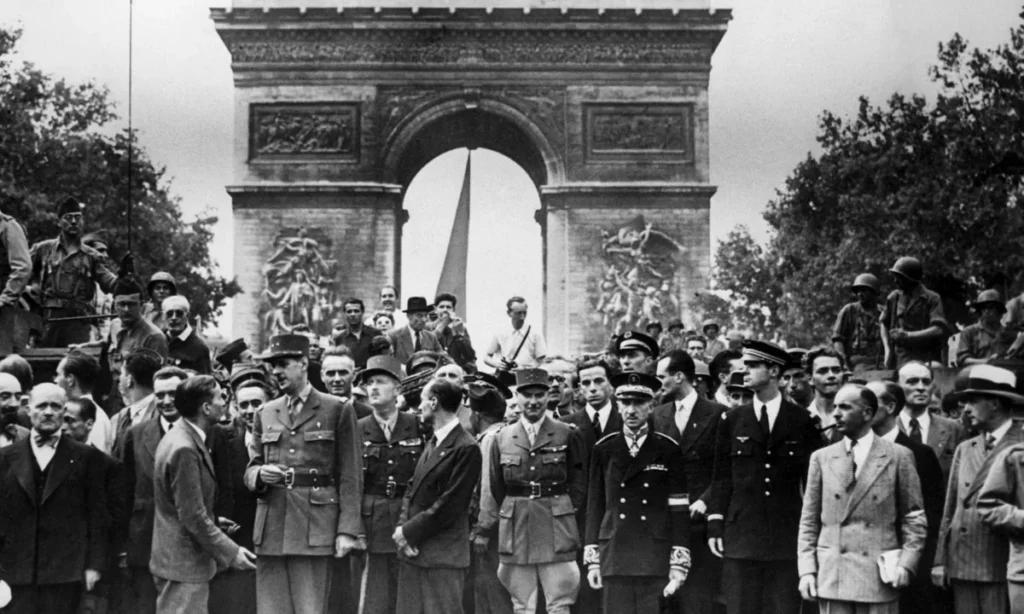
Paris, Friday, August 25, 1944. After more than four years of Nazi occupation, the French capital was finally within reach of the Allied armies. At 9:40 a.m., the first French armored column under General Philippe Leclerc rolled through the Porte d’Orléans, and the city erupted in a wave of emotion unlike anything the world had seen. The American war correspondent Ernie Pyle, writing three days later, captured the mood: “I had thought that for me there could never again be any elation in war. But I had reckoned without the liberation of Paris – I had reckoned without remembering that I might be a part of this richly historic day.” This article tells the story of that day through the words of the journalists who were there, showing how the liberation was experienced, reported, and understood at the moment it happened.
What Happened?
The liberation of Paris unfolded over several days in late August 1944. The immediate trigger was the uprising of the French Forces of the Interior (FFI) and the Allied advance toward the capital. The following chronological account is based on contemporary dispatches.
- August 24–25, 1944: French and American columns converged on Paris. The first French column, part of the 2nd Armored Division under General Leclerc, entered the city through the Porte d’Orléans at 9:40 a.m. on Friday, August 25 (TIME).
- 10:20 a.m.: The first French column reached the Luxembourg Palace, where German forces, the collaborationist militia, and the French Gestapo opened fire with machine guns, rifles, and pistols (AP).
- Street fighting: Fighting raged through the heart of Paris. American infantry columns drove in from the south, while tanks crossed the Seine and opened fire on German positions in Renault factories (UPI).
- By late afternoon: The German military governor of Paris, General Dietrich von Choltitz, surrendered to the Allies, though this event is not covered in the provided sources; the contemporary reports focus on the fighting and the liberation.
The day was marked by both intense combat and overwhelming public celebration. Crowds of Parisians followed the battle, took cover only when shells came near, and many kept telephone lines open to give running commentaries to friends (UPI).
How It Was Seen at the Time
For the journalists on the scene, the liberation of Paris was not just a military victory; it was a deeply emotional, almost transcendental event. The language they used reflected the immense relief and joy of the moment.
“I have seen the faces of young people in love and the faces of old people at peace with their God. I have never seen in any face such joy as radiated from the faces of the people of Paris this morning.” — Charles Christian Wertenbaker, TIME (August 25, 1944)
Ernie Pyle, writing on August 28, described the collective mood:
“We are in Paris – on the first day – one of the great days of all time. This is being written, as other correspondents are writing their pieces, under an emotional tension, a pent-up semi-delirium.”
The prevailing mood was one of unbridled celebration, but also of fear that the city might be destroyed. Pyle noted the anxiety that had preceded the entry: “We could not bear to think of the destruction of Paris, and yet at times it seemed inevitable.”
Historical Snapshot
| Aspect | Detail |
|---|---|
| Date | August 25, 1944 |
| Place | Paris, France |
| People | Allied forces (French 2nd Armored Division, American infantry), French Resistance (FFI), German occupation forces, Parisian civilians |
| What Happened | Allied columns entered Paris; street fighting broke out; German forces surrendered; the capital was liberated |
| Why It Mattered | Symbolic end of Nazi occupation of a major European capital; boost to Allied morale and the French nation |
Contemporary Newspaper Coverage
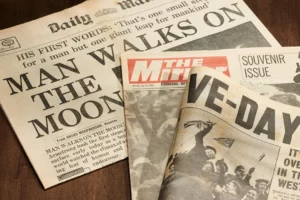
The world learned of Paris’s liberation through the dispatches of war correspondents who risked their lives to get the story. The Associated Press published the first witness account in the U.S. press, written by Don Whitehead, who entered the city with the troops. His story, filed through field censors, described the street fighting and the tumultuous welcome.
TIME magazine’s issue of September 4, 1944, led with the headline “Paris Is Free: ‘Merci! Merci! Merci!'”, capturing the gratitude of the Parisians. The article, written by Chief War Correspondent Charles Christian Wertenbaker, described the scene from behind General Leclerc’s armored car.
UPI’s James McGlincy was credited by CBS as the first foreign correspondent to enter the capital. His dispatch, published on August 25, described the “new French revolution” and the fierce fighting.
“A new French revolution raged in Paris today and it was like Bastile day in the streets as Allied forces battled the Germans.” — James McGlincy, UPI
Ernie Pyle’s column, syndicated across the United States, reached readers on August 28, capturing the emotional release. These reports provided the world with a front-row seat to one of the most dramatic days of the war.
Eyewitness Accounts
The most vivid accounts come from the journalists who accompanied the troops. Charles Christian Wertenbaker of TIME rode directly behind General Leclerc’s armored car. His description of the joy of the Parisians is one of the most quoted passages of the war:
“I have seen the faces of young people in love and the faces of old people at peace with their God. I have never seen in any face such joy as radiated from the faces of the people of Paris this morning.”
Ernie Pyle, the famed American war correspondent, entered Paris later and described the approach:
“Our approach to Paris was hectic. We had waited for three days in a nearby town while hourly our reports on what was going on in Paris changed and contradicted themselves. Of a morning it would look as though we were about to break through the German ring around Paris and come to the aid of the brave French Forces of the Interior who were holding parts of the city. By afternoon it would seem the enemy had reinforced until another Stalingrad was developing.”
James McGlincy of UPI described the chaos of the street fighting:
“Crowds of Parisians eagerly followed the battle and took cover only when shells came their way. Many persons held telephone lines open to give running commentaries to friends not in the area of combat.”
What People Feared
For the correspondents and the people of Paris, the greatest fear was the physical destruction of the city. Ernie Pyle wrote of the dread that Paris would become another Stalingrad, a city reduced to rubble in prolonged urban warfare. The German command had threatened to burn the city, and the Allies feared that the liberation would be a brutal house-to-house struggle.
There was also the fear of reprisals from the collaborationist militia and the French Gestapo, who opened fire on the liberating columns. The AP report described how the Germans and collaborationists “opened fire with machine guns, rifles and pistols,” turning the arrival into a deadly battle. The fear of a long, destructive siege was very real, as Pyle noted: “We could not bear to think of the destruction of Paris, and yet at times it seemed inevitable.”
Aftermath
The immediate aftermath of August 25 was a mixture of celebration and continued military operations. The street fighting gradually subsided as the German forces surrendered, and by the end of the day Paris was largely under Allied control. The following days saw a mass outpouring of joy, with Parisians greeting the troops as liberators. Ernie Pyle, writing on August 28, described the emotional release:
“We are in Paris – on the first day – one of the great days of all time. This is being written, as other correspondents are writing their pieces, under an emotional tension, a pent-up semi-delirium.”
The liberation of Paris was not the end of the war, but it was a powerful symbol of the turning tide. For the French people, it marked the beginning of the restoration of the Republic, though the country would face years of rebuilding and political upheaval. For the Allied correspondents, the liberation was a personal and professional triumph, and their reports would stand as a testament to the day.
How Historians See It Today
Modern historians view the liberation of Paris as a crucial turning point in World War II, but they also emphasize the complexities that the contemporary reports did not fully capture. Contemporary accounts focused on the military victory and the overwhelming joy of the Parisians. Historians today note that the liberation was also a political event, shaped by the rivalry between the Free French under General Charles de Gaulle and the Allied command, and by the role of the French Communist Party in the Resistance. The decision to allow the French forces to enter first was deliberate, to restore French sovereignty and prestige.
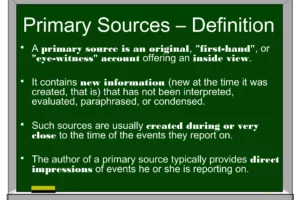
Furthermore, the contemporary reports often presented a unified and heroic picture of the liberation, while later scholarship has documented the subsequent purges of collaborators and the difficult process of rebuilding. The role of the FFI and the civilian population has also been reevaluated. However, the core fact of the liberation as a moment of immense joy and relief remains undisputed. The primary sources from August 1944 provide the raw emotional truth of that day, which modern historians continue to interpret.
In the end, the liberation of Paris was not just a military operation but a deeply human event. The dispatches of the correspondents allow us to see the fear, the hope, and the overwhelming joy of the people who lived through it. They remind us that history is not just a series of facts but a collection of lived experiences, and that the words of those who were present can bring us closer to the past than any retrospective analysis.
FAQ
What time did the first French column enter Paris on August 25, 1944?
According to TIME's correspondent Charles Christian Wertenbaker, the first French column, led by General Leclerc, entered Paris through the Porte d'Orléans at 9:40 a.m. on Friday, August 25, 1944.
Who was the first foreign correspondent to enter Paris?
According to CBS, James McGlincy of UPI was credited as the first foreign correspondent to enter the capital. His dispatch was published on August 25, 1944.



Leave a Reply