
Short Answer
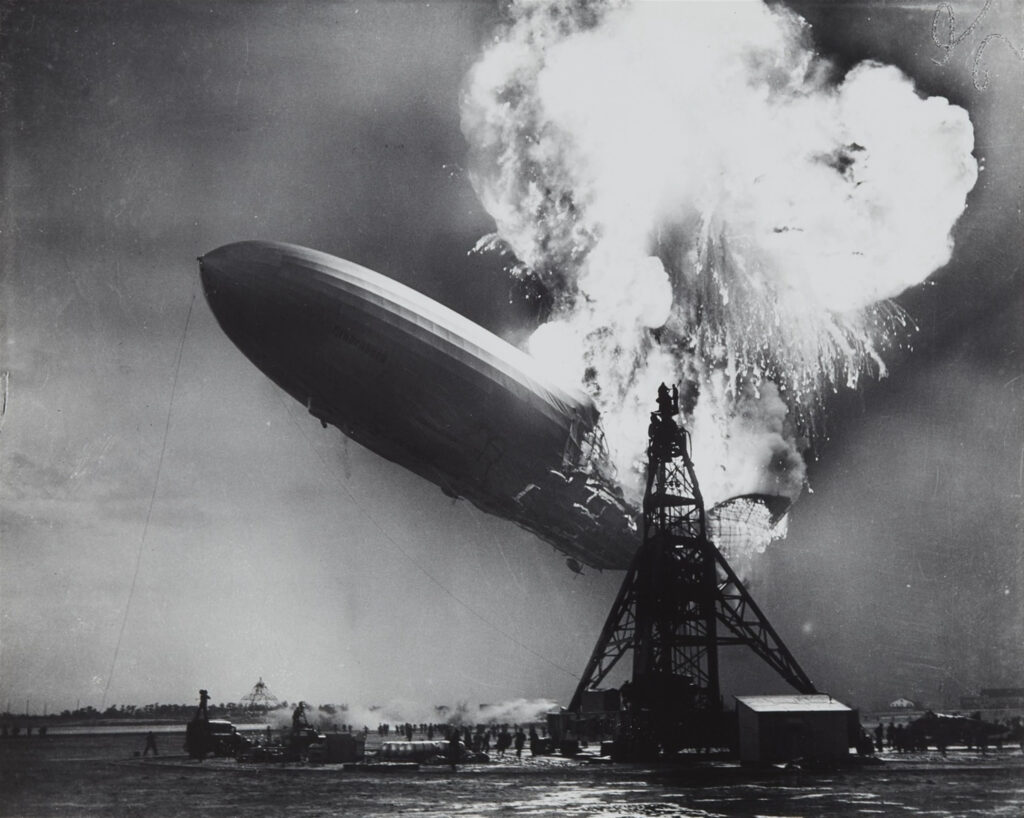
On the evening of May 6, 1937, the pine barrens of central New Jersey hummed with anticipation as the German airship LZ 129 Hindenburg descended toward the Naval Air Station at Lakehurst. The 804-foot dirigible, built by the Zeppelin Company of Friedrichshafen, had left Frankfurt three days earlier on its first transatlantic flight of the season. Seventeen-year-old Frank Ward had cut school at noon and hitchhiked to the field, where his father, Peter Ward, was an engineer. The teenager had served on the ground crew for five of the Hindenburg’s landings the previous year and expected this one to go smoothly. At 7:25 p.m., as the great ship drifted over the pine-tree horizon and the crew prepared to grab the landing ropes, the air burst into flame. In less than a minute, the flagship of modern aviation was a twisted, burning skeleton, and the world’s confidence in the airship was consumed with it.
What Happened?
The Hindenburg had departed Frankfurt on May 3, 1937, for its first transatlantic crossing of the season. In 14 months of operation, the zeppelin had completed 63 trips, and its arrival at Lakehurst was a routine event for the ground crew. On board were 39 passengers and 61 crew members — 100 people in all.
At approximately 7:25 p.m., as the airship was about to moor, its rear section burst into flames. The fire spread with terrifying speed, and within seconds the entire airframe was engulfed. The ship fell to the ground, its twisted aluminum skeleton and ribboned fabric continuing to burn for hours afterward as minor explosions tore through the wreckage. The U.S. Navy sailors, who had been preparing to grab the tether lines, ran for safety as they watched the airship fall with its rear half consumed by fire.
- May 3, 1937: The Hindenburg departs Frankfurt on its first transatlantic flight of the season.
- May 6, 1937, 7:25 p.m.: The airship bursts into flames while attempting to moor at Naval Air Station Lakehurst, New Jersey.
- Deaths: 35 of the 100 people aboard, plus one ground crew member.
- Survivors: 24 of the 39 passengers and 42 of the 61 crew members survived.
How It Was Seen at the Time
For contemporaries, the disaster was almost impossible to reconcile. The Hindenburg was not merely a machine; it was a symbol of German technical brilliance and the promise of a new era of transatlantic travel. The initial wire reports described an explosion. The Associated Press reported:
“Its silvery bulk shattered by a terrible explosion, the German air liner Hindenburg plunged in flames at the United States Naval air station tonight, with indications that 34 of the 100 aboard and one spectator perished.”
The New York Times, on its front page of May 7, 1937, ran the headline: “SHIP FALLS ABLAZE; Great Dirigible Bursts Into Flames as It Is About to Land.” The radio reporter Herbert Morrison, who was at the field covering the landing, captured the shock live as the fireball consumed the ship. The Smithsonian Institution later noted that the disaster “marked the beginning of the end of the era of the airship and is one of the most famous disasters in aviation history.”
The prevailing mood was one of disbelief and speculation. The Bureau of Air Commerce quickly established an inquiry board to investigate the cause. In the early hours, no one knew why the ship had caught fire, and the word “explosion” dominated the headlines.
Historical Snapshot
| Aspect | Detail |
|---|---|
| Date | May 6, 1937, 7:25 p.m. |
| Place | Naval Air Station Lakehurst, New Jersey |
| People | 39 passengers and 61 crew members aboard; ground crew at Lakehurst |
| What Happened | The airship Hindenburg burst into flames while attempting to moor |
| Why It Mattered | The disaster marked the beginning of the end of the airship era |
Contemporary Newspaper Coverage
The disaster was front-page news around the world. The New York Times published its account on May 7, 1937, on page one, with the headline “SHIP FALLS ABLAZE; Great Dirigible Bursts Into Flames as It Is About to Land.” The Associated Press wire story, written the night of the crash, captured the chaos of the initial response:
“Its silvery bulk shattered by a terrible explosion, the German air liner Hindenburg plunged in flames at the United States Naval air station tonight, with indications that 34 of the 100 aboard and one spectator perished.”
The AP report noted that “minor explosions continued to tear its twisted aluminum skeleton and ribboned fabric for hours afterward” and that an official announcement listed 24 of the 39 passengers and 42 of the 61 crew members as having survived, “leaving a total of 34 unaccounted for.” The tone of the coverage was one of shock and uncertainty, with reporters on the scene struggling to make sense of the catastrophe.
Eyewitness Accounts
Frank Ward, a 17-year-old ground crew member, was one of the closest witnesses. He had cut school at noon and hitchhiked to the Lakehurst station, where his father was an engineer. As the airship drifted in, Ward and a cluster of other linemen grabbed one of the landing ropes tossed from the zeppelin. In the Smithsonian’s account, he described the moment: the ship edged over the pine-tree horizon, maneuvering, and then the fire erupted. The ground crew, the U.S. Navy sailors, and the photographers on the field all ran for safety as the airship fell with its rear half engulfed in flames.
The Smithsonian’s National Air and Space Museum preserves the photograph of that moment: sailors, preparing to grab the tether lines, fleeing as the ship falls. The image, along with the radio broadcast of Herbert Morrison, became one of the most iconic records of the disaster. The Bureau of Air Commerce’s inquiry board would later rely on these accounts and the testimony of the ground crew to piece together what had happened.
What the Sources Got Wrong
The initial wire reports contained errors that were corrected only as the recovery effort proceeded. The first Associated Press report stated that “34 of the 100 aboard and one spectator perished.” The final toll was 35 of the aboard and one ground crew member — not a spectator, but a member of the Lakehurst crew. The AP also reported that “twenty-four bodies were counted in two places, thirteen at the naval s…” — the sentence cut off in the original, but the count was clearly incomplete in the first hours.
More significantly, the early characterization of the event as an “explosion” was misleading. The New York Times headline said “Bursts Into Flames,” while the AP wire described a “terrible explosion.” The Bureau of Air Commerce’s inquiry board was established to determine the actual cause, and the distinction between an explosion and a fire that spread rapidly through the hydrogen-filled ship would become a central question of the investigation. The initial reports, written in the chaos of the night, reflected the shock of the moment rather than a definitive understanding of the disaster.
Aftermath
The immediate aftermath was one of shock, mourning, and investigation. The U.S. Navy, which operated the Lakehurst station, responded to the wreckage, and the Bureau of Air Commerce began its inquiry. The disaster effectively ended the German airship program: the Hindenburg’s sister ship, the Graf Zeppelin II, was soon grounded, and commercial airship travel never resumed. The Smithsonian’s National Air and Space Museum noted that the disaster “marked the beginning of the end of the era of the airship.” The world that had watched the zeppelin as a marvel of modern technology now watched its remains smolder on the field at Lakehurst.
How Historians See It Today
Contemporary observers interpreted the disaster as a catastrophic failure of a promising technology — a symbol of the fragility of human ambition. Modern historians, drawing on the primary sources and the subsequent investigation, view the Hindenburg as the moment the airship era ended, not because of a single technical flaw, but because public confidence in hydrogen-lifted aircraft was never restored. The exact cause of the fire — whether static electricity, a hydrogen leak, or sabotage — remains debated, but the consensus is that the disaster, captured on film and radio, defined the public image of the airship forever. The eyewitness accounts of the ground crew, the wire reports, and the photographs from that evening remain the central evidence for understanding what happened in the spring of 1937.
The Hindenburg disaster of May 6, 1937, was over in less than a minute, but its image has never faded. The primary sources of that night — the wire copy, the newspaper headlines, the testimony of the ground crew — tell us of a world that believed in the promise of the zeppelin, and of the moment that promise was consumed in fire. The airship era ended that evening, and the world that had watched the great ship descend over the pine trees was never the same.
FAQ
How many people died in the Hindenburg disaster?
According to the Associated Press, 35 people aboard the Hindenburg and one person on the ground died, for a total of 36 deaths. Of the 100 people aboard, 24 of the 39 passengers and 42 of the 61 crew members survived.
What caused the Hindenburg to catch fire?
The exact cause was debated at the time and remains a subject of debate among historians. The initial wire reports described an 'explosion,' but the Bureau of Air Commerce's inquiry board was established to investigate. Modern hypotheses include a hydrogen leak ignited by static electricity, a mechanical failure, or sabotage, but no single cause has been definitively proven.
Did the Hindenburg disaster end the airship era?
Yes. The Smithsonian Institution notes that the disaster 'marked the beginning of the end of the era of the airship.' The German airship program was grounded, and commercial transatlantic airship travel never resumed.












Leave a Reply