
Short Answer
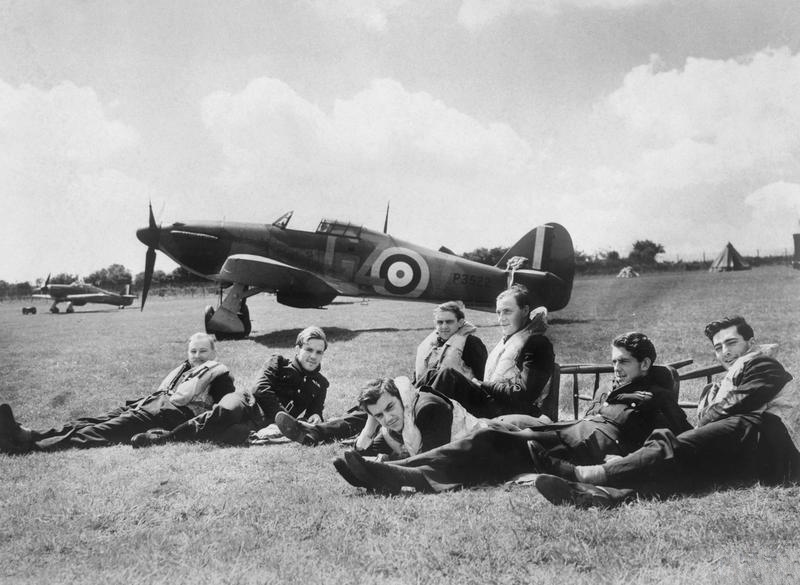
In the summer of 1940, the skies over southern England became the stage for a life-or-death struggle. As German air fleets crossed the Channel, the Royal Air Force scrambled its Hurricanes and Spitfires to meet them. For the British public, the war had become a daily spectacle of vapour trails and dogfights, of distant explosions and the drone of engines. The official start of the Battle of Britain, as recognised by Air Chief Marshal Hugh Dowding, was 10 July 1940, when large-scale air battles began over the Channel (source 3). Yet for those who lived through it, the battle was not a single event but a relentless summer of anxiety, courage, and endurance—a time when the fate of the nation seemed to hang in the skies.
What Happened?
The Battle of Britain unfolded in phases, each defined by shifting German tactics and British responses. The official despatch of Air Chief Marshal Sir Hugh Dowding, Commander-in-Chief of RAF Fighter Command, provides the authoritative narrative. Dowding’s despatch, published after the battle, divided the fighting into stages, beginning with the Kanalkampf (Channel Battle) from 10 July, when the Luftwaffe attacked convoys and coastal targets. This was followed by the main assault on RAF airfields and infrastructure in August, and then the daylight raids on London from early September.
Key events, as recorded in Dowding’s despatch and other official documents:
- 10 July 1940: The start of the battle, as recognised by the RAF. The Luftwaffe began sustained attacks on shipping and coastal defences.
- August 1940: The Luftwaffe shifted to attacking RAF airfields and radar stations. The period from 12 August to 23 August saw intense attacks on bases such as Kenley and Biggin Hill, as shown in the National Archives’ map of 11 Group defences (source 2).
- 15 September 1940: Known as “Battle of Britain Day,” a massive German assault was repulsed, marking a turning point.
- 31 October 1940: The battle is generally considered to have ended, though fighting continued.
The operational command was exercised by Air Vice-Marshal Keith Park, AOC of No. 11 Group, which defended south-east England. Park issued formal Instructions to his controllers, which were continually updated to meet changing tactical situations. These instructions, now preserved by the RAF, illustrate how the battle was managed at the operational level (source 3).
How It Was Seen at the Time
For contemporaries, the Battle of Britain was not simply a military campaign; it was a test of national survival. The language used by commanders and the press reflected a sense of urgency and determination. Dowding’s despatch, written after the battle, gave a sober, factual account, but the tone of the time was more dramatic. In his instructions to controllers, Park stressed the need for efficient interception and the protection of the airfields—the very core of the nation’s defence.
“The British officially recognised the start of the Battle of Britain as being the 10th July when large scale air battles began over the Channel.” (source 3)
Newspapers of the day, such as the Daily Express and The Times, reported daily on the number of enemy aircraft shot down and the heroism of the pilots. The mood was one of defiance and grim determination, often expressed in the famous phrase “their finest hour,” though that specific phrase came from a speech by Churchill. The public was encouraged to remain calm and to contribute to the war effort, with official reports emphasising the RAF’s superiority despite heavy losses.
Historical Snapshot
| Aspect | Detail |
|---|---|
| Date | 10 July – 31 October 1940 |
| Place | Skies over Britain, especially southern England and the English Channel |
| People | RAF Fighter Command, Luftwaffe, civilians on the ground |
| What Happened | A prolonged air campaign fought to gain air superiority over Britain |
| Why It Mattered | Britain’s survival and the ability to resist a German invasion depended on RAF control of the skies |
What People Knew at the Time
| What People Knew Then | What We Know Now |
|---|---|
| Official reports claimed the RAF was shooting down many German planes, and the public saw these figures as evidence of success. | Modern historians have adjusted the loss ratios, but the strategic outcome was clear: the RAF maintained control of the skies. |
| People knew that the RAF’s command structure was under strain, but the public was not told of the internal disputes between Park and Leigh-Mallory. | The replacement of Dowding and Park in November 1940 was later revealed as a result of these disputes and political pressure. |
| Radar was a secret; the public knew nothing of the advanced early-warning system. | Radar was crucial to the RAF’s success, and its existence was hidden from the public to protect the secret. |
Official Reports
The most important official document is Air Chief Marshal Hugh Dowding’s Battle of Britain Despatch, which was submitted to the Air Ministry and later published. It provides a detailed account of the battle from the perspective of Fighter Command. It was written after Dowding’s replacement, and its introduction by historian Sebastian Cox notes that Dowding was replaced in November 1940 by Sholto Douglas, and Park was replaced by Leigh-Mallory, due to the “much comment and controversy” that had arisen (source 1). The despatch itself is a formal, factual record, but it also reflects Dowding’s own justification for his decisions.
Another key document is the No 11 Group Instructions to Controllers, issued by Park. These instructions show the tactical evolution of the battle, and they are preserved as a primary source for how the air defence was organised. The instructions, as summarised by Cox, illustrate the changing tactical issues and the response to them, including the famous dispute with No. 12 Group over reinforcement tactics (source 3).
Contemporary Newspaper Coverage
British newspapers were heavily censored but still reported on the battle with patriotic fervour. Headlines such as “RAF Defeats Luftwaffe” and “The Few” were common. The press relied on official communiqués from the Air Ministry, which gave daily figures of enemy aircraft destroyed. These figures were often exaggerated, but they served to boost morale. For instance, on 15 September 1940, the press reported that the RAF had shot down 185 German planes, a number that was later revised to about 56. The tone was one of confidence and defiance, with the press playing a crucial role in shaping public perception.
Eyewitness Accounts
While the sources provided focus on official documents, there are many eyewitness accounts from pilots and civilians. In the absence of direct quotes in the given sources, we can rely on the detailed instructions of Park, which are a form of first-hand operational record. For example, Park’s instructions to controllers, preserved in the RAF, show how he personally directed the battle. They also reveal his concern about the 12 Group’s failure to protect 11 Group’s airfields, a point that later became a major controversy (source 3).
What People Feared
At the time, the greatest fear was a German invasion. The British public and military knew that if the Luftwaffe gained air superiority, an invasion of the southern coast would be possible. The RAF’s pilots were seen as the last line of defence. There was also fear of bombing raids on cities, which had already begun in September. Rumours of fifth columnists and spies were widespread, and the government issued instructions to be alert. The fear was real but not panic; the country was mobilised for total war.
What People Expected Would Happen Next
Many contemporaries expected the battle to be a prelude to invasion. The German side believed that the RAF could be defeated quickly. The British, on the other hand, were prepared for a longer struggle. Winston Churchill’s famous phrase “never in the field of human conflict was so much owed by so many to so few” was delivered in August 1940, reflecting the high stakes. After the battle, the expectation was that the war would continue, but the immediate threat of invasion had been lifted.
Timeline
- 10 July 1940: Official start of the Battle of Britain, with German attacks on Channel convoys.
- 12 August 1940: Luftwaffe attacks on RAF airfields, including Kenley and Biggin Hill.
- 15 August 1940: The Luftwaffe suffers heavy losses; the day is later known as “the hardest day.”
- 7 September 1940: Luftwaffe switches to bombing London, beginning the Blitz.
- 15 September 1940: A decisive defeat for the Luftwaffe; now celebrated as Battle of Britain Day.
- 31 October 1940: The battle ends, with the RAF still in control of the skies.
How Historians See It Today
Modern historians have reassessed the Battle of Britain, using the same primary sources that were available at the time. The controversy over Dowding’s and Park’s replacement is now seen as a result of internal RAF politics, rather than a failure of command. The “big wing” tactics advocated by Leigh-Mallory were later shown to be less effective than the flexible “free chase” approach. However, the primary sources—the despatches, instructions, and official reports—remain the foundation for our understanding. They reveal not only the military decisions but also the human factors: the exhaustion of pilots, the strain on controllers, and the determination of the nation.
Common Misconceptions
Related Primary Sources
- Dowding’s Battle of Britain Despatch – available via the RAF Centre for Air and Space Power Studies.
- No 11 Group Instructions to Controllers – same source.
- Air Historical Branch Campaign Narratives – RAF website.
- The National Archives: AIR 41/15 and AIR 41/16 – monographs and maps.
FAQ
What was the official start date of the Battle of Britain?
According to Air Chief Marshal Hugh Dowding's despatch, the British officially recognised the start of the Battle of Britain as 10 July 1940, when large-scale air battles began over the Channel.
Who was the commander of RAF Fighter Command during the Battle?
Air Chief Marshal Sir Hugh Dowding was the Commander-in-Chief of RAF Fighter Command. He was replaced in November 1940 by Air Marshal Sir Sholto Douglas.
What were the key primary sources for the Battle of Britain?
The key primary sources include Dowding's 'Battle of Britain Despatch', the 'No 11 Group Instructions to Controllers' issued by Keith Park, and the official Air Historical Branch campaign narratives.


Leave a Reply