Short Answer
In the early decades of the nineteenth century, a letter from London to Edinburgh might take three days by mail coach, while a missive from New York to Philadelphia could be delayed by rain or weather. The world was a place where the written word moved at the speed of a horse and the patience of a postman. To send a letter was to trust a chain of riders, coaches, and postmasters, each link as essential as the last. This was the era before the telegraph and the email, when the postal system was the nervous system of the entire civilized world.
What Happened?
The nineteenth century witnessed a dramatic transformation in how letters traveled. When Queen Victoria was born in May 1819, almost all mail in mainland Britain was carried by foot, horseback, or simple horse-drawn carts and wagons, according to the Postal Museum. The speediest conveyance was the swift Mail Coach, which had first commenced running on 2 August 1784. These coaches were impressively decorated, with black and maroon bodies and bright red wheels, and the guard wore a bright red uniform. Yet by the time Victoria became Queen on 20 June 1837, the Mail Coaches were already on their last legs.
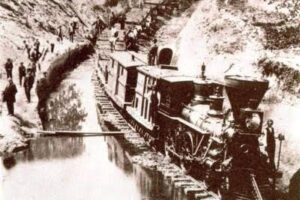
The real revolution came with the railways. In Britain in 1839, Parliament obligated private railway companies to convey the Royal Mail throughout the kingdom at reasonable rates, as documented in a comparative study by Cambridge University Press. Thereafter, the expansion of postal services and railway networks went hand in hand. The modern Postal Age in Great Britain and France began in the 1830s, with railway expansion and postal growth reinforcing each other.
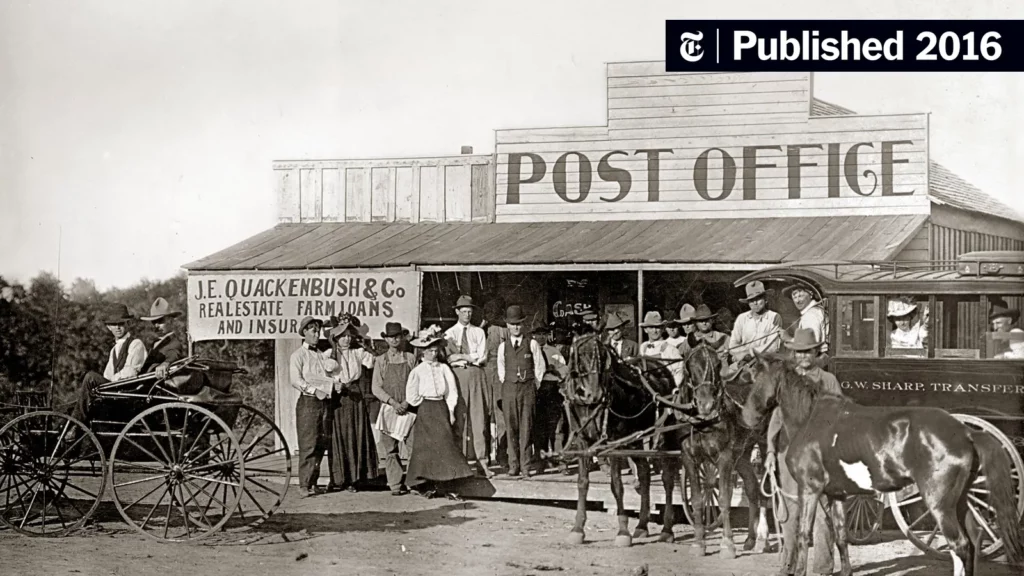
Across the Atlantic, the United States had its own postal expansion. According to the National Postal Museum, between Independence and 1792 the United States General Post Office changed little from its colonial forerunner. There were seventy-five post offices in 1790, most along the Atlantic seaboard. The 1792 Post Office Act laid the foundation for explosive growth: Congress took away the executive branch’s authority to establish post roads, and newspapers were permitted in the mail at heavily subsidized rates. By the time Alexis de Tocqueville visited America in 1831, the postal system had grown considerably, linking the eastern seaboard and beginning to reach into the interior.
- 1784 – Mail coaches introduced in Britain, offering the fastest overland mail service.
- 1792 – U.S. Post Office Act grants Congress control over post roads and subsidizes newspapers.
- 1830s – Railway expansion begins in Britain and France, accelerating postal delivery.
- 1839 – British Parliament obligates railways to carry Royal Mail.
How It Was Seen at the Time
Contemporaries regarded the postal system as a marvel of speed and reliability. The Postal Museum describes the Mail Coach as “the speediest of mail carriage” when it first ran in 1784. The impressive livery and the red uniform of the coach guard were designed to convey authority and pride. People understood that the postal service was essential for governance, commerce, and personal connection. The 1792 Post Office Act in the United States was seen as a way to ensure an informed electorate, with newspapers heavily subsidized in the mail. The prevailing mood was one of optimism and expectation: the postal system was expanding, and with it, the reach of civilization.
“The speediest of mail carriage was provided by the swift Mail Coaches that had first commenced running 2 August 1784.” — The Postal Museum
Historical Snapshot
| Aspect | Detail |
|---|---|
| Date | 1830s–1850s |
| Place | Great Britain, France, United States |
| People | Postmasters, mail coach guards, railway companies, government officials |
| What Happened | Railways replaced mail coaches as the primary means of carrying letters, and postal networks expanded dramatically. |
| Why It Mattered | The expansion of the postal system was a key factor in state and nation building, as it unified regions and enabled the rapid flow of information. |
What People Knew at the Time
| What People Knew Then | What We Know Now |
|---|---|
| Mail coaches were the fastest mode of transport. | Railways would soon make mail coaches obsolete. |
| The postal service was expanding, but its full impact on society was not yet understood. | Historians now see the postal system as a crucial instrument of state centralization and national identity. |
| The 1792 U.S. Post Office Act was seen as a way to inform the electorate. | The act also laid the groundwork for a massive, centralized postal bureaucracy. |
Daily Life
For the ordinary person, sending a letter in the early nineteenth century meant a trip to the nearest post office. There was no home delivery in rural areas; letters were collected at the post office. The mail coach would arrive with the post, and the guard, in his bright red uniform, would hand the bags to the postmaster. The coach itself was a spectacle, with its black and maroon body and red wheels, as described by the Postal Museum. In the United States, the postal route was often a simple road, and the postman might travel on foot or horseback, as the National Postal Museum notes that in 1790, most post offices were along the Atlantic seaboard. The cost of postage was often paid by the recipient, and letters were typically sealed with wax to ensure privacy.
Numbers at the Time
r>Year of the first mail coach in Britain1784
| Statistic | Value (Year) |
|---|---|
| Number of post offices in the United States | 75 (1790) |
| Year Britain obliged railways to carry mail | 1839 |
How Historians See It Today
Modern scholarship, as exemplified by the Cambridge University Press study, argues that the postal system in the nineteenth century was not just a convenience but a fundamental engine of state and nation building. The expansion of railways and postal services went hand in hand, enabling governments to project authority over vast territories and creating a shared national communication network. This perspective contrasts with the contemporary view, which focused on the practical speed of the mail. Today, historians emphasize the role of the postal system in fostering national identity, economic integration, and the spread of ideas.
The primary sources of the era—the mail coaches, the post offices, and the railway acts—reveal a world in which communication was a physical, tangible act. The letters that traveled by these means carried the hopes, fears, and business of an entire century. The postal system of the 1800s was not merely a prelude to the internet; it was a revolutionary network that transformed how people lived and governed. Its legacy is still felt in the modern postal services that descend directly from the innovations of that time.
FAQ
How fast did letters travel in the 19th century?
In the early 19th century, a letter from London to Edinburgh might take three days by mail coach. After the railway expansion in the 1830s, times were significantly reduced, but the exact speed depended on the route and weather.
What was the role of the postal system in nation building?
According to modern historians, the postal system enabled governments to communicate with distant regions, integrate markets, and spread information, thereby strengthening national unity and state power.








Leave a Reply