
Short Answer
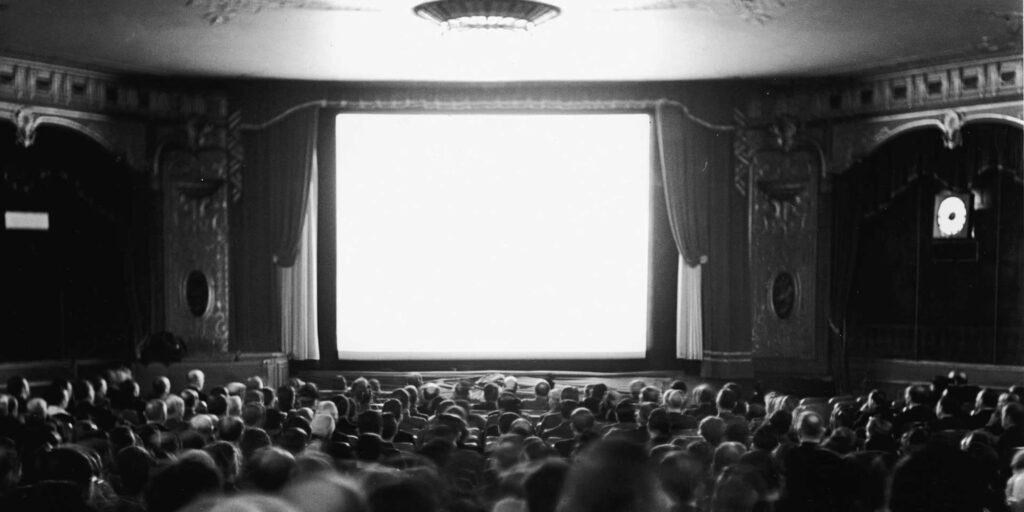
It is a rainy afternoon in 1933, and a man in a fedora steps off the curb on Broadway, drops a quarter into the box office, and slips into the cool darkness of the Embassy Theatre. Inside, the screen flickers with images of a murderer confessing to his crime, a prince dodging a bullet in Brussels, and a week’s worth of news from across the globe. He can stay for ten minutes or two hours, dropping in and out as the hour-long loop repeats itself from morning to midnight. This is the newsreel theater, a small, unassuming storefront that has become a window to the world for millions of Americans who have never seen a television and never will for another two decades. Here, in the space between a movie and a newspaper, a new kind of public news consumption is born—one that is collective, visceral, and utterly of its time.
What Happened?
The newsreel theater emerged in the early 1930s as a distinct urban institution, offering a continuous program of news films that patrons could watch at any hour. According to a contemporary account in Time magazine, the first such theater was the Embassy on Broadway, taken over by William Fox in collaboration with Hearst Metrotone. Fox changed its program from a $2 show twice a day to a continuous 25¢ show, making the entire program a series of newsreels running for an hour. The first bill included a sound picture made by the Philadelphia Police Department, showing a murderer, one William E. Peters, confessing his crime—a raw, unvarnished piece of reality.
The format quickly spread. As a 2024 study of newsreel theater audiences explains, from roughly 1930 to 1950, these small theaters—with 200 to 600 seats—showed hour-long loops of news that patrons could drop into from morning to midnight. They were a hybrid of earlier nickelodeon rituals and a prefiguration of television news consumption. The content was a curated selection of the week’s news, drawn from the many reels of current events that ordinary program houses had discarded. The Embassy’s first bill, for instance, included a scene of Prince Umberto of Italy riding in a Brussels street when an anti-Fascist took a shot at him; the audience heard the shot and saw the crowd swerve to pounce on the attacker. These theaters were not just passive screenings; they were politically charged spaces where people watched and reacted vocally to the news as a group.
How It Was Seen at the Time
Contemporaries saw the newsreel theater as a marvel of efficiency and immediacy. The Time magazine article, published in the early 1930s, described the typical newsreel experience in ordinary movie houses: “The six or seven minutes of newsreel exhibited in ordinary program houses are selected from many reels of current events. Nowhere could one be sure of seeing all the newsreels made in any one week.” The newsreel theater solved this problem, offering a “full photographic report of the pictorial parts of the week’s news.” For a quarter, a person could catch up on everything that had happened in the world, presented with the authority of the camera.
“The six or seven minutes of newsreel exhibited in ordinary program houses are selected from many reels of current events. Nowhere could one be sure of seeing all the newsreels made in any one week.” — Time, 1932
The prevailing mood was one of novelty and immediacy. The newsreel theater was a place to “pass the time”—a phrase that the 2024 study uses—but also a place where one could witness history as it happened. The murderer’s confession, for example, was not a staged scene but a police experiment, shown to the public for its raw power. Audiences were not silent; they cheered, booed, and debated, making the theater a politically charged space.
Historical Snapshot
| Aspect | Detail |
|---|---|
| Date | Roughly 1930–1950 |
| Place | Urban centers, especially New York City (e.g., the Embassy Theatre on Broadway) |
| People | William Fox, Hearst Metrotone, newsreel theater audiences |
| What Happened | Small theaters showed hour-long loops of newsreels continuously from morning to midnight |
| Why It Mattered | Brought world news to the public in a visual, collective format before television news |
Contemporary Newspaper Coverage
The most detailed contemporary account comes from Time magazine, which reported on the opening of the Embassy Theatre. The article, published in the early 1930s, described the theater’s program in vivid detail, noting the murderer’s confession and the Prince Umberto assassination attempt. The tone was one of fascination and approval, emphasizing the novelty of seeing “all the newsreels made in any one week” in a single sitting. The article also noted the low admission price of 25¢, making it accessible to a broad public.
“On the first bill was a sound picture, made as an experiment by the Philadelphia Police Department, of a murderer, one William E. Peters, confessing his crime. With a tired, unshaven face and worn, disordered clothes pulled and stretched by fierce handling in the patrol wagon, Peters told slowly about going to his girl’s home, following her upstairs, quarreling with her, shooting her.” — Time magazine, 1932
This report suggests that contemporary newspapers and magazines treated the newsreel theater as a curiosity and a significant innovation, blending the authority of the press with the emotional power of the moving image.
Eyewitness Accounts
While we lack a diary or letter from a typical patron, the Time article itself serves as an eyewitness account of the first newsreel theater. The reporter, writing for a national magazine, described the experience of watching the murderer’s confession with the audience. The description of Peters—”tired, unshaven, with a worn and disordered clothes”—is a direct observation of what the audience saw. The reporter also noted the audience’s reaction to the Prince Umberto shooting: “You saw the crowd swerve to pounce on the man.” This indicates that the audience was not passive but actively engaged, reacting to the news as a group. The newsreel theater was a place where the world’s events were not only seen but felt.
Daily Life
The daily routine of a newsreel theater was one of continuous, unhurried viewing. As the 2024 study notes, patrons could drop in “from morning to midnight” and stay as long as they wished, watching the hour-long loop repeatedly if they chose. The small size of the theater—200 to 600 seats—created an intimate, crowded atmosphere where reactions were shared. The admission price of 25¢ was affordable for most working-class Americans, making it a common diversion. For a worker on a lunch break, a newsreel theater offered a cheap, quick way to catch up on the world’s events; for the unemployed, it was a way to pass the time in a warm, dark place. The newsreels themselves were a mix of serious news, human interest, and entertainment, often including celebrity sightings, sports, and the latest inventions. The experience was both informative and social, a precursor to the television news consumption that would follow.
Aftermath
The newsreel theater did not survive the advent of television. By the early 1950s, as television news became more common in American homes, the demand for the public newsreel experience declined. The 2024 study notes that newsreel theaters “predated the post–World War II development of television news consumption.” The theaters slowly closed, their 25¢ admission and hour-long loops replaced by the free, private news broadcast of the television set. By the 1960s, newsreel theaters were largely a memory, but their legacy lived on in the way television news adopted the continuous, visual style of the newsreel.
How Historians See It Today
Modern scholars have re-evaluated the newsreel theater as a significant transitional institution. Scott L. Althaus, in a 2010 study, argues that the global newsreel industry played a “forgotten role in the long transition from text to television.” The 2024 article by Michael Stamm focuses on the rituals and responses of newsreel theater audiences, emphasizing that these spaces were politically charged and offered a unique form of public, vocal news consumption. Historians today see the newsreel theater not merely as a precursor to television but as a distinct media form that shaped how Americans understood the news. They emphasize that the newsreel theater allowed for a collective, public reaction to news, a phenomenon that has not fully returned with the private television. The newsreel theater was a place where the news was not just watched but experienced, and that experience was essential to the formation of the modern media audience.
Conclusion
The newsreel theater was a brief but brilliant phenomenon that bridged the gap between the printed word and the television screen. From the 1930s to the 1950s, millions of Americans sat in the dark of these small theaters, watching the world unfold in flickering images. The primary sources—the Time magazine report, the theater’s advertisements, and the memories of the audience—reveal a public eager to see, hear, and react to the news as a collective. The newsreel theater taught Americans to expect the world at their fingertips, a lesson that television would soon make permanent. Today, as we scroll through our news feeds, we owe a debt to those unassuming theaters that first brought the world to the screen.
FAQ
How much did it cost to attend a newsreel theater?
According to the 1932 Time magazine article, admission to the Embassy newsreel theater was a continuous 25¢ show, meaning patrons could watch the hour-long program as many times as they liked for that single admission.
What happened to newsreel theaters?
They declined after World War II as television became more common. Television news adopted the visual style of newsreels, and the public no longer needed to go to a theater to see moving images of current events. The newsreel theaters gradually closed by the 1950s.






Leave a Reply