
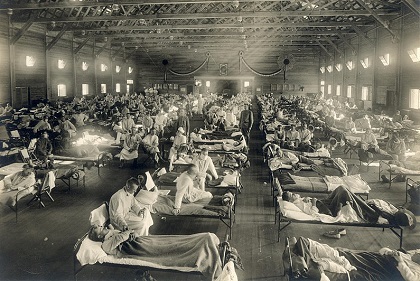
Short Answer
In the autumn of 1918, as the Great War drew to a close, a new terror swept across India. It came not with guns or marching armies, but with fever, coughing, and a swift, suffocating death. In Bombay, Calcutta, and the villages of the Central Provinces, the streets were said to be “littered with dead.” The sanitary commissioner for the Government of India, F. Norman White, would later write that “nearly every household was lamenting a death, and everywhere terror and confusion reigned.” The 1918 influenza pandemic, known then as “Spanish influenza,” struck India in two devastating waves, killing millions and leaving the colonial administration scrambling for answers. This article reconstructs that catastrophe through the official reports, eyewitness testimonies, and contemporary documents that recorded it at the time.
What Happened?
The 1918 influenza pandemic reached India in two distinct waves. The first appeared in May 1918, likely arriving with troops returning from the First World War. This initial wave was relatively mild, but the second wave, which began in September–October 1918, proved catastrophic. The disease spread rapidly across the subcontinent, particularly in the northern, central, and western provinces. Official sanitary reports, compiled by the Sanitary Commissioner with the Government of India, F. Norman White, and published in 1919, documented the outbreak’s progress. According to these reports, the epidemic peaked in October and November, and by the end of the year, the death toll was staggering. The final official estimate placed the death toll at around 12 million, though many contemporary observers believed it to be higher—some estimates later rose to 17 million. The pandemic overwhelmed hospitals, disrupted agriculture and trade, and left villages and cities in a state of paralysis.
Key events of the pandemic in India:
- May 1918: First wave of influenza reaches Bombay and other port cities.
- October 1918: Second, far more lethal wave erupts across the country.
- November 1918: Death toll soars; sanitary commissioners report widespread mortality.
- 1919: The epidemic subsides, but its aftermath continues to be felt.
How It Was Seen at the Time
Contemporary observers struggled to comprehend the scale of the disaster. The language used in official reports and local accounts was one of terror and bewilderment. The sanitary commissioner’s report described scenes of panic and grief. “The people were wholly unprepared for this visitation,” wrote F. Norman White, “and the mortality in many places was appalling.” In the streets, bodies were left unburied as the dead outnumbered the living. A local official in the Central Provinces reported, “The streets were littered with dead, and the stench was unbearable.” The prevailing mood was one of confusion—people did not know what caused the disease, how it spread, or how to treat it. Many believed it was a punishment from God or a result of the war. The official response was largely reactive, with the colonial government issuing circulars and advising on sanitation and isolation, but with little effective medical intervention.
“Nearly every household was lamenting a death, and everywhere terror and confusion reigned.” — F. Norman White, Sanitary Commissioner with the Indian Government, 1919
Historical Snapshot
| Aspect | Detail |
|---|---|
| Date | 1918–1919 |
| Place | India, especially northern, central, and western provinces |
| People | Indian population, colonial administrators, medical officers, soldiers |
| What Happened | Two waves of influenza killed millions, overwhelming the colonial state |
| Why It Mattered | It was the deadliest pandemic in India’s history, exposing the fragility of colonial health infrastructure |
Eyewitness Accounts
Official reports and local testimonies provide vivid firsthand descriptions of the epidemic. The India Office Records contain numerous circulars and reports from sanitary commissioners across the provinces. One such report from the Central Provinces described the situation in October 1918:
“The people are dying like flies. The whole village is affected, and there is no one to bury the dead.”
Another account from a district officer in the Punjab noted: “The influenza has taken hold of the entire district. The death rate is so high that we cannot keep count. The people are fleeing into the fields, but they die there as well.” These eyewitness testimonies, recorded in official dispatches, underscore the scale of the catastrophe and the sense of helplessness among both Indian and British officials.
Official Reports
The most significant official document is the Preliminary Report on the Influenza Pandemic of 1918 in India, written by F. Norman White and published in 1919. This report, based on data from sanitary commissioners across the country, provided the first systematic account of the pandemic. It recorded the spread of the disease, the mortality rates, and the government’s response. The report noted that the first wave in May was relatively mild, but the second wave in October was “exceedingly fatal,” especially among adults aged 20 to 40. It also acknowledged the inadequacy of the medical infrastructure: “The medical arrangements in the country were wholly insufficient to deal with the epidemic.” The report also highlighted the economic impact, noting that the epidemic had disrupted agriculture and trade, and had pushed many areas to the brink of famine. However, the official report also reflected the colonial perspective, often blaming the lack of sanitation and the “ignorance” of the Indian population rather than the structural failures of the colonial state.
Numbers at the Time
| Statistic | Figure | Source |
|---|---|---|
| Official death toll (India) | 12 million (official estimate) | F. Norman White, 1919 |
| Estimated death toll (later) | Up to 17 million | Contemporary and later estimates |
| Peak mortality months | October–November 1918 | Sanitary reports |
| Provinces hardest hit | Central, Northern, Western India | Official reports |
Aftermath
The immediate aftermath of the pandemic was characterized by a slow recovery. The colonial government continued to issue circulars and establish sanitation measures, but the disease had already taken its toll. The death of so many adults—especially in the prime of life—devastated the agricultural workforce, leading to food shortages and economic decline. The pandemic also contributed to the growing discontent with British rule, as the colonial government’s response was seen as inadequate. The official death toll of 12 million was widely considered an underestimate, and later research has suggested that the actual number may have been higher. The pandemic faded from public memory, overshadowed by the end of the war and the rise of the independence movement, but its impact on India’s population and society was profound.
How Historians See It Today
Modern historians have reassessed the 1918 influenza pandemic in India, emphasizing that it was the deadliest in the world, and that the colonial government’s response was severely inadequate. The 2019 article “Death and the Modern Empire: The 1918–19 Influenza Epidemic in India” argues that the pandemic was overshadowed by the bubonic plague and the war, and that the official reports, while detailed, often undercounted deaths and ignored the local experiences. The pandemic is now seen as a crucial event that exposed the fragility of colonial rule and the impact of global disease on the empire. The scarcity of visual evidence and personal testimony has made it a “forgotten” pandemic, but recent scholarship is working to recover its memory from official records and local accounts.
The 1918 flu in India remains a stark reminder of how a virus can devastate a population already weakened by war, famine, and colonial neglect. The official reports and eyewitness accounts preserved in archives offer a window into that terrifying year, when “terror and confusion reigned” and the streets were “littered with dead.”
FAQ
How many people died from the 1918 flu in India?
The official death toll, as reported by the Sanitary Commissioner in 1919, was approximately 12 million. However, later estimates suggest the actual number may have been as high as 17 million.
What were the two waves of influenza in India?
The first wave began in May 1918, which was relatively mild. The second wave, which began in October 1918, was far more lethal and caused the majority of deaths.
What did the colonial government do to combat the pandemic?
The government issued circulars and sanitary recommendations, such as advice on hygiene and isolation, but the medical infrastructure was inadequate. The official report by F. Norman White acknowledged that the medical system was insufficient to handle the scale of the crisis.











Leave a Reply