
Short Answer
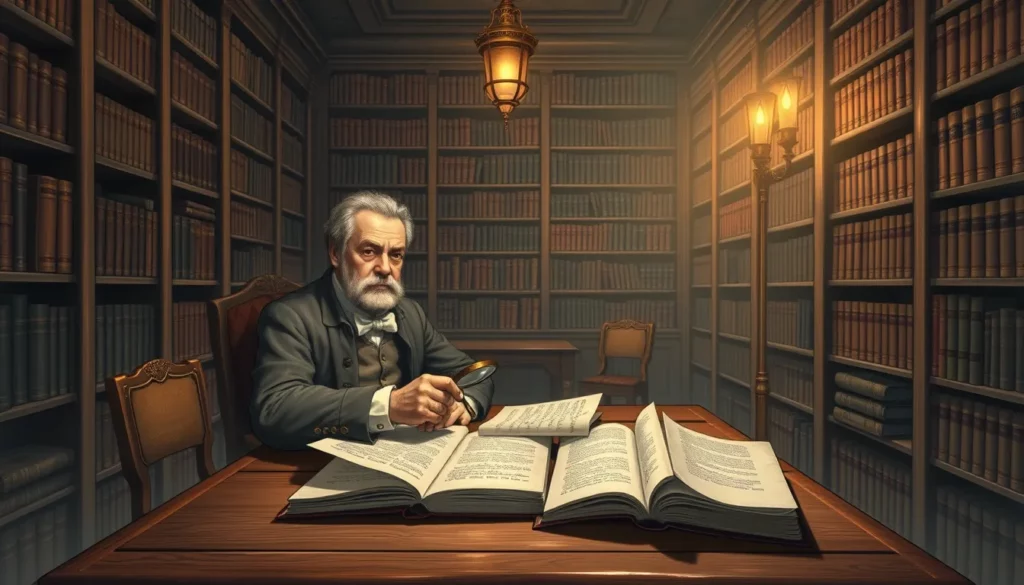
In the Main Reading Room of the Library of Congress, a researcher can sit within reach of more than 300 quotation dictionaries, a special reference collection assembled for the pursuit of half-remembered lines. Yet the real work begins not with the dictionaries but with a suspicion: that the sentence on the bookmark, the speech, or the social-media card may not belong to the person named. The researcher writes down the exact words, notes the alleged speaker and date, and then begins the slow work of moving backward through print, manuscript, and record. The trail may run from a modern anthology to a nineteenth-century compilation, from a newspaper column to a private letter, and finally to a speech delivered in a particular room on a particular day. Tracing a historical quote is therefore an exercise in provenance: it asks when the words first appear, who wrote them down, and how they traveled. The tools are mundane—catalogs, indexes, full-text searches, and careful citation—but the result can overturn a familiar story. The past often survives in fragments, and a quotation is one of the most fragile fragments of all.
What Happened?
The subject is not a single event but a repeatable method. Quote tracing has a chronological logic: fix the wording, locate the earliest documented appearance, verify the source’s standing as a primary record, and then follow the chain of transmission.
- Fix the wording. Record the exact sentence, punctuation, and any variant. If the quote is translated, find the original-language version. A single changed word can send the search in the wrong direction.
- Search for the earliest appearance. Use full-text databases, digitized newspapers, printed correspondence, diaries, speeches, and official records. The goal is not the most famous version but the earliest recoverable one.
- Use quotation dictionaries as finding aids. Bartlett’s Familiar Quotations, the Oxford Dictionary of Quotations, and the Yale Book of Quotations can point to earlier sources, but they are indexes, not final proof. Their citations must be followed back to the document.
- Verify the primary source. Read the passage in context. Ask whether the speaker or writer actually composed the words, whether a stenographer recorded them, whether the text was revised, and whether the edition is authoritative.
- Map the transmission. Note how the quote changed as it moved through newspapers, anthologies, biographies, and later quotation websites. Misattribution often enters at a specific link in this chain.
This method applies equally to political oratory, literary aphorisms, and anecdotes. In every case, the researcher distinguishes between the earliest known text, the later attribution, and the modern reputation. The method does not require a single “eureka” moment; it requires a trail of evidence.
How It Was Seen at the Time
Contemporaries usually encounter a quotation as part of an occasion, not as an attribution problem. When Franklin D. Roosevelt delivered his first inaugural address on March 4, 1933, listeners heard the line in the midst of a banking crisis. The sentence was not yet a quotation to be verified; it was a political promise and a call for confidence. Roosevelt said:
“So, first of all, let me assert my firm belief that the only thing we have to fear is fear itself—nameless, unreasoning, unjustified terror which paralyzes needed efforts to convert retreat into advance.”
Newspapers and radio audiences understood the words in that immediate context. The later habit of excerpting the phrase as a free-standing quotation came after the speech had entered memory.
The opposite case is instructive. In Rousseau’s Confessions, published in 1782, readers met an anecdote about “a great princess” who, when told that the peasants had no bread, replied, “Qu’ils mangent de la brioche.” The text did not name Marie Antoinette. Readers at the time could not have seen the line as a verified royal utterance; they saw it as a story told by Rousseau. The attribution to Marie Antoinette came later, after the phrase had detached from its earliest printed home.
Historical Snapshot
| Aspect | Detail |
|---|---|
| Date | 1782 (publication of Rousseau’s Confessions) |
| Place | France; the text circulated in posthumous print |
| People | Jean-Jacques Rousseau; “a great princess”; later Marie Antoinette |
| What Happened | Rousseau recorded an anecdote about a princess and brioche, without naming Marie Antoinette |
| Why It Mattered | The case shows how a textual anecdote can become a famous misattribution |
What the Sources Got Wrong
The most familiar quotation errors are not random. They often begin with a plausible story, a famous name, and a chain of repetition. The “let them eat cake” tradition is the clearest example. No contemporary document assigns the brioche remark to Marie Antoinette. The earliest known appearance is in Rousseau’s Confessions, where the speaker is an unnamed “great princess.” Later writers supplied the queen’s name, and the phrase became a symbol of royal indifference. The error was not invented by a single author; it accumulated through repetition.
The cherry-tree anecdote about George Washington follows a similar pattern. The line “I cannot tell a lie” is absent from Washington’s own papers. It entered circulation through Mason Locke Weems’s The Life of Washington (1806), a moralizing biography that supplied the story of the boy and the hatchet. Weems’s book was widely reprinted, and the anecdote acquired the authority of repetition.
Literary quotations are equally vulnerable. “Elementary, my dear Watson” is not found in Arthur Conan Doyle’s canonical Sherlock Holmes stories. It belongs to later stage and film adaptations, yet it is routinely printed as if it were Doyle’s own sentence. In each case, the error is detectable by the same method: identify the earliest text, check the primary source, and note where the familiar version diverges.
Contemporary Terminology
Quote tracing uses a small vocabulary that is worth keeping precise. Attribution is the assignment of a statement to a person or text. Provenance is the documented history of a text’s transmission. Apocryphal describes a story or saying of doubtful authenticity. A canard is a false or exaggerated report that circulates as fact. In early modern and nineteenth-century scholarship, a florilegium was a compiled collection of excerpts, and a commonplace book was a personal notebook in which readers copied quotations and observations. The ur-text is the earliest recoverable version of a text. These terms help the researcher separate the original document from the later compilation that made it famous.
Key Documents
- Franklin D. Roosevelt, First Inaugural Address, March 4, 1933. The speech is a primary source for the “fear itself” quotation and shows the exact wording in context.
- Jean-Jacques Rousseau, Les Confessions, published 1782. The earliest known source for the brioche anecdote, naming no queen.
- Mason Locke Weems, The Life of Washington, 1806. The source of the cherry-tree and “I cannot tell a lie” tradition.
- John Bartlett, Familiar Quotations, first edition 1855. A historically important quotation compilation and an example of a finding aid that must be checked against primary sources.
Common Misconceptions
Related Primary Sources
- Library of Congress, Main Reading Room quotation reference collection and “Finding Quotations” guide.
- HathiTrust and Internet Archive for digitized books, periodicals, and nineteenth-century compilations.
- Chronicling America for digitized American newspapers.
- Franklin D. Roosevelt Presidential Library and Museum for inaugural addresses and manuscript drafts.
- National Archives and official gazettes for speeches, laws, and public records.
The method of tracing a quotation is finally an exercise in historical discipline. It teaches that memory is not evidence, that repetition is not proof, and that the earliest text is often less tidy than the famous version. The primary sources do not always give a clean answer. They give something better: a documented path from a sentence to the moment it was written or spoken. That path is the historian’s safeguard against the comfortable error.
FAQ
How do I find the original source of a historical quote?
Record the exact wording, then search full-text archives, quotation dictionaries, and digitized primary sources for the earliest appearance. Follow any citations back to the original document and read the passage in context.
What if a quote appears in many books but no primary source can be found?
Repeated secondary citation is not proof. The quotation may be apocryphal or misattributed. Check the earliest dated appearance and whether that source is a contemporary record rather than a later compilation.
How do translations affect quote tracing?
Translations often change wording, punctuation, and tone. Trace the original-language text first, then compare translations to see where the familiar version diverges.
Are quotation dictionaries reliable?
They are useful finding aids but not final proof. They can repeat earlier errors, so researchers should follow their citations to the primary source.













Leave a Reply