
Short Answer
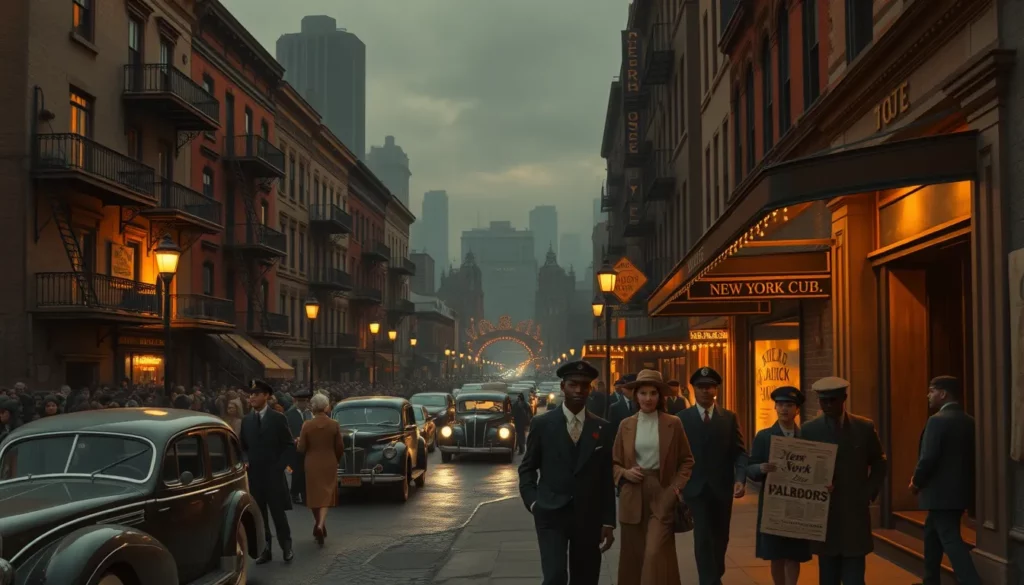
On a Saturday night in the mid-1920s, Lenox Avenue was a river of sound and movement. Church women in dark coats hurried home from prayer meetings; Pullman porters just back from the road swapped stories outside a barbershop; young couples pressed into the Savoy Ballroom; and the smell of chicken, rice, and beans drifted from kitchenettes stacked inside once-elegant brownstones. Harlem was not simply a neighborhood. It was the capital of Black America, a destination for migrants from the South and the Caribbean, and a place where the promises of the Great Migration collided with high rents, crowded housing, and the color line. For ordinary residents, the Harlem Renaissance was less a literary salon than a daily negotiation: how to pay rent, find work, raise children, worship, dance, and insist on dignity in a city that rarely granted it easily.
What Happened?
Harlem’s emergence as a Black metropolis was recent. At the turn of the twentieth century, the area north of Central Park was largely white and middle-class; most Black New Yorkers lived downtown in neighborhoods such as the Tenderloin and San Juan Hill. The Great Migration changed that. Between the 1910s and 1930s, hundreds of thousands of African Americans left the rural South, and Caribbean migrants arrived in New York, many settling in Harlem. By 1920, Harlem had become the center of Black cultural and political life in the city.
The 1920s were the decade in which that transformation became visible to the wider world. Contemporary observers used the language of a “New Negro,” and the period’s cultural flowering—later called the Harlem Renaissance—was intertwined with everyday community life.

- 1910s–1920s: The Great Migration and Caribbean immigration swell Harlem’s Black population; segregated housing and employment shape where people live and work.
- March 1924: Charles S. Johnson of the National Urban League organizes a Civic Club dinner in Manhattan, bringing together Black writers and white publishers; it is often treated as a symbolic launch of the New Negro literary movement.
- March 1925: The Survey Graphic publishes a special issue, “Harlem: Mecca of the New Negro,” edited by Alain Locke; it is expanded into the anthology The New Negro later that year.
- 1925: A. Philip Randolph and others found the Brotherhood of Sleeping Car Porters, linking Harlem’s working life to national labor organizing.
- 1926: The Savoy Ballroom opens on Lenox Avenue and becomes a famous racially mixed dance hall; Fire!!, a literary magazine edited by Wallace Thurman, publishes younger Black writers.
- October 1929: The stock market crash ends the decade’s boom and foreshadows the economic pressures of the 1930s.
How It Was Seen at the Time
Contemporaries did not usually call the era the Harlem Renaissance. They spoke of the New Negro, the Negro Renaissance, or simply “Harlem.” Black periodicals such as The Crisis and Opportunity presented the neighborhood as a proving ground for a modern, self-assertive Black identity. The Crisis published Langston Hughes’s “The Negro Speaks of Rivers” in 1921; Opportunity and other journals reviewed new fiction, poetry, and art alongside news of churches, clubs, and jobs.
For many Black observers, Harlem was a place of pride and possibility. The poet Claude McKay caught both its hardness and its vitality:
“Harlem!…Its brutality, gang rowdyism, promiscuous thickness. Its hot desires. But, oh, the rich blood-red color of it! The warm accent of its composite voice, the fruitiness of its laughter, the trailing rhythm of its ‘blues’ and the improvised surprises of its jazz.” — Claude McKay, poet and novelist
White visitors often saw something else: a playground. The writer Edward Doherty described Harlem as a place where “anything goes,” a “new playground of New York” and a “capital of miscegenation.” Such language revealed more about downtown fantasies than about the lives of Harlem’s residents. A folk saying captured the attachment many felt despite the neighborhood’s difficulties:
“I’d rather be a lamppost in Harlem than governor of Georgia.” — Harlem folk saying
Historical Snapshot
| Aspect | Detail |
|---|---|
| Date | 1920s, with the cultural peak usually placed between the mid-1920s and 1929 |
| Place | Harlem, Manhattan, New York City |
| People | African American migrants from the South, Caribbean immigrants, working-class families, writers, musicians, churchgoers, and white slummers |
| What Happened | Harlem became the center of Black urban life and a celebrated cultural movement, while residents faced overcrowding, high rents, job discrimination, and police harassment |
| Why It Mattered | The era reshaped American music, literature, and politics, and made Harlem a national symbol of Black modernity and community |
Daily Life
Housing and Work
Everyday life was shaped by housing. Once-grand brownstones were subdivided into small apartments and kitchenettes, and Black tenants often paid high rents for cramped rooms. Eviction was a constant threat. To meet rent, some households held “rent parties,” charging admission, selling food and liquor, and hiring a piano player. Prohibition made such gatherings partly illegal, but they persisted as practical community institutions.
Work was equally precarious. Many Black women worked in domestic service; men found jobs as Pullman porters, chauffeurs, longshoremen, laborers, barbers, and factory hands. Professional and clerical positions were limited by discrimination, and Black workers were often excluded from unions or confined to the worst-paid jobs. The case files of the New York Probation Department, later used by social historians, show families relying on wages from several members, kin networks, and neighbors to survive.
Church, Clubs, and Leisure
Churches were central. Abyssinian Baptist, Mother AME Zion, and St. Philip’s Episcopal drew large congregations and offered worship, charity, schooling, and social connection. Fraternal orders, women’s clubs, sports teams, and YMCA and YWCA branches provided meeting places and respectability. Nightlife was equally important: the Savoy Ballroom, the Lafayette Theatre, speakeasies, movie houses, and dance halls offered release and income. The Cotton Club, which opened in 1923, showcased Black performers but admitted only white patrons—a glaring symbol of the racial economy that framed Harlem’s entertainment world.
Food, Clothing, and Street Life
Foodways mixed Southern and Caribbean traditions: chicken, rice and beans, greens, fish, and baked goods sold from homes and small shops. Sunday best mattered; churchgoers dressed carefully, and street life was a theater of gossip, courtship, politics, and numbers gambling. Children played in streets and crowded playgrounds, while newspaper sellers, peddlers, and musicians added to the noise. Contemporary photographs and descriptions convey a neighborhood that was dense, lively, and closely watched—by neighbors, by police, and by white visitors seeking spectacle.
Contemporary Newspaper Coverage
Harlem’s Black press covered the neighborhood as a full world, not merely a nightlife district. The New York Amsterdam News, the New York Age, and the Chicago Defender carried church calendars, lodge notices, society news, migration advice, and reports on rent parties, crime, and discrimination. Their tone mixed boosterism with reform: Harlem was presented as a place of achievement that deserved equal treatment, but also as a community with real problems that white officials ignored.
The most famous periodical intervention came in March 1925, when the Survey Graphic devoted a special issue to “Harlem: Mecca of the New Negro,” edited by Alain Locke. It collected essays by Black writers and presented Harlem as the capital of a new racial consciousness. The issue was widely discussed and helped shape how both Black and white readers imagined the neighborhood. White-owned newspapers and magazines, by contrast, often emphasized the exotic and the illicit, running stories about cabarets, vice, and “slumming” tours that treated Harlem as a destination for thrill-seeking downtown whites.
Newspaper coverage also revealed what was omitted. Sensational stories about nightlife rarely explained the housing shortages, low wages, and health crises that shaped daily life. The Black press had to report both the Renaissance and the eviction notice.
Different Perspectives
Black Harlemites
For many Black residents, Harlem was a refuge and an achievement. The folk saying about preferring to be a lamppost in Harlem expressed attachment to a place where Black people could vote, own businesses, attend churches and theaters, and escape some forms of Southern racial terror. But pride coexisted with anger at rent gouging, police abuse, and employers who refused to hire Black workers for anything but menial jobs.
White Visitors and “Slummers”
White downtown visitors often saw Harlem through a lens of exoticism. Edward Doherty’s description of Harlem as “anything goes” typified a tourist literature that treated Black life as entertainment. The Cotton Club’s whites-only policy made this racial hierarchy explicit: Black musicians and dancers performed for white audiences, while Black patrons were excluded. Not all white observers were tourists; some social workers and journalists wrote with sympathy, but even sympathetic accounts often framed Harlem as a problem to be studied rather than a community to be understood.
Caribbean Immigrants
Harlem also contained a substantial Caribbean population. West Indian immigrants brought different churches, foodways, political traditions, and ideas about empire and race. They sometimes clashed with African American residents over jobs, housing, and cultural style, but they also helped build Black Harlem’s institutions and internationalist politics.
Elite and Working-Class Residents
The Renaissance’s best-known figures were writers, artists, and editors who moved among publishers, patrons, and downtown audiences. Working-class residents often encountered the same movement through church socials, rent parties, vaudeville, jazz, and the Black press. Social historians have emphasized that the cultural elite and ordinary families inhabited the same streets but not always the same Harlem.
What People Feared
Fear was part of everyday life. Black tenants feared eviction and rent increases; workers feared layoffs and the hostility of white unions; parents feared tuberculosis, pneumonia, and infant mortality in overcrowded apartments. Police harassment and arrest were constant worries, especially for young men and for those involved in numbers gambling or after-hours liquor sales. Prohibition created a cat-and-mouse game with police, and raids on speakeasies could turn violent.
- Racial violence: The memory of the 1919 “Red Summer” and the revival of the Ku Klux Klan nationally kept fears of white mob violence alive, even though Harlem did not experience a major race riot until 1935.
- Moral panic: White officials and reformers feared that Harlem’s nightlife, interracial mixing, and gambling would spread vice into downtown New York.
- Respectability: Middle-class Black leaders feared that sensational coverage of cabarets and crime would reinforce racist stereotypes and undermine claims to citizenship.
- Displacement: Residents feared that rising rents and commercial development would push Black families out of the neighborhood they had made their own.
How Historians See It Today
Early histories of the Harlem Renaissance often centered on a small literary elite: Alain Locke, Langston Hughes, Zora Neale Hurston, Countee Cullen, and the magazines and patrons that promoted them. Since the late twentieth century, social historians have widened the frame. Studies such as “This Harlem Life” use probation files, census records, and institutional archives to reconstruct the lives of ordinary families, showing how kinship, churches, clubs, and friendships sustained people amid bad housing and racial discrimination.
Historians now describe the era less as a single “Renaissance” than as a contested moment in the making of Black urban life. They emphasize the diversity of Harlem’s population—Southern migrants, Caribbean immigrants, workers, professionals, and the poor—and the gap between the neighborhood’s glamorous image and its material conditions. The “two Harlems” idea, contrasting the white fantasy of Oz Harlem with the daily Harlem of Black residents, captures a central insight of modern scholarship: the cultural flowering was real, but it occurred in the same streets as eviction, disease, and police surveillance.
The primary sources from 1920s Harlem do not show a single, simple story. They show a neighborhood alive with music, worship, ambition, gossip, and organizing, and also marked by overcrowding, racism, and economic insecurity. What makes the era enduring is not only the literature and jazz that won national attention but the ordinary endurance that made those achievements possible. The letters, case files, newspapers, photographs, and songs of the period remind us that the Harlem Renaissance was something people lived as well as something they wrote, performed, and celebrated. Harlem’s 1920s remain a lesson in how culture is built from the daily work of community.
FAQ
What was everyday life like in Harlem during the 1920s?
Everyday life combined vibrant community institutions with material hardship. Residents lived in subdivided brownstones and kitchenettes, paid high rents, worked in domestic service, Pullman portering, longshoring, factories, and small businesses, and relied on churches, fraternal orders, clubs, rent parties, and neighbors. The Harlem Renaissance was experienced through church socials, jazz clubs, newspapers, street life, and the constant struggle to find work and pay rent.
Was the Harlem Renaissance only a literary movement?
No. Although writers such as Langston Hughes, Zora Neale Hurston, and Claude McKay are central, the era also included music, dance, theater, visual art, religious life, labor organizing, and ordinary community institutions. For most Harlem residents, the Renaissance was less a salon than a lived experience shaped by housing, work, worship, and leisure.
How did Prohibition affect Harlem in the 1920s?
Prohibition made liquor sales illegal, but speakeasies and rent parties continued, creating a cat-and-mouse dynamic with police. Nightlife became both a source of income and a target for raids. Prohibition also intensified white slumming and moral panic about Harlem’s cabarets, even as alcohol remained part of the neighborhood’s social economy.










Leave a Reply