
Short Answer
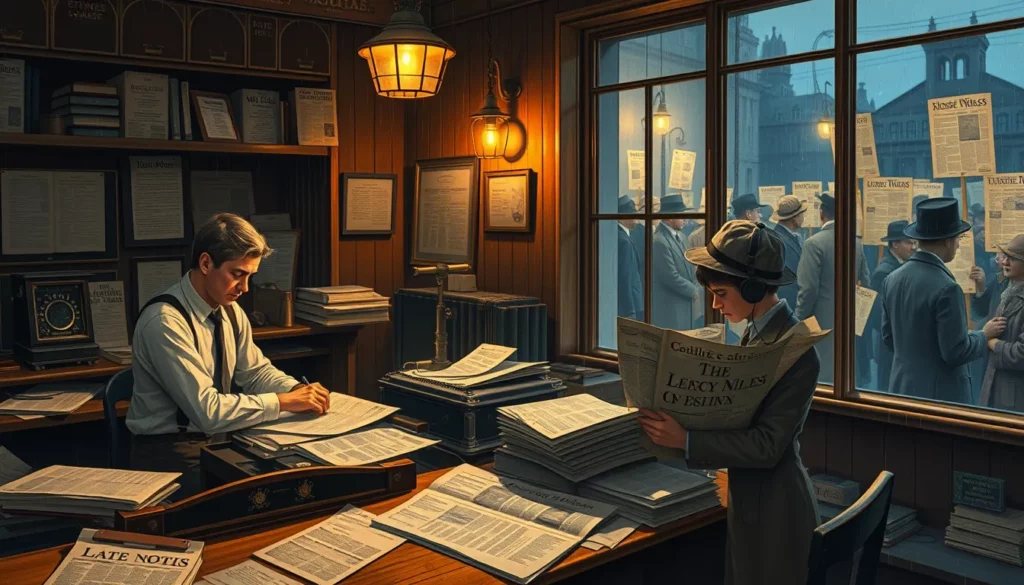
Shortly after midnight on April 15, 1912, telegraph keys began chattering in New York newspaper offices with a story that seemed too large for the wires: the White Star liner Titanic, the largest ship afloat, had struck an iceberg in the North Atlantic. In the first hours, editors had fragments—Cape Race wireless, Marconi operators, messages relayed from ships—not a coherent account. Outside the White Star Line offices at 9 Broadway, crowds gathered in spring rain. Some papers rushed extra editions saying the ship was sinking; others, within hours, reported that all passengers had been saved and the vessel was being towed to Halifax. In London, Reuters and Fleet Street were also piecing together wireless bulletins. The world was learning about the disaster at the speed of Morse code, and the first 24 hours produced some of the most famous and consequential errors in modern newspaper history. This article treats the first 24 hours as the period from the collision on the night of April 14 through the first full day of New York and London newspaper coverage on April 15–16, 1912.
What Happened?
The Titanic was on her maiden voyage from Southampton to New York when she struck an iceberg at about 11:40 p.m. ship’s time on April 14, 1912. She sank at about 2:20 a.m. on April 15. Her wireless operators, Jack Phillips and Harold Bride, sent distress calls that were picked up by nearby ships and shore stations, including Cape Race in Newfoundland. The Cunard liner Carpathia, commanded by Captain Arthur Rostron, altered course and reached the scene at daybreak, taking survivors from the lifeboats.
- April 14, about 11:40 p.m.: Titanic strikes an iceberg in the North Atlantic.
- April 15, after midnight: Distress calls are sent by wireless; ships and shore stations relay fragments of information.
- April 15, about 2:20 a.m.: Titanic sinks.
- April 15, daybreak: Carpathia begins picking up survivors from lifeboats.
- April 15, morning and afternoon: New York and London newspapers publish extra editions and conflicting wireless bulletins, including false reports that the ship was safe or under tow.
- April 15–16: As survivor lists and Carpathia dispatches arrive, the scale of the disaster becomes clearer, though early casualty figures remain wrong.
The central problem for newspapers was not a lack of interest but a lack of verified facts. Wireless telegraphy could carry a message across the ocean in minutes, but it could not instantly establish whether a report had come from a Titanic officer, a passing ship, a shore station, or a rumor repeated along the coast. White Star officials in New York initially declined to confirm the worst, and their caution competed with the newspaper demand for definite headlines.

How It Was Seen at the Time
Contemporaries saw the event through a fog of official silence and technological wonder. The wireless was still new enough to seem almost magical, and newspapers treated its bulletins as authoritative even when they contradicted one another. The language of the first reports mixed maritime confidence with catastrophe: the Titanic was “unsinkable,” “the greatest ship afloat,” and then suddenly “sinking,” “in tow,” or “all saved.” Crowds outside newspaper offices and shipping company headquarters read bulletins posted in windows; extras changed hands in the street. Hope and disbelief alternated by the hour.
“ALL SAVED FROM TITANIC AFTER COLLISION.” — a headline that appeared in the New York Evening Sun on April 15, 1912, reflecting the false safety reports that spread through afternoon papers.
“The Titanic had foundered at about 2:20 A.M. … All her boats are accounted for and about 655 souls have been saved of the crew and passengers, most of the latter presumably women and children. There were about 1,200 persons aboard the Titanic.” — The New York Times, April 15, 1912, beginning with a Cape Race dispatch. The figures were still far from the truth.
The prevailing mood was not simple credulity. Readers knew that wireless messages could be garbled, that shipping companies often withheld details, and that rival papers printed contradictory claims. Yet the public also expected the largest and most modern ship in the world to survive an accident. That expectation shaped what editors were willing to print.
Historical Snapshot
| Aspect | Detail |
|---|---|
| Date | April 14–16, 1912 |
| Place | North Atlantic; Cape Race, Newfoundland; New York; London |
| People | Captain Edward Smith, J. Bruce Ismay, Jack Phillips, Harold Bride, Captain Arthur Rostron, White Star officials, newspaper editors |
| What Happened | Titanic struck an iceberg and sank; wireless bulletins produced conflicting newspaper reports of safety, towage, and disaster. |
| Why It Mattered | The first 24 hours exposed the speed and fragility of wireless-age news and created enduring examples of journalistic error. |
Contemporary Newspaper Coverage
Newspaper coverage in the first 24 hours moved through three broad phases. The first bulletins, often attributed to Cape Race or Marconi operators, reported that the Titanic had struck ice and was in distress. The second phase produced hopeful reports that the ship was safe, that passengers had been transferred, or that she was being towed toward Halifax. The third phase, as Carpathia’s survivor dispatches arrived, confirmed that the ship had sunk, but still carried incorrect numbers of saved and lost.
The New York Times on April 15 opened with a Cape Race dispatch that correctly reported the foundering but wrongly estimated about 655 saved and about 1,200 aboard. The New York Evening Sun went further in the wrong direction with its “ALL SAVED” headline. The New York Herald’s April 15 front page, like many others, combined wireless fragments with large, confident display type. The Detroit News later summarized the disaster as “1,241 missing, 868 saved from Titanic; hope of more rescues abandoned,” a headline that was closer in scale but still inaccurate in detail. By April 16, The New York Times was reporting 866 rescued and probably about 1,250 lost—nearer the final tragedy, but not yet reliable.
“White Star liner Titanic, biggest and most luxurious ship ever built, on her maiden voyage, struck an iceberg 1,030 miles east of New York, at 10:30 Sunday night, and sank in four hours.” — The Detroit News, April 17, 1912, as reproduced in later media-history summaries. The time and distance details were themselves part of the confusion.
The tone of coverage was urgent, competitive, and often declarative. Headlines used the language of certainty because uncertainty did not sell extras. Yet the stories beneath those headlines frequently admitted that details were unconfirmed, that messages had come “indirectly,” or that White Star officials refused to comment.
What People Knew at the Time
| What People Knew Then | What We Know Now |
|---|---|
| Titanic had struck an iceberg and was in distress. | Titanic struck ice at about 11:40 p.m. on April 14 and sank at about 2:20 a.m. on April 15. |
| Some papers reported all passengers were saved or that the ship was being towed to Halifax. | No towing occurred; the ship sank, and more than 1,500 people died. |
| Early accounts gave about 655 or 866 saved and about 1,200 or 1,241 missing. | Modern tallies generally give about 2,200 people aboard, about 700 saved, and more than 1,500 lost, though survivor lists vary slightly. |
| Wireless bulletins were treated as fast but not always verified. | Wireless saved lives, but in 1912 it also multiplied rumor and error. |
What the Sources Got Wrong
The most famous error was the false report of safety. On April 15, afternoon papers spread the erroneous report that the Titanic was safe. The New York Times later explained that the White Star Line had received the message “only indirectly” and could not confirm it. The false report was not a single deliberate hoax so much as a cascade of wireless confusion, official caution, and headline competition.
- “All saved” was false. The New York Evening Sun’s April 15 headline “ALL SAVED FROM TITANIC AFTER COLLISION” became a symbol of premature certainty. The ship had sunk, and hundreds were dead.
- The towage story was false. Reports that the Titanic was being towed to Halifax or was proceeding under her own steam confused messages about other ships and the Carpathia’s rescue work.
- The numbers were wrong. The New York Times on April 15 reported about 655 saved and about 1,200 aboard; later reports gave 866 saved and about 1,250 lost. Modern accounts put the total aboard at roughly 2,200 and the dead at more than 1,500.
- Prominent names were misplaced. Early survivor and missing lists mixed passengers, duplicated names, and sometimes placed the dead among the saved or the saved among the dead. John Jacob Astor, Isidor Straus, Benjamin Guggenheim, and Major Archibald Butt were eventually confirmed dead, but early lists were unreliable.
- “All boats accounted for” misled. The phrase suggested a orderly rescue; in fact, lifeboat capacity had been grossly inadequate, and many boats left only partly filled.
These errors did not survive because readers were foolish. They survived because the information system of 1912 was fast enough to create news but too fragmented to verify it quickly. The wireless operator was a new kind of witness, and the newspaper editor was still learning how to weigh his messages.
Different Perspectives
White Star Officials
White Star officials in New York were cautious in public. They denied having direct confirmation of the ship’s safety and said the false report had reached them indirectly. Their caution may have been intended to prevent panic, but it also left the field open to rumor.
Newspaper Editors
Editors faced a classic dilemma: publish uncertain wireless fragments immediately or wait for confirmation and risk being beaten by rivals. In the first 24 hours, many chose speed. The result was a patchwork of true and false headlines that readers had to interpret for themselves.
Wireless Operators
Marconi operators such as Phillips and Bride were at the center of the event, sending distress calls while the ship sank. Their messages were heroic, but once relayed through ships and shore stations they became raw material for competing newspaper narratives. Phillips died; Bride survived, and his later account helped correct some early reports.
Readers and Crowds
Readers outside newspaper offices and shipping company headquarters experienced the news as a sequence of bulletins, not a finished story. Hope rose when “all saved” was posted and collapsed when the foundering was confirmed. The emotional whiplash was part of the event’s public history.
Timeline
- April 14, about 11:40 p.m.: Titanic strikes an iceberg.
- April 15, after midnight: Distress calls are sent; Cape Race and nearby ships receive wireless messages.
- April 15, about 2:20 a.m.: Titanic sinks.
- April 15, daybreak: Carpathia reaches the lifeboats and begins rescue.
- April 15, morning: New York papers publish early bulletins and extras.
- April 15, afternoon: False safety reports spread through afternoon papers; White Star officials cannot confirm them.
- April 15–16: Carpathia dispatches and survivor lists confirm the disaster, but early casualty figures remain wrong.
- April 18: Carpathia arrives in New York with survivors, producing the first large wave of eyewitness testimony.
- April 22: The New York Times reports White Star’s explanation of the false safety message.
The first 24 hours of Titanic reporting remain a case study in how speed, technology, and competition can outrun verification. The newspapers were not uniformly wrong, and some early dispatches correctly reported that the ship had foundered. But the most memorable headlines promised safety when there was none, and their errors shaped public grief, official inquiry, and the modern understanding of the disaster. The primary sources show a world learning to live with instant news—and learning, painfully, that a wireless message is not the same as a confirmed fact.
FAQ
Did newspapers really report that all Titanic passengers were saved?
Yes. On April 15, 1912, afternoon papers including the New York Evening Sun carried false safety reports and headlines such as “ALL SAVED FROM TITANIC AFTER COLLISION.” White Star officials later said the safety message had reached them only indirectly and could not be confirmed.
Why did early reports say Titanic was being towed to Halifax?
The towage story grew from garbled wireless messages, confusion among ships in the area, and the desire for a hopeful outcome. Titanic had sunk; no towing occurred. Carpathia was the ship that reached the survivors.
How many people were actually on Titanic?
Modern accounts generally give about 2,200 people aboard. Early newspaper figures of about 1,200 aboard were far too low. The final death toll was more than 1,500, with roughly 700 survivors, though survivor lists vary slightly because of duplicated and misspelled names.
When did newspapers get the story right?
More reliable news arrived after Carpathia reached the lifeboats and began sending survivor lists on April 15–16. Even then, casualty figures remained inaccurate. The arrival of Carpathia in New York on April 18 produced the first large wave of eyewitness testimony.
Was the false reporting a deliberate hoax?
No single hoax explains it. The errors came from a cascade of wireless confusion, indirect messages, official silence, and newspaper competition for extra editions. Some reports were honest but premature; others were simply wrong.














Leave a Reply