
Short Answer
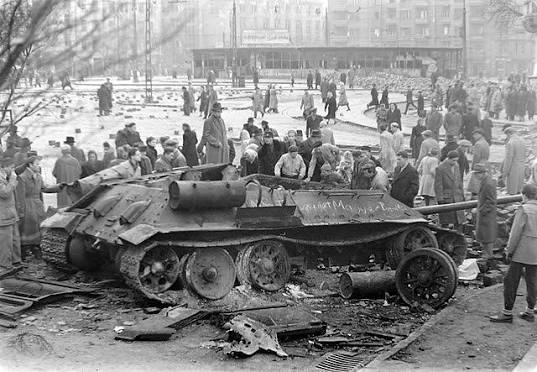
On 23 October 1956, Budapest erupted in a nationwide uprising against Soviet domination and the communist government of Hungary. Within days, the revolution spread to the industrial heartland, and workers in factories, mines, and power plants began forming their own revolutionary councils. These councils, composed of ordinary workers, seized control of production, published their own newspapers, and demanded political and economic reforms. In the Ikarus Bus Factory, one of the largest industrial plants in Hungary, workers took over the factory and established a council that challenged the authority of the communist party. Their resistance, though short-lived, became one of the most powerful expressions of the Hungarian Revolution. This article, based on contemporary reports and official records, reconstructs the rise, demands, and suppression of the workers’ councils in 1956.
What Happened?
The Hungarian uprising began on 23 October 1956 with student demonstrations in Budapest. Within days, the revolt spread to industrial centers, and workers across the country formed revolutionary councils. According to the United Nations Special Committee on the Problem of Hungary, workers’ councils emerged as a key revolutionary force, taking over factories and demanding a say in management. The councils were not limited to industrial workers; they also included miners, railway workers, and public employees. They organized general strikes, printed leaflets, and negotiated with local authorities.
The Ikarus Bus Factory, a major state-owned enterprise, became a focal point. As historian Zsombor Bódy notes, the revolution had significant consequences for the factory, where workers’ councils played a crucial role in the political activities and influence. The councils threatened the Kádár regime, which was installed by the Soviet Union after the initial revolution was suppressed. After the Soviet intervention on 4 November 1956, the councils continued to resist. They called a general strike that paralyzed the country and engaged in negotiations with the new government. However, the Kádár regime, with Soviet military support, gradually crushed the councils. By mid-December, most councils had been disbanded, and their leaders arrested.
How It Was Seen at the Time
Contemporaries saw the workers’ councils as a genuine expression of working-class self-determination. Hannah Arendt, the political philosopher, famously called the Hungarian Revolution “the only real workers’ revolution in the twentieth century” (as cited in Bódy, 2020). The workers themselves described their councils as organs of self-government, not merely trade unions. They used terms like “proletarian democracy” and “workers’ control.” In contrast, the Kádár regime, seeking to legitimize its rule, labeled the revolution and the councils as “counter-revolutionary” and “fascist” elements. The official media depicted the councils as the work of foreign agents and reactionary forces. This narrative, as David A. J. Reynolds argues, was a deliberate attempt to construct a historical interpretation that would justify the regime’s suppression of the revolution.
“In the case of the Hungarian revolution—which in her view was the only real workers’ revolution in the twentieth century—it is worthwhile to make a distinction between the workers’ councils and the other revolutionary bodies.” — Zsombor Bódy, quoting Hannah Arendt (source: DOI 10.1163/9789004440395_007)
Historical Snapshot
| Aspect | Detail |
|---|---|
| Date | 23 October – 19 December 1956 |
| Place | Budapest and industrial centers across Hungary, including the Ikarus Bus Factory |
| People | Hungarian workers, factory councils, Soviet troops, Kádár government, UN Special Committee |
| What Happened | Workers formed revolutionary councils, seized factories, and demanded political and economic reforms; after the Soviet intervention, they resisted via general strikes until suppression |
| Why It Mattered | The councils were the most radical expression of the revolution, challenging both Soviet domination and the communist party’s monopoly on power |
Eyewitness Accounts
The UN Special Committee on the Problem of Hungary collected testimonies from hundreds of witnesses who had fled Hungary. These witnesses included workers, students, and soldiers. Their accounts describe the formation of workers’ councils and the atmosphere of the revolution. One worker from the Ikarus factory, testifying before the committee, described how the council took over the management of the plant and tried to maintain production while the revolution was underway. Another witness, a railway worker, recounted how the council organized a strike that halted all traffic on the national railways. These testimonies provide a vivid picture of the workers’ determination and the initial success of their self-organization. The UN report noted that the workers’ councils were the only organized force that effectively controlled the factories after the Soviet intervention.
Different Perspectives
The Workers’ Perspective
Workers saw their councils as a legitimate expression of their rights. They demanded the withdrawal of Soviet troops, free elections, and the right to self-management. They believed they were fighting for a democratic socialist future. Their language was full of references to “workers’ power” and “proletarian self-government.” They also saw themselves as continuing the traditions of the 1956 revolution.
The Kádár Regime’s Perspective
The Kádár government, installed by the Soviet Union, dismissed the revolution and the councils as a “counter-revolution” engineered by reactionaries and Western imperialists. The regime used this narrative to justify the suppression of the councils and the imprisonment of their leaders. This interpretation was officially adopted by the Hungarian government and was the basis for the ensuing political repression. The regime’s view was not shared by the workers, but it became the official historical narrative for decades.
What People Feared
In the autumn of 1956, workers feared not only the return of Soviet troops but also the possibility that their newly won rights would be taken away. They feared that the councils would be dissolved and that the old communist order would be restored. There was also a fear of anarchy, as some workers worried that the revolution might lead to chaos and a breakdown of order. The Kádár regime exploited these fears by depicting the councils as a threat to stability and national security. The workers, on the other hand, feared that the revolution would be crushed by Soviet military force, as indeed happened.
Aftermath
After the Soviet intervention on 4 November 1956, the workers’ councils continued to exist for several weeks, but the Kádár regime began to dismantle them. The regime used a combination of force, economic pressure, and political deception. It promised concessions, but in reality it was preparing to crush the councils. By mid-December 1956, the councils had been dissolved, and their leaders were arrested, imprisoned, or executed. The Ikarus Bus Factory, like many others, was subjected to a purge of its workers. The revolution was officially condemned as a counter-revolution, and the workers’ councils were branded as illegal organizations. The suppression of the councils was a key step in the consolidation of the Kádár regime’s power.
How Historians See It Today
Modern historians have re-evaluated the workers’ councils as a genuine attempt at self-government and a significant part of the Hungarian Revolution. Scholars like Zsombor Bódy have emphasized the importance of the councils in the political landscape of the revolution. They argue that the councils were not just a protest movement but a constructive effort to establish a new form of industrial democracy. The UN report, which was released in 1957, already recognized the councils’ role. The modern scholarship also stresses the suppression of the councils as a crucial event in the consolidation of the Kádár regime. The workers’ councils have become a symbol of resistance against totalitarianism and a point of reference for democratic movements in Central Europe.
Contemporary Terminology
Workers’ Council – An elected body of workers that took over the management of a factory or enterprise during the 1956 revolution. The term was used to describe both the factory-level councils and the central workers’ council in Budapest.
Counter-revolution – The term used by the Kádár regime to describe the entire 1956 revolution and the workers’ councils. It was intended to delegitimize the revolution as a foreign-inspired attack on the communist state.
Proletarian democracy – A term used by the workers to describe the form of self-government they were creating, which they contrasted with the bureaucratic state socialism of the communist party.
Timeline
- 22 October 1956 – Students at the Technical University in Budapest prepare a list of demands, including the withdrawal of Soviet troops and free elections.
- 23 October 1956 – Demonstrations erupt in Budapest; the revolution begins.
- 25 October 1956 – Workers in several factories form their first councils, seizing control of production.
- 28 October 1956 – The Hungarian government, led by Imre Nagy, declares a ceasefire and recognizes the workers’ councils.
- 4 November 1956 – Soviet troops intervene in force; Kádár forms a new government.
- November–December 1956 – Workers’ councils resist, call general strikes, but are gradually suppressed.
- 19 December 1956 – The Kádár government formally dissolves the central workers’ council and arrests its leaders.
Key Documents
- UN Report of the Special Committee on the Problem of Hungary (1957) – The official UN report, based on hearings with hundreds of witnesses, documenting the revolution and the workers’ councils.
- Workers’ Council Proclamations (1956) – Various leaflets and proclamations issued by workers’ councils, outlining their demands and justifications.
- Kádár’s Speech on the Counter-Revolution (1957) – The official government interpretation of the events, used to justify the suppression of the councils.
Common Misconceptions
FAQ
What were the main demands of the workers' councils in 1956?
The councils demanded the withdrawal of Soviet troops, free elections, and the right to self-management of factories. They also sought to establish a democratic socialist system, as evidenced in their proclamations and testimonies collected by the UN.
How did the Kádár regime respond to the workers' councils?
The Kádár regime, installed by the Soviet Union, initially negotiated with the councils but then suppressed them through military force and arrests. The regime branded the councils as 'counter-revolutionary' and used this label to justify their dissolution.




Leave a Reply