
Short Answer
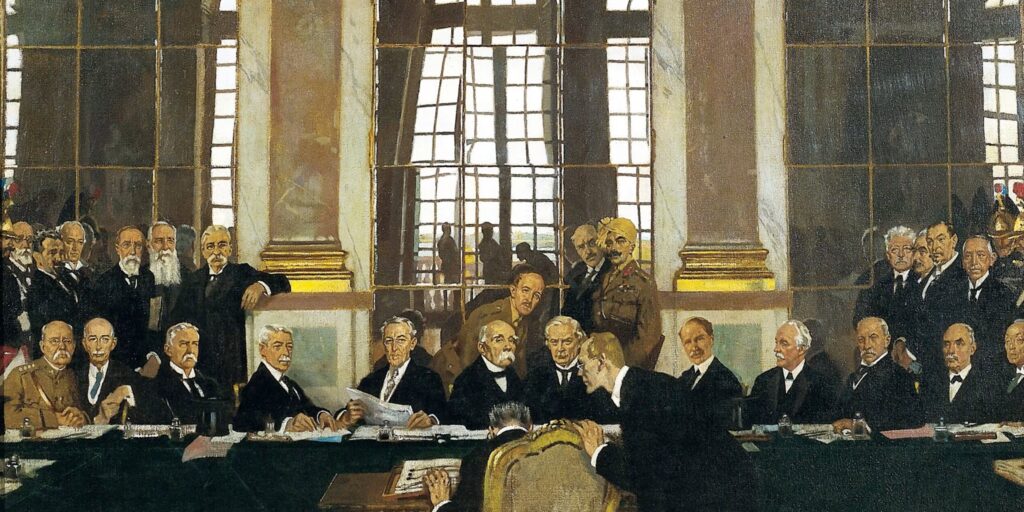
On June 28, 1919, the world held its breath. In the Hall of Mirrors at the Palace of Versailles, German delegates affixed their signatures to the peace treaty that ended the First World War. Exactly five years after the assassination of Archduke Franz Ferdinand, crowds outside the palace cheered and wept, while inside a bitter protest was registered. Around the globe, newspaper headlines proclaimed “World War Ends as Pact is Signed,” capturing the relief and unease of the moment. The signing was the culmination of months of negotiations in Paris, and the world’s press had followed every twist, bringing the drama of the peace conference into the homes of millions.
What Happened?
The Treaty of Versailles was signed on June 28, 1919, at the Palace of Versailles, France. It formally ended the state of war between Germany and the Allied Powers. The Paris Peace Conference had opened in January 1919, with representatives from over thirty-two nations. The “Big Four” — President Woodrow Wilson of the United States, Prime Minister David Lloyd George of Great Britain, Prime Minister Georges Clemenceau of France, and Prime Minister Vittorio Orlando of Italy — dominated the negotiations. The treaty imposed on Germany the full responsibility for the war, required it to pay enormous reparations, stripped it of territory, and limited its armed forces to 100,000 men. It also created the League of Nations, a body that President Wilson championed as a guarantee against future conflict.
The German delegation was presented with the draft treaty on May 7, 1919, and given a deadline of June 23 to accept it. After a final ultimatum, the German government, with its military and economic options exhausted, agreed to sign. The signing ceremony was a historic event, described in contemporary accounts as the “Historic Ceremony of Its Delivery to the German Delegates at Versailles, How It Was Received” (from Current History, June 1919).
How It Was Seen at the Time
The reaction to the treaty was deeply divided. In the Allied nations, there was a sense of relief and victory. The headline “World War Ends as Pact is Signed” appeared in newspapers on June 28, 1919, as recorded by the Library of Congress. Crowds cheered and wept, but in Germany the treaty was met with bitter protest. The German people described it as a “dictated peace,” and their newspapers railed against the harsh terms. The mood was tempered by both hope and anxiety: many believed that the League of Nations would prevent future wars, while others feared that the treaty would create a new enemy.
“World War Ends as Pact is Signed” — headline from the New York Tribune, June 28, 1919 (as cited by the Library of Congress).
Historical Snapshot
| Aspect | Detail |
|---|---|
| Date | June 28, 1919 |
| Place | Palace of Versailles, France |
| People | Big Four: Wilson, Lloyd George, Clemenceau, Orlando; German delegates |
| What Happened | The Treaty of Versailles was signed, ending World War I |
| Why It Mattered | It imposed harsh terms on Germany and established the League of Nations |
Contemporary Newspaper Coverage
The world’s press covered the treaty and the peace conference with unprecedented intensity. From January to June 1919, newspapers in the United States and Europe published daily reports. The Current History magazine, a contemporary publication, offered detailed accounts with titles such as “The Paris Peace Conference: Opening Session of the Greatest World Tribunal in History” and “Germany and the Peace Treaty; Historic Ceremony of Its Delivery to the German Delegates at Versailles, How It Was Received.” The Library of Congress’s Chronicling America collection contains numerous articles from this period, including pieces from the New York Tribune and other papers that documented the proceedings, the text of the treaty, and the reactions of the German delegation.
The coverage reflected the deep divisions in public opinion. In the United States, the debate over the League of Nations was intense; Senator Henry Cabot Lodge spoke against the League, as recorded in the Library of Congress’s sound recordings collection. Newspapers published arguments both for and against ratification, shaping the political discourse. In Britain and France, the press celebrated the victory but also voiced concerns about the treaty’s enforcement. The German press, by contrast, condemned the treaty as an injustice, predicting dire consequences.
“Germany and the Peace Treaty; Historic Ceremony of Its Delivery to the German Delegates at Versailles, How It Was Received” — Current History, June 1919.
What People Feared
Contemporaries harbored many fears. In Germany, there was the fear of national humiliation and economic collapse. The German people worried that the treaty would destroy their country. In the Allied nations, some feared that the treaty was not harsh enough to prevent Germany from rising again, while others worried that the League of Nations would be too weak to maintain peace. The newspapers often reflected these anxieties, with headlines warning of “the war to end all wars” and the dangers of a “dictated peace.” The fear of a second war was already present, even as the ink dried on the treaty.
What People Expected Would Happen Next
Most contemporaries expected that the Treaty of Versailles would usher in a new era of peace. President Wilson had promised a “peace without victory,” and the League of Nations was seen as a mechanism to prevent future conflicts. However, there were also expectations that the treaty would need to be revised. Some commentators predicted that Germany would eventually recover and reassert itself. The expectations were mixed: the Allied nations hoped for a lasting peace, while German observers anticipated resentment and future conflict.
How Historians See It Today
Modern historians often view the Treaty of Versailles as a flawed peace. The Library of Congress notes that “many historians claim the peace treaty’s harsh terms set the stage for the Second World War.” The reparations and the “war guilt” clause placed a heavy burden on Germany, and the League of Nations ultimately failed to maintain peace. Contemporary optimism about the treaty’s ability to prevent war was quickly overshadowed by the economic and political crises of the 1920s and 1930s. This historical perspective stands in stark contrast to the relief and hope that dominated the newspaper reports of June 1919.
Aftermath
Immediately after the signing, the treaty was ratified by the Allied powers. The League of Nations was formally established in January 1920, though the United States never joined. Germany was forced to accept the treaty, but the resulting economic hardship and political instability fueled resentment that would contribute to the rise of the Nazi Party. The treaty also redrew the map of Europe, returning Alsace-Lorraine to France and creating the Polish Corridor. In the short term, the world turned to reconstruction, but the seeds of future conflict were already planted.
The Treaty of Versailles and the newspapers that reported it offer a powerful lesson in the complexity of peacemaking. The primary sources—newspaper headlines, contemporary articles, and official accounts—reveal a world torn between hope and anxiety. The newspapers of 1919 promised peace, but the fears of a “dictated peace” would echo for decades. The treaty’s legacy is a reminder that the end of war is not always the beginning of peace.
FAQ
What did newspapers report on the day the Treaty of Versailles was signed?
Newspapers around the world proclaimed 'World War Ends as Pact is Signed' on June 28, 1919. They described the ceremony at Versailles, the cheering and weeping crowds, and Germany's bitter protest against the treaty's terms.
How did German newspapers react to the treaty?
German newspapers bitterly protested the treaty, calling it a 'dictated peace' and describing the terms as humiliating. They predicted economic ruin and political instability for Germany.




Leave a Reply