
Short Answer
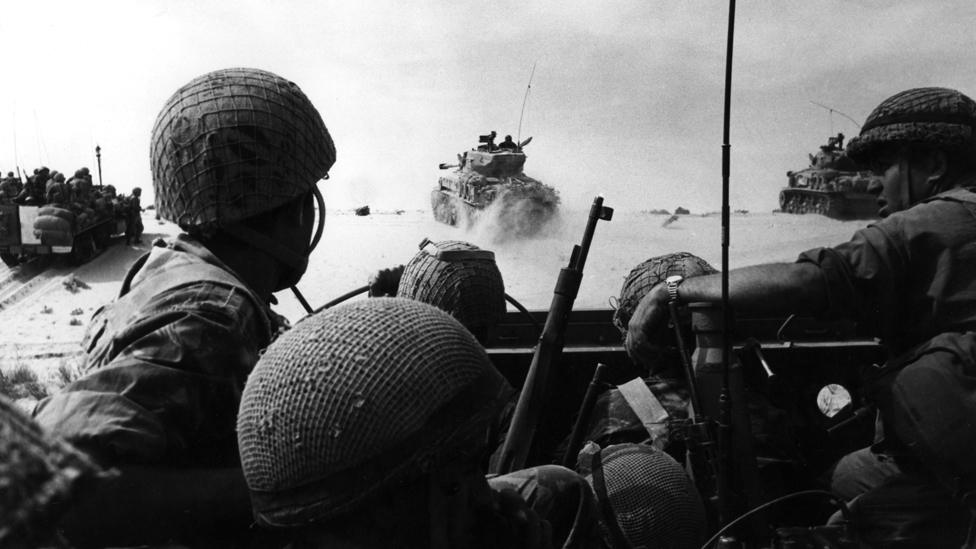
In the early hours of June 5, 1967, the skies over Cairo and Jerusalem were split by the roar of jet engines. For six days, the Middle East was consumed by a war that would redraw borders, topple governments, and leave an indelible mark on millions of lives. In Cairo, residents awoke to the sound of air-raid sirens and the distant thud of explosions as Israeli aircraft struck Egyptian airfields. In Jerusalem, a city physically divided since 1948, the crack of artillery and the rattle of machine guns echoed through the streets. The war was not a distant event; it was a lived reality, experienced in the homes, shelters, and streets of two ancient cities. This article reconstructs that experience through the eyes of those who were there—Palestinians, Israelis, Jordanians, and Egyptians—using their own words and contemporary reports to capture the fear, confusion, and hope of a moment that changed everything.
What Happened?
The Six-Day War began on June 5, 1967, when Israel launched a preemptive air strike against Egyptian airfields, destroying most of the Egyptian air force on the ground. The attack came after weeks of escalating tensions, including Egypt’s closure of the Straits of Tiran to Israeli shipping and the withdrawal of UN peacekeepers from the Sinai Peninsula. Within hours, Israel had achieved air superiority and turned its attention to ground offensives in the Sinai and against Jordan, which had signed a mutual defense pact with Egypt.
In Jerusalem, the city was divided by the Green Line, with Jordan controlling the eastern sector, including the Old City and the holy sites. On the morning of June 5, Jordanian forces began shelling West Jerusalem, and Israeli troops responded. The battle for Jerusalem was fierce, with Israeli paratroopers fighting house-to-house in the narrow alleys of the Old City. On June 7, Israeli forces captured the Old City, including the Temple Mount and the Western Wall. The war ended on June 10 with a ceasefire, leaving Israel in control of the Sinai Peninsula, the Gaza Strip, the West Bank, East Jerusalem, and the Golan Heights.
In Cairo, the initial days were marked by confusion and misinformation. The Egyptian government, led by President Gamal Abdel Nasser, initially claimed victory, but by June 9, Nasser appeared on television to announce his resignation, only to be persuaded to stay after mass demonstrations. The war was a profound shock to the Arab world, which had expected a different outcome.
How It Was Seen at the Time
Contemporaries experienced the war through a fog of propaganda, rumor, and fear. In Jerusalem, the sounds of battle were immediate and personal. Samia Khoury, a Palestinian woman living in Beit Hanina, a suburb north of Jerusalem, recalled the chaos: “We were living in Beit Hanina, a suburb north of Jerusalem. There was a Jordanian military camp right behind our house. The Israeli planes raiding the area didn’t realise that the Jordanian camp had been evacuated before the war had even begun. One of the…” (BBC News, 2007). Her account, like many others, captures the sense of being caught between armies.
In Cairo, the government-controlled media broadcast triumphant claims of victory, and many Egyptians initially believed that the war was going well. But as the reality of defeat set in, a mood of disbelief and despair spread. The war was seen as a collective humiliation, a “naksa” (setback) that would shape Arab politics for decades.
Israeli perspectives were similarly shaped by fear and survival. Many Israelis saw the war as a defensive necessity, a struggle for existence against hostile neighbors. The capture of the Old City was met with euphoria, as Jewish soldiers wept at the Western Wall. The war was framed in biblical and historical terms, a return to the heart of the Jewish homeland.
Eyewitness Accounts
The most vivid records of the war come from the people who lived through it. The BBC’s “Have Your Say” feature, published in 2007 for the 40th anniversary, collected personal accounts from readers across the world. Among them was Samia Khoury, a Palestinian from East Jerusalem, who described the bombing of her neighborhood. Another account came from Nabih El Suhaimat, a young captain in the Jordanian Army stationed in Jerusalem. In a BBC Witness History program, he recalled how he and his soldiers “fought in vain to defend the city against the Israeli attack” (BBC World Service, 2017). He was forced to flee Jerusalem in disguise after the fall of the Old City.
Abraham Rabinovich, an American reporter who arrived in Jerusalem five days before the war, witnessed the aftermath of the battle for the Old City. In a 2017 Washington Post retrospective, he described walking through the former checkpoint into the eastern side of the city on June 7, 1967, and reaching the Temple Mount “a few hours after its capture” (Washington Post, 2017). His account, based on interviews with 300 soldiers, officials, and civilians, provides a detailed, on-the-ground view of the battle.
These eyewitness accounts are invaluable for understanding the human dimension of the war. They reveal not only the events but the emotions—fear, courage, grief, and relief—that defined the experience.
Different Perspectives
Israeli Perspective
For many Israelis, the war was a defensive victory against existential threats. The capture of East Jerusalem and the Old City was seen as a historic reunification of the capital. Israeli soldiers and civilians alike expressed a sense of awe and religious significance. The war was also a time of intense anxiety, as the country faced the possibility of invasion from multiple fronts.
Palestinian Perspective
For Palestinians, the war was a catastrophe, or “Nakba” (catastrophe) in its second phase. The occupation of the West Bank, Gaza, and East Jerusalem led to displacement, loss of homes, and the beginning of a long military occupation. Samia Khoury’s account reflects the fear and uncertainty of civilians caught in the crossfire. Many Palestinians fled or were expelled, and the war created a new refugee crisis.
Jordanian Perspective
Jordan, which had ruled East Jerusalem since 1948, saw the war as a defensive struggle. Captain Nabih El Suhaimat’s account highlights the bravery and futility of the Jordanian defense. The loss of Jerusalem was a deep blow to Jordanian national pride and to the Hashemite Kingdom’s claim to custodianship of the holy sites.
Egyptian Perspective
In Cairo, the war was experienced through the lens of Nasser’s pan-Arabism. The initial claims of victory were quickly replaced by the reality of defeat. Nasser’s resignation speech on June 9, 1967, was a moment of national trauma. Many Egyptians felt betrayed by their own leadership and by the failure of the Arab coalition. The war led to a period of soul-searching and eventually to the rise of a new generation of leaders.
What People Feared
During the war, fears ran high on all sides. Israelis feared a second Holocaust, with the memory of the 1948 war and the threats of Arab leaders to “drive the Jews into the sea” still fresh. The shelling of West Jerusalem and the possibility of a Jordanian breakthrough fueled these anxieties. Palestinians feared displacement and the loss of their homes, a fear that had been realized in 1948 and now threatened to repeat. Jordanians feared the loss of Jerusalem and the holy sites. Egyptians feared the collapse of Nasser’s regime and the humiliation of defeat.
Rumors and misinformation amplified these fears. In Cairo, rumors of Israeli paratroopers landing in the city circulated, though they were unfounded. In Jerusalem, there were fears that the Old City would be destroyed in the fighting. The reality was devastating enough, but the uncertainty made it worse.
What People Expected Would Happen Next
At the time, few predicted the swift and decisive outcome. Many expected a prolonged war, similar to the 1948 conflict, with heavy casualties on both sides. Arab leaders and populations expected that the combined forces of Egypt, Jordan, and Syria would at least hold their ground, if not achieve victory. Israeli leaders, too, were uncertain; the decision to attack was a gamble. After the war, many expected a quick peace settlement, but the reality was decades of continued conflict and occupation.
Some contemporaries, like Abraham Rabinovich, sensed that the capture of the Old City would have profound consequences. In his book, he noted that the conquest was “something that Israel’s leaders had not planned and that some of them did not want” (Rabinovich, 2007). The aftermath would prove that the war’s outcome was not a simple victory but the beginning of a new, complex chapter in Middle East history.
Aftermath
The immediate aftermath of the war was marked by euphoria in Israel and shock in the Arab world. Israel began to administer the newly occupied territories, including East Jerusalem, which was annexed in a move not recognized internationally. The war created a new wave of Palestinian refugees, with estimates of 280,000 to 325,000 people fleeing or being expelled from the West Bank and Gaza. In Cairo, Nasser remained in power but his prestige was shattered, and the war led to a period of political and economic instability. The United Nations passed Resolution 242, calling for the withdrawal of Israeli forces from occupied territories, but the resolution’s ambiguous language left room for interpretation. The war set the stage for the Yom Kippur War of 1973 and the ongoing Israeli-Palestinian conflict.
The primary sources from 1967—the letters, diaries, and recorded interviews—offer a raw and unfiltered view of a world in turmoil. They remind us that history is not just a sequence of events but a collection of human experiences, each with its own fears, hopes, and memories. The Six-Day War, as seen through the eyes of those in Cairo and Jerusalem, is a testament to the enduring power of eyewitness testimony in understanding the past.
FAQ
What was the immediate reaction in Cairo to the Six-Day War?
Initially, the Egyptian government broadcast claims of victory, but as the scale of the defeat became clear, there was shock and disbelief. President Nasser announced his resignation on June 9, 1967, but withdrew it after mass demonstrations of support. The war was a profound humiliation for Egypt and the Arab world.
How did civilians in Jerusalem experience the war?
Civilians in Jerusalem experienced the war through shelling, air raids, and street fighting. Palestinian residents like Samia Khoury described the chaos of bombs falling near their homes. Israeli civilians in West Jerusalem faced Jordanian artillery fire. The capture of the Old City on June 7 was a moment of intense emotion for both sides.








Leave a Reply