
Short Answer
Quick Snapshot
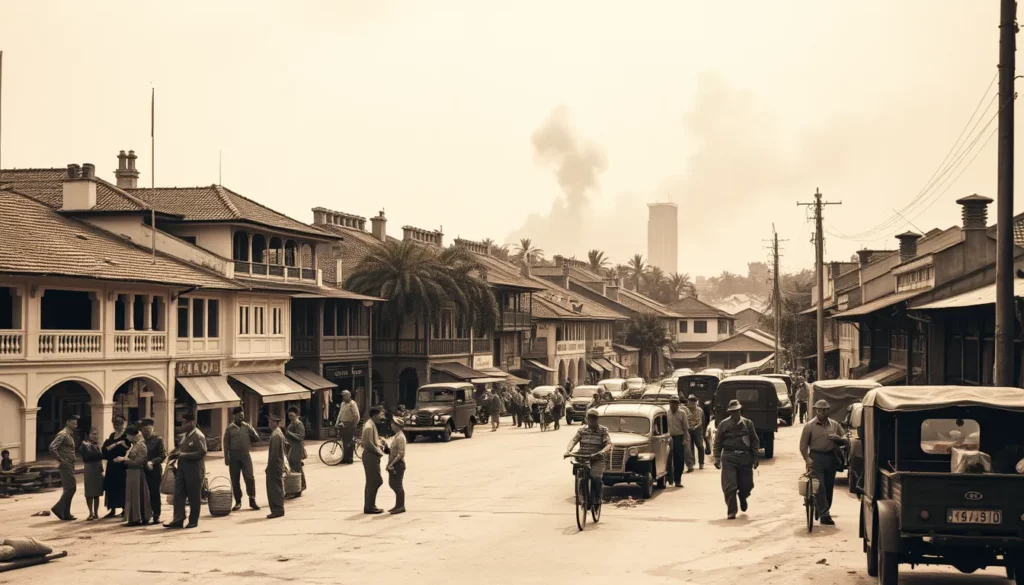
Singapore in 1942 was a British Crown colony at the southern tip of the Malay Peninsula, a great entrepôt port and the supposed "Gibraltar of the East." Its fall on 15 February 1942 was one of the defining catastrophes of the Second World War in Asia. This article uses the most common encyclopedic meaning: Singapore as the British colony and city during the year of its surrender and early Japanese occupation.
At the start of the year, Japanese forces were driving down Malaya. By February, refugees crowded the city, Japanese bombs fell on the docks and airfields, and the British commander, Lieutenant-General Arthur Percival, faced an enemy that had moved faster and fought more effectively than anticipated. The surrender at the Ford Motor Factory at Bukit Timah handed some 80,000 to 85,000 British and Commonwealth troops to the Japanese, the largest capitulation in British history.
The city was renamed Syonan-to, "Light of the South," under Japanese military rule. Everyday life was transformed by curfews, rationing, propaganda, forced labour, and fear. The year 1942 was therefore not simply a military defeat but a rupture in the social and political history of Singapore.
Singapore in 1942
Singapore lies at the southern end of the Malay Peninsula, separated from Johore by the narrow Straits of Johore. In 1942 the island was mainly low-lying, with mangrove swamps, small rivers, rubber plantations, kampongs, and the dense Bukit Timah forest and hill. The city centred on the south coast, around the Singapore River, Keppel Harbour, and the commercial district. The naval base at Sembawang and the airfields at Tengah, Seletar, and Kallang gave the island strategic value far beyond its size.
The climate was hot and humid, with monsoon rains and sudden squalls. In February 1942 heat, rain, and smoke from burning oil and rubber works added to the confusion of battle. The atmosphere was one of blackout, air-raid alarms, evacuation, and rumour. British planners had long advertised Singapore as a fortress, but the defences were incomplete, the air force weak, and the garrison inexperienced in jungle warfare. The Japanese advanced with bicycles, tanks, and close co-operation between infantry and aircraft, while the British and Commonwealth forces fell back through Malaya to the island.
Population & Economy
Singapore was a multiethnic colonial city. The Chinese formed the largest community, with substantial Malay, Indian, Eurasian, and smaller European populations. In the late 1930s the colony had perhaps three-quarters of a million people; by early 1942 refugees from Malaya and military personnel had swelled the numbers to roughly 800,000 civilians and tens of thousands of troops. Chinese dialects, Malay, Tamil, English, and other languages filled the streets. The population was young, mobile, and sharply divided by class and race under colonial rule.
The economy was built on trade. Singapore handled rubber, tin, petroleum, rice, spices, and manufactured goods. Keppel Harbour and the Tanjong Pagar railway yards linked ocean shipping to the Malayan railway. British military spending had expanded dockyards, barracks, and the naval base. War disrupted this system: shipping was diverted, insurance collapsed, banks restricted withdrawals, and essential foods became scarce. Rice, sugar, cooking oil, and kerosene were hoarded or rationed. Wages fell in real terms while black-market prices rose. The occupation economy would soon depend on Japanese military currency, forced deliveries, and barter.
Government & Politics
Singapore was a British Crown colony. Governor Sir Shenton Thomas headed the civil administration, with a Legislative Council and municipal bodies, but there were no democratic elections in the modern sense. In February 1942 civil government was overwhelmed by military events. Lieutenant-General Arthur Percival commanded Malaya Command; General Tomoyuki Yamashita commanded the Japanese 25th Army. Winston Churchill, as British Prime Minister, treated the fall as a strategic and moral disaster.
There never has been a moment, there never could be a moment, when Great Britain or the British Empire, single-handed, could fight Germany and Italy, could wage the Battle of Britain, the Battle of the Atlantic and the Battle of the Middle East, and at the same time stand thoroughly prepared in Burma, the Malay Peninsula, and generally in the Far East.
Churchill called the surrender the "worst disaster" in British military history. After 15 February, Japanese military administration replaced British rule. The island became Syonan-to, governed through the Japanese Army and its military police, the Kempeitai. Political life was reduced to obedience, propaganda, and survival. The occupation authorities used screening operations, informers, and collective punishment to control a population they regarded with suspicion.
Industry
Before the war Singapore was an entrepôt and service economy rather than a great manufacturing centre. Its industries included rubber processing and grading, tin smelting, oil storage, ship repair, engineering, sawmills, food processing, and printing. The Singapore Naval Base at Sembawang was a major employer and symbol of British power, with dry docks, workshops, and fuel depots. Keppel Harbour handled cargo and passengers, while Chinese and Indian firms ran import-export networks across Southeast Asia.
The war shattered these networks. Japanese bombing damaged docks, warehouses, and shipping. After the surrender, the occupiers seized British and Allied businesses, controlled key commodities, and used prisoners of war and civilian labour on airfields, roads, and military projects. Trade was redirected to Japan and its conquered territories. Small workshops and family businesses struggled with shortages of fuel, spare parts, and raw materials. The industrial base of 1942 was thus not expanding but contracting under occupation.
Education
Education in colonial Singapore was divided by language and religion. English-language schools, mission schools, Chinese schools, Malay schools, and Tamil schools served different communities. Raffles College and the King Edward VII College of Medicine provided higher education for a small elite. Literacy was uneven: many children received only a few years of schooling, and girls were less likely than boys to continue. Chinese schools were often politically active and watched by the colonial authorities.
In 1942 schooling was disrupted first by bombing and evacuation, then by the Japanese occupation. Schools closed or reopened under new rules. The Japanese promoted Nippon-go, the Japanese language, and propaganda in the classroom. English was discouraged, and teachers suspected of anti-Japanese activity were removed. For most children, the year meant interrupted lessons, fear, and family hardship rather than educational reform.
Transportation
Singapore depended on its harbour. Keppel Harbour and the roads and railway around Tanjong Pagar connected the island to Malaya and the world. The Malayan railway ran north to the causeway and on through Johore; in January 1942 the British blew up part of the causeway to slow the Japanese. Within the city, people travelled by trolleybus, bus, motorcar, bicycle, rickshaw, and on foot. Goods moved by cart, lorry, and coastal lighter.
War disrupted every mode of transport. Air raids damaged roads, bridges, and vehicles. Petrol was scarce, and military traffic took priority. After the surrender, the Japanese used the railway and roads for military purposes, including the movement of prisoners of war. Civilians faced curfews and restrictions on movement. The harbour, once a hub of global shipping, became a controlled entry point for the occupier.
Everyday Life
Everyday life in 1942 was dominated by fear and scarcity. Families queued for rice, water, and kerosene. Blackout rules darkened streets and homes. Air-raid sirens sent people into shelters or drains. Refugees from Malaya crowded into shophouses, schools, and temporary camps. Housing ranged from crowded Chinese shophouses and kampong houses to European bungalows and military barracks. Clothing followed the tropical climate and community custom: sarong kebaya, cheongsam, dhoti, trousers, and colonial whites, though shortages made patched and mended clothes common.
Before the surrender, cinemas, clubs, and radio broadcasts continued amid anxiety. After 15 February, the Japanese imposed curfews, propaganda films, and new holidays. The Kempeitai inspired terror. Chinese men were rounded up in screening operations; many were executed in the Sook Ching massacres. Prisoners of war were concentrated at Changi and other camps, where food and medicine were scarce. For civilians, survival depended on family networks, small trading, and caution in public speech.
Major Events
The decisive event was the Battle of Singapore. Japanese forces landed on the northwest coast on 8 February 1942, seized Bukit Timah and the reservoirs, and threatened the city’s water supply. British and Commonwealth troops, exhausted and poorly supported, could not hold. On 15 February Percival surrendered at the Ford Motor Factory. The Japanese occupation began immediately. The Sook Ching screenings and the imprisonment of Allied troops followed. The fall also had global consequences: it undermined the myth of European invincibility in Asia and shocked Britain, Australia, and the United States.
What Newspapers Were Reporting
Before the surrender, The Straits Times and other local papers carried official communiqués, air-raid warnings, evacuation notices, and reports of fighting in Malaya. Headlines emphasised Japanese advances, British withdrawals, and appeals for calm. The tone shifted from confidence to crisis as refugees arrived and bombs fell. Censorship limited what could be printed, and rumours often outran the newspapers.
After 15 February, the Japanese-controlled press produced Syonan Shimbun and other propaganda. It announced the new order, praised Japanese victories, and warned of punishment for resistance. News of the outside war was tightly controlled. For historians, these newspapers are valuable not only for facts but for the language of occupation and the attempt to reshape public opinion.
What People Were Talking About
Letters, diaries, and oral histories record fear of a fifth column, spy scares, hoarding, and the fate of European women and children evacuated before the battle. Chinese families feared Japanese reprisals and the screening operations. Indian soldiers and civilians wondered what the Japanese slogan of Asian liberation would mean in practice. British prisoners worried about food, disease, and news from home. Rumours spread about water shortages, looting, and Japanese atrocities. People debated whether to flee, hide, collaborate, or resist. The occupation made ordinary conversation dangerous, and silence became a survival skill.
Historical Photographs
Photographs from 1942 are among the most powerful sources for the fall. Imperial War Museums and other archives hold images of Japanese troops advancing by bicycle, British and Commonwealth prisoners, the surrender party at the Ford Factory, and the damaged docks and city. The famous photographs of Percival and Yamashita at the surrender table capture the theatricality of defeat. Photographs of Changi prisoner-of-war camp show overcrowding and improvisation. Japanese propaganda photographs presented Syonan-to as an orderly new order, while Allied and postwar images emphasised humiliation and suffering. Visual evidence must be read critically: photographers on all sides selected, framed, and captioned scenes for political purposes.
Documents & Primary Sources
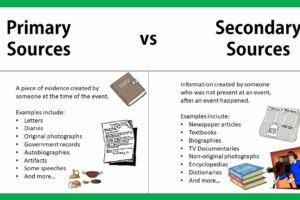
Key sources include the surrender document signed at the Ford Motor Factory, British and Japanese military records, Winston Churchill’s speeches in Hansard, colonial government files, maps of Singapore and Malaya, and the registers of prisoners of war. The Straits Times and the Syonan Shimbun provide press evidence. Diaries and letters of soldiers, nurses, civilians, and prisoners give personal perspectives. Oral history interviews held by the National Archives of Singapore and the Imperial War Museums preserve memories of the battle, occupation, and Sook Ching. Historians also use Japanese military orders, Kempeitai records, and postwar testimony to reconstruct the massacres and the occupation administration.
1942 Timeline
| Date | Event |
|---|---|
| January 1942 | Japanese air raids intensify on Singapore; refugees pour into the city as British forces withdraw down Malaya. |
| 31 January | British and Commonwealth troops complete withdrawal to Singapore; the causeway to Johore is damaged. |
| 8 February | Japanese forces land on the northwest coast of Singapore. |
| 10-11 February | Japanese troops capture Bukit Timah and threaten the reservoirs and water supply. |
| 13-14 February | Fighting around Pasir Panjang; the Malay Regiment makes a stand at Bukit Chandu. |
| 15 February | Lieutenant-General Arthur Percival surrenders to General Tomoyuki Yamashita at the Ford Motor Factory. |
| 17 February | Singapore is renamed Syonan-to under Japanese occupation. |
| February-March | Sook Ching screenings and massacres target Chinese men; Allied prisoners are concentrated in camps. |
What Changed Next
The occupation lasted until 1945. Singapore became Syonan-to, its economy was subordinated to Japan, and its people endured rationing, forced labour, propaganda, and violence. Allied prisoners of war suffered in Changi and on labour projects across Asia. The Sook Ching massacres left deep scars. In 1945 Japan surrendered, and British forces returned, but the prestige of colonial rule had been shattered. The fall of 1942 accelerated nationalist politics and changed the relationship between Britain and Singapore. By 1965 Singapore would become an independent republic, but the memory of 1942 remained central to its sense of vulnerability and resilience.
Sources
- Imperial War Museums, "Why did Singapore fall?", https://www.iwm.org.uk/history/second-world-war/war-against-japan/why-did-singapore-fall
- Dr Luke Gibbon, "What’s the Context? 15 February 1942: The Fall of Singapore," History of Government Blog, https://history.blog.gov.uk/2017/02/15/whats-the-context-15-february-1942-the-fall-of-singapore/
- Brian P. Farrell, The Defence and Fall of Singapore 1940-1942, Tempus, 2005.
- Peter Thompson, The Battle for Singapore: The True Story of the Greatest Catastrophe of World War II, Portrait, 2005.
- Alan Warren, Singapore 1942: Britain’s Greatest Defeat, Hambledon and London, 2002.
FAQ
What was the population of Singapore in 1942?
About 800,000 civilians in early 1942, swollen by refugees from Malaya, plus some 85,000 British and Commonwealth troops.
What major events happened in Singapore in 1942?
Japanese landings on 8 February, the capture of Bukit Timah, the surrender on 15 February, the start of Japanese occupation, and the Sook Ching massacres.
What primary sources are available for studying Singapore in 1942?
The surrender document, Churchill's Hansard speeches, The Straits Times and Syonan Shimbun, Imperial War Museums photographs, Changi prisoner-of-war records, colonial files, maps, diaries, and oral histories.
How did daily life in Singapore in 1942 differ from today?
Daily life was shaped by air raids, curfews, rationing, occupation propaganda, forced labour, and fear, with no modern telecommunications or consumer economy.


Leave a Reply