
Short Answer
In July 1925, the small town of Dayton, Tennessee, swelled with a crowd of more than 200 journalists, telegraph operators, and curious onlookers. The air was thick with humidity and anticipation as the nation’s press descended to cover what many expected to be the final blow to “ignorant fundamentalism.” The Scopes trial—dubbed the “Monkey Trial” by the papers—was a spectacle that promised to settle a national debate over science, religion, and the right to teach. As the Editor & Publisher yearbook boasted, 1925 was “the greatest year in the history of the American press,” with record circulations and advertising. The trial was a perfect storm for a newspaper industry eager to sell papers.
What Happened?
The Scopes trial began as a legal test of Tennessee’s Butler Act, passed in March 1925, which made it unlawful to teach any theory that denied the divine creation of man as taught by the Bible. In May, John Thomas Scopes, a 24-year-old high school science teacher, was charged with teaching evolution. The trial opened on July 10, 1925, in Dayton, with a cast of legal giants: Clarence Darrow for the defense and William Jennings Bryan, a three-time presidential candidate and fundamentalist leader, for the prosecution.
- July 10, 1925: Jury selection begins in a hot, crowded courtroom.
- July 13-14: Prosecution presents its case; defense argues the law is unconstitutional.
- July 15: The New York Times reports “INTENSE BITTERNESS SHOWN” as the defense calls prayers argumentative and Judge Raulston overrules Darrow.
- July 20: Darrow calls Bryan to the stand as an expert witness on the Bible, a dramatic exchange that captured the nation’s attention.
- July 21: The jury finds Scopes guilty; Judge Raulston fines him $100.
The trial lasted only eight days, but its impact echoed for decades. The conviction was later overturned by the Tennessee Supreme Court on a technicality, though the Butler Act remained on the books until 1967.
How It Was Seen at the Time
Reporters arrived in Dayton with a narrative already written. As Marvin Olasky’s analysis of eight major newspapers—including the New York Times, Chicago Tribune, and Baltimore Sun—reveals, “most reporters presupposed evolution as a scientific fact, the residents of Dayton as ignorant, and the Bible as highly errant.” The trial was framed as a clash between progress and superstition, and the press often portrayed the townspeople as backward.
“The reporters presupposed evolution as a scientific fact, the residents of Dayton as ignorant, and the Bible as highly errant.” — Marvin N. Olasky, When World Views Collide (1986)
This narrative ignored the reality that pro-evolution books were readily available in Dayton, and that the town had its own intellectual currents. The prevailing mood in the press was one of certainty: science would triumph, and fundamentalism would be exposed as a relic.
Historical Snapshot
| Aspect | Detail |
|---|---|
| Date | July 10-21, 1925 |
| Place | Dayton, Tennessee |
| People | John T. Scopes, Clarence Darrow, William Jennings Bryan, Judge John T. Raulston |
| What Happened | Scopes was tried for teaching evolution in violation of the Butler Act. |
| Why It Mattered | The trial symbolized the national conflict between modern science and religious fundamentalism. |
Contemporary Newspaper Coverage
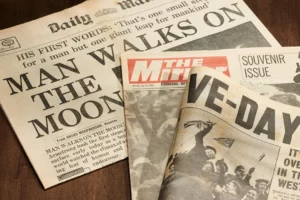
The Scopes trial was a media frenzy. The New York Times alone sent a team of reporters, and the trial generated headlines across the country. On July 15, 1925, the Times ran the front-page headline: “INTENSE BITTERNESS SHOWN; Heated Words Are Passed as Defense Calls Prayers Argumentative.” The article described the courtroom as a cauldron of anger, with the judge threatening contempt action against the press for premature publication of his ruling on the indictment.
“PRESS WARNED BY COURT: Contempt Action Threatened on Premature Publication of Ruling on the Indictment.” — The New York Times, July 15, 1925
The Editor & Publisher statistical review for 1925 noted that newspapers achieved “highest records in history for volume of newspaper advertising and circulation,” calling it “the greatest year in the history of the American press.” The trial was a commercial goldmine, with papers selling millions of copies.
What People Knew at the Time
| What People Knew Then | What We Know Now |
|---|---|
| Journalists believed evolution was a proven scientific fact and that Dayton residents were ignorant backwoods folk. | Pro-evolution books were available in Dayton, and the townspeople were not uniformly ignorant; the trial was more complex than a simple science vs. religion binary. |
| The trial was seen as a decisive battle that would end fundamentalism. | The trial actually galvanized the fundamentalist movement and did not end the debate; it continues today. |
| The press framed the issue as a clear-cut conflict between modern science and ancient superstition. | Historians now see the trial as a contest over the meaning of democracy, education, and the role of religion in public life. |
Different Perspectives
The Journalists
Reporters came with a set of biases, as Olasky’s study of eight newspapers found. They often mocked the townspeople and Bryan, viewing themselves as defenders of scientific reason.
The Townspeople
Contrary to the press’s stereotype, Dayton’s residents were not all ignorant. Pro-evolution books were sold in local stores, and some townspeople welcomed the trial as a way to put their town on the map. They were often treated as caricatures in the press.
The Court
Judge Raulston attempted to maintain order but was often at odds with Darrow. The New York Times article of July 15 documents the court’s frustration with the press, warning of contempt for premature publication.
What People Feared
Many in the press and the urban elite feared that fundamentalism would take over American education and culture. They saw the Butler Act as the first step toward a theocracy. On the other side, fundamentalists feared that modernism and science would destroy the moral fabric of the nation, leading to social decay. The trial crystallized these anxieties, and newspapers amplified them with dramatic headlines.
Aftermath
Scopes was found guilty and fined $100, but the conviction was overturned by the Tennessee Supreme Court on a technicality. The Butler Act remained in force until 1967. The trial did not end the debate; it intensified it. The media moved on, but the cultural divide between science and religion persisted, and the Scopes trial became a touchstone for future conflicts over education and the teaching of evolution.
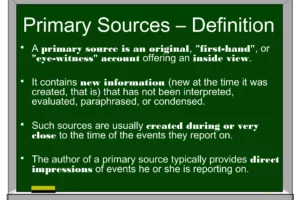
The primary sources of the Scopes trial—the newspapers, the courtroom reports, and the eyewitness accounts—reveal a moment when the press did not merely report the news but actively shaped it. The reporters’ own biases, their fears, and their expectations became part of the story. In reading these sources, we see that the trial was not just about a teacher and a law; it was about the power of the press to define reality in an age of rapid change.
FAQ
How did the newspapers portray the Scopes trial?
Newspapers portrayed the trial as a battle between science and religion, often with a bias against fundamentalism. Reporters presupposed evolution as a scientific fact and viewed Dayton residents as ignorant, as noted in Marvin Olasky's analysis of eight major newspapers.
What was the immediate outcome of the trial?
Scopes was found guilty and fined $100, but the conviction was overturned on appeal. The Butler Act remained in effect until 1967.





Leave a Reply