
Short Answer
On the last day of June 1960, the Republic of the Congo celebrated its independence from Belgium. Within a week, the new nation was in chaos: the army mutinied, Belgian paratroopers returned to protect civilians, and the mineral-rich province of Katanga declared its secession. The Congolese government appealed to the United Nations, and on July 14 the Security Council authorized a peacekeeping force of unprecedented size. For the next four years, the world watched as the UN tried to restore order, support a fragile government, and avoid interfering in domestic politics—a mandate that one scholar later called a “mission impossible.”
What Happened?
The United Nations Operation in the Congo (ONUC) began in July 1960 and lasted until June 1964. It was the largest peacekeeping operation in the history of the UN at the time, involving up to 19,000 troops at full strength, along with civilian advisers who helped run the central government in Léopoldville. The operation was deployed into an ongoing civil war and the secession of the Katanga province, making it the first “second-generation” peacekeeping operation—a large-scale, multifunctional mission in the midst of a conflict.
The key events unfolded as follows:
- June 30, 1960: The Republic of the Congo gains independence from Belgium.
- July 5–8: The army mutinies, and Belgian troops intervene to protect European civilians.
- July 11: Katanga, led by Moïse Tshombe, declares its secession.
- July 14: The UN Security Council authorizes a peacekeeping force, with the proviso that it will not interfere in domestic politics.
- July 15: The first UN troops arrive in the Congo.
- September 1960: Prime Minister Patrice Lumumba is dismissed from government; he is later arrested and killed in January 1961.
- September 1961: Secretary-General Dag Hammarskjöld dies in a plane crash while on a peace mission.
- 1962–1963: UN forces take military action to end the Katanga secession.
- June 1964: The UN operation is withdrawn.
The Security Council had authorized Hammarskjöld to send a peacekeeping force to support the Congolese government, but with the proviso not to interfere in domestic politics. This contradiction created a “mission impossible,” as later scholars have described it.
How It Was Seen at the Time
Contemporaries were acutely aware of the tension at the heart of the UN mandate. The Security Council had called for the withdrawal of Belgian troops and for the restoration of order, but it also insisted that the UN force would not take sides in the Congo’s internal affairs. This contradiction was immediately recognized. As one contemporary analysis noted, the “contradiction created a mission impossible” for Hammarskjöld.
“The mandate that Hammarskjöld had boldly secured was contested and led both the Soviet Union and the Western alliances of states to distrust the role of the secretary-general.”
The Cold War colored every step. The Soviet Union viewed the UN operation as a Western imperialist maneuver; Western states feared it would open the door to Soviet influence. The Congolese government itself was divided, with Lumumba and his successors giving different interpretations of the UN’s role. The press and public opinion in many countries debated whether the UN was overstepping its authority or failing to act decisively enough.
Historical Snapshot
| Aspect | Detail |
|---|---|
| Date | July 1960 – June 1964 |
| Place | Republic of the Congo (Léopoldville and Katanga) |
| People | Dag Hammarskjöld, Patrice Lumumba, Moise Tshombe, UN forces |
| What Happened | UN peacekeeping to restore order, support the government, and end Katanga’s secession |
| Why It Mattered | Tested the limits of UN intervention in a sovereign state and exposed Cold War tensions |
Timeline
- June 30, 1960 – Congo becomes independent.
- July 5–8, 1960 – Army mutiny; Belgian troops intervene.
- July 11, 1960 – Katanga declares secession.
- July 14, 1960 – UN Security Council authorizes ONUC.
- July 15, 1960 – First UN troops arrive.
- September 1960 – Lumumba dismissed from government.
- January 1961 – Lumumba killed.
- September 1961 – Hammarskjöld dies in a plane crash.
- 1962–1963 – UN forces end Katanga’s secession.
- June 1964 – ONUC withdraws.
Different Perspectives
The United Nations and Secretary-General Hammarskjöld
Hammarskjöld saw the operation as a necessary step to maintain peace and prevent the Congo from becoming a Cold War battleground. He insisted that the UN force would not interfere in domestic politics, but the reality of the situation forced him to adopt a more flexible interpretation. The Security Council’s mandate was ambiguous, and Hammarskjöld’s attempts to balance the need for order with the principle of non-interference led to criticism from all sides.
The Soviet Union
The Soviet Union accused the UN of being a tool of the Western powers. It demanded that the operation be placed under the control of the Congolese government and that the Secretary-General’s powers be curtailed. The Soviet distrust of Hammarskjöld’s role was a major factor in the crisis.
The Western Powers (United States and Belgium)
Western nations, particularly the United States, supported the UN operation as a way to prevent Soviet influence and to maintain order. Belgium, however, had its own economic interests in Katanga and was initially reluctant to see the UN force take control of the region. The West’s support was conditional on the UN not interfering with Western economic interests.
The Congolese Government and Katanga
The Congolese government, led by Patrice Lumumba initially, called for UN assistance but soon became frustrated with the UN’s refusal to help it crush the Katanga secession. Lumumba’s successor, Joseph Kasa-Vubu, also had his own political agenda. In Katanga, the secessionist leader Moise Tshombe was supported by Belgian mining interests and saw the UN as an enemy of his regime. The local population experienced the UN presence as both a source of order and a symbol of foreign intervention.
How Historians See It Today
Modern historians have reinterpreted the UN operation in the Congo as a watershed moment in the history of peacekeeping. In 1968, Ernest W. Lefever wrote that the operation was “unique, controversial and costly” and that it demonstrated the severe limits of the United Nations as an instrument for political reform and crisis management in the Third World. More recently, scholars have described ONUC as the first “second-generation” peacekeeping operation, because it involved not only military force but also civilian administration, economic reform, and political mediation. The contradictory mandate, the Cold War context, and the challenges of state-building are now seen as key lessons for later UN missions. The operation remains a case study of the limits of international intervention in a sovereign state.
Aftermath
The UN withdrawal in June 1964 left the Congo still fragile. The secession of Katanga had been ended, but the central government remained weak, and the country soon fell into a cycle of coups and instability. The experience of the ONUC had a lasting impact on UN peacekeeping doctrine, influencing later missions in Somalia, Bosnia, and beyond. The operation also highlighted the dangers of a ambiguous mandate and the difficulty of maintaining neutrality in a civil war. The legacy of the Congo crisis was a lesson in the limits of intervention—a lesson that continues to shape international policy today.
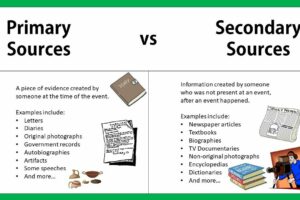
The primary sources of the Congo crisis—the Security Council resolutions, the reports of the Secretary-General, the speeches of Congolese leaders, and the accounts of journalists on the ground—reveal a world in which the hope of a new international order collided with the realities of the Cold War and the complexities of decolonization. The UN’s experience in the Congo remains a powerful reminder that peacekeeping is never neutral, and that the best of intentions can be thwarted by the contradictions of the mandate and the interests of the great powers.
FAQ
Why did the UN intervene in the Congo in 1960?
The UN intervened in response to a request from the Congolese government after the army mutinied, Belgian troops returned, and the province of Katanga declared secession. The UN Security Council authorized a peacekeeping force to support the Congolese government and to restore order, but with the proviso not to interfere in domestic politics.
What was the 'mission impossible' in the Congo?
The mandate of the UN operation was contradictory: it was to support the Congolese government and restore order, but also to avoid interfering in domestic politics. This made it impossible to fully achieve both objectives, as the government itself was divided and the secession of Katanga required a military action that could be seen as interference. This contradiction was noted by contemporaries and has been analyzed by historians.
How did the Cold War affect the UN's operation in the Congo?
The Soviet Union and the United States both viewed the Congo as a strategic prize. The Soviet Union accused the UN of being a tool of the West, while the West feared Soviet influence. This distrust led to the UN's Secretary-General being criticized by both sides, and it complicated the implementation of the mandate.
What was the outcome of the Katanga secession?
The Katanga secession was ended in 1963 after UN forces took military action. The province was reintegrated into the Congo, but the conflict left a legacy of instability in the region.

Leave a Reply