
Short Answer
Quick Snapshot
This article concerns Munich, the capital of Bavaria in West Germany, in 1972, with particular attention to the Summer Olympics and the hostage crisis that overshadowed them. In 1972 Munich was a prosperous, rapidly modernizing city on the Isar River, eager to present a new, democratic Germany to the world. The Games opened on 26 August with 7,134 athletes from 121 teams and 195 events, the largest Olympics to that date. They were intended as “carefree Games” that would erase the memory of the 1936 Berlin Olympics.
The mood changed on 5 September, when eight members of the Palestinian militant group Black September entered the Olympic Village, killed two Israeli team members and took nine hostages. A failed rescue attempt at Fürstenfeldbruck airbase ended with all nine hostages dead, along with five terrorists and one West German policeman. The Games were suspended for 34 hours and then resumed after a memorial service. The phrase attributed to IOC President Avery Brundage, “The Games must go on,” became the crisis’s most contested slogan.
For Munich itself, 1972 was also a year of new infrastructure: the S-Bahn opened, the U-Bahn was expanded, and the Olympic Park transformed the Oberwiesenfeld area. The events of September cast a long shadow over the city’s self-presentation and over Olympic security for decades.
Munich in 1972
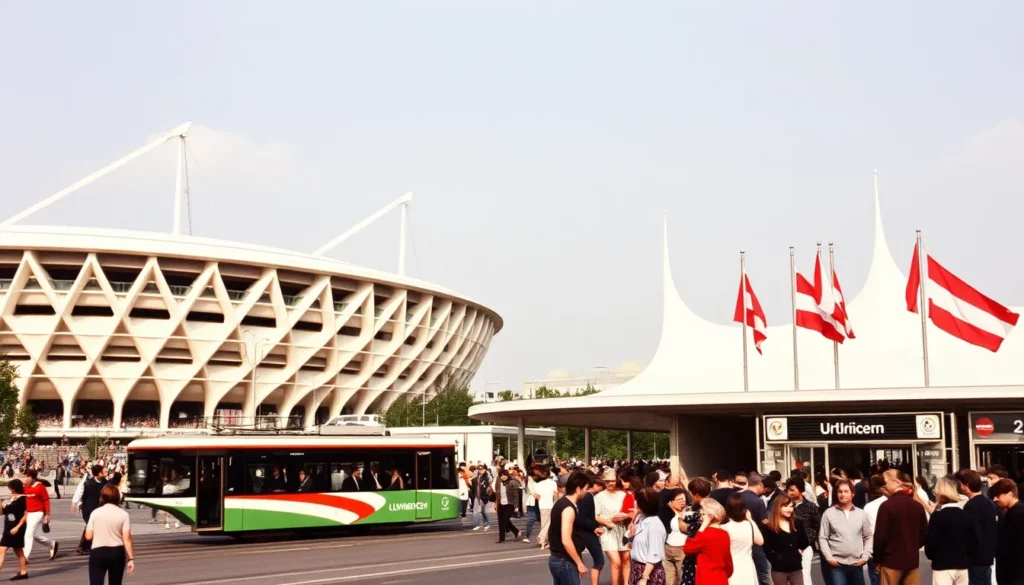
Munich lies in southern Bavaria on the Isar River, north of the Alps, in the Federal Republic of Germany. In 1972 it was a city of about 1.3 million people, the largest in Bavaria and one of West Germany’s leading economic and cultural centers. Its skyline mixed historic churches and palaces with postwar office blocks, department stores and new housing estates. The Olympic construction zone in the north of the city added a futuristic stadium, arena, village and parkland designed to symbolize openness rather than militarism.
The atmosphere in the summer of 1972 was expectant. The city had spent years preparing for the Games, and residents were accustomed to construction, traffic diversions and foreign visitors. The weather during the Games was generally warm and late-summer mild, suitable for outdoor events and for crowds in the Olympic Park. Yet the political climate was tense: West Germany was a frontline state in the Cold War, and the Israeli-Palestinian conflict was never far from European security concerns.
Population & Economy
Munich’s population stood at roughly 1.3 million in 1972, having grown steadily through postwar reconstruction and immigration. The city was the center of a larger metropolitan region and attracted West German and foreign workers, including guest workers from Turkey, Yugoslavia, Italy and Greece. Its economy rested on services, finance, insurance, electronics, publishing, brewing and automobile manufacturing. Siemens had major operations in Munich, BMW was headquartered nearby, and insurance giants such as Allianz and Munich Re gave the city a strong white-collar sector.
The Olympics brought a surge of public and private spending on construction, transport and tourism. Hotels, restaurants and shops prepared for hundreds of thousands of visitors. Cost-of-living figures from the period are difficult to translate directly, but a loaf of bread cost only a few Deutsche Mark, a modest restaurant meal could be had for several marks, and rents in ordinary apartments were far lower than in later decades. The Games were also promoted as an economic showcase for Bavarian industry and for West German reliability.
Government & Politics
Munich was governed by a city council and an Oberbürgermeister. In 1972 the mayor was Hans-Jochen Vogel of the Social Democratic Party (SPD), who had led the city through the Olympic preparations; later in the year Georg Kronawitter, also SPD, succeeded him. Bavaria’s state government was led by Minister-President Alfons Goppel of the Christian Social Union (CSU), and the federal government in Bonn was a coalition of Social Democrats and Free Democrats under Willy Brandt. The Olympics were thus a joint project of city, state and federal authorities, with the organizing committee seeking to project a democratic and pacific image of West Germany.
Political debate around the Games emphasized reconciliation and the rejection of Nazi militarism. Security was deliberately kept low-key: uniformed police were to be inconspicuous, and the Olympic Village was guarded by unarmed or lightly armed personnel more prepared for ticket fraud and disorder than for terrorism. This approach reflected both the desire for “carefree Games” and a broader West German reluctance to appear militarized. The hostage crisis would expose the limits of that policy and trigger intense political recrimination.
Industry
Munich’s industrial base in 1972 included electrical engineering and electronics, vehicle manufacturing, insurance, publishing and brewing. Siemens employed thousands in the city and surrounding area; BMW’s presence reinforced Munich’s identity as an automotive center. The Süddeutsche Zeitung and other publishers made Munich a major media capital, while breweries and beer halls remained culturally and economically important. The Olympic building program created work for construction firms, architects, engineers and transport contractors.
The Games also stimulated the service sector. Hotels, travel agencies, restaurants, shops and transport workers catered to athletes, officials, journalists and spectators. The Olympic Park itself was a long-term urban investment, intended to leave Munich with sports facilities, housing and green space after the event. In the short term, the crisis disrupted tourism and forced authorities to redirect attention from celebration to security and emergency response.
Education
Munich was a major educational center. Ludwig Maximilian University of Munich and the Technical University of Munich attracted students from across West Germany and abroad, and the city had numerous secondary schools, vocational institutes and research bodies. Literacy was effectively universal. The 1970s saw continued expansion of higher education and comprehensive schooling debates in West Germany, though Munich’s older gymnasium system remained influential.
The Olympics had an educational dimension as well: schools and youth groups followed the Games, and the event was used to teach international understanding and sportsmanship. The hostage crisis forced teachers and commentators to discuss terrorism, the Middle East conflict and the ethics of continuing a sporting festival after a massacre. These conversations were part of a broader civic education in democratic responsibility.
Transportation
Munich’s transport network was transformed for the 1972 Games. The first U-Bahn line had opened in 1971, and further sections were built to connect the city center with the Olympic Park and other venues. The S-Bahn regional rail system opened in 1972, tying Munich to its suburbs and to the airport at Riem. Trams, buses and roads carried visitors to the stadium, while special traffic plans and parking restrictions were introduced around the Olympic area.
The city’s main airport, Munich-Riem, handled international arrivals, and the Hauptbahnhof was the central rail gateway. For ordinary residents, trams and buses remained familiar, but the new underground and suburban lines symbolized modernization. The transport build-out was one of the most durable legacies of the Olympics, though it also contributed to debt and to later debates about the cost of mega-events.
Everyday Life
Daily life in Munich in 1972 combined old Bavarian customs with postwar consumer culture. Families lived in apartments and suburban houses; many shopped at neighborhood bakeries, butchers and markets, while department stores and supermarkets were growing. Traditional food included pretzels, sausages, roast pork, dumplings and beer, often enjoyed in Biergärten. Clothing followed late-1960s and early-1970s fashions: wide lapels, bright colors, miniskirts, long hair and casual sportswear. The Olympic Games brought foreign visitors, souvenirs and a sense of occasion to ordinary routines.
Entertainment included cinema, television, football, cycling and outings to the Isar or the Alps. The Olympic Park became a new public amenity. Religion, family and neighborhood ties remained important, though youth culture and protest movements challenged older authorities. The crisis of September 5 abruptly changed the mood: streets near the Olympic Village were cordoned off, public events were cancelled or subdued, and residents gathered around radios and televisions for news.
Major Events
The dominant event was the 1972 Summer Olympics, opened on 26 August by President Gustav Heinemann. Günter Zahn lit the Olympic flame, Heidi Schüller took the athletes’ oath, and Heinz Pollay took the officials’ oath. The Games featured 195 events and 7,134 athletes from 121 National Olympic Committees. American swimmer Mark Spitz won seven gold medals and set seven world records; Soviet gymnast Olga Korbut became a media sensation. Men’s indoor handball and slalom canoeing made their Olympic debuts, and archery returned after a 52-year absence.
On 5 September, eight Black September militants entered the Olympic Village, killed two Israeli team members and seized nine hostages. They demanded the release of 328 prisoners held in Israel and of Ulrike Meinhof, a jailed founder of the Red Army Faction. West German police mounted a rescue at Fürstenfeldbruck airbase, but the operation failed. All nine hostages were killed, along with five terrorists and one police officer. The Games were suspended for 34 hours; a memorial service was held in the main stadium, and the IOC decided to continue. The three surviving attackers were arrested but were released in October after the hijacking of Lufthansa Flight 615.
What Newspapers Were Reporting
Munich’s newspapers, especially the Süddeutsche Zeitung and the Münchner Merkur, devoted extensive coverage to the Olympics. Early reports celebrated the opening ceremony, the new stadium and the city’s modern transport system. Sports pages followed Mark Spitz’s records and Olga Korbut’s performances, while local columns described crowds, traffic and the international atmosphere. After 5 September, the tone shifted abruptly. Front pages carried accounts of the attack, the hostage negotiations, the failed rescue and the memorial service. Editorial writers debated whether the Games should continue and whether West Germany had been adequately prepared.
Newspapers also reported the political aftermath: criticism of Bavarian police procedures, questions about intelligence warnings, and calls for better international cooperation against terrorism. Foreign correspondents sent dispatches describing Munich as a city in shock. The coverage helped shape public memory of the event, and the famous balcony photograph of a kidnapper at Building 31 became one of the most reproduced images of the crisis.
What People Were Talking About
In the days after the attack, Munich residents and visitors discussed security failures, the ethics of continuing the Olympics, and the responsibility of the West German state. Some argued that cancelling the Games would reward terrorism; others believed that celebration was impossible after the deaths. Athletes and coaches spoke of fear, grief and solidarity, while Jewish and Israeli representatives pressed for remembrance. Diaries and letters from the period show a mixture of shock, anger and confusion, often focused on the contrast between the Games’ peaceful rhetoric and the violence in the Village.
Longer-term conversations concerned the Israeli-Palestinian conflict, the treatment of Palestinian prisoners, and the role of Germany in Middle Eastern diplomacy. The crisis also intensified debate about police competence, media ethics and the safety of foreign guests. Munich’s self-image as a tolerant, modern city was challenged by the realization that global politics had entered the Olympic Village.
Historical Photographs
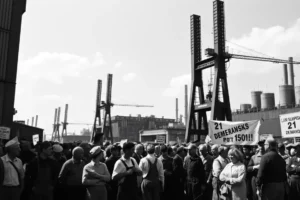
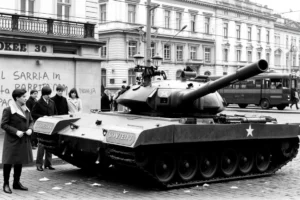
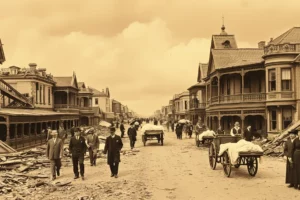
The visual record of Munich 1972 is extensive. Photographs show the futuristic Olympic Stadium and the tent-like roof of the Olympic Park, crowded opening ceremonies, athletes in competition and spectators in period clothing. The most famous and haunting images come from the hostage crisis: a masked kidnapper on the balcony of Building 31, police in position around the Village, crowds watching from behind barriers, and the memorial service in the main stadium. Press photographers captured the strain on officials’ faces and the grief of the Israeli delegation.
Color and black-and-white photographs document the city’s streets, the new U-Bahn and S-Bahn, and ordinary Munich life during the Games. Television footage and the official film “Visions of Eight” add moving images. These photographs are not neutral illustrations; they shaped how the world remembered both the Olympics and the massacre. Later memorial images from 2016 and 2020 show how the visual record continues to be used in ceremonies of remembrance.
Documents & Primary Sources
Historians rely on the records of the International Olympic Committee, the Munich Olympic Organizing Committee, the Bavarian state police and the Federal German government. Police logs, security plans, negotiation transcripts and internal memoranda are essential for reconstructing the response to the attack. The Bavarian State Archives and the German Federal Archives hold official files, while the Süddeutsche Zeitung and other newspapers provide contemporary reports and photographs.
Personal accounts include interviews with athletes, journalists, police officers and relatives of the victims. The documentary “One Day in September” and the official Olympic film “Visions of Eight” preserve eyewitness testimony and visual evidence. Later investigative journalism, including Der Spiegel’s reports on intelligence warnings, has added to the documentary record. These sources must be read critically, because governments, the IOC and media organizations had reputational interests at stake.
1972 Timeline
| Date | Event |
|---|---|
| 26 August | Opening ceremony of the Munich Summer Olympics; Gustav Heinemann opens the Games. |
| 27 August – 4 September | Olympic competition; Mark Spitz wins seven gold medals; Olga Korbut becomes a star. |
| 5 September, 04:31 | Black September militants enter the Olympic Village and take Israeli hostages. |
| 5–6 September | Siege and failed rescue at Fürstenfeldbruck; all nine hostages, five terrorists and one policeman killed. |
| 6 September | Memorial service in the main stadium; Games suspended for 34 hours. |
| 11 September | Closing ceremony of the Games. |
| October | Three surviving attackers released in exchange after Lufthansa Flight 615 hijacking. |
What Changed Next
The Munich massacre transformed Olympic security. Future Games introduced armed guards, metal detectors, background checks and tighter access to athletes’ villages. West Germany faced sustained criticism for its handling of the rescue and for intelligence failures, and the event became a reference point in debates about counterterrorism. Israel launched a covert assassination campaign against those it held responsible, while the Palestinian militant movement and the wider Middle East conflict continued to shape international politics.
For Munich, the Olympics left a mixed legacy. The city gained the Olympic Park, new transport lines and international recognition, but the massacre became central to its modern history. Memorials and commemorations followed, including the IOC’s 2016 ceremony honoring the victims and a moment of silence at the 2020 Tokyo opening ceremony. Historians continue to reassess the decisions of 1972, especially the tension between openness and security.
Sources
- International Olympic Committee, “Munich 1972 Summer Olympics – Athletes, Medals & Results,” https://www.olympics.com/en/olympic-games/munich-1972.
- “Munich massacre,” Wikipedia, https://en.wikipedia.org/wiki/Munich_massacre.
- David Clay Large, Munich 1972: Tragedy, Terror, and Triumph at the Olympic Games (Rowman & Littlefield, 2012).
- Simon Reeve, One Day in September: The Full Story of the 1972 Munich Olympics Massacre and the Israeli Revenge Operation “Wrath of God” (Arcade, 2000).
- Serge Groussard, The Blood of Israel: The Massacre of the Israeli Athletes, the Olympics, 1972 (William Morrow, 1975).
FAQ
What was the population of Munich in 1972?
Munich’s population was approximately 1.3 million in 1972, making it the largest city in Bavaria.
What major events happened in Munich in 1972?
Munich hosted the 1972 Summer Olympics, opened on 26 August, and suffered the Munich massacre on 5–6 September, when Black September terrorists killed eleven Israeli athletes and one West German policeman. The city also opened its S-Bahn and expanded the U-Bahn for the Games.
What primary sources are available for studying Munich in 1972?
Key sources include IOC and Munich organizing committee records, Bavarian and federal police files, government archives, newspapers such as the Süddeutsche Zeitung, photographs, television footage, the official film “Visions of Eight,” and eyewitness interviews.
How did daily life in Munich in 1972 differ from today?
In 1972 Munich had no smartphones or public internet, newspapers and television were central news sources, cash and Deutsche Mark transactions were normal, and the city was still completing the transport and Olympic infrastructure that later became familiar.










Leave a Reply