
Short Answer
Quick Snapshot
In 1957 Little Rock was the capital and largest city of Arkansas, a midsize Southern city proud of its schools, churches, businesses, and growing suburbs. It was also a segregated city, where Black and white residents lived, worked, worshipped, and attended school largely apart. This article treats the year chiefly through the Central High School desegregation crisis and the contemporary reports that recorded it, while also placing that crisis within the wider texture of daily life in Little Rock.
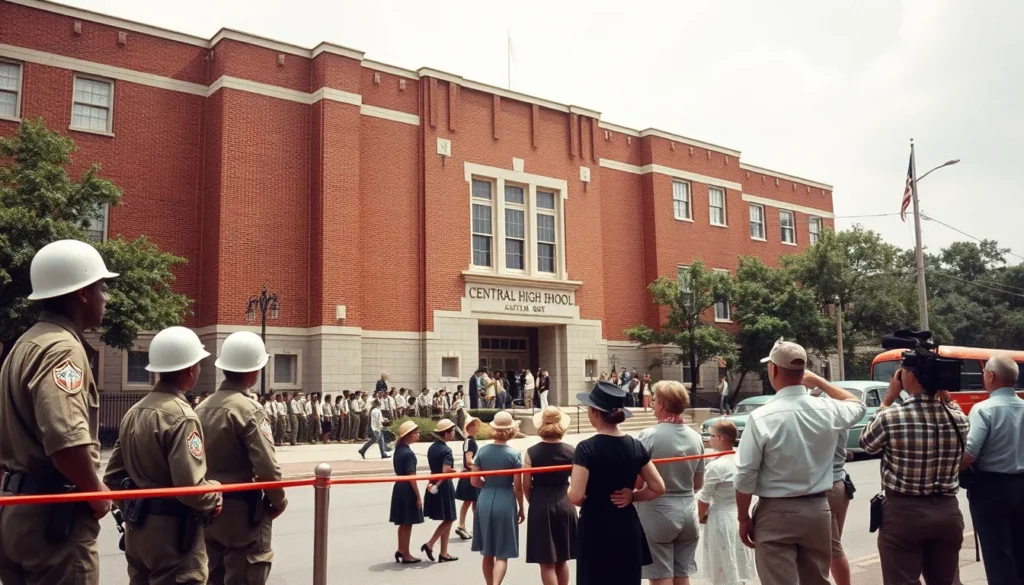
The autumn of 1957 turned Little Rock into a national and international story. After the Little Rock School Board adopted a gradual desegregation plan, nine Black students were assigned to previously all-white Central High School. Governor Orval E. Faubus deployed the Arkansas National Guard to block them; President Dwight D. Eisenhower eventually sent federal troops to enforce court orders. Newspapers, television cameras, FBI agents, photographers, and ordinary eyewitnesses produced an unusually dense record of the confrontation.
Yet 1957 was not only a constitutional crisis. It was a year of segregated lunch counters and buses, church suppers and high school football, railroad work and state government employment, radio and early television, and anxious private conversations about race, federal power, and the future of public education.
Little Rock in 1957
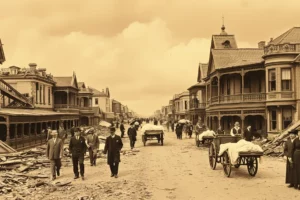
Little Rock lies on the south bank of the Arkansas River in Pulaski County, near the geographic center of Arkansas. The climate is humid subtropical, with hot summers, mild winters, and frequent thunderstorms. In 1957 the city was the seat of state government, a railroad and commercial hub, and a regional center for banking, insurance, retail, and light manufacturing. Its downtown streets mixed state office buildings, department stores, hotels, movie theaters, and bus stops; surrounding neighborhoods ranged from elite older districts to working-class white and Black communities.
The city’s atmosphere in 1957 combined civic boosterism with deep racial segregation. Business leaders spoke of growth and modernization, while segregationist politicians warned that federal civil rights enforcement threatened local custom and states’ rights. Central High School, a massive brick and stone institution in the south-central part of the city, became the symbolic center of that conflict. Contemporary reports describe crowds gathering near the school, National Guard troops posted around its perimeter, and reporters and photographers arriving from across the country.
Population & Economy
Little Rock’s population in 1957 was roughly 106,000 to 108,000, growing slowly from about 102,000 in 1950 toward the 1960 census count of 107,813. Roughly one-quarter of residents were Black, and racial segregation shaped housing, schooling, employment, and public accommodations. The metropolitan area included nearby North Little Rock and Pulaski County communities, with state government, railroads, banking, insurance, retail trade, and light manufacturing supporting the local economy.
Prosperity was uneven. White-collar jobs in government, law, banking, and insurance were largely white; Black workers were concentrated in domestic service, labor, teaching in segregated schools, church work, and small business. The federal minimum wage stood at $1.00 an hour, and prices were modest by later standards: a loaf of bread cost about 18 to 20 cents, a gallon of gasoline about 30 cents, and a newspaper a few cents. The crisis of September 1957 raised fears among business leaders that national publicity and racial violence would damage Little Rock’s reputation and discourage investment.
Government & Politics
Little Rock operated under a city manager form of government with a mayor and board of directors. Mayor Woodrow Wilson Mann was a moderate who supported compliance with federal court orders and publicly opposed the use of state troops to block integration. Arkansas Governor Orval E. Faubus, by contrast, made opposition to Central High desegregation a central political cause in 1957. The Little Rock School Board, led by President William G. Cooper and Superintendent Virgil Blossom, had adopted a gradual desegregation plan after the Supreme Court’s 1954 Brown v. Board of Education decision.
Politics in 1957 were shaped by Democratic Party dominance, segregationist pressure, and the doctrine of states’ rights. Faubus’s decision to use the National Guard transformed a local school dispute into a test of federal authority. Federal District Judge Ronald N. Davies issued orders restraining the governor’s use of troops to block the students, and President Eisenhower ultimately federalized the Arkansas National Guard and sent units of the 101st Airborne Division to Little Rock. The school board, city government, and state government were thus drawn into a constitutional confrontation that none could fully control.
Industry
Little Rock’s economy was less dominated by a single factory than by a combination of commerce, government, transportation, and services. State government offices employed thousands. Banks and insurance companies served the region. The Missouri Pacific and Rock Island railroads brought freight and passengers through the city, and Union Station was a busy gateway. Retail stores, hotels, restaurants, newspapers, radio stations, and the new television station KARK served the surrounding region. Light manufacturing included food processing, clothing, furniture, and building materials, while nearby Little Rock Air Force Base, opened in the mid-1950s, added a federal military presence to the local economy.
Agriculture remained important to the wider Arkansas economy, and Little Rock served as a market and processing center for cotton, soybeans, livestock, and timber. The city’s newspapers, the Arkansas Gazette and the Arkansas Democrat, were significant local institutions. In 1957 the integration crisis placed these businesses and institutions under intense national scrutiny, as reporters from major networks and metropolitan papers descended on the city.
Education
Little Rock’s schools were segregated by law. Central High School was the city’s flagship white high school, while Dunbar High School and other Black schools served the African American community. Horace Mann High School was also part of the segregated system. Higher education included Philander Smith College, Arkansas Baptist College, and Little Rock University, later the University of Arkansas at Little Rock. Literacy was high by contemporary standards, but educational opportunity was separate and unequal: Black schools often received fewer resources, hand-me-down materials, and lower salaries for teachers.
After Brown v. Board of Education, the Little Rock School Board adopted a plan of gradual integration beginning at Central High School. In 1957 nine Black students were selected to attend Central: Minnijean Brown, Elizabeth Eckford, Ernest Green, Thelma Mothershed, Melba Pattillo, Gloria Ray, Terrence Roberts, Jefferson Thomas, and Carlotta Walls. Their attempt to enroll became the year’s central educational event and a national symbol of the struggle over public schooling.
Transportation
Little Rock in 1957 was a city of automobiles, buses, and railroads. Streetcar service had ended in the 1940s, and public transit was provided by buses, which were segregated by custom and law. Major highways and U.S. routes linked the city to Memphis, St. Louis, Dallas, and other regional centers, though the interstate highway system was still in its early stages. The Arkansas River was bridged at Little Rock, but large-scale commercial navigation on the river awaited later federal improvements.
Rail travel remained important. The Missouri Pacific and Rock Island lines carried passengers and freight, and Union Station served as a hub for business travelers, soldiers, and families. For most residents, however, daily movement depended on walking, private cars, and buses. The school crisis itself was shaped by transportation: students gathered at bus stops, reporters drove to the school, and National Guard troops were deployed around the Central High campus.
Everyday Life
Daily life in Little Rock was organized around family, church, work, school, and neighborhood. Housing was rigidly segregated. White families in the suburbs and older neighborhoods enjoyed new cars, televisions, and modern appliances, while Black families often lived in overcrowded rental housing and faced limited access to loans and public services. Meals followed Southern patterns: fried chicken, pork, cornbread, vegetables, and sweet tea, with church suppers and family gatherings marking the social calendar. Clothing was formal by later standards: men wore hats and suits for business and church, while women wore dresses, gloves, and hats for downtown shopping.
Entertainment included radio, early television, movies, high school football, and church socials. Central High football games drew community attention, and downtown theaters and department stores were important gathering places, though segregated. Air conditioning was still uncommon in homes, so porches, shade trees, and evening visits shaped summer routines. The crisis of September 1957 disrupted these ordinary patterns, as schools were surrounded by troops, parents debated whether to send children to class, and rumors swept through churches, barbershops, and kitchen tables.
Major Events
The central event of 1957 was the confrontation over desegregation at Central High School. After the school board announced that nine Black students would enroll, Governor Faubus ordered National Guard troops to surround the school on September 2. On September 4, Elizabeth Eckford attempted to enter alone and was turned away by Guardsmen as a hostile crowd gathered. NBC reporter John William Chancellor later gave a signed statement to FBI agents describing the crowd and the guard perimeter. The other students also faced obstruction.
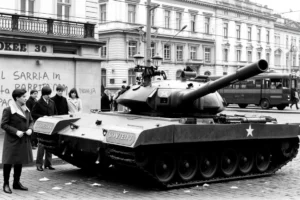
On September 20, Federal District Judge Ronald N. Davies issued an injunction against Faubus’s use of the Guard to block integration. On September 23, the nine students entered the school through a side door, but mob violence outside led city police to remove them. On September 24, President Eisenhower federalized the Arkansas National Guard and ordered the 101st Airborne Division to Little Rock. On September 25, the nine students were escorted into Central High School under federal protection. Harassment and violence continued through the fall, and an FBI summary later documented threats and incidents from September 6 to October 2, 1957.
What Newspapers Were Reporting
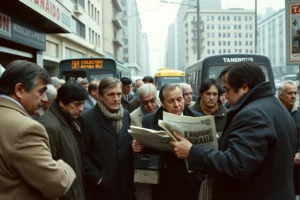
The Arkansas Gazette and the Arkansas Democrat provided extensive local coverage, while the New York Times, wire services, and national television networks carried the story across the country. Reports described crowds outside Central High, the deployment of National Guard troops, statements by Faubus and school board officials, and the arrival of federal troops. The Arkansas Gazette’s coverage and editorials, edited by Harry Ashmore, were later recognized with the 1958 Pulitzer Prize for Public Service. Television footage and photographs gave national audiences images of jeering crowds, armed soldiers, and solitary Black students facing hostile sidewalks.
One of the most detailed contemporary records comes from the FBI interview with NBC reporter John William Chancellor, conducted at the Marion Hotel in Little Rock on September 6, 1957, by Special Agents John C. Welch and Robert E. Hickam. Chancellor stated:
"At 7:30 a.m., I counted the crowd on the East curb of Park Street, and found 92 persons to be standing there. I estimated, at the time, about 150 men from the Arkansas National Guard and Air National Guard, posted around the High School."
Chancellor also described seeing a young Black girl approach the guard perimeter at Park Street and 14th Street, only to be turned away. He recalled asking a Guardsman whether she could be admitted and being told, "We couldn’t let her in." Such reports gave readers and investigators a granular, moment-by-moment account of the crisis.
What People Were Talking About
Conversations in Little Rock ranged from constitutional principle to immediate safety. Segregationists argued that states should resist federal court orders and warned of racial mixing; moderates and business leaders worried about violence, lost trade, and national embarrassment; Black families and civil rights organizers debated how to protect the students and sustain the legal fight. The Mothers’ League of Central High School and other segregationist groups mobilized white parents, while ministers, teachers, and NAACP leaders urged compliance with the law and dignity for the students.
Rumors circulated about planned violence, outside agitators, and federal intentions. Some white parents discussed keeping children home; some Black parents feared retaliation against the nine students and their families. The crisis also entered private letters and diaries, where people recorded fear, anger, prayer, and uncertainty. Later memoirs by the Little Rock Nine and civil rights activists show how ordinary routines, from riding the bus to walking through a hostile crowd, became acts of courage.
Historical Photographs
The visual record of Little Rock in 1957 is exceptionally rich. The most famous photograph is Will Counts’s image of Elizabeth Eckford walking to Central High on September 4, 1957, while a crowd of white students and adults, including Hazel Bryan, jeers behind her. Counts photographed for the Arkansas Democrat, and the image became an iconic representation of racial hostility and Black determination. Other photographs show National Guard troops, federal paratroopers, students entering the school, crowds on the sidewalks, and the school building itself.
Television footage also survives. Chancellor’s FBI statement mentions 16 mm motion picture film taken at Central High on September 4, including footage by NBC photographer Maurice Levy, freelance photographer Tom Journeay, and KARK news editor Rusty Ralston. The film was edited for the Huntley show and retained by NBC. Together with newspaper photographs and FBI records, these images document both the public confrontation and the physical setting of the school and surrounding streets.
Documents & Primary Sources
Historians studying Little Rock in 1957 rely on a wide range of primary sources. FBI records, including the summary of events at Central High School and the interview report with John William Chancellor, provide contemporaneous investigative detail. Little Rock School Board minutes, court orders, and legal filings document the official desegregation process. The Arkansas Gazette and Arkansas Democrat on microfilm preserve local reporting, advertisements, and editorials. Photographs by Will Counts and other press photographers capture the visual scene, while television film and oral histories preserve eyewitness testimony.
Additional sources include NAACP records, Daisy Bates’s papers, Arkansas state government records, and the memoirs and interviews of the Little Rock Nine. The University of Arkansas Libraries Special Collections holds the FBI records cited here under the Little Rock Central High Integration Crisis collection. The National Park Service’s Little Rock Central High School National Historic Site also maintains interpretive and archival materials for researchers and visitors.
1957 Timeline
| Date | Event |
|---|---|
| Late August 1957 | The Little Rock School Board finalizes plans for nine Black students to enroll at Central High School under its gradual desegregation plan. |
| September 2, 1957 | Governor Orval E. Faubus orders Arkansas National Guard troops to surround Central High School. |
| September 4, 1957 | Elizabeth Eckford attempts to enter Central High alone and is turned away by Guardsmen as a hostile crowd gathers; NBC reporter John William Chancellor observes the scene. |
| September 6, 1957 | FBI agents interview Chancellor at the Marion Hotel in Little Rock; he provides a signed statement about the crowd and Guard perimeter. |
| September 20, 1957 | Federal District Judge Ronald N. Davies issues an injunction restraining Faubus from using the National Guard to block integration. |
| September 23, 1957 | The nine students enter Central High briefly, but mob violence outside leads police to remove them. |
| September 24, 1957 | President Eisenhower federalizes the Arkansas National Guard and sends the 101st Airborne Division to Little Rock. |
| September 25, 1957 | The nine Black students are escorted into Central High School under federal protection. |
| October 2, 1957 | An FBI summary covers threats and violence aimed at the students from September 6 through this date. |
What Changed Next
The confrontation at Central High did not end in 1957. Harassment of the Black students continued through the school year, and in 1958 Governor Faubus closed Little Rock’s public high schools rather than allow further integration, producing the so-called Lost Year. The Supreme Court’s 1958 decision in Cooper v. Aaron reaffirmed that state officials could not nullify federal desegregation orders. Little Rock’s schools reopened in 1959, but desegregation remained slow and contested for years. The events of 1957 accelerated national debate over civil rights, federal authority, and the meaning of equal education.
For later historians, 1957 in Little Rock became a case study in how local customs, state politics, federal power, journalism, and ordinary courage intersect. The primary sources from that year, from FBI reports and newspaper photographs to television footage and student memoirs, continue to shape how the crisis is understood and taught.
Sources
- FBI Summary of Events at Central High School, Little Rock Central High Integration Crisis, Federal Bureau of Investigation Records, 1957 (MC 1027), University of Arkansas Libraries Digital Collections, https://digitalcollections.uark.edu/digital/collection/Civilrights/id/1228/
- FBI Interview Report with John William Chancellor, September 6, 1957, University of Arkansas Libraries Digital Collections, https://digitalcollections.uark.edu/digital/api/collection/Civilrights/id/1089/download
- Daisy Bates, The Long Shadow of Little Rock (New York: David McKay, 1962).
- Elizabeth Jacoway, Turn Away Thy Son: Little Rock, the Crisis That Shocked the Nation (New York: Free Press, 2007).
- National Park Service, Little Rock Central High School National Historic Site, https://www.nps.gov/lrch/index.htm
FAQ
What was the population of Little Rock in 1957?
Little Rock's population was roughly 106,000 to 108,000 in 1957, growing from about 102,000 in 1950 to 107,813 in the 1960 census.
What major events happened in Little Rock in 1957?
The central event was the Central High School desegregation crisis: Governor Faubus used the National Guard to block nine Black students, federal courts intervened, and President Eisenhower sent federal troops to enforce integration in September 1957.
What primary sources are available for studying Little Rock in 1957?
Key sources include FBI reports and interview statements, Little Rock School Board records, court orders, Arkansas Gazette and Arkansas Democrat issues, photographs by Will Counts and other press photographers, television film, oral histories, and memoirs by the Little Rock Nine.
How did daily life in Little Rock in 1957 differ from today?
Daily life was shaped by legal segregation, fewer household appliances and no widespread air conditioning, limited television, segregated schools and public accommodations, and much lower prices and wages. The civil rights crisis disrupted ordinary routines and made national news of local schooling.




Leave a Reply