
Short Answer
In the summer of 1950, the Korean War shattered the peacetime expectations of millions of American families. Married couples who had barely set up housekeeping, veterans of World War II called back to duty, and young sweethearts suddenly separated by an ocean found themselves sustained by the only thread that connected them: letters. As one soldier, Harold Mulhausen, later recalled, “My wife wrote almost every day…she wrote about the family, what she was doing, about our life when I return, what was happening around the city, and our love for each other.” These V-mail letters—thin, censored, often delayed—carried the weight of a war fought in a faraway land, and they remain a powerful, intimate record of how ordinary people experienced the conflict.
What Happened?
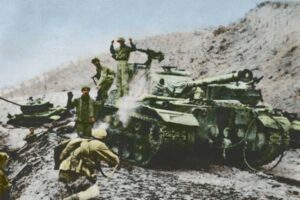
The Korean War began on June 25, 1950, when North Korean forces crossed the 38th parallel. The United States, acting under the United Nations flag, committed ground troops within weeks. For American servicemen and their families, the war arrived suddenly and confusingly. As the Korean War Educator notes, “When the Korean War broke out, husbands in the reserves were whisked off to war by government order, leaving their families behind to worry about the fact that their life’s partner was now in harm’s way.”
Letter writing was the primary means of communication between soldiers and their loved ones. The process was arduous and slow. According to a dissertation analyzing American servicemen’s letters from 1950–1953, the time lapse between sending and receiving a letter was often two to four weeks. Soldiers wrote on V-mail forms—microfilmed sheets that reduced weight and size—or on any paper they could find. The frequency varied: some wrote daily, others weekly, depending on combat conditions. One soldier, Boris “Bob” Spiroff, a platoon sergeant with the First Cavalry (Co G, 7th Cav Regt), wrote regularly to his wife Cassie from 1950 to 1951, and his letters are preserved on the Korean War Educator website.
The war itself followed a brutal arc: the initial North Korean offensive, the Pusan Perimeter, the Inchon landing, the Chinese intervention, and the long stalemate that lasted until the armistice in July 1953. Through it all, letters carried the emotional burdens of both soldiers and their families. The home front was not a safe haven; it was a place of anxiety and uncertainty, where wives and mothers waited for the mail carrier with dread and hope.
How It Was Seen at the Time
Contemporaries understood the war as a necessary, if confusing, struggle. The official language called it a “police action,” not a war, which created a sense of unreality for many. Soldiers’ letters often reflected this ambiguity. The dissertation notes that soldiers used humor to cope with combat, and that they wrote about the weather, the Korean people, and the boredom between firefights. One letter from the Korean War Educator archive captures the mix of love and worry:
“We will not be strangers,” one wife wrote to her husband, “but I am so afraid of the time that passes. I want you home.”
For soldiers, letters from home were a lifeline. The dissertation records that “mail call” was the most anticipated event of the day. One soldier, quoted in the dissertation, said: “We would wait for the mail call like we waited for nothing else. It was the only thing that made the war bearable.” The prevailing mood was one of endurance—both soldiers and families tried to maintain normalcy and hope, even as they feared the worst.
Historical Snapshot
| Aspect | Detail |
|---|---|
| Date | June 25, 1950 – July 27, 1953 |
| Place | Korean Peninsula; home front in the United States |
| People | American soldiers, their families, Korean civilians, military personnel |
| What Happened | The United States fought a UN-sanctioned war to repel North Korean invasion; millions of letters exchanged between soldiers and families |
| Why It Mattered | Letters were the primary means of emotional connection and morale, and they document the human experience of the war |
Letters & Diaries
The letters from the Korean War are a rich primary source. Bob Spiroff’s letters to his wife Cassie, preserved by the Korean War Educator, provide a vivid picture of a soldier’s daily life and his longing for home. Spiroff’s letters, written from the front lines, describe the cold, the fear, and the boredom. In one letter, he wrote: “It is so cold here, my feet are numb, but I think of you and that keeps me warm.”
Another collection, the Carl J. Dorsey Letters, offers a similar perspective. The dissertation also quotes many soldiers. One soldier wrote home: “I never knew how much I loved you until I had to leave you.” These letters were not just about love; they also contained practical matters—money, children, household repairs. The home front letters, as described in the Korean War Educator’s “We Will Not be Strangers,” show that wives were not passive. They managed homes, raised children, and sometimes worked in defense industries. One wife wrote: “I am learning to fix the leaky faucet. You would be proud of me.”
The significance of these letters lies in their honesty. They do not romanticize war; they show the mundane and the terrifying. The dissertation notes that soldiers often wrote about the weather—the frostbite and cold—as well as about the Korean people, sometimes with compassion, sometimes with racial prejudice. These letters are a direct window into the minds of men and women living through a war.
What People Knew at the Time
| What People Knew Then | What We Know Now |
|---|---|
| That the war was a “police action” and might end quickly | The war lasted three years and ended in stalemate |
| That letters took weeks to arrive, but they were the only way to communicate | Modern communication is instant, but letters remain a primary source for historians |
| That the home front was a place of worry and waiting | We now understand the psychological toll on families, which the letters document |
| That soldiers were fighting to stop communism | Historians debate the war’s necessity and the broader Cold War context |
Daily Life
For soldiers in Korea, daily life was a mix of boredom and terror. The dissertation describes how soldiers filled the tedious hours between firefights by writing letters, playing cards, and waiting. The weather was a constant enemy—the brutal cold of winter caused frostbite, and the summer heat and rain brought disease. Soldiers lived in tents, ate C-rations, and wore heavy wool uniforms. They wrote about the Korean people, whom they encountered as refugees, workers, and occasionally as enemies. The letters show a range of attitudes, from compassion to racial prejudice.
On the home front, wives and families adapted to a new routine. They often had to manage finances alone, raise children, and maintain the home. The “We Will Not be Strangers” article describes a couple who lived on the east coast, and the wife’s letters to her husband were full of household news and reassurance. She wrote: “I am saving money for your return. We will go to the beach like we used to.” The daily life of the home front was not without its own sacrifices, as families rationed, volunteered for civil defense, and participated in scrap drives. But the central experience was waiting—for a letter, for news, for a return.
Common Misconceptions
How Historians See It Today
At the time, the war was often framed as a necessary fight against communism, but historians now view it as a complex conflict with lasting consequences. The letters themselves have become a key source for understanding the human dimension. Historians like Elizabeth Bruns, in her 2019 article on a GI’s correspondence, argue that these ordinary letters are “endowed with explanatory power for a specific period or event.” They are not just personal artifacts; they are evidence of the social and emotional history of the war. The dissertation by Luke MacAuley similarly analyzes the letters to understand combat, race, and the concept of “home.” Today, historians recognize that the letters from the Korean War are a bridge between the home front and the front line, revealing the shared experience of a generation. The initial interpretation of the war as a “police action” has been replaced by a more critical view that acknowledges the war’s human cost and its role in the Cold War. The letters are a reminder that history is not just about generals and battles, but about the ordinary people who lived through it.
The enduring significance of these letters lies in their authenticity. They are not polished memoirs or official reports; they are raw, immediate, and honest. They teach us that the past was not a simple story of heroism, but a complex web of love, fear, and hope. The letters from the front and the home front are a testament to the human need to connect, to share, and to survive, even in the midst of war.
FAQ
How often did soldiers write letters during the Korean War?
Frequency varied; some wrote daily, others weekly, depending on combat and access to materials. The dissertation notes that soldiers often wrote to fill the tedious hours between firefights.
What was V-mail and how did it work?
V-mail was a microfilm system used to reduce the size of letters. Soldiers wrote on standard forms, which were then photographed onto microfilm, shipped, and reprinted at the destination. It was used during World War II and the Korean War to save space and weight.
Why are these letters considered important primary sources?
The letters are firsthand accounts of the war experience, revealing the emotional, social, and physical realities of soldiers and their families. They provide a direct, uncensored view of daily life, fears, and hopes, which is invaluable to historians.










Leave a Reply