
Short Answer
Quick Snapshot
Guernica—Gernika in Basque—was a small but symbolically charged market town in the Basque province of Biscay when war reached it on 26 April 1937. This article uses Guernica in its most common encyclopedic sense: the town and the events of that year, especially the aerial bombing and the creation of Picasso’s Guernica, rather than the painting alone.
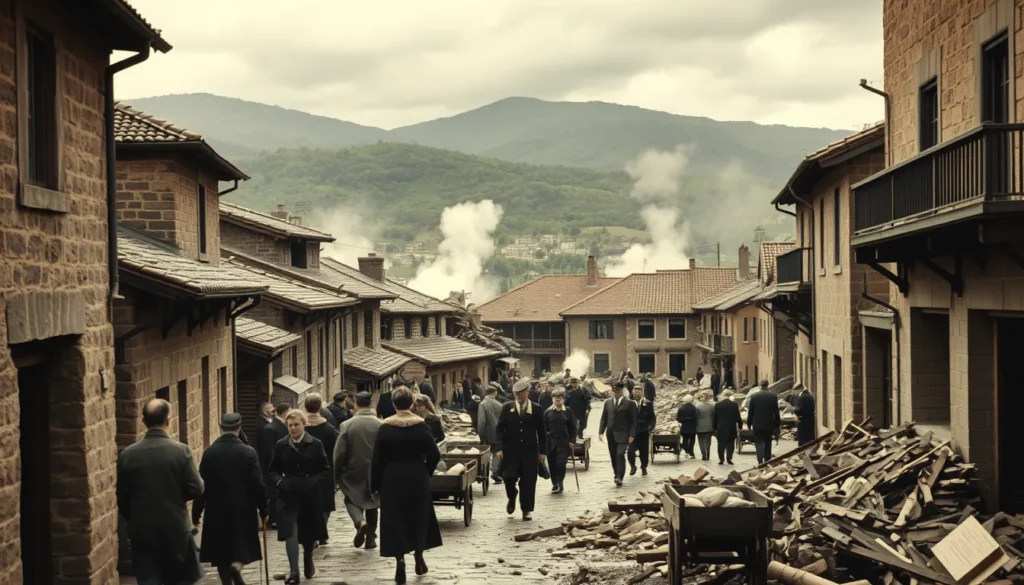
On a Monday market day, German and Italian aircraft supporting Francisco Franco’s Nationalists attacked the town for about three hours. High explosives collapsed buildings; incendiaries set them alight. Eyewitnesses described a town burning from end to end. Death-toll estimates have varied widely, from a few hundred to more than a thousand, but the attack’s meaning was immediate: civilians had been targeted from the air.
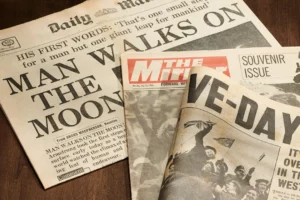
Within days, newspapers and photographers carried the destruction around the world. Pablo Picasso, already commissioned to paint a mural for the Spanish Pavilion at the 1937 Paris World’s Fair, read the reports in Paris and began work on the canvas that became Guernica. In 1937 the town became both a ruin and a warning—a local Basque tragedy transformed into a global symbol.
Guernica in 1937
Guernica lies inland from the Biscayan coast, roughly 30 kilometres east of Bilbao, in the green, rainy Busturialdea region. The town was the ceremonial heart of Basque liberties: the Casa de Juntas and the oak tree of Gernika were potent symbols of Basque self-government. Its streets were compact, its buildings modest, and its economy tied to the surrounding farms and markets. The climate is maritime, with mild, damp winters and springs; in April 1937 the sky over the town would have been familiar, changeable, and low.
By spring 1937, however, normal weather and normal routines had been overtaken by war. The Spanish Civil War had begun in July 1936. The Basque Autonomous Government, loyal to the Second Republic, controlled Biscay, but Nationalist forces under General Franco were advancing. Refugees moved through Guernica, and the town stood near the front. A market day could still draw farmers and traders, but the atmosphere was anxious: rumours of bombing, shortages, and the proximity of battle shaped daily conversation.
Population & Economy
Before the attack, Guernica had roughly 7,000 residents, though the number present on 26 April was swollen by market-day visitors and people displaced by war. The town was a service and market centre for nearby villages. Its economy rested on agriculture, small workshops, furniture-making, metalwork, and retail trade. A factory producing war material lay outside the centre—often identified with the Astra-Unceta arms works—and, as the British correspondent George Steer noted, it was untouched by the bombing.
Wartime conditions distorted the local economy. Food, fuel, and medicine were scarce; transport was disrupted; refugees placed pressure on housing and supplies. Exact local prices are not reliably preserved in surviving records, but scarcity and inflation were more important than any stable cost-of-living table. The town’s market function made the timing of the attack especially devastating: civilians from surrounding farms and villages were gathered in the centre when the aircraft arrived.
Government & Politics
In 1937 Guernica was administered within the short-lived Basque Autonomous Government, led by lehendakari José Antonio Aguirre. The Basque Nationalist Party dominated much of Basque political life, while Republicans and left-wing parties supported the wider Republican war effort. Normal municipal elections had been suspended by war; local government was overwhelmed by refugees, requisitions, and civil defence. The town’s symbolic status—the tree and assembly house of Gernika—made it politically important far beyond its size.
The political climate was one of loyalty to the Republic, Basque patriotism, Catholic conservatism, and fear of Nationalist repression. The bombing was immediately interpreted in political terms: Republican and Basque sources condemned fascist intervention, while Nationalist propaganda denied responsibility and blamed retreating Republican forces. The attack thus became a battle not only over territory but over memory and legitimacy.
Industry
Guernica was not a heavy-industrial city, but it had a range of small enterprises. Furniture workshops served local households and institutions; metalworkers produced tools and hardware; food processing, milling, and market trade supported the rural hinterland. The Astra-Unceta arms factory outside town was the most strategically significant industrial site in the area, and its survival was later cited as evidence that the raid was not a precise military strike.
For most residents, industry meant small-scale work rather than factory wages. The surrounding countryside supplied dairy, timber, maize, and other farm produce. The town’s fairs and markets linked these rural products to urban consumers. The bombing destroyed workshops, shops, and market infrastructure, damaging an economy already strained by war.
Education
Guernica had primary and religious schools serving the town and nearby villages. Literacy in the Basque provinces was relatively high by Spanish standards, though rural schooling varied and many children left school early for farm or workshop labour. Under the Republic, education was a site of cultural contest: Basque language and culture had gained ground, but Catholic institutions remained powerful.
In 1937 war disrupted schooling. Classes were interrupted by mobilisation, refugees, and the threat of attack. The destruction of buildings and the displacement of families meant that education, like much of daily life, was subordinated to survival. The town’s cultural institutions, especially those linked to Basque identity, mattered as symbols even when ordinary schooling had stopped.
Transportation
People moved around Guernica by road, on foot, by horse and cart, and by narrow-gauge railway linking the town to Bilbao and the coast. Market days brought carts and pedestrians into the centre. For most residents, travel was local and practical; few owned motor vehicles. The railway and roads also made the town a transit point for refugees and military traffic.
The town had no effective air defences. When the bombers arrived, civilians had little warning and few shelters. The narrow streets and compact buildings helped fire spread after incendiaries were dropped. Afterwards, roads and rail links were clogged with fleeing people and emergency traffic, while Nationalist forces advanced into the ruined town.
Everyday Life
Before 26 April, daily life in Guernica followed the rhythms of a Basque market town: early rising, church bells, farm deliveries, shopkeeping, school, and family meals. Housing was modest—stone and brick houses, many with balconies and tiled roofs. Food centred on bread, beans, potatoes, vegetables, dairy, and occasional meat or fish. Clothing was practical and often homemade; Sunday and festival dress marked special occasions. Entertainment included religious festivals, Basque sports, music, and gatherings around the market and cider houses.
War changed everything. Families shared housing with refugees; women queued for scarce goods; men were absent in military service. The 26 April market drew people into the centre just as the attack began. Survivors described fire, smoke, collapsing buildings, and the difficulty of escaping through rubble. In the days that followed, ordinary life gave way to burial, flight, and fear of further attacks.
Major Events
The central event was the bombing of 26 April 1937. Around 4:30 p.m., German Condor Legion and Italian Aviazione Legionaria aircraft attacked Guernica in waves. High-explosive bombs collapsed buildings; incendiaries ignited them. The raid lasted roughly three hours. Crews on the British battleship HMS Hood reportedly saw the aircraft assembling over the coast. George Steer of The Times reached the town and filed a report that shaped international opinion.
Death-toll estimates remain contested. Early claims spoke of thousands; later historical estimates often place the figure at a few hundred, with some Basque sources giving much higher numbers. The uncertainty reflects wartime propaganda, incomplete records, and the chaos of the attack. What is not disputed is the raid’s character: an undefended market town was struck from the air, and the attack became a landmark in the history of civilian bombing.
News of the destruction reached Picasso in Paris. He had been struggling with a commission for the Spanish Pavilion at the 1937 Paris World’s Fair. The reports from Guernica gave him his subject. He began sketching on 1 May and worked rapidly, producing numerous studies before completing the large canvas in the following weeks.
What Newspapers Were Reporting
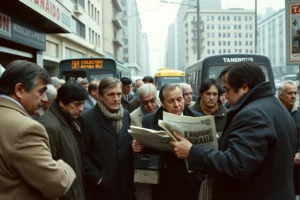
Newspapers around the world carried the story within days. George Steer’s report in The Times was especially influential. He wrote:
At 2 a.m. today when I visited the town, the whole of it was a horrible sight, flaming from end to end.
Steer also challenged the claim that the raid was a legitimate military operation:
A factory producing war material lay outside the town and was untouched. So were two barracks some distance from the town.
Republican and Basque newspapers denounced the attack as fascist terror bombing. Nationalist press denied responsibility and claimed that retreating Republican forces had destroyed the town. International coverage debated the use of air power against civilians and the role of German and Italian forces in Spain. The story of Guernica became a propaganda contest as much as a news event.
What People Were Talking About
Survivors and refugees spoke of the roar of aircraft, the whistle of bombs, and the firestorm that followed. People asked which foreign powers had sent the planes and whether the Non-Intervention Committee would act. In Paris, Picasso’s friends and political allies discussed the Spanish Pavilion and the need for a strong Republican statement. Picasso himself read the newspaper reports at the Café de Flore; the horror of Guernica ended his search for a subject.
In the Basque Country, conversation turned to the defence of Bilbao, the fate of refugees, and the fear that other towns would be bombed. Nationalist supporters spread scepticism about atrocity reports. Abroad, the attack fed debates about aerial warfare, civilian protection, and the failure of international law. The phrase “Guernica” began to circulate as shorthand for unprovoked violence against civilians.
Historical Photographs
A substantial visual record survives. Photographers and newsreel cameramen documented the ruins: collapsed roofs, burned streets, and dazed survivors. Dora Maar, Picasso’s companion and a photographer, made a famous sequence showing Picasso at work on Guernica; these images reveal the painting’s evolution and the artist’s studio process. Press photographs of the destroyed town circulated internationally and reinforced the reportage.
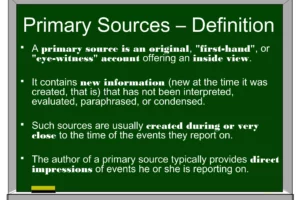
These photographs are not neutral evidence. They were selected, cropped, and published within wartime propaganda battles. Yet they remain essential primary sources: they show the scale of destruction, the material reality of the bombing, and the way the event was turned into a public symbol. Newsreels and newspaper spreads helped carry Guernica’s image to audiences far from Spain.
Documents & Primary Sources
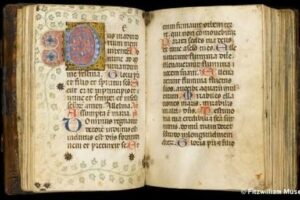
Historians rely on a range of contemporaneous materials to reconstruct Guernica in 1937:
- George Steer’s dispatches to The Times, including his eyewitness description of the burning town.
- Basque government records and local administrative papers relating to casualties, refugees, and civil defence.
- Picasso’s sketches, studies, and correspondence, including the commission from José Gaos for the Spanish Pavilion.
- Dora Maar’s photographs of Picasso working on Guernica and of the painting in progress.
- Maps, press photographs, newsreels, and Paris World’s Fair catalogues documenting the painting’s first display.
These sources must be read critically. Wartime records are incomplete, propaganda shaped press accounts, and death-toll figures vary. The Museo Reina Sofía’s Rethinking Guernica project has digitised around 2,000 documents relating to the painting and its history.
1937 Timeline
| Date | Event |
|---|---|
| Spring 1937 | Basque front collapses; refugees move through Guernica as Nationalist forces advance. |
| 26 April 1937 | German and Italian aircraft bomb Guernica on market day; high explosives and incendiaries destroy much of the town. |
| 27–28 April 1937 | George Steer visits the ruins and files his report; The Times publishes his eyewitness account. |
| Late April 1937 | Nationalist forces occupy the ruined town. |
| 1 May 1937 | Picasso begins sketching for the mural that becomes Guernica. |
| May–June 1937 | Picasso works rapidly on the large canvas; Dora Maar photographs the process. |
| Summer 1937 | The Spanish Pavilion at the Paris World’s Fair displays Guernica; the painting becomes an international sensation. |
| 19 June 1937 | Bilbao falls to Nationalist forces, deepening the crisis in Biscay. |
What Changed Next
In the short term, Guernica was occupied and rebuilt under Franco’s dictatorship. The bombing became part of a wider Nationalist victory in Biscay, and many survivors dispersed. In the longer term, the town’s name became inseparable from Picasso’s painting. Guernica toured Europe and the Americas, spent decades at the Museum of Modern Art in New York, and returned to Spain in 1981. Since 1992 it has been held at the Museo Reina Sofía in Madrid.
The memory of 1937 also changed. During the Franco years, public commemoration was restricted; after democracy returned, Guernica became a site of Basque memory and anti-war symbolism. The painting’s universal fame ensured that the town’s destruction would be remembered not only as a Basque or Spanish event but as a warning about aerial bombing and the vulnerability of civilians.
Sources
- Museo Reina Sofía, Rethinking Guernica: Picasso’s Twentieth-Century Work-Icon Close-Up, https://guernica.museoreinasofia.es/en.
- Toby Saul, The horrible inspiration behind one of Picasso’s great works, ‘Guernica’, National Geographic, 8 May 2018, https://www.nationalgeographic.com/history/history-magazine/article/pablo-picasso-guernica-painting-history.
- George L. Steer, The Tree of Gernika: A Field Study of Modern War (1938).
- Hugh Thomas, The Spanish Civil War (revised edition).
- Antony Beevor, The Battle for Spain: The Spanish Civil War 1936–1939.
FAQ
What was the population of Guernica in 1937?
Guernica had roughly 7,000 residents before the attack, but market-day visitors and refugees inflated the number of people present on 26 April 1937.
What major events happened in Guernica in 1937?
The central event was the 26 April aerial bombing by German and Italian aircraft supporting Franco’s Nationalists. The destruction inspired Picasso’s Guernica, which was displayed at the Paris World’s Fair later that year.
What primary sources are available for studying Guernica in 1937?
Key sources include George Steer’s newspaper dispatches, Basque government records, Picasso’s sketches and correspondence, Dora Maar’s photographs, press photographs, newsreels, and Paris World’s Fair catalogues.
How did daily life in Guernica in 1937 differ from today?
Daily life was shaped by war, scarcity, refugee movement, and the absence of modern communications and air defences. Market-day routines were suddenly shattered by aerial bombing, and the town’s name became a global symbol of civilian suffering.



Leave a Reply