
Short Answer
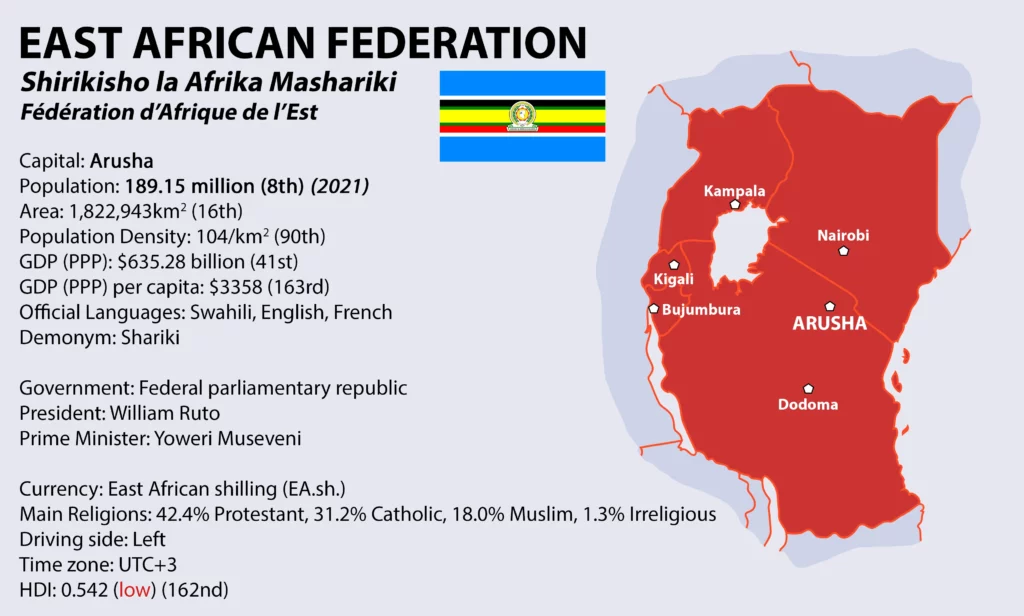
In the sweltering heat of Dar es Salaam, June 1963, the air was thick with hope. Julius Nyerere, Tanganyika’s president, had just declared that the East African Federation was “a must”—a sentiment echoed by Kenya’s Jomo Kenyatta and Uganda’s Milton Obote. The three leaders, meeting to chart a common future, spoke of a single nation stretching from the Indian Ocean to the Great Lakes. Newspapers across the region ran headlines like “Federation by Christmas!” and “One Nation, One Destiny.” For a brief, electric moment, it seemed that the colonial boundaries drawn in Berlin in 1885 would be erased, and a new super-state would rise in Africa. Yet within a year, the dream lay in tatters. The leaders who had once embraced unity retreated into the safety of their own national capitals, and the federation was never born. This article, drawing on contemporary speeches, official records, and the reflections of those who lived through the moment, reconstructs why a union that seemed so inevitable failed so completely.
What Happened?
The idea of an East African federation was not new. Under British colonial rule, the region had been administered through the East African High Commission (1948–1961), which coordinated common services like railways, customs, and postal systems. As independence approached, many nationalists saw federation as the natural next step. Tanganyika gained independence in December 1961, Uganda in October 1962, and Kenya in December 1963. In June 1963, the three leaders—Nyerere, Obote, and Kenyatta—met in Nairobi and issued a declaration of intent to form a federation by the end of the year. A working party was established to draft a constitution.
But the negotiations quickly stalled. Disagreements emerged over the distribution of powers, the location of the federal capital, and the pace of integration. Uganda, with its powerful kingdoms (Buganda, Bunyoro, Toro, and Ankole), feared that a strong central government would erode their autonomy. Kenya, the most economically developed, worried about subsidizing its poorer neighbours. Tanganyika, under Nyerere, was the most enthusiastic, but even he faced domestic opposition from those who feared losing sovereignty. By early 1964, the momentum had evaporated. A military mutiny in Tanganyika in January 1964, and the Zanzibar Revolution that same month, further distracted the leaders. The federation was quietly shelved. Instead, the three nations pursued a looser economic union, culminating in the East African Community (EAC) in 1967, which focused on common services and trade, not political unity.
How It Was Seen at the Time
Contemporaries understood the federation debate as a struggle between centralization and local autonomy. As one scholar later noted, “For the leaders who initiated the politics of federation in the 1960s, regional unity promised the further centralisation of power, and a means of defeating tribalist opposition.” Nyerere, in a 1963 speech, argued that “East Africa must unite or perish”—a phrase that captured the fear of balkanization and neo-colonial domination. But others saw federation as a threat. The Kabaka of Buganda, Sir Edward Mutesa, warned that a federal government would “swallow up the kingdoms” and reduce them to provinces. In Uganda, the Democratic Party opposed federation on the grounds that it would undermine the 1962 constitution, which had granted Buganda significant autonomy. The prevailing mood was one of cautious optimism mixed with deep anxiety. As George Kanyeihamba, a Ugandan legal scholar, later reflected in his 1975 book, the establishment of the East African Community in 1967 did not “rekindle the desire for the East African federation”—the leaders had lost their enthusiasm.
Historical Snapshot
| Aspect | Detail |
|---|---|
| Date | 1961–1964 (peak negotiations June 1963) |
| Place | East Africa: Tanganyika, Uganda, Kenya |
| People | Julius Nyerere (Tanganyika), Milton Obote (Uganda), Jomo Kenyatta (Kenya), Sir Edward Mutesa (Kabaka of Buganda) |
| What Happened | Leaders declared intent to form a federation, but negotiations collapsed over power-sharing and autonomy. |
| Why It Mattered | The failure shaped the region’s political boundaries and led to the looser East African Community (1967). |
Different Perspectives
Tanganyika: The Enthusiast
Nyerere was the most vocal advocate. He saw federation as a way to build a strong, unified state that could resist neo-colonial pressures. In a 1963 address, he declared, “We must unite or perish.” His government even offered to delay Tanganyika’s own independence to allow Kenya and Uganda to catch up, a gesture that was not reciprocated.
Uganda: The Reluctant Partner
Uganda’s leaders were divided. Obote paid lip service to federation but faced fierce opposition from the kingdoms, especially Buganda. The Kabaka, who was also the President of Uganda, feared that a federal government would abolish the kingdoms’ autonomy. As a result, Uganda insisted on a loose confederation, not a strong federal state.
Kenya: The Pragmatist
Kenyatta was cautious. Kenya was the wealthiest of the three, and its leaders worried about subsidizing the others. There were also internal ethnic tensions—the Kikuyu and Luo rivalry—that made a federal structure attractive to some as a way to protect regional interests. But ultimately, Kenya’s political elite preferred to consolidate power at the national level.
What People Feared
Anxieties ran high. Many feared that a federation would lead to domination by one country or ethnic group. In Uganda, the kingdoms feared cultural annihilation. In Kenya, some feared that Nyerere’s socialist policies would be imposed on them. There was also the specter of neo-colonialism: a weak federation might be easier for former colonial powers to manipulate. Rumors circulated that Britain was secretly encouraging the failure of the federation to protect its economic interests in Kenya. While no evidence supports this, the suspicion was widespread.
What People Expected Would Happen Next
In 1963, most observers expected the federation to be formed by the end of the year. The East African Standard, a Nairobi newspaper, predicted that “the new nation will be born on December 9, 1963.” Even after the deadline passed, many believed it was only a matter of time. Nyerere continued to push for unity, and in 1964 he proposed a two-stage approach: first a customs union, then a political federation. But the momentum was lost. By 1965, the idea was effectively dead, and the leaders turned to consolidating their own national power.
Aftermath
The immediate aftermath was a retreat into national sovereignty. The three countries pursued separate paths, though they maintained common services through the East African Common Services Organization (EACSO). In 1967, they signed the Treaty for East African Cooperation, establishing the East African Community. This body managed the railway, harbours, postal services, and a common market, but it had no political authority. The EAC itself collapsed in 1977 due to ideological differences and personal rivalries. The dream of a political federation was never revived, though it has resurfaced periodically in regional discussions.
How Historians See It Today
Modern historians, drawing on the primary sources of the era, argue that the federation’s failure was not inevitable but was the result of the leaders’ own nation-building projects. As one study puts it, “the politics of federation should be understood as a constitutive part of the contested nation-state making process, rather than a viable alternative to it.” The leaders used the federation idea to centralize power at home, but when it came to negotiating, they were forced to define national interests, which divided them. This interpretation challenges the earlier view that the failure was due to external interference or personal animosity. Instead, it highlights the inherent tension between regional unity and national sovereignty—a tension that remains relevant today.
The primary sources of the 1960s—speeches, newspaper reports, and official records—reveal a moment of genuine possibility. The leaders of East Africa were not simply cynical; they were caught between the dream of unity and the realities of power. The failure of the federation left a legacy of separate nation-states, but it also left a memory of what might have been. As Nyerere later wrote, “The East African Federation is a dream that will not die.”
FAQ
Why did the East African Federation fail?
The federation failed because the leaders of Tanganyika, Uganda, and Kenya could not agree on the distribution of power, the status of traditional kingdoms, and economic burdens. Each leader prioritized national interests, and the negotiations collapsed by early 1964.
What was the East African Community (1967)?
The East African Community was a looser economic union established in 1967, providing common services like railways and postal systems, but without political integration. It collapsed in 1977.










Leave a Reply