
Short Answer
In the summer of 1947, as the British Raj prepared to divide into India and Pakistan, a young clerk in Delhi wrote to his brother in London: “The flag will come down, but what will rise? We are told it is freedom, but freedom for whom?” Across the colonized world, from Accra to Algiers, from Jakarta to Nairobi, millions of people were asking the same question. The era of decolonization—roughly from the end of World War II to the 1970s—was not a single event but a cascade of transformations, each experienced through the crackle of radio broadcasts, the ink of newspaper headlines, the urgency of private letters, and the formality of official dispatches. Contemporary sources capture the raw emotions of that moment: the euphoria of flag-raising ceremonies, the bitterness of colonial wars, the fear of chaos, and the hope for a new beginning. This article draws on those primary materials—now preserved in archives like the Gale Decolonization collection and the Wilson Center Digital Archive—to show how people at the time understood the end of empire.
What Happened?
Decolonization unfolded in waves across the twentieth century, with the most intense period following World War II. The war had weakened European powers and fueled nationalist movements that demanded self-rule. The process was neither uniform nor peaceful. In South Asia, the British granted independence to India and Pakistan in August 1947, but the partition triggered massive violence and displacement. In Africa, Ghana became the first sub-Saharan colony to gain independence in 1957 under Kwame Nkrumah, followed by dozens of others over the next two decades. In the Middle East and North Africa, decolonization took different forms: the French left Syria and Lebanon in 1946, but fought brutal wars in Algeria and Vietnam; the British withdrew from Palestine in 1948, leading to the creation of Israel and the Nakba. The Wilson Center Digital Archive notes that “the twentieth-century Middle East and North Africa (MENA) was a central arena of decolonization,” with different parts involved in different waves.
Key events include:
- 1946 – Syria and Lebanon gain independence from France.
- 1947 – India and Pakistan become independent from Britain; partition leads to mass migration and violence.
- 1954–1962 – Algerian War of Independence against France, ending with Algerian independence.
- 1957 – Ghana becomes independent, the first sub-Saharan African colony to do so.
- 1960 – “Year of Africa”: seventeen African colonies gain independence.
- 1962 – Uganda, Jamaica, and Trinidad and Tobago become independent.
- 1975 – Portuguese colonies in Africa (Angola, Mozambique, etc.) gain independence after the Carnation Revolution.
These events were not isolated; they were shaped by Cold War rivalries, the United Nations, and the global spread of anti-colonial ideas. Contemporary sources—from the speeches of leaders to the letters of ordinary people—reveal how these forces were understood at the time.
How It Was Seen at the Time
Contemporaries saw decolonization as both a triumph and a peril. Nationalist leaders framed it as the inevitable victory of justice over oppression. In his independence day speech on March 6, 1957, Kwame Nkrumah declared, “The independence of Ghana is meaningless unless it is linked with the total liberation of the African continent.” Jawaharlal Nehru, in his famous “tryst with destiny” speech on August 14, 1947, said, “Long years ago we made a tryst with destiny, and now the time comes when we shall redeem our pledge.” These words, captured in radio broadcasts and printed in newspapers, inspired millions.
But there was also anxiety. Colonial settlers and administrators feared the loss of status and property. In Algeria, the European population (pieds-noirs) resisted independence violently. In Kenya, white farmers called the Mau Mau uprising a “terrorist” movement, while African nationalists saw it as a liberation struggle. The language of the time was charged: “self-determination,” “colonialism,” “imperialism,” “freedom fighters,” and “terrorists” were used by different sides to describe the same events. A British official in Kenya wrote in a 1952 dispatch, “We are facing a rebellion that is both primitive and organized; the only answer is force.” Meanwhile, an African teacher in Nairobi wrote in his diary, “They call us savages, but we are the ones who know the land. The future is ours.”
“The independence of Ghana is meaningless unless it is linked with the total liberation of the African continent.” — Kwame Nkrumah, March 6, 1957
Historical Snapshot
| Aspect | Detail |
|---|---|
| Date | 1945–1975 (peak period) |
| Place | Asia, Africa, Middle East, Caribbean, Pacific |
| People | Nationalist leaders (Nkrumah, Nehru, Sukarno, Nasser), colonial officials, settlers, ordinary citizens |
| What Happened | European colonial empires dissolved; new nation-states emerged, often amid violence and Cold War pressure |
| Why It Mattered | Redrew the global political map, created the Third World bloc, and shaped post-1945 international order |
Contemporary Newspaper Coverage
Newspapers were the primary medium through which most people followed decolonization. The Gale Decolonization collection includes thousands of articles from British, American, and Commonwealth newspapers, showing how the press framed events. In 1947, the New York Times headlined “India Gains Freedom; Pakistan is Born” with a tone of cautious optimism. The Times of London spoke of “the end of an era” and worried about the fate of the Commonwealth. In Africa, the Ghanaian Times celebrated independence with the headline “Free at Last!” while the East African Standard in Kenya described Mau Mau as “a wave of terror.”
Coverage was often biased. British papers tended to emphasize the orderly transfer of power and the benevolence of colonial rule, while nationalist papers highlighted exploitation and the heroism of freedom fighters. A 1957 editorial in the Manchester Guardian noted, “The British have a habit of making a graceful exit, but the scars of empire remain.” The press also played a role in shaping public opinion in the metropole, with some papers calling for “law and order” in Algeria and others supporting the FLN.
“India Gains Freedom; Pakistan is Born” — New York Times, August 15, 1947
Eyewitness Accounts
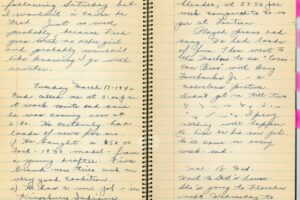
Eyewitness accounts from the time provide visceral detail. The Wilson Center Digital Archive contains speeches, private notes, and radio transcripts from leaders and ordinary people. For example, a 1956 radio broadcast by Gamal Abdel Nasser, after the nationalization of the Suez Canal, declared, “We are not slaves; we are free men.” A British soldier in Kenya wrote home in 1953: “We are fighting a shadow enemy. The forest is full of them, but they vanish when we approach. The settlers say we must be harsh, but I wonder if we are on the right side.”
On the other side, a Kenyan woman who joined the Mau Mau recalled in a later interview (recorded in the 1960s) that “we were not terrorists; we were fighting for our land. The white man took our land and called it his own.” These accounts, though filtered through memory, capture the deep divisions of the era.
“We are not slaves; we are free men.” — Gamal Abdel Nasser, radio broadcast, July 26, 1956
Different Perspectives
Colonized Peoples
Nationalist leaders and ordinary people saw decolonization as a moral imperative. They used the language of rights, dignity, and self-determination. In a 1947 letter to the United Nations, a group of Indonesian students wrote, “We have waited for justice for three hundred years; we cannot wait any longer.”
Colonial Administrators and Settlers
Many colonial officials believed they were bringing “civilization” and “development.” A British district officer in Nigeria wrote in his diary in 1950: “The natives are not ready for self-rule. They will fall into chaos without our guidance.” Settlers in Algeria and Kenya feared for their lives and property, and some formed armed groups to resist independence.
Cold War Powers
The United States and the Soviet Union both courted newly independent nations. The Wilson Center archive highlights how the superpowers used decolonization to expand their influence. A 1955 CIA memo noted, “The loss of colonies to the West is a gain for the Soviets unless we can win the new nations to our side.”
How Historians See It Today
Modern scholarship has moved beyond the triumphalist or nostalgic narratives of the time. The Cambridge article “Decolonizing Decolonization” (2025) argues that the concept itself needs to be examined critically, noting that “appeals to ‘decolonize’ now range widely, from decolonizing the university to decolonizing Russia.” Historians today emphasize the agency of colonized peoples, the role of international institutions, and the persistence of neocolonial structures. The Palgrave Handbook on Decolonizing International Affairs (2023) contends that the field of international affairs remains “deeply and pervasively rooted in the Western-centric view of the world,” and that decolonization is an ongoing process. Contemporary sources are now read not as transparent records but as texts that reveal the biases and power dynamics of their authors.
Related Primary Sources
- Gale Decolonization: Politics and Independence in Former Colonial and Commonwealth Territories – A digital archive of newspapers, government documents, and personal papers covering the period from the 1940s to the 1970s.
- Wilson Center Digital Archive – International Dimensions of Decolonization in the Middle East and North Africa – A collection of speeches, private notes, radio transcripts, and government memoranda.
- United Nations Archives – Records of debates and resolutions on decolonization, including the Declaration on the Granting of Independence to Colonial Countries and Peoples (1960).
- British National Archives – Colonial Office files, governors’ dispatches, and intelligence reports.
- National Archives of India – Papers of the Indian independence movement, including letters and speeches of Gandhi and Nehru.
Contemporary sources are not neutral windows onto the past; they are artifacts of their time, shaped by the hopes, fears, and prejudices of their creators. Reading them with care allows us to understand decolonization not as a tidy narrative of progress, but as a messy, contested, and deeply human process. The voices of clerks, soldiers, settlers, and leaders—captured in letters, newspapers, and radio broadcasts—remind us that the end of empire was not a single event but a thousand small moments of change, each with its own meaning.
FAQ
What types of primary sources are available for studying decolonization?
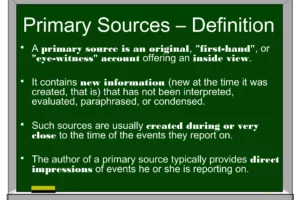
Primary sources include newspapers, government dispatches, letters, diaries, speeches, radio broadcasts, photographs, and official reports. Major collections include the Gale Decolonization archive and the Wilson Center Digital Archive, which cover political and international dimensions.
How did contemporaries view decolonization?
Views varied widely. Nationalist leaders saw it as a moral victory, colonial settlers feared loss of privilege, and Cold War powers saw it as an opportunity for influence. Contemporary sources capture these conflicting perspectives.









Leave a Reply