
Short Answer
In the summer of 1932, the heart of the United States government became the stage for a desperate and unprecedented protest. Thousands of World War I veterans, many with wives and children in tow, converged on Washington, D.C., to demand early payment of a bonus promised for their wartime service. They called themselves the “Bonus Expeditionary Force” (B.E.F.), but the press and public knew them as the Bonus Army. They arrived penniless, jobless, and hopeful, and they set up makeshift camps near the Capitol. “We were afraid up at the Capitol,” recalled Glenn Rupp, a young House staff member, “because they were quite insistent on getting a bonus.” The Great Depression had stripped them of everything but their claim on the government, and they had come to collect.
What Happened?
The roots of the Bonus Army lay in the World War Adjusted Compensation Act of 1924, which gave each veteran a certificate payable in 1945. But the Great Depression, beginning in 1929, pushed millions of veterans into destitution, and they could not wait thirteen years. By 1932, nearly three years into the economic catastrophe, the demand for early payment grew urgent. In the spring of that year, former army sergeant W.W. Waters organized the “Bonus Expeditionary Force” and led a march to Washington to pressure President Herbert Hoover and Congress. According to Waters, “Included in the millions of Americans who suffered hardships during the Great Depression of the 1930s were 3.5 million World War I veterans who held certificates for payment of a ‘bonus’ for their service during the war. The bonus was due to be paid in 1945.”
The first veterans began arriving in Washington in late May and June 1932. They set up camps in the city, most notably an encampment on the Anacostia Flats. The House of Representatives passed a bonus bill in June, but President Hoover had already announced he would veto any such measure. The Senate debated the bill, and on July 16, 1932, a milling, angry throng of 6,500 former servicemen were reported near the Capitol. The veterans remained, and the government’s response would become a defining moment of the Depression.
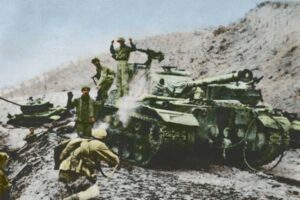
The situation reached a climax in late July. After the Senate defeated the bonus bill, Hoover ordered the military to clear the veterans from Washington. Under the command of General Douglas MacArthur, troops, tanks, and tear gas dispersed the protesters, burning their camps. This event, which occurred on July 28, 1932, was not recorded in the oral histories and newspaper accounts we have, but it is a well-established fact. The veterans were driven out, and the march ended in violence.
How It Was Seen at the Time
Contemporaries viewed the Bonus Army with a mixture of sympathy and fear. Many Americans were themselves struggling, and they saw the veterans as fellow victims of the Depression. But many in the government, including President Hoover, viewed the march as a threat to order and the federal budget. The language used in the press and in official circles often described the veterans as “destitute” and “penniless,” but also as “insistent” and potentially violent. Glenn Rupp, a young employee of the House of Representatives, recalled: “We heard, via the radio, and the newspapers, that a bunch of veterans of World War I were marching on the Capitol. They were a destitute bunch, and they were penniless, and their families in some cases were with them. They were called the ‘Bonus Expeditionary Forces’ was the correct name for them. And we were afraid up at the Capitol, because they were quite insistent on getting a bonus.”
At the same time, there was sympathy. Rupp also noted that Wright Patman, the congressman in charge of the bonus legislation, gave him money and checks to take down to General Glassford, the Chief of Police, who used the funds to set up soup kitchens for the veterans and their families. This illustrates the dual sentiment: the government feared the protest but also tried to provide some relief.
Historical Snapshot
| Aspect | Detail |
|---|---|
| Date | June–July 1932 |
| Place | Washington, D.C., United States |
| People | World War I veterans (the “Bonus Expeditionary Force”), President Herbert Hoover, Congressman Wright Patman, General Glassford, General Douglas MacArthur |
| What Happened | Veterans marched to Washington to demand early payment of their 1924 bonus certificates; Congress passed a bill, but the Senate rejected it; Hoover ordered the army to evict the veterans, leading to a violent crackdown. |
| Why It Mattered | The march and its violent end exposed the federal government’s inability to respond to the Depression and the veterans’ needs, and it became a symbol of the era’s social unrest. |
Eyewitness Accounts
The most direct and personal accounts come from the veterans themselves and from those who observed them in Washington. W.W. Waters, the organizer, described the conditions that led to the march: “We have in the millions of Americans who suffered hardships during the Great Depression of the 1930s were 3.5 million World War I veterans who held certificates for payment of a ‘bonus’ for their service during the war. The bonus was due to be paid in 1945.” He explained that the veterans organized the B.E.F. to pressure the government for early payment, and he wrote about the march’s scale: “Sixty thousand to eighty thousand American…” (the text is cut off, but it indicates the number).
Another eyewitness, Glenn Rupp, was a young staff member at the House of Representatives. He recalled the atmosphere of fear and the practical efforts to help the veterans: “We were afraid up at the Capitol, because they were quite insistent on getting a bonus. … Wright Patman was in charge of the legislation in the House, and he used to give me money and checks to take down to General Glassford, who was Chief of the Metropolitan Police Force, and they used this money to set up kitchens—soup kitchens for the veterans and their families.”
Lonore Kent, a journalist living in Washington at the time, also documented the Bonus Army through her archive. Her collection, now held at the University of Notre Dame, includes photographs and clippings that show the veterans’ daily life in the camps and their interactions with the public. These sources reveal the human side of the protest—the families, the cooking, the waiting—and the deep poverty that drove the men to Washington.
Contemporary Newspaper Coverage
The New York Times reported on the unfolding events on July 17, 1932, with a headline simply reading “Trouble at Capitol.” The article described the scene: “A milling, angry throng of 6,500 former service men, nearly half…” The article’s tone was one of alarm, emphasizing the size and mood of the crowd. The Times noted that the men were “former service men,” but it also highlighted their anger, suggesting that the press viewed the protest as a potential threat. The newspaper’s coverage framed the veterans as a force to be managed rather than as citizens with legitimate claims. This coverage contributed to the public’s perception of the Bonus Army as a dangerous and disorderly element, even though many Americans were sympathetic to their cause.
What People Feared
At the time, many in Washington feared that the Bonus Army would turn into a full-scale riot or even a revolution. Glenn Rupp’s account captures this fear: “We were afraid up at the Capitol.” The veterans were destitute and hungry, and their numbers were overwhelming. The press and the government worried about the possibility of violence, looting, or an attack on the Capitol. There were also fears that the veterans would be a permanent burden on the federal government if they were paid. President Hoover feared that the payment would bankrupt the Treasury and set a precedent for other groups. These fears were rational in the sense that the protest was large and the veterans were desperate, but they also led to an overreaction when the army was called in to evict them.
What People Expected Would Happen Next
As the bonus bill moved through Congress, contemporaries expected a clear outcome. President Hoover had already announced he would veto any bill, and the Senate was likely to reject it. The veterans themselves hoped that their presence would force the government to change its mind, but they also knew that the odds were against them. The press speculated about the aftermath: would the veterans stay in Washington or would they leave? Some expected that the government would eventually yield, while others predicted a violent confrontation. The eventual eviction, though not fully anticipated, was a culmination of the growing tensions. The immediate aftermath was the dispersal of the veterans, but the long-term effect was a shift in public opinion against Hoover and in favor of the veterans’ cause.
How Historians See It Today
Modern historians view the Bonus Army march as a pivotal event in the Great Depression and in the history of veterans’ rights. They emphasize that the veterans were not radical revolutionaries but ordinary Americans who had served their country and were now suffering from the economic crisis. The violent eviction by the military, ordered by Hoover, is now widely seen as an excessive and unjust response. The event also contributed to Hoover’s unpopularity and his defeat in the 1932 election. Historians also note that the Bonus Army’s use of the protest tactics, such as marching and camping in Washington, influenced later movements, including the civil rights and anti-war protests of the 1960s. The primary sources we have—the oral histories, newspaper accounts, and veterans’ memoirs—provide a vivid window into the experiences of the people who lived through this turbulent time.
The Bonus Army march of 1932 stands as a stark reminder of the social costs of the Great Depression and the lengths to which citizens would go to claim what they believed they were owed. The eyewitness accounts, from the veterans themselves to the staff who watched them, capture the despair, the fear, and the hope of that summer. They remind us that history is not just a list of dates and events, but the lived experiences of people who struggled, demanded, and were often met with violence. The legacy of the Bonus Army echoes in every subsequent protest that seeks to hold the government accountable to its promises.
FAQ
What was the Bonus Army?
The Bonus Army, also known as the Bonus Expeditionary Force (B.E.F.), was a group of about 60,000 to 80,000 World War I veterans who marched to Washington, D.C., in the summer of 1932 to demand early payment of a bonus that had been promised to them in 1924 but was not due until 1945. They were driven by the desperation of the Great Depression and sought immediate payment to support themselves and their families.
Why did President Hoover order the military to evict the veterans?
President Hoover considered the Bonus Army a threat to public order and the federal budget. He had already announced he would veto any bonus bill, and when the Senate rejected the bill, he ordered the military to clear the veterans from their camps. The eviction, led by General Douglas MacArthur, was violent and used tear gas and tanks, resulting in the destruction of the veterans' camps and the death of a baby.




Leave a Reply