
Short Answer
Quick Snapshot
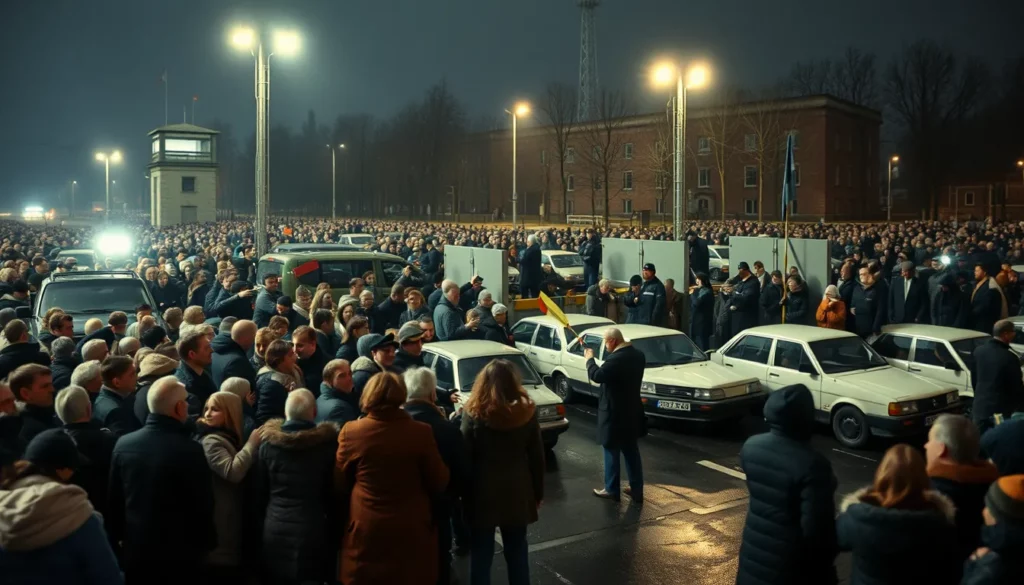
On the evening of 9 November 1989, Berlin became the stage for one of the Cold War’s most improbable turning points. At a press conference shortly before 7 p.m., Günter Schabowski, a Politburo member and SED Berlin chief, read out a revised travel regulation and, when asked when it would take effect, said as far as he knew it was ‘immediately.’ West Germany’s ARD television led its 8 p.m. Tagesschau with the news under the heading ‘GDR opens border.’ Crowds of East Berliners moved toward the checkpoints. At Bornholmer Strasse, guards let a few people through at about 9:20 p.m.; by 11:30 p.m., with the crowd too large to hold, the barrier was raised and around 20,000 people crossed the Bösebrücke bridge without checks.
Within hours other crossings were opened. West Berliners welcomed the arrivals on the Kurfürstendamm; restaurants handed out free drinks; Trabants poured through the border. The Wall had not been dismantled by treaty or battle. It was opened by a combination of popular pressure, a state in crisis, and an official’s improvised words.
This article uses ‘Berlin in 1989: The Night the Wall Opened’ in its most common encyclopedic sense: the events in divided Berlin on 9-10 November 1989 and their immediate context. It is not a general history of the entire year, although earlier 1989 developments are included where they explain the night.
Berlin in 1989
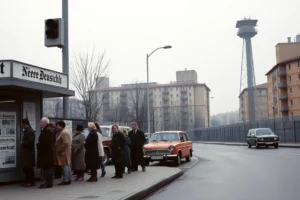
Berlin in 1989 was a city of two governments, two currencies, two police forces, and a 45-kilometre barrier running through its heart. The Wall, built in 1961, divided East Berlin, the capital of the German Democratic Republic, from West Berlin, an enclave surrounded by GDR territory and guaranteed by the United States, Britain, and France. The city’s geography was ordinary and bizarre at once: the Spree river, the Tiergarten, the Brandenburg Gate, and ordinary apartment blocks were all overlaid by sector boundaries, watchtowers, and checkpoints.
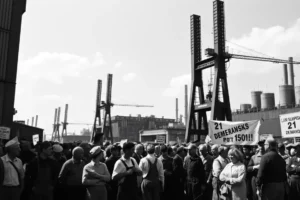
November weather was cold and damp, but the political atmosphere was hotter than the temperature. Since the summer, East Germans had been leaving through Hungary and Czechoslovakia; Monday demonstrations in Leipzig and other cities had grown; and the SED leadership under Erich Honecker was losing control of its own narrative. In West Berlin, people watched the East German crisis on television and debated whether the Wall might open. The city felt suspended between fear and expectation.
The phrase ‘the night the Wall opened’ refers to the breach of the border, not the physical demolition of the entire Wall, which came later. On the night of 9 November, the decisive action took place at crossing points such as Bornholmer Strasse, where thousands of people demanded passage and guards had no clear orders.
Population & Economy
Greater Berlin had roughly 3.4 million inhabitants in 1989: about 2.1 million in West Berlin and 1.3 million in East Berlin. West Berlin was an island economy sustained by West German subsidies, Allied garrisons, manufacturing, retail, tourism, and a large service sector. East Berlin was the GDR’s administrative capital and a major industrial centre, with state-owned combines, full employment, and heavily subsidized rents and staple foods. The two economies met across the border but operated on different principles.
In West Berlin, electrical engineering, machine building, chemicals, printing and publishing, breweries, department stores, and the service trades employed much of the workforce. Companies such as Siemens, AEG, and Schering had long roots in the city, though manufacturing was changing. In East Berlin, combines and state enterprises dominated: Elektro-Apparate-Werke Berlin-Treptow, Kabelwerk Oberspree, Berlin-Chemie, and many smaller plants produced goods for the GDR and Comecon markets. Shortages of consumer goods and long waits for cars were part of everyday economic life in the East.
Cost of living comparisons are difficult because the currencies were not freely convertible and East Berlin prices were administered. East Berlin rents and basic foods were heavily subsidized; West Berlin rents, restaurants, and consumer goods reflected market prices and West German subsidy. In both halves, housing was scarce and the state or municipal authorities played a large role in allocation.
Government & Politics
West Berlin was governed by the Abgeordnetenhaus and a Governing Mayor. In March 1989 Walter Momper of the SPD became Governing Mayor after an election that ended the CDU’s long run in the city; his coalition with the Alternative List reflected a changing West Berlin politics. West Berlin’s government had limited sovereignty, because the Allied powers retained reserved rights, but it managed schools, housing, transport, and police for the western sectors.
East Berlin was ruled through the SED and the city magistracy. The SED Berlin district leadership was headed by Günter Schabowski, who was also a member of the Politburo and Central Committee. The Lord Mayor of East Berlin, Eberhard Krack, headed the municipal administration, but real power lay with the party. There were no free elections in East Berlin in 1989; the GDR’s local elections on 7 May were widely criticized as falsified, and protests against the results added to the legitimacy crisis.
By November, the national leadership was in turmoil. Honecker had resigned on 18 October; his successor, Egon Krenz, promised reforms but moved cautiously. The Politburo’s attempt to manage the refugee crisis with a new travel law produced the press conference that accidentally opened the border. Schabowski’s announcement was not a carefully planned surrender, but it became one in practice.
Industry
Berlin’s industry was diverse and divided. West Berlin’s factories produced electrical goods, machinery, chemicals, pharmaceuticals, printed materials, and food and drink. The city’s breweries and publishing houses served both local and West German markets. Retail, tourism, and the service sector grew in importance, and the presence of Allied soldiers and West German subsidies supported demand. Yet West Berlin was not a self-sufficient industrial powerhouse; its economy depended heavily on transfers and on access through the GDR.
East Berlin’s industry was organized into state-owned combines. The Elektro-Apparate-Werke Berlin-Treptow made electrical and electronic equipment; Kabelwerk Oberspree produced cables; Berlin-Chemie and other plants served the chemical and pharmaceutical sectors. East Berlin also had printing, food processing, and transport enterprises. These firms were integrated into the GDR’s planned economy, with targets set by ministries and allocations of raw materials. Consumer goods were often scarce, and the gap between West Berlin’s shop windows and East Berlin’s supply was one of the visible realities of division.
The night of 9 November did not change industry overnight, but it exposed the economic gulf that would shape the next years. East German workers who crossed into West Berlin saw supermarkets, car showrooms, and department stores that made the planned economy’s shortcomings vivid.
Education
Berlin had a dense educational landscape. In West Berlin, the Free University of Berlin and the Technical University of Berlin were major institutions, alongside schools run by the city government. In East Berlin, Humboldt University and a network of institutes and schools served the GDR’s educational system. Literacy was near universal in both halves, and schooling was compulsory, but the content and purpose of education differed sharply.
West Berlin’s schools and universities were pluralistic and politically contested; the Free University had been a cold-war showcase of academic freedom and a site of student activism. East Berlin’s schools were shaped by Marxist-Leninist ideology, with curricula designed to produce socialist citizens. Universities were integrated into state planning, and political reliability mattered for admission and advancement. In 1989, student and academic life was increasingly affected by the crisis: some students joined protests, others left through Hungary, and the Humboldt University community watched the SED’s authority weaken.
Education did not stop on 9 November. In the weeks after the border opened, East Berlin’s institutions faced questions about reform, academic freedom, and how to teach a history that had just been overturned.
Transportation
Transport in divided Berlin was a patchwork. West Berlin had U-Bahn lines, buses, and a road network, while East Berlin had trams, S-Bahn lines, buses, and its own U-Bahn sections. The S-Bahn had once crossed the city, but many West Berliners avoided it during the division, and some lines were closed or used only by East Berliners. Travel between the two halves required permits, passports, and designated checkpoints such as Friedrichstrasse, Checkpoint Charlie, and Bornholmer Strasse.
West Berlin was supplied by road, rail, and air corridors, with Allied and West German flights keeping the city connected. East Berlin’s public transport was cheap and heavily used, but cars were scarce and waiting lists for Trabants were long. By 1989, the city’s transport geography was shaped by the Wall: routes that had once been continuous were severed, and checkpoint queues were a normal part of life.
On the night of 9 November, transport became the language of freedom. East Berliners walked to checkpoints, drove Trabants through the border, and crowded onto the S-Bahn and U-Bahn. In the following days, West Berliners and East Berliners used the reopened crossings to visit family, shop, and sightsee. The Trabi, once a symbol of East German scarcity, became a symbol of the border’s collapse.
Everyday Life
Everyday life in Berlin in 1989 was lived in the shadow of the Wall. West Berliners had consumer goods, nightlife, and access to the West, but their city was an enclave and a potential flashpoint. East Berliners had work, subsidized housing, and a dense social life, but faced shortages, political restrictions, and the impossibility of spontaneous travel to the West. Families were divided by the border; letters, phone calls, and carefully arranged visits maintained ties.
On 9 November, ordinary routines dissolved. People sitting at dinner tables, watching television, or preparing for bed heard that the border was open. They rushed to checkpoints or to the homes of friends. In West Berlin, crowds gathered on the Kurfürstendamm; restaurants and bars handed out free drinks; strangers embraced. East Berliners who crossed were met with champagne, flowers, and a mixture of celebration and disbelief. Border guards, unsure of their orders, improvised.
The night was joyful but not simple. Some East Germans returned home the same night, uncertain whether the opening would last. Others stayed with relatives. The Wall still stood physically; what had collapsed was the border regime that made it effective. In the days that followed, everyday life began to include new possibilities: visiting a West Berlin department store, driving a Trabant onto the autobahn, or applying for a passport.
Major Events
The opening of the Wall on 9 November was the climax of a year of crisis in East Germany. On 7 May, local elections produced official results that many citizens rejected as fraudulent, spurring protest. In the summer and autumn, thousands of East Germans fled through Hungary and occupied West German embassies in Prague and Warsaw. On 4 November, a massive demonstration on East Berlin’s Alexanderplatz demanded democratic reforms. On 6 November, the SED published a draft travel law; it was intended to manage the refugee crisis, not to open the border.
On 9 November, the Politburo revised the travel regulation and sent Schabowski to brief the press. His ‘immediately’ set off the chain reaction. At Bornholmer Strasse, the first crossings began at about 9:20 p.m.; by 11:30 p.m., the barrier was raised. Other checkpoints opened later that night. On 10 November, Trabant convoys crossed into West Berlin, and the city celebrated for days. On 22 December, the Brandenburg Gate crossing was opened, and on 31 December Berliners celebrated New Year’s Eve on the Wall in front of the gate.
These events were local, national, and global at once. They belonged to Berlin’s street geography, to the GDR’s political collapse, and to the end of the Cold War division of Europe.
What Newspapers Were Reporting
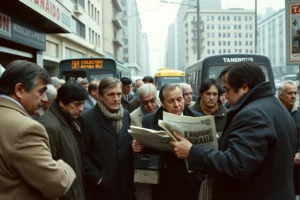
Television moved faster than print on the night of 9 November. West Germany’s ARD broadcast Schabowski’s press conference and then led its 8 p.m. Tagesschau with the headline ‘GDR opens border.’ That broadcast is often cited as the trigger that sent East Berliners to the checkpoints. West Berlin radio and television interrupted programming with reports of crowds at Bornholmer Strasse and the festive mood on the Kurfürstendamm. West Berlin newspapers such as Der Tagesspiegel and the Berliner Morgenpost prepared editions describing the opening, the crowds, and the first Trabis.
East Berlin’s press responded more cautiously. Neues Deutschland, the SED’s central organ, carried the official travel regulation and emphasized order and legality. The Berliner Zeitung and other East Berlin papers reported the new rules, but the streets were ahead of the print. In the following days, both sides of the city’s press documented the crossings, the family reunions, and the political debates that followed. The contrast between official language and lived reality was itself part of the story.
Newspapers also recorded the practical details that historians rely on: which checkpoints opened, how many people crossed, what officials said, and how Berliners described the night. These reports, read alongside television footage and eyewitness accounts, form a rich primary record.
What People Were Talking About
On the night of 9 November, rumor and hope traveled faster than official instructions. People asked whether the border was really open, whether the visas would be honored, whether Soviet troops would intervene, and whether they should go now or wait. In West Berlin restaurants, a woman shouting ‘Die Mauer ist gefallen!’ was at first thought to be overwrought; then kitchen staff repeated the news and the room emptied toward the checkpoints. One British eyewitness in West Berlin remembered the atmosphere as electric.
The feeling in the air was electric, as if some great force had been let loose. – Joseph, Portugal, BBC eyewitness
At the border, guards and travelers improvised. A British resident who had been visiting East Berlin recalled a border officer issuing visas with the remark, ‘Why not – the world’s going mad anyway.’ Such anecdotes capture the collapse of bureaucratic certainty. East Berliners talked about shopping, visiting relatives, and seeing the West; West Berliners talked about welcoming the arrivals and about what the opening meant for the city’s future. Families discussed whether to stay in the East, move west, or wait.
The conversations were not only celebratory. Some East Germans feared that the opening was temporary or that the state would punish those who crossed. Others worried about jobs, housing, and the end of familiar social arrangements. The phrase ‘the Wall in the head’ would later describe the psychological divisions that outlasted the concrete barrier.
Historical Photographs
The visual record of 9 November 1989 is extensive. Photographs show Günter Schabowski at the press conference, looking serious as he read the travel regulation; ARD spokesman Jo Brauner reading the 8 p.m. news; crowds pressing against the Bornholmer Strasse checkpoint; and the first Trabants crossing into West Berlin on 10 November. Other images show West Berliners sitting on the Wall near the Brandenburg Gate, champagne bottles raised, and East Berliners being welcomed with flowers and free drinks on the Kurfürstendamm.
One striking photograph from 31 December 1989 shows Berliners celebrating New Year’s Eve on the Wall in front of the Brandenburg Gate. It captures how quickly the barrier had become a stage for celebration rather than fear. Press photographers from Reuters, Associated Press, and German agencies documented the night, and Berlin’s own archives hold images of the checkpoints, border guards, and crowds. These photographs are not neutral illustrations; they show what photographers could see, and they helped shape the world’s memory of the event.
Visual evidence also includes television footage, which preserves the sound of the crowds, the flicker of border lights, and the improvised interviews with people who had just crossed. For historians, the combination of still photography and broadcast recording is essential.
Documents & Primary Sources
Historians studying the night the Wall opened rely on several kinds of primary sources. The most important include the transcript and audio-visual record of Schabowski’s press conference; the text of the GDR’s revised travel regulation; border guard logs and checkpoint reports; Politburo and Central Committee minutes; and Stasi records held by the Stasi Records Archive. These documents show what officials intended, what they communicated, and where the orders broke down.
Newspapers and broadcast archives provide contemporary reporting and public reaction. West Berlin’s Der Tagesspiegel and Berliner Morgenpost, East Berlin’s Neues Deutschland and Berliner Zeitung, and the ARD and ZDF television archives are key. Personal letters, diaries, and oral histories capture the experience of ordinary Berliners. Photographs and film from the Bundesarchiv, the Berlin Wall Memorial, and press agencies document the crowds and checkpoints. Maps of the border and city sectors help reconstruct movement on the night.
Allied records and West Berlin government files add the perspective of the western sectors and the Four Powers. Together, these sources allow a reconstruction that is more than a single narrative: they reveal the confusion, speed, and contingency of the opening.
1989 Timeline
| Date | Event in Berlin |
|---|---|
| 7 May | GDR local elections; protests follow allegations of falsified results. |
| Summer-autumn | East Germans flee via Hungary and occupy West German embassies in Prague and Warsaw. |
| 4 November | Mass demonstration on East Berlin’s Alexanderplatz demands reform. |
| 6 November | GDR publishes a draft travel law intended to manage the refugee crisis. |
| 9 November | Schabowski’s press conference; ARD reports the border is open; Bornholmer Strasse opens about 9:20 p.m.; barrier raised by 11:30 p.m. |
| 10 November | Trabant convoys cross into West Berlin; celebrations continue. |
| 22 December | Brandenburg Gate crossing is opened. |
| 31 December | Berliners celebrate New Year’s Eve on the Wall in front of the Brandenburg Gate. |
What Changed Next
In the days after 9 November, new crossings were opened and the border regime loosened rapidly. The physical Wall remained, but it had lost its power to terrify. Between June and November 1990, most of the Wall through the city centre was torn down, and souvenir hunters carried pieces of it around the world. On 22 December 1989, the Brandenburg Gate crossing opened, symbolically joining the city’s most famous landmark to the celebration. German reunification followed on 3 October 1990.
The opening also changed daily life. East Berliners gained access to West Berlin’s shops, universities, media, and travel routes; West Berliners could visit the East without the old restrictions. But the transition was uneven. Economic shock, unemployment, and the closure of many East German enterprises followed. The ‘wall in the head’ persisted, and many families that had been divided found reunion more complicated than expected.
For Berlin, the night of 9 November 1989 became a founding memory: a moment when ordinary people, a confused bureaucracy, and a television broadcast combined to open a border that had seemed permanent.
Sources
- Berlin.de, ‘Opening and fall of the Berlin Wall,’ https://www.berlin.de/en/history/8482274-8619314-opening-and-fall-of-the-berlin-wall.en.html
- BBC, ‘1989: The night the Wall came down,’ http://news.bbc.co.uk/onthisday/hi/witness/november/9/newsid_3241000/3241641.stm
- Mary Elise Sarotte, The Collapse: The Accidental Opening of the Berlin Wall (Basic Books, 2014).
- Frederick Taylor, The Berlin Wall: A World Divided, 1961-1989 (HarperCollins, 2006).
- Bundesarchiv, Berlin-Lichterfelde, and the Stasi Records Archive, Berlin.
FAQ
What was the population of Berlin in 1989?
Greater Berlin had roughly 3.4 million inhabitants, with about 2.1 million in West Berlin and 1.3 million in East Berlin.
What major events happened in Berlin in 1989?
The key events include the 7 May local elections and protests, the autumn refugee crisis, the 4 November Alexanderplatz demonstration, Schabowski's 9 November press conference, the opening of Bornholmer Strasse that night, the Trabi convoys on 10 November, and the opening of the Brandenburg Gate crossing on 22 December.
What primary sources are available for studying Berlin in 1989?
Researchers use press conference transcripts and broadcasts, border guard logs, Politburo and Stasi records, newspapers such as Der Tagesspiegel and Neues Deutschland, photographs and film from the Bundesarchiv and Berlin Wall Memorial, Allied records, diaries, letters, and oral histories.
How did daily life in Berlin in 1989 differ from today?
Berlin was divided by the Wall and a strict border regime; East Berliners faced shortages and restricted travel, while West Berlin was an enclave dependent on subsidies and Allied protection. Today the city is unified, and the former border is marked by memorials and cobblestone lines.

Leave a Reply