
Short Answer
On the morning of June 4, 1942, a small group of American torpedo bombers droned north of Midway Atoll, a tiny coral outpost nearly halfway between the United States and Japan. Ensign George Gay, flying tail-end Charlie in Torpedo Squadron 8, watched as Japanese fighters and antiaircraft fire tore through his formation. One by one, all fourteen of his fellow planes fell into the sea. Gay, the only survivor, continued his run against the aircraft carrier Akagi. “I saw somebody on the bridge, I guess it was a captain or an admiral or something, he’s waiving a pair of binoculars and pointing his samurai sword at me,” he later recalled. That moment—one man in a crippled aircraft against the might of the Imperial Japanese Navy—captures the desperation and heroism of Midway. The battle that unfolded over the next hours would shatter Japanese offensive power and turn the Pacific War. This article tells that story through the eyes of those who were there, using their own words to show what it meant to live through the turning point of the Pacific.
What Happened?
The Battle of Midway, fought June 4–7, 1942, was the decisive naval engagement of the Pacific War. The Imperial Japanese Navy aimed to capture Midway Atoll and lure the U.S. Pacific Fleet into a trap, forcing a crippling battle that would eliminate American carriers and open the way for an invasion of Hawaii. According to the American Battle Monuments Commission, the Japanese attempted “to force a crippling battle on the U.S. Navy and establish a base between Pearl Harbor and Japan.” Japanese control of Midway would have placed them “in close striking distance of Hawaii.”
But American intelligence had broken Japanese codes. As the ABMC notes, “American Naval intelligence, using code breaking and false messages, discovered the Japanese plans.” This allowed Admiral Chester Nimitz to position three American carriers—Enterprise, Hornet, and Yorktown—northeast of Midway, ready to ambush the Japanese fleet.
- June 4, 1942: Japanese carrier forces under Admiral Chuichi Nagumo strike Midway Island, causing heavy damage but failing to destroy the airfield.
- Morning attacks: American torpedo squadrons, including Torpedo 8, attack the Japanese carriers without fighter escort. Nearly all are shot down, but they draw Japanese fighters and antiaircraft fire to low altitude.
- Dive-bomber attack: American dive-bombers from Enterprise and Yorktown exploit the gap and hit three Japanese carriers—Akagi, Kaga, and Soryu—in a devastating five-minute strike, setting them ablaze.
- Counterattack: The Japanese carrier Hiryu launches a counterstrike that cripples the Yorktown, but later in the day U.S. dive-bombers find and sink Hiryu.
- June 5: The Japanese fleet retreats, having lost four carriers, one heavy cruiser, and over 3,000 men, including many irreplaceable pilots and aircraft mechanics.
The United States lost the carrier Yorktown and a destroyer, but the damage to the Japanese carrier force was irreparable. The battle ended Japanese offensive capability in the Pacific.
How It Was Seen at the Time
For American servicemen and the public, Midway was a dramatic reversal of fortune. After months of defeats following Pearl Harbor, the Doolittle Raid and the Battle of the Coral Sea had lifted morale, but Midway was the first decisive victory. The official narrative emphasized courage, sacrifice, and the triumph of intelligence. Ensign Gay’s account, recorded in 1943, captures the desperation of the attack: “I went straight on in and I saw somebody on the bridge, I guess it was a captain or an admiral or something, he’s waiving a pair of binoculars and pointing his samurai sword at me.” He described the American errors, arguing for better arming of torpedo bombers, but his tone is one of a man who survived a miraculous ordeal.
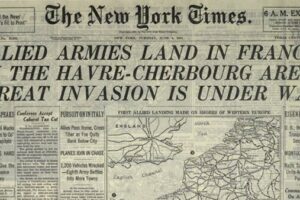
From the Japanese side, Lieutenant Commander Mitsuo Fuchida, who was aboard the Akagi, later recalled the shock of the American dive-bomber attack. His memoir, quoted in an NPR retrospective, describes the sudden appearance of the aircraft and the inferno that engulfed the flagship. The Japanese public, however, was not told of the defeat; the high command suppressed the news, and the loss was not acknowledged until months later. The American press, however, hailed the victory as a turning point, though they could not yet reveal the role of codebreaking.
Historical Snapshot
| Aspect | Detail |
|---|---|
| Date | June 4–5, 1942 |
| Place | Midway Atoll and the surrounding Pacific Ocean |
| People | U.S. Navy pilots, sailors, and codebreakers; Imperial Japanese Navy pilots and officers |
| What Happened | American forces ambushed a Japanese carrier fleet, sinking four carriers and turning the tide of the Pacific War |
| Why It Mattered | Japan lost its offensive capability and the United States seized the initiative |
Eyewitness Accounts
The most famous American eyewitness is Ensign George Gay, the sole survivor of Torpedo 8. His oral history, recorded in 1943, provides a harrowing description of the attack. He describes flying through Japanese fighters and antiaircraft fire, watching his friends die, and finally being shot down himself. He floated in the sea for hours, hiding under a seat cushion, while the Japanese fleet passed nearby. He was later rescued by a PBY patrol plane. His testimony, preserved in the U.S. Navy archives, is a vivid record of courage and luck.
“But I went straight on in and I saw somebody up on the bridge, I guess it was a captain or an admiral or something, he’s waiving a pair of binoculars and pointing his samurai sword at me. I went on in and I dropped my torpedo.”
Gay also argued that the United States made errors in the battle, particularly in the arming of torpedo bombers, which were slow and vulnerable. He believed that the torpedo squadrons were sacrificed needlessly, but his account underscores the courage of the pilots who attacked without fighter support.
From the Japanese perspective, Lieutenant Commander Mitsuo Fuchida, the flight commander who led the attack on Pearl Harbor, was aboard the Akagi during the battle. In his memoirs, he described the moment the American dive-bombers appeared: “We were in the middle of rearming and refueling our aircraft, and the flight decks were covered with bombs and torpedoes. The American bombers came out of the clouds, and within minutes our ship was a raging inferno.”
What People Knew at the Time
| What People Knew Then | What We Know Now |
|---|---|
| Americans knew they had won a major victory, but the full extent of the damage to the Japanese fleet was not revealed immediately. | Historians confirm that the Japanese lost four carriers and over 3,000 men, including the core of their carrier aviation force. |
| The U.S. Navy acknowledged the role of intelligence, but codebreaking details were kept secret for years. | We now know that the U.S. had broken the Japanese JN-25 code and knew the exact plan of attack. |
| Japanese authorities initially suppressed news of the defeat, presenting it as a tactical withdrawal. | Modern scholarship reveals that the defeat was catastrophic and marked the turning point of the Pacific War. |
Different Perspectives
American Perspective
For the American pilots and sailors, Midway was a test of courage against overwhelming odds. Ensign Gay’s account emphasizes the despair of seeing his squadron wiped out, yet he pressed on. The Navy’s official report praised the torpedo squadrons for drawing the Japanese fighters down to sea level, allowing the dive-bombers to attack unopposed. The American public saw it as a vindication of their armed forces, a sign that the United States could defeat the Japanese.
Japanese Perspective
The Japanese perspective is less well-known but equally important. Lieutenant Commander Fuchida’s memoir, written after the war, described the shock of the dive-bomber attack and the chaos aboard the carriers. The Japanese command had been overconfident, believing that the Americans would not be able to respond in time. The defeat was a severe blow to Japanese morale, but it was hidden from the public. The Japanese high command continued to claim victories, but the loss of four carriers and their experienced aircrews was irreplaceable.
Aftermath
The Battle of Midway was a decisive turning point. The Japanese Navy lost four aircraft carriers, a heavy cruiser, and more than 3,000 men, including many of their most experienced pilots. The United States lost the carrier Yorktown and about 360 men. The American victory allowed the U.S. to take the initiative in the Pacific, leading to the Guadalcanal campaign and the island-hopping offensive. The Japanese never again launched a major offensive, and the war in the Pacific became a war of attrition that the United States would win.
How Historians See It Today
Modern historians unanimously view Midway as the turning point of the Pacific War. The American victory was due to a combination of codebreaking, luck, and the extraordinary courage of the torpedo pilots who sacrificed themselves to draw the Japanese fighters away. Historians also emphasize the importance of the American dive-bomber attack, which arrived at the exact moment when the Japanese carriers were most vulnerable—rearming and refueling. The battle demonstrated the power of naval aviation and the importance of intelligence. While contemporary accounts often stressed the heroism of individual pilots, modern scholarship also recognizes the role of poor Japanese intelligence and overconfidence. The battle is now seen as a classic example of how a smaller, well-informed force can defeat a larger, overconfident enemy.
Today, the eyewitness accounts of men like Ensign Gay and Lieutenant Commander Fuchida remain the most vivid and powerful record of the battle. They remind us that history is not just a series of events, but the experiences of real people who faced fear, confusion, and loss. Their words allow us to see the battle through their eyes, and to understand the human cost of the turning point in the Pacific.
FAQ
What was the role of codebreaking at Midway?
American naval intelligence had broken the Japanese JN-25 code and knew the Japanese plan to attack Midway. They used false messages to confirm the target and positioned their carriers for an ambush. This gave the U.S. a crucial advantage that allowed the smaller American force to win the battle.
Why was Ensign George Gay famous?
Ensign George Gay was the sole survivor of Torpedo Squadron 8 at the Battle of Midway. He flew his torpedo bomber through a gauntlet of Japanese fighters and antiaircraft fire, dropped his torpedo, and was shot down. He spent hours in the water, hidden under a seat cushion, and was rescued the next day. His detailed account became a primary source for the battle.
What were the immediate consequences of the Battle of Midway?
The Japanese Navy lost four aircraft carriers and a significant portion of their trained pilots and mechanics. This ended their ability to conduct major offensive operations. The United States gained the strategic initiative and launched the Guadalcanal campaign in August 1942, marking the beginning of the island-hopping offensive toward Japan.











Leave a Reply