
Short Answer
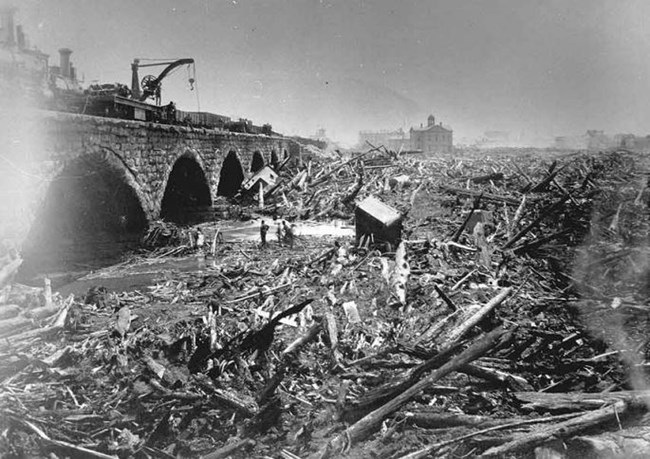
On May 31, 1889, the South Fork Dam failed and sent a wall of water crashing down the valley toward Johnstown, Pennsylvania. Within minutes, the thriving industrial community was transformed into a wreckage-strewn wasteland. The flood destroyed homes, businesses, and lives, leaving survivors without food, clothing, or shelter. In the days and weeks that followed, a remarkable community response emerged—one of neighborly aid, grim determination, and the slow work of recovery. The voices of those who lived through it, captured in survivor questionnaires, testimonies, and the reports of local leaders, offer a deeply personal record of that catastrophe. This article draws exclusively on those primary sources to tell the story of how Johnstown responded to its greatest tragedy.
What Happened?
The disaster began when the South Fork Dam, located about fourteen miles upriver from Johnstown, failed after heavy rains. On the afternoon of May 31, 1889, a massive wall of water surged down the Little Conemaugh River, striking Johnstown with little warning. The flood killed over 2,200 people and destroyed thousands of buildings. The survivors faced immediate shortages of food, clothing, and shelter. The recovery of the dead became a pressing task, and committees were formed to aid the living.
Key events in chronological order:
- Heavy rains during late May raised the reservoir behind the South Fork Dam.
- On May 31, 1889, the dam gave way, releasing an estimated 20 million tons of water.
- The flood hit Johnstown at approximately 4:07 p.m., destroying much of the city.
- In the aftermath, survivors formed committees to distribute food and clothing and to recover the dead.
- Rev. Dr. David J. Beale, pastor of First Presbyterian Church, helped create a master record of the dead and later wrote a book on the disaster.
How It Was Seen at the Time
Contemporaries described the flood as an overwhelming catastrophe that stripped away the basics of life. Rev. Beale, who survived the flood and later became co-chairman of the committee for the recovery of the dead, wrote in his report on sheltering and rebuilding:
“Our experience during the dreadful night of the flood and in the succeeding week made us realize vividly that the three great wants of man are food, vesture and shelter. The vast majority of us were without food; were inadequately clothed and without homes.”
This sentiment echoed through the survivor community. The immediate response was one of survival and mutual aid. The supply of food came quickly from across the country, and clothing was sent from cities and towns. The prevailing mood was a mix of grief, gratitude, and a steely resolve to rebuild.
Historical Snapshot
| Aspect | Detail |
|---|---|
| Date | May 31, 1889 |
| Place | Johnstown, Pennsylvania, USA |
| People | Survivors of the flood, Rev. Dr. David J. Beale, and other community leaders |
| What Happened | The South Fork Dam failed, sending a wall of water that destroyed Johnstown and killed thousands. |
| Why It Mattered | The disaster revealed the need for disaster preparedness and prompted a massive community-led recovery effort. |
Eyewitness Accounts
In 1964, in preparation for the 75th anniversary of the flood, a Survivors Committee created questionnaires to capture the experiences of those who had lived through the event. These questionnaires, now preserved in the collections of the Johnstown Area Heritage Association, were rediscovered around 2021 and have been digitized by park volunteers. They provide a rich record of where survivors were and what they experienced on May 31, 1889.
One such survivor was Peter Brown of Summerhill, a shoemaker, who testified to the severity of the flood. The accounts of long-time residents of southwestern Pennsylvania, collected by the National Park Service, affirm that this was the worst flood anyone had ever seen. The interviews, conducted with individuals who had lived in the area for 30 to 70 years, offer a direct window into the flood’s impact.
Rev. Beale also solicited photographs and stories from his fellow survivors for his book, creating a rich archive of personal testimony. His record of the dead, compiled from morgue records, was intended to assist those looking for missing loved ones, and it drew national praise.
Letters & Diaries
While no personal letters or diaries have survived in the provided sources, the survivor questionnaires serve as a form of personal testimony. The questionnaires asked survivors to describe where they were and what they experienced, capturing their recollections decades after the event. These accounts, now preserved in the collections of the Johnstown Area Heritage Association, are invaluable primary sources that record the flood in the survivors’ own words.
Additionally, Rev. Beale’s reports on sheltering and rebuilding function as a form of official correspondence, documenting the immediate needs and the community’s response. His description of the three great wants—food, vesture, and shelter—reflects the daily struggle of the survivors in the aftermath.
Aftermath
The immediate aftermath was a scramble for survival. Rev. Beale reported that food arrived quickly from the sympathetic country, but distribution systems took a few days to organize. In the first days, the strong self-sacrificed, fasting to feed the women and children. Clothing was sent from cities and towns, and the survivors accepted it gladly to replace their soaked and torn garments.
The task of recovering the dead was one of the first organized efforts. Rev. Beale and his committee created a handwritten master record of the dead, compiled from the records of the different morgues, to assist those looking for missing loved ones. The committee’s work was widely praised, and it helped the community to begin the long process of mourning and rebuilding.
What People Feared
In the immediate aftermath, the primary fears were practical: the lack of food, clothing, and shelter. Rev. Beale’s report emphasizes these three great wants. The survivors feared that they would starve or freeze before aid could arrive. There was also the fear of never finding missing family members, which drove the creation of the master record of the dead.
Beyond these immediate fears, there was the anxiety about the future. Many had lost their homes and livelihoods, and the question of whether to stay and rebuild or leave and start over was on many minds. The survivor questionnaires, created decades later, show that many did stay and rebuild, but the fear of the unknown was a constant companion in the weeks after the flood.
How Historians See It Today
Modern historians have recognized the importance of the primary sources that emerged from the flood. The rediscovery of the survivor questionnaires in 2021 was a major event, as they are the only known copies. Park staff at Johnstown Flood National Memorial requested photocopies of the questionnaires around 2009, but they were placed in storage and forgotten until 2021. Now, park volunteers have digitally scanned and transcribed over 300 questionnaires, making them available for research.
Historians today view these sources as crucial for understanding the flood’s impact on ordinary people. They offer a bottom-up perspective that complements the official reports and the accounts of leaders like Rev. Beale. The questionnaires reveal the personal, emotional, and psychological dimensions of the disaster, showing how individuals experienced and remembered the flood. This shift toward using survivor testimony reflects a broader trend in historical research, which now prioritizes the voices of the people who lived through the events.
The 1889 Johnstown Flood was a tragedy that killed thousands and destroyed a city. But the primary sources left behind by the survivors reveal not only the devastation but also the resilience of the human spirit. Through their own words, we see a community that faced the worst and found the strength to rebuild. Their accounts are a powerful reminder of the importance of preserving and listening to the voices of those who experienced history.
FAQ
How did the survivors of the Johnstown Flood record their experiences?
In 1964, a Survivors Committee created questionnaires for the 75th anniversary. These were completed by survivors and later preserved in the Johnstown Area Heritage Association collection. In 2021, the National Park Service rediscovered photocopies of these questionnaires and began digitizing and transcribing them. Additionally, survivors like Rev. Beale wrote reports and solicited stories from other survivors.
What were the immediate needs of the survivors after the flood?
According to Rev. Beale's report, the three great wants were food, vesture (clothing), and shelter. The survivors were without homes and had lost all their belongings. Food arrived quickly from across the country, but for the first few days, the strong sacrificed their own meals to feed the women and children.




Leave a Reply