
Short Answer
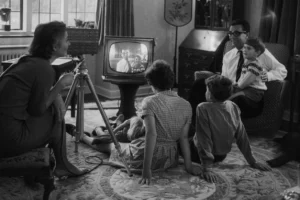
On January 20, 1961, a young, confident John F. Kennedy stood before a nation shivering in the Washington cold and declared, “Ask not what your country can do for you—ask what you can do for your country.” To millions watching on black-and-white television sets, the moment felt like the dawn of a golden age. The economy was booming, the suburbs were spreading, and the United States seemed poised to lead the world into a future of limitless possibility. Yet within a decade, that optimism would be shattered by assassinations, urban riots, a divisive war, and a growing generational chasm. This article reconstructs the 1960s as contemporaries experienced them—through the speeches they heard, the newspapers they read, the fears they harbored, and the hopes they carried into a decade that began with a New Frontier and ended with a nation deeply divided.
What Happened?
The 1960s unfolded as a decade of dramatic, often violent change. The following chronological account highlights the major events as they were reported and understood at the time:
- 1960: John F. Kennedy, a young Democratic senator from Massachusetts, narrowly defeated Richard Nixon in the presidential election, promising a “New Frontier” of domestic reform and global leadership.
- 1961: Kennedy took office on January 20. In April, the failed Bay of Pigs invasion of Cuba embarrassed the administration. In August, the Berlin Wall was erected, symbolizing Cold War division.
- 1962: The Cuban Missile Crisis brought the world to the brink of nuclear war in October, as the United States and Soviet Union confronted each other over missiles in Cuba.
- 1963: On August 28, Martin Luther King Jr. delivered his “I Have a Dream” speech during the March on Washington, a massive civil rights demonstration. On November 22, President Kennedy was assassinated in Dallas, Texas, shocking the nation and the world.
- 1964: President Lyndon B. Johnson signed the Civil Rights Act, outlawing segregation and discrimination. Congress also passed the Gulf of Tonkin Resolution, escalating U.S. involvement in Vietnam.
- 1965: The Voting Rights Act was signed, and the first U.S. combat troops were sent to Vietnam. Urban riots erupted in Watts, Los Angeles, and other cities.
- 1968: The Tet Offensive in January turned public opinion against the Vietnam War. In April, Martin Luther King Jr. was assassinated, sparking riots across the country. In June, Robert F. Kennedy was assassinated. The Democratic National Convention in Chicago was marred by police violence against protesters.
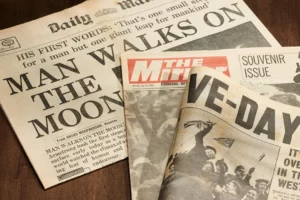
- 1969: On July 20, American astronauts Neil Armstrong and Buzz Aldrin became the first humans to walk on the Moon, fulfilling Kennedy’s 1961 promise. The Woodstock music festival in August drew hundreds of thousands of young people, symbolizing the counterculture.
How It Was Seen at the Time
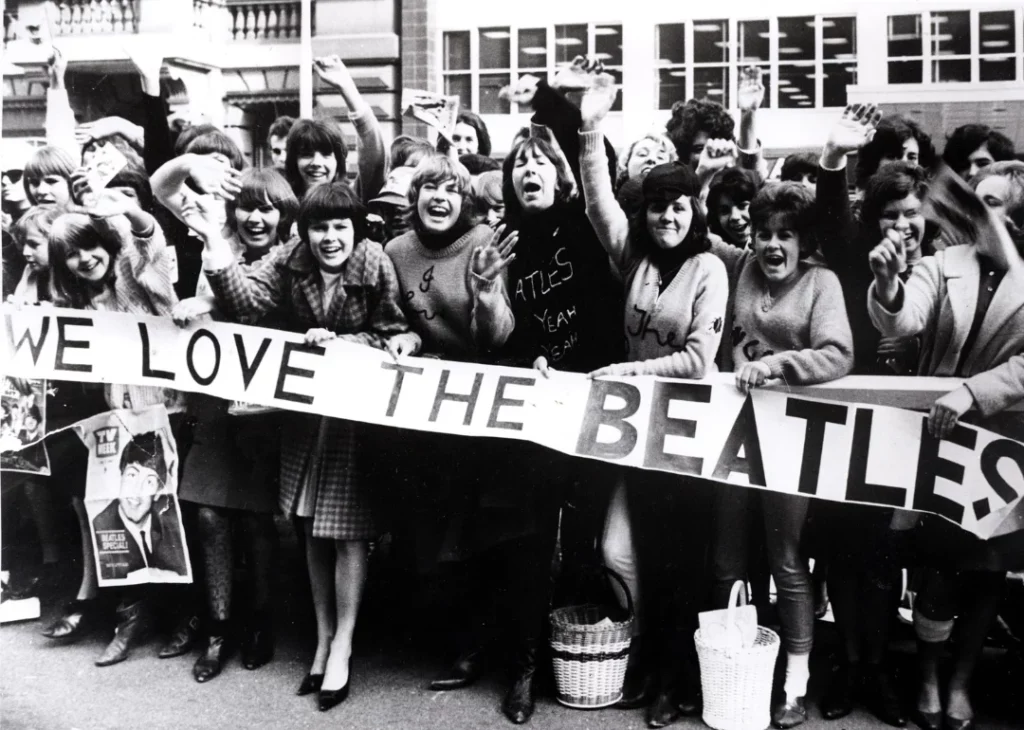
Contemporaries experienced the 1960s as a time of both exhilarating possibility and terrifying uncertainty. The early years were marked by a faith in government’s ability to solve big problems—a faith that Kennedy’s rhetoric and Johnson’s Great Society programs seemed to justify. But as the decade wore on, that faith eroded. The Vietnam War, broadcast nightly into living rooms, became a source of bitter division. The civil rights movement, while achieving landmark legislation, faced violent backlash. And the assassinations of 1963 and 1968 left many feeling that the nation was coming apart.
“I have a dream that my four little children will one day live in a nation where they will not be judged by the color of their skin but by the content of their character.” — Martin Luther King Jr., August 28, 1963
Many Americans, especially the young, saw the decade as a moral crusade. As one student protester later recalled, “We believed we could change the world—and we were terrified that we might not.” The language of the era was filled with urgency: “the generation gap,” “the establishment,” “the military-industrial complex.” The prevailing mood shifted from the optimism of the early years to a more cynical, confrontational stance by 1968.
Historical Snapshot
| Aspect | Detail |
|---|---|
| Date | January 1, 1960 – December 31, 1969 |
| Place | United States, with global events in Vietnam, Cuba, the Soviet Union, and the Moon |
| People | John F. Kennedy, Lyndon B. Johnson, Martin Luther King Jr., Richard Nixon, Neil Armstrong, and millions of ordinary Americans |
| What Happened | Civil rights legislation, Vietnam War escalation, space race, political assassinations, counterculture movement |
| Why It Mattered | The decade reshaped American society, politics, and culture, and set the stage for the 1970s and beyond |
What People Knew at the Time
| What People Knew Then | What We Know Now |
|---|---|
| Americans believed the Vietnam War was a necessary stand against communism, based on official government statements and optimistic military reports. | Later declassified documents and reporting revealed widespread official deception about the war’s progress and the Gulf of Tonkin incident. |
| The Moon landing was seen as a triumphant achievement of American technology and resolve. | Historians now view it as the climax of the Cold War space race, with significant scientific and political implications. |
| Civil rights leaders were often portrayed as radical or disruptive by mainstream media. | Modern scholarship recognizes the movement’s moral clarity and its role in expanding democracy. |
| The assassination of JFK was initially blamed on a lone gunman, Lee Harvey Oswald. | Decades of investigation and conspiracy theories have left many questions unresolved, though the official Warren Commission conclusion remains contested. |
Contemporary Newspaper Coverage
Newspapers were the primary source of daily information for most Americans. The coverage of major events was often dramatic and emotional. On November 23, 1963, the Dallas Morning News ran the headline “Kennedy Slain by Assassin”—a stark, shocking announcement. The New York Times devoted its entire front page to the assassination, with a banner headline: “KENNEDY IS KILLED BY SNIPER.” The tone was one of disbelief and grief.
“The President was shot while riding in an open automobile in a motorcade through downtown Dallas. He died at 1 p.m. Central Standard Time.” — Associated Press bulletin, November 22, 1963
Coverage of the Vietnam War evolved from early support to critical scrutiny. By 1968, after the Tet Offensive, even mainstream outlets like The New York Times and Time began questioning the war’s progress. The Moon landing, by contrast, was celebrated with near-universal awe. The Washington Post declared: “Man Walks on Moon: Astronauts Take Giant Step for Mankind.”
Eyewitness Accounts
Eyewitnesses to the decade’s events left vivid records. The Associated Press’s annual compilation, The World in 1969, collected firsthand reports from correspondents around the globe. One reporter described the Woodstock festival: “Half a million young people, many of them barefoot and wearing flowers, sat in the mud and listened to music that seemed to speak directly to their souls.” Another account from the March on Washington in 1963 captured the mood: “The crowd stretched from the Lincoln Memorial to the Washington Monument, and when Dr. King spoke, there was not a sound except his voice and the occasional sob.”
“I saw the smoke rising from the city, and I thought, ‘This is the end of the world.'” — A resident of Watts during the 1965 riots, quoted in contemporary news reports
Astronaut Neil Armstrong’s own words from the Moon—”That’s one small step for man, one giant leap for mankind”—were heard live by an estimated 600 million people, making it the most-watched event in history at the time.
What People Feared
The 1960s were shadowed by the constant threat of nuclear war. The Cuban Missile Crisis in October 1962 brought the world closer to annihilation than ever before. Americans built fallout shelters, schools conducted duck-and-cover drills, and families stocked canned goods. As one housewife in Miami told a reporter, “We knew that if the missiles were launched, we wouldn’t have time to say goodbye.”
Beyond nuclear war, people feared the spread of communism, the breakdown of social order, and the loss of traditional values. The civil rights movement, while supported by many, also provoked fears of racial upheaval. The assassinations of 1968 led to widespread anxiety that the nation was spiraling into chaos. Rumors of government conspiracies and plots circulated, some of which later proved unfounded, but the fear was real.
How Historians See It Today
Contemporary observers often saw the 1960s as a time of moral clarity—a struggle between good and evil, progress and reaction. Modern historians, however, emphasize the complexity and contingency of the decade. They point to the deep divisions within the civil rights movement, the economic and social costs of the Vietnam War, and the ways in which the counterculture both challenged and reinforced existing power structures. The Great Society programs, once hailed as triumphs, are now evaluated with a more critical eye, noting both their achievements and their limitations. The space race is understood not just as a scientific triumph but as a Cold War propaganda tool. Historians also stress the importance of global perspectives, recognizing that the 1960s were not just an American story but a worldwide phenomenon of decolonization, protest, and cultural change.
The primary sources of the 1960s—speeches, newspapers, letters, and photographs—reveal a generation that lived through extraordinary change. They show us not only what happened, but how people made sense of it: with hope, fear, anger, and resilience. The decade’s legacy is not a simple narrative of triumph or tragedy, but a complex tapestry of human experience that continues to shape our world today.
FAQ
What was the most significant event of the 1960s according to contemporaries?
Many contemporaries would point to the assassination of President John F. Kennedy in November 1963 as a defining moment, as it shattered the optimism of the early decade. Others would cite the Moon landing in 1969 as the pinnacle of achievement. The Vietnam War and the civil rights movement were also seen as transformative, though opinions on their significance varied widely.
How did people in the 1960s get their news?
Most Americans relied on daily newspapers, radio, and evening television news broadcasts. The major networks—CBS, NBC, and ABC—aired 15-minute evening news programs, which expanded to 30 minutes in 1963. The assassination of JFK was one of the first events to be covered extensively on live television, and the Moon landing was watched by hundreds of millions on TV.








Leave a Reply