
Short Answer
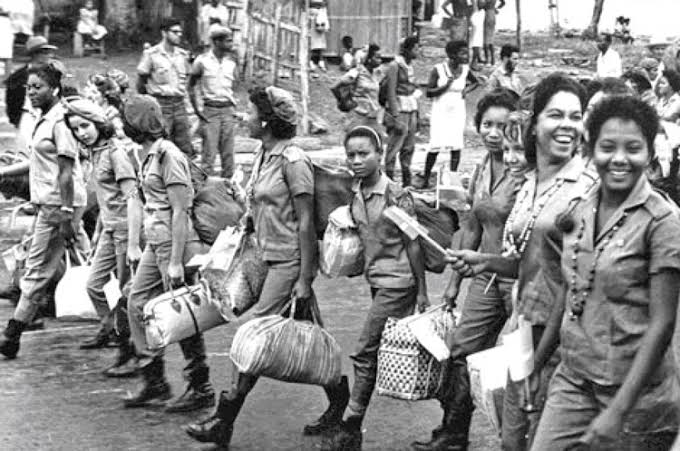
In the sweltering streets of Havana in 1957, a young woman carrying a basket of laundry might have been transporting ammunition for the 26th of July Movement. Another, posing as a nurse, might have been carrying coded messages hidden in her shoe. These women were the clandestinas—the clandestine fighters of the urban underground—whose contributions to the Cuban Revolution were long overshadowed by the iconic bearded guerrillas of the Sierra Maestra. The official story, repeated in textbooks and speeches, focused on the mountains and the male guerrilleros. Yet the letters, diaries, and oral testimonies of the women themselves tell a different story—one of agency, sacrifice, and a fierce struggle for recognition that began long before the revolution’s victory in 1959.
What Happened?
Following the March 10, 1952 coup led by Fulgencio Batista, opposition to his regime took shape in both rural guerrilla bands and urban clandestine networks. Women were active in both, but they were overwhelmingly concentrated in the cities, where they worked as couriers, safe-house keepers, bomb-makers, and intelligence gatherers. As the political scientist Lorraine Bayard de Volo notes in her study Women and the Cuban Insurrection, the prevailing masculine narrative of the revolution has long obscured this reality. The insurrection itself, which lasted from 1952 to 1959, saw women participate in crucial ways—yet the revolutionary leadership, particularly the 26th of July Movement led by Fidel Castro, tended to reproduce dominant gender paradigms. Women were often assigned roles that mirrored their domestic roles: providing food, shelter, and medical care, while men were expected to take up arms.
After the revolution’s triumph on January 1, 1959, the revolutionary state’s official narrative emphasized the Sierra Maestra as the birthplace of the revolution. This narrative was reinforced in the 1960s, as the new government sought to unify the country under a single heroic origin. Women’s participation in the urban underground was minimized, and the women who had fought were often portrayed as secondary, as enablers of the men who did the real fighting. However, the testimonies of these women—collected in interviews, letters, and diaries—reveal a much more complex story. They were not merely helpers; they were strategists, leaders, and even armed combatants. The conflict over gender, as the dissertation A Contradictory Liberation argues, was central to the revolutionary process of 1952–1962. The revolutionary leadership’s tendency to reproduce dominant gender paradigms limited women’s participation even as it allowed them to be proactive agents.
How It Was Seen at the Time
At the time, the prevailing interpretation—both within the revolutionary movement and in the international press—was that the revolution was a masculine affair. The iconic image was of the bearded guerrilla in the Sierra Maestra, not the woman in the city. The official narrative of the revolution emphasized virtually exclusively the role of the guerrillas in the sierra in defeating the Batista dictatorship, thereby diminishing the centrality of the urban underground. This view was not just held by the government but also by many of the women themselves, who often internalized the idea that their work was merely supportive. Yet the women who participated in the clandestine networks knew their own importance. As one former clandestina recalled in an oral history, “We were the ones who kept the revolution alive in the city. Without us, the guerrillas would have had no guns, no ammunition, no food. But they never said our names.”
“The official narrative of the revolution emphasizes virtually exclusively the role of the guerrillas in the sierra in defeating the Batista dictatorship, thereby diminishing the centrality of the urban underground.” — Clandestinas, Duke University Press
Historical Snapshot
| Aspect | Detail |
|---|---|
| Date | 1952–1959 (insurrection); 1959–1962 (post-revolutionary period) |
| Place | Cuba, primarily Havana and other urban centers |
| People | Women of the urban underground (clandestinas), revolutionary leaders, guerrillas in the Sierra Maestra |
| What Happened | Women participated in the urban clandestine networks, performing essential roles in the insurrection against Batista |
| Why It Mattered | Their contributions were largely erased from the official narrative, but their testimonies reveal a more complex and gendered history of the revolution |
Letters & Diaries
The personal letters and diaries of the women who fought in the Cuban insurrection are among the most powerful primary sources for understanding their experiences. The dissertation A Contradictory Liberation draws on personal letters, the clandestine press, and oral histories in Cuba and the United States to uncover the conflicts over the meaning of gender that were central to the revolutionary process. These letters show women writing to their families, to their comrades, and to each other, expressing not only their revolutionary commitment but also their frustration with the limitations placed on them by the male leadership. One woman wrote in 1957, “They treat us as if we were only good for cooking and cleaning, but I have learned to load a pistol and I am ready to use it.” These documents also reveal the emotional toll of the clandestine life—the constant fear of arrest, torture, or death. The letters are not just political documents; they are intimate records of courage and despair.
The clandestine press itself—the newspapers and bulletins printed in secret and distributed by women—also served as a form of testimony. These publications, often written and edited by women, argued for the inclusion of women in the struggle and critiqued the gender stereotypes that persisted within the movement. They provide a direct link to the women’s own voices, as they were written by the women themselves and distributed at great personal risk.
Eyewitness Accounts
Oral histories are perhaps the most powerful source for recovering the women’s experiences. The book Clandestinas by Carollee Bengelsdorf is based on in-depth interviews with over thirty former clandestinas. These women, many of whom had never spoken publicly about their roles, told of the daily routines of the underground: hiding arms in their homes, transporting messages, and evading the police. They described the trauma they experienced—the torture of friends, the assassination of comrades, and the constant threat of discovery. One woman recalled how she had to hide her own daughter in a safe house to keep her from the police. Another described how she was forced to watch her husband be killed by the Batista forces. These accounts are not just stories of courage; they also reveal the gendered expectations that shaped their experiences. Many of the women reported that they were not taken seriously by the male leaders, and that they had to prove themselves over and over again.
Different Perspectives
The Revolutionary Leadership
The revolutionary leadership, particularly the 26th of July Movement, tended to reproduce the dominant gender paradigms of the era. Women were often assigned to tasks that were considered “appropriate” for their sex—cooking, nursing, and housekeeping. The leadership’s view was that the revolution was a masculine struggle, and that women’s role was to support the men. This is evident in the speeches and the internal correspondence of the movement, which often praised women for their “sacrifice” and “devotion” rather than for their strategic or tactical contributions.
The Women Themselves
The women who participated in the clandestine networks had a different perspective. They saw themselves as full participants in the revolution, and they often resisted the gender roles imposed on them. In their letters and testimonies, they express pride in their roles as couriers, spies, and even saboteurs. They also expressed frustration with the male leadership’s failure to recognize their contributions. After the revolution, many of these women continued to fight for gender equality, pushing the new revolutionary state to live up to its promises. Their perspective was one of active agency, not passive support.
Aftermath
In the immediate aftermath of the revolution, the new government enacted a series of measures aimed at “liberating” women, including the creation of the Federation of Cuban Women (FMC) and the adoption of the Law of the Mother. However, the official narrative continued to downplay the women’s wartime roles. The state’s version of history emphasized the Sierra Maestra as the birthplace of the revolution, and women were often cast as grateful beneficiaries of the revolution’s paternalism. The women who had fought in the underground were largely left out of the official memory. It was not until the 1990s and 2000s that historians and scholars began to uncover their stories, using the letters, diaries, and oral histories that had been preserved by the women themselves. The book Clandestinas and the dissertation A Contradictory Liberation are part of this new scholarship that challenges the masculine narrative.
How Historians See It Today
Modern historiography has significantly revised the understanding of women’s role in the Cuban Revolution. Scholars like Lorraine Bayard de Volo in Women and the Cuban Insurrection have used gender analysis and previously unexamined testimonies to shatter the prevailing masculine narrative. They argue that women were not merely helpers but were central to the insurrection, and that their participation was shaped by gender, which in turn shaped the revolutionary process itself. The dissertation also argues that women were highly proactive agents in the period of 1959–1962, not simply passive recipients of the state’s “enlightened paternalism.” This shift in historiography has been accompanied by a broader recognition of the importance of primary sources—letters, diaries, oral histories—in recovering the voices of those who were marginalized. Today, historians view the Cuban Revolution as a more complex and gender-diverse event than previously understood, and the testimonies of the clandestinas are now seen as essential to understanding the revolution’s true nature.
The letters and testimonies of the women who fought in the Cuban Revolution remind us that history is not simply the story of the victors, but also the story of those who were silenced. Their voices, preserved in personal correspondence and recorded in oral histories, have finally been allowed to speak. They reveal a revolution that was not only a struggle against dictatorship but also a struggle over the meaning of gender—a struggle that continues to resonate in Cuba and beyond. The primary sources they left behind are not just historical documents; they are the testimony of the women who risked everything to fight for a better world, and who, for too long, were forgotten.
FAQ
What kinds of primary sources did historians use to recover the role of women in the Cuban Revolution?
Historians have used personal letters, diaries, the clandestine press, and oral histories. The dissertation 'A Contradictory Liberation' draws on personal letters and the clandestine press, while 'Clandestinas' uses in-depth interviews with over thirty former clandestinas. These sources reveal the women's own perspectives and actions, which had been omitted from the official narrative.
Why were women's roles in the Cuban Revolution downplayed in the official narrative?
The official narrative emphasized the Sierra Maestra guerrilla warfare, which was largely a male domain. The urban underground, where women were concentrated, was deemphasized. Additionally, the revolutionary leadership tended to reproduce dominant gender paradigms, viewing women as support rather than fighters. This combined to erase women's contributions from the public memory of the revolution.





Leave a Reply