
Short Answer
In the early months of 1942, the West Coast of the United States witnessed a quiet but devastating transformation. In San Francisco, a shop owner of Japanese descent placed a large sign in his window reading “I am an American” on December 8, 1941, the day after Pearl Harbor. The store was soon closed, and the owner—a University of California graduate—was ordered to evacuate. This sign became a symbol of the fate of roughly 120,000 Japanese Americans who, within months, were uprooted from their homes and sent to remote concentration camps. Their stories, preserved in diaries, photographs, letters, and camp newspapers, offer a direct and unmediated window into a wartime experience that tested the very meaning of American citizenship and loyalty.
What Happened?
Following the attack on Pearl Harbor on December 7, 1941, the U.S. government moved quickly to address perceived security threats from persons of Japanese ancestry. On February 19, 1942, President Franklin D. Roosevelt signed Executive Order 9066, authorizing military commanders to designate exclusion zones. Over the following months, the West Coast—home to the majority of Japanese Americans—was declared a military area, and all persons of Japanese ancestry, regardless of citizenship, were ordered to evacuate.
- March 1942: The War Relocation Authority (WRA) was established to oversee the relocation and internment of Japanese Americans.
- March 1942: The first camp, Manzanar, opened in California.
- By the end of 1942, over 110,000 people had been moved to ten permanent camps scattered across remote areas, including Heart Mountain in Wyoming, Tule Lake in California, and Rohwer in Arkansas.
- Families were given only days to dispose of property and belongings; many lost homes, farms, and businesses.
- The camps were surrounded by barbed wire and guarded by armed soldiers; internees lived in barracks, often with no privacy.
These events are documented in the photographs and reports of the time. The WRA’s own report noted, “Barbed wire fences are going up” (Digital History). The evacuation was carried out with haste and often without clear explanation, leaving many Japanese Americans confused and fearful.
How It Was Seen at the Time
At the time, many government officials and military leaders justified internment as a necessary security measure, citing potential sabotage or espionage. However, the primary sources from the internees themselves reveal a very different reality. The famous photograph of the “I am an American” sign, taken on December 8, 1941, captures the determination of a man to prove his loyalty. Yet the sign was soon irrelevant, as the evacuation orders came regardless of citizenship.
“A large sign reading ‘I am an American’ placed in the window of a store, at 13th and Franklin streets, on December 8, the day after Pearl Harbor. The store was closed following orders to persons of Japanese descent to evacuate from certain West Coast areas.”
Internees expressed bewilderment and despair. Grace Nakamura recalled the daily roll call: “We had roll call about 6:30 every day…” (Digital History). The camps were not prison in name but in reality. The WRA’s own report acknowledged the physical barriers: “Barbed wire fences are going up…” (Digital History). The mood was one of shock and a sense of betrayal, as expressed by Emiko Kamiya: “I was thirteen-years-old when we were at Tule Lake….” (Digital History).
Historical Snapshot
| Aspect | Detail |
|---|---|
| Date | 1942–1946 |
| Place | West Coast and ten remote camps, including Manzanar, Tule Lake, Heart Mountain, Rohwer |
| People | Japanese American citizens and resident aliens, including women, children, and elderly |
| What Happened | Forced removal and incarceration in concentration camps |
| Why It Mattered | Demonstrated the fragility of civil liberties during wartime and the power of racism |
Eyewitness Accounts
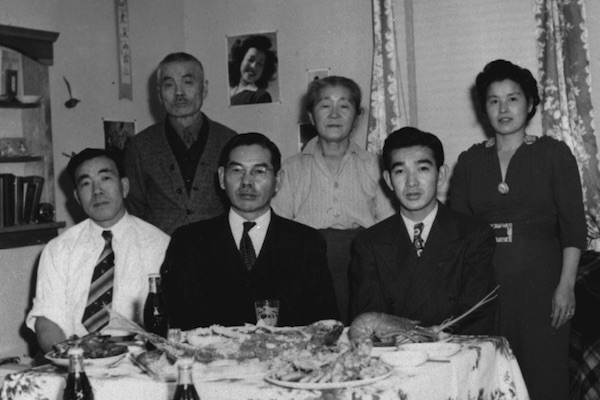
The oral history of Rose Matsui Ochi provides a deeply personal perspective. Her family was sent to Rohwer, Arkansas. She recalled the emotional toll on her family:
“My brother Yoshikazu was two years older than me. He, like many former internees, never stopped being angry about internment. Another brother Takeshi was born retarded in the internment camp, and died in his teens. Many women were depressed and tried to avoid having children in camp.”
Emiko Kamiya, who was thirteen when she entered Tule Lake, echoed the confusion and fear: “I was thirteen-years-old when we were at Tule Lake….” (Digital History). The accounts of internees like Grace Nakamura, who described the daily roll call, and others, show the monotony and humiliation of camp life.
Letters & Diaries
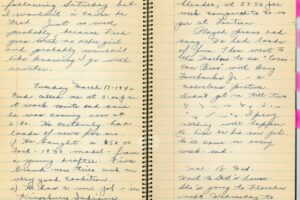
One of the most powerful primary sources is the diary of Stanley Hayami, a high school student who was incarcerated at the Heart Mountain concentration camp in Wyoming. The diary, preserved by the Smithsonian Institution, offers a rare, day-by-day record of camp life. Hayami writes about school, friends, family, and the emotional struggle of being a teenager in a barbed-wire world. His diary is a testament to the resilience of youth and the loss of innocence. The diary also illustrates the use of primary sources in teaching history, as noted in the Smithsonian’s educational materials (Smithsonian).
Daily Life
Daily life in the camps was regulated by the clock. Internees were awakened by roll call at 6:30 a.m., as described by Grace Nakamura. The camps were surrounded by barbed wire, and guards stood in watchtowers. Families lived in single-room barracks, often with only partitions between them. The WRA report stated, “Barbed wire fences are going up…” and the confinement was both physical and psychological. The internees established schools, newspapers, and community organizations to maintain a semblance of normalcy. The Library of Congress collection of internment camp newspapers, published from 1942 to 1946, documents these efforts—they included announcements, editorials, and community news, serving as a lifeline of information and identity.
What People Feared
The primary sources reveal deep anxieties. Many women feared having children in camp, as Rose Ochi noted, because of the harsh conditions and the depression that pervaded. Others feared being sent to Japan or being separated from family. The WRA’s own reports acknowledged the psychological strain. Internees also feared the loss of their property and their futures. The fear of being labeled disloyal was acute, leading to the infamous loyalty questionnaire that split families.
How Historians See It Today
Contemporary justifications for internment were rooted in military necessity, but modern historians have shown that there was no evidence of espionage or sabotage by Japanese Americans. The 1983 Commission on Wartime Relocation and Internment of Civilians concluded that the internment was a grave injustice, motivated by racism and wartime hysteria. Today, historians view the camps as a dark chapter in American civil liberties, and they emphasize the voices of the internees to correct the narrative. The primary sources—diaries, oral histories, photographs, and newspapers—are essential to understanding the human cost of the policy.
The primary sources of the Japanese American internment are not just historical artifacts; they are living testimonies of resilience and loss. They teach us that in times of fear, even a democracy can turn on its own citizens. The voices from the camps—the roll call, the barbed wire, the diary entries—remind us of the enduring need to protect civil rights against the tides of war and prejudice.
FAQ
What was the 'I am an American' sign?
The sign was placed in a San Francisco store window on December 8, 1941, the day after Pearl Harbor, by a Japanese American store owner. It was a desperate assertion of loyalty and citizenship, but the owner was still evacuated and interned.
How did internees record their daily life?
Internees used diaries, such as Stanley Hayami's diary, and camp newspapers published by the internees themselves. These primary sources document roll calls, living conditions, community events, and the emotional toll of confinement.






Leave a Reply