
Short Answer
In an attic, an online archive, or a library’s special collections, the discovery of a personal letter or a diary can feel like a direct connection to a life long past. As historian Steven Stowe writes, these texts are “plain-spoken, lively, and full of details,” drawing us close to the writer’s hopes, worries, and everyday common sense. Yet they also reveal profound differences between then and now—in language, expressive style, and what people felt needed saying at all. For historians, diaries and letters are not just artifacts; they are windows into the subjective dimension of history, capturing the personalities, motivations, and emotions of individuals who made, endured, or witnessed the events we study. This article explores how these personal documents became a cornerstone of historical reconstruction, what they reveal, and how modern scholarship has sharpened our understanding of their nature and limits.
What Happened?
The use of letters and diaries as historical sources is as old as the practice of writing itself, but their systematic study as a distinct category of evidence emerged in the twentieth century. In the German-speaking world, historians began to classify such texts as Selbstzeugnisse (self-testimonies) or ego-documents—a term that emphasizes their personal and subjective character. As historian Volker Depkat explains, these personal documents “help pave the way toward understanding the ‘subjective dimension’ of history, i.e., the personalities, minds, motivations, emotions, and worldviews of concrete historical actors.”
In the 1970s and 1980s, the rise of social history and the “new cultural history” accelerated interest in ordinary people’s experiences. Diaries and letters from soldiers, farmers, women, and immigrants became crucial sources for telling the stories of those who had been left out of official records. The development of digital archives and online collections, such as the History Matters project at the Roy Rosenzweig Center for History and New Media, made these texts more accessible than ever before. By the early 2000s, the study of “life writing” had become an interdisciplinary meeting ground for historians and literary critics, each bringing different questions and methods to the same documents.
Historical Snapshot
| Aspect | Detail |
|---|---|
| Date | 20th century (systematic study); ancient origins |
| Place | Global, with strong traditions in Europe and North America |
| People | Historians, literary critics, diarists, letter-writers |
| What Happened | Personal documents became recognized as vital primary sources for understanding the subjective experience of history |
| Why It Mattered | It shifted historical focus from official records to individual voices, enriching our understanding of past societies |
Letters & Diaries
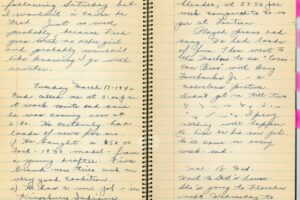
Letters and diaries are unique among historical sources because they are “immediate, homely, and thus comfortable to read,” as historian Steven Stowe writes. They seem to emerge directly from the writer, “fresh and intimate,” bringing us close to who that person was. At the same time, they fascinate us by revealing differences between times past and our own. Stowe observes that “these differences in turn point to historical changes and continuities in self, social relations, work, and values, which personal letters and diaries capture with special sharpness.”
The power of these texts lies in their specificity. A diary entry from a Civil War soldier or a letter from a medieval merchant provides details of daily life that official records omit. For instance, a letter might mention the price of bread, the weather, or a family quarrel, offering a glimpse of lived experience. Historian Reetta Eiranen argues that “human beings understand themselves and others as well as their lived reality and temporality through narration,” and diaries and letters are a primary vehicle for that narration.
Different Perspectives
Historians
Historians approach personal documents as sources for reconstructing past realities. They are interested in what these texts reveal about the writer’s world—the social, cultural, and political contexts that shaped their lives. According to Volker Depaper, for historians, personal documents are “all the material handed down to us from which they can draw knowledge of past realities.” They classify sources into “objective” ones (government files, statistics) and “subjective” ones (personal documents), and they use the latter to access the “subjective dimension” of history.
Literary Critics
Literary critics approach the same texts as life writing, focusing on narrative structure, rhetorical strategies, and the construction of the self. They ask how the writer shapes their story, what literary conventions they employ, and how the text creates meaning. For them, a diary is not a transparent window into the past but a crafted artifact that uses language to create a persona. This perspective highlights the constructed nature of experience, as Eiranen explains: “immediate experience (Erlebnis) and reflected experience (Erfahrung) are distinct, and the latter is grasped and expressed by narration.”
What the Sources Got Wrong
One of the most common misconceptions about diaries and letters is that they are unmediated, “raw” sources that present the truth without distortion. In fact, as modern scholarship has shown, these texts are carefully constructed narratives. The writer chooses what to include, what to omit, and how to present themselves. They may exaggerate, misremember, or intentionally deceive. For example, a diarist might write with an eye toward posterity, shaping their image for future readers. As Eiranen points out, experience is “constructed” through narration; the act of writing transforms the raw event into a meaningful story. Early historians sometimes took these texts at face value, but today’s researchers understand that a diary or letter is not a transparent window—it is a crafted document that must be interpreted with caution.
How Historians See It Today
Today, historians view diaries and letters as essential but complex sources. They recognize that these texts provide access to the “subjective dimension” of history, but they also understand that subjectivity is not the same as truth. The field of life writing studies has established a sophisticated framework for analyzing personal documents, blending the historian’s attention to context and evidence with the literary critic’s attention to narrative and form. As Depaper writes, “historians and literary critics approach one and the same phenomenon from different disciplinary perspectives and with different epistemological interests.” Modern scholarship uses diaries and letters not only to reconstruct what happened but also to understand how people experienced and interpreted events. The challenge is to read them critically, asking questions about the writer’s perspective, the intended audience, and the cultural conventions of the time.
Related Primary Sources
In the end, diaries and letters are more than just sources; they are voices from the past that speak to us across time. They remind us that history is not only about kings and battles but also about the hopes, fears, and daily lives of ordinary people. As Stowe says, they “open a tantalizing window into past lives,” and when read with care, they allow us to reconstruct the personal experience of those who came before us.
FAQ
Why are diaries and letters considered valuable historical sources?
Diaries and letters provide direct insight into the personal thoughts, emotions, and daily lives of people in the past. They reveal the 'subjective dimension' of history—how individuals understood and experienced events, rather than just the official records. They are especially valuable for documenting the experiences of ordinary people who are often absent from government documents.
What are the limitations of using diaries and letters as historical evidence?
Diaries and letters are constructed narratives, not raw truth. Writers may omit details, exaggerate, or shape their stories for an audience. They are also subjective and only reflect one person's viewpoint. Historians must therefore read them critically, considering the writer's background, purpose, and the conventions of the time. They should be cross-referenced with other sources to build a more complete picture.










Leave a Reply