
Short Answer
On 22 March 1947, Viscount Louis Mountbatten stepped off a Royal Air Force aircraft at Palam airfield, Delhi, to assume the most politically volatile post in the British Empire: Viceroy of India. The air was thick with dust and uncertainty. The Second World War had left Britain economically exhausted, and the subcontinent was tearing itself apart with communal violence between Hindus and Muslims. Prime Minister Clement Attlee had announced on 10 February 1947 that Britain would grant India independence by June 1948, but the deadline felt distant. Mountbatten, a decorated naval commander and a cousin of the King, was given the task of negotiating the transfer of power. He was the last viceroy, and the world watched to see whether he could manage the exit of the Raj without leaving India in flames.
What Happened?
Mountbatten, born on 25 June 1900 in Frogmore House, Windsor, was a German aristocrat who changed his family name from Battenberg to Mountbatten in 1917. He had a distinguished naval career, overseeing the defeat of the Japanese offensive towards India during World War II. On 10 February 1947, Prime Minister Clement Attlee made a historic speech to the House of Commons, stating that India would be granted independence by June the following year and confirming Mountbatten’s appointment as Viceroy. Mountbatten’s responsibilities were to oversee Britain’s exit and facilitate constitutional self-government.
Mountbatten arrived in India in late March 1947. He immediately began negotiations with Indian leaders, including Jawaharlal Nehru of the Indian National Congress and Muhammad Ali Jinnah of the Muslim League. The two leaders were determined to pursue the interests of their respective parties, and communal violence was escalating. Mountbatten found the “choppy waters of Indian politics” difficult to navigate, as noted by the parliamentary record. His mediation tested his patience, and he eventually concluded that the only way to avoid a complete breakdown was to hasten the government’s exit strategy.
In a climate of increasing communal violence and repatriation, Mountbatten decreed that the transfer of power and the partition to create the states of India and Pakistan would come into effect on 15 August 1947. He would remain as Governor-General of India for another tumultuous year before returning to the Admiralty. The Indian Independence Act was passed by the British Parliament in July 1947, and at midnight on 14-15 August, India and Pakistan became independent dominions. Mountbatten served as Governor-General of the new India until June 1948.
How It Was Seen at the Time
Contemporary observers were struck by the speed and decisiveness of Mountbatten’s actions. While from the outset he had insisted on a strict time limit of fifteen months within which to complete his task, no one had seriously anticipated such a speedy transformation. There was widespread acclamation for Mountbatten’s energy and skill in directing and producing the settlement. Lord Samuel, a Liberal philosopher statesman, spoke of the Parliamentary Bill to ratify Indian independence as “A moral to all future generations – a Treaty of Peace Without a War.” Lord Listowel, Britain’s last Secretary of State for India, described the event as “one of the turning points of the twentieth century.” The mood was one of relief and hope, tempered by the painful reality of partition.
“A moral to all future generations – a Treaty of Peace Without a War.” — Lord Samuel
Historical Snapshot
| Aspect | Detail |
|---|---|
| Date | 10 February 1947 (Attlee’s announcement); 15 August 1947 (independence and partition) |
| Place | Delhi, India; London, United Kingdom |
| People | Lord Mountbatten, Clement Attlee, Jawaharlal Nehru, Muhammad Ali Jinnah |
| What Happened | Mountbatten was appointed last Viceroy; he negotiated the partition of India and Pakistan and the transfer of power |
| Why It Mattered | It ended British rule in India, created the world’s largest democratic state and a new Muslim nation, and set a precedent for decolonization |
Different Perspectives
Indian Leaders
Nehru and Jinnah’s adherence to the wishes of their respective parties tested Mountbatten’s powers of mediation. Nehru, representing the Congress, sought a unified India but accepted partition as the price of freedom. Jinnah, leading the Muslim League, insisted on a separate state for the Muslim majority. Their mutual distrust was a central obstacle, and Mountbatten’s attempts to bridge the gap were often met with suspicion. Jinnah was particularly wary of Mountbatten’s pro-Congress sympathies, while Nehru resented the hurried timetable that seemed to favour Jinnah’s demands.
British Officials
Many British officials in India saw Mountbatten as a pragmatist who was willing to sacrifice the “jewel in the crown” in order to preserve a semblance of order. Some, like the last Secretary of State for India, Lord Listowel, praised the speed and efficiency of the withdrawal. Others, however, felt that the partition was a betrayal of the Indian people, and that Mountbatten had been overly eager to leave. The official British line, as expressed in the House of Commons, was that the transfer of power was a historic and necessary step.
How Historians See It Today
Modern historians have reassessed Mountbatten’s role, moving beyond the contemporary praise to a more critical analysis. On the 50th anniversary of Indian independence, Alan Johnson wrote in History Today that while Mountbatten’s energy and skill were undeniable, his insistence on a strict time limit and his decision to hasten the exit may have contributed to the chaos and violence of partition. The question of whether a longer transition could have mitigated the bloodshed remains a matter of debate. Historians also note that Mountbatten’s personal ambition and desire to appear decisive influenced his decisions. The partition itself led to the displacement of over 10 million people and the deaths of hundreds of thousands, a tragedy that was only partially acknowledged at the time.
Common Misconceptions
Mountbatten was solely responsible for partition.
The partition was the result of long-standing communal divisions and the demands of the Muslim League; Mountbatten facilitated but did not cause the split.
Mountbatten was universally praised as a hero.
While many contemporaries lauded him, many Indian nationalists and later historians criticized his haste and the ensuing violence.
Mountbatten was a mere bureaucrat.
He was a royal naval commander with significant wartime experience, which influenced his approach to negotiation.
Timeline
- 10 February 1947: Prime Minister Clement Attlee announces in the House of Commons that India will be granted independence by June 1948, and that Mountbatten will be the new Viceroy.
- 22 March 1947: Mountbatten arrives in Delhi to assume the viceroyalty.
- April–June 1947: Mountbatten conducts intensive negotiations with Indian leaders, attempting to preserve unity but ultimately accepting partition.
- 3 June 1947: Mountbatten announces the plan for partition, with a date of 15 August 1947.
- 18 July 1947: The Indian Independence Act is passed by the British Parliament.
- 15 August 1947: India and Pakistan become independent dominions; Mountbatten becomes Governor-General of India.
- June 1948: Mountbatten returns to the United Kingdom, ending his tenure as Governor-General.
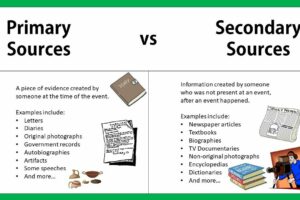
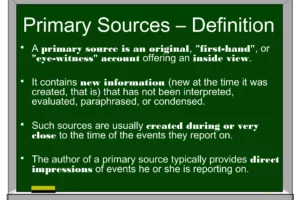
The primary sources from the era—parliamentary records, contemporary newspapers, and the speeches of British officials—paint a picture of a man who moved with extraordinary speed to end the Raj, but also of a nation that was fractured by the very process of liberation. Mountbatten’s legacy is indelibly tied to the birth of India and Pakistan, a moment that was both a triumph of decolonization and a tragedy of human displacement. The sources remind us that history is often made in the midst of chaos, and that the decisions of a single individual, however well-intentioned, can have consequences that echo for generations.
FAQ
Why did Mountbatten decide to bring forward the date of Indian independence?
Mountbatten initially had a fifteen-month deadline, but he became convinced that the escalating communal violence required an earlier transfer of power. He believed that a longer delay would lead to even greater bloodshed and that a quick partition was the only way to avoid a complete breakdown. This decision was announced on 3 June 1947, with independence set for 15 August.
What was Mountbatten's role after independence?
After India and Pakistan became independent on 15 August 1947, Mountbatten remained as the Governor-General of the new Dominion of India until June 1948. He did not serve as Governor-General of Pakistan, which was Jinnah himself. He then returned to the United Kingdom and resumed his naval career.




Leave a Reply