
Short Answer
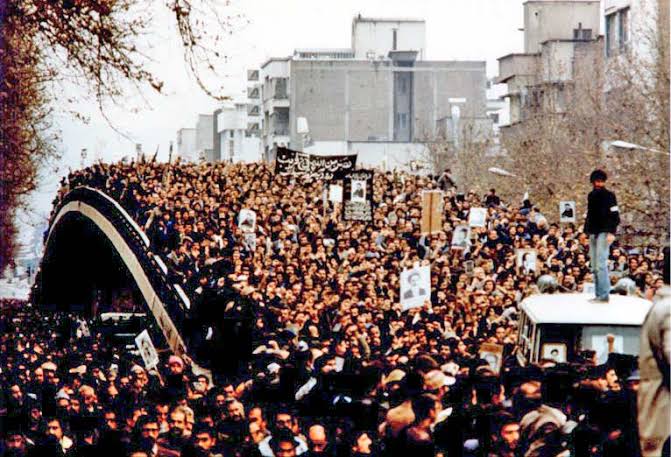
In the autumn of 1978, Tehran’s Grand Bazaar was a city within a city—a labyrinth of brick corridors where merchants traded carpets, pistachios, and gold. But as martial law was declared in September, the bazaar’s ancient walls became something else: a financial engine for the revolutionary movement. For decades, the bazaaris—the merchants and shopkeepers of Iran’s urban economy—had been the most powerful economic class outside the state. Now they were converting their wealth into a weapon against the Pahlavi monarchy, funding protests, and forging an alliance with the Shi’a clergy that would topple a dynasty.
What Happened?
The alliance between the bazaar and the clergy was not new. According to the International Institute for Iranian Studies, this partnership had shaped Iran’s governance for over a century, playing a pivotal role in the Tobacco Protest of 1891, the Constitutional Movement of 1905–1911, and the nationalization of oil under Prime Minister Mohammed Mossadegh in 1951. Under the Pahlavi dynasty (1926–1979), the bazaar survived and even flourished because of state neglect, as the Iran Primer notes. However, its political role intensified during the 1977–79 revolution.
Benjamin Smith’s study of collective action explains that the bazaar was a crucial component of the social movement that brought down the monarchy, providing both material and mobilizing resources. Bazaaris funded strikes, distributed leaflets, and coordinated with the ulama (Shi’a Islamic leadership). The International Institute for Iranian Studies states that the bazaar community played a pivotal role in facilitating the clerics’ ascent to power through meticulous planning and substantial financial backing.
The key events unfolded in 1978. On September 8, 1978—known as Black Friday—martial law was declared in Tehran, and soldiers fired on demonstrators in Jaleh Square, killing hundreds. An eyewitness account in an oral history collection describes the scene: “The city was completely deserted and under the control of armed soldiers, and it was impossible to enter Jaleh Street and the surrounding area of the square.” The next day, people continued their demonstrations, and the bazaars closed in protest, channeling funds into the revolutionary committees. By February 11, 1979, the monarchy had collapsed, and the revolution—with the bazaar’s financial backing—had succeeded.
How It Was Seen at the Time
For contemporaries, the bazaar’s role was an open secret. The oral history reveals the mood of fear and determination. After hearing of the massacre, the witness recalled: “Everyone was unanimous in their belief that if the demonstrations did not continue tomorrow, the events of Khordad 15, 1342 (June 05, 1963) would be repeated.” The 1963 uprising had been brutally crushed, and many feared a repeat. Yet the bazaaris and the public chose to keep protesting, because the alternative—the Shah’s dictatorship—seemed worse. The prevailing mood was one of defiance, with the bazaar as a symbol of both economic power and religious identity.
Historical Snapshot
| Aspect | Detail |
|---|---|
| Date | 1977–1979 |
| Place | Iran, especially Tehran’s Grand Bazaar and other urban centers |
| People | Bazaaris (merchants, shopkeepers), ulama (clergy), revolutionary leaders |
| What Happened | The bazaar provided financial and logistical support to the revolutionary movement, funding protests and organizing networks. |
| Why It Mattered | The bazaar’s support was crucial to toppling the Pahlavi monarchy and enabling the clergy to come to power. |
What People Knew at the Time
| What People Knew Then | What We Know Now |
|---|---|
| That the bazaar was a center of opposition, with merchants and clergy cooperating against the Shah. | Modern research confirms the bazaar’s role as a material and mobilizing resource, but also shows that it was not a monolithic institution; it was shaped by collective action and negotiation. |
| That the bazaar could shut down the economy in protest. | Historians understand that the bazaar’s influence depended on its networks and coordination with the clergy, but also that it faced internal divisions and economic pressures. |
Eyewitness Accounts
An anonymous eyewitness, recorded in an oral history collection, described the immediate aftermath of the Jaleh Square massacre:
“I heard the news about martial law on the radio at noon. I immediately came to Tehran. The city was completely deserted and under the control of armed soldiers, and it was impossible to enter Jaleh Street and the surrounding area of the square. The news indicated that the hospitals were crowded, and the city was in a state of complete chaos.”
This testimony shows the chaos and fear that gripped Tehran, and yet the same witness noted that the next day people returned to the streets, determined not to let the massacre stop the movement.
What People Feared
The greatest fear was a repeat of the 1963 crackdown, when the Shah’s forces killed thousands of protesters. The mention of Khordad 15 in the eyewitness account reveals that the 1963 events were a collective trauma. Many feared that if the demonstrations stopped, the regime would become even more brutal. There was also the fear of economic collapse, as the bazaar’s closure threatened the livelihoods of thousands. Yet the bazaaris chose to risk their shops and their lives, because they believed the revolution was worth the cost.
What People Expected Would Happen Next
After Black Friday, people were uncertain whether the movement would survive. The eyewitness said that “everyone was unanimous in their belief that if the demonstrations did not continue tomorrow, the events of Khordad 15 would be repeated.” They expected that if the protests stopped, the regime would crush the opposition. But they also expected that if the protests continued, the revolution could succeed. The protests did continue, and the bazaar’s financial support sustained the movement through the winter. Most contemporaries did not predict the rapid collapse of the monarchy in February 1979; many expected a longer struggle. The revolution’s success was a surprise even to many participants.
How Historians See It Today
Modern scholarship has refined the understanding of the bazaar’s role. Benjamin Smith argues that the bazaar was not a naturally “Islamic” institution, but rather a collection of actors who engaged in collective action when conditions were right. He notes that the bazaar’s survival under the Pahlavi state was due to neglect, and that its revolutionary role was contingent on a specific set of political and economic circumstances. The Iran Primer adds that there is no single “bazaari mentality” and that the bazaar has adapted to changing conditions. Historians now see the bazaar-clergy alliance as crucial but not deterministic; it was one of several factors that enabled the revolution. The bazaar’s financial support was essential, but it was the combination of street protests, religious leadership, and economic pressure that brought down the monarchy.
In conclusion, the primary sources—eyewitness accounts, oral histories, and contemporary analyses—reveal that the bazaar was both a physical space and a network of economic power. The bazaaris funded the uprising, mobilized their networks, and stood alongside the clergy to end the Pahlavi regime. Their story is a reminder that revolutions are not only made in the streets but also in the quiet back rooms of the marketplace.
FAQ
What role did the bazaar play in the Iranian Revolution?
The bazaar provided crucial financial and logistical support to the revolutionary movement. Merchants funded protests, organized strikes, and helped distribute materials. Their cooperation with the clergy was essential in toppling the Pahlavi monarchy, as noted by the International Institute for Iranian Studies and Benjamin Smith's research.
How did the bazaar and clergy alliance develop?
The alliance was rooted in historical events like the Tobacco Protest (1891) and the Constitutional Movement (1905–1911), where bazaaris and clerics jointly opposed foreign influence and state oppression. This partnership was reinforced during the Mossadegh era and culminated in the 1979 revolution, where the bazaar's financial backing enabled the clergy to take power.




Leave a Reply