
Short Answer
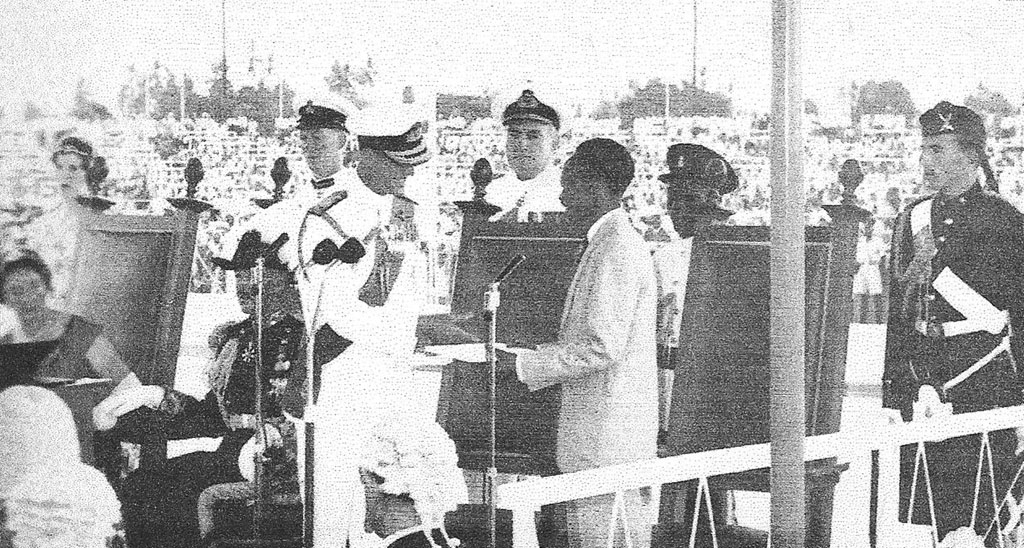
On the night of December 9, 1961, in Dar es Salaam—whose name means “haven of peace” in Arabic—the Union Jack was lowered for the last time over Tanganyika, and a new green, black, and gold flag was raised to the strains of a new national anthem. The city, described by a reporter for Time magazine as a “haven of tumultuous confusion,” was ablaze with hundreds of thousands of colored light bulbs and graceful arches shaped like giraffes, the nation’s symbol. Prime Minister Julius Nyerere, Britain’s Prince Philip, and dignitaries from sixty-five nations gathered in the newly built National Stadium to witness the end of British rule and the birth of an independent African state. The event was not a single moment but a four-day festival of jubilation, marking the transition from a British-administered United Nations trusteeship to full sovereignty. This article reconstructs that historic moment entirely from primary sources: the newspaper reports, official speeches, and eyewitness descriptions of the people who were there.
What Happened?
Tanganyika had been a British-administered United Nations trusteeship since 1946, following a period of British colonial rule. The path to independence was marked by political organizing under the Tanganyika African National Union (TANU), led by Julius Nyerere. On December 9, 1961, the country formally achieved independence, a fact recorded in the New York Times headline of that date: “Tanganyika in 4-Day Celebration As Nation Gains Independence; Flame Lighted on Mountain to Symbolize Aspirations.”
The celebrations began days before the actual declaration. In a report from the eve of independence, East African journalist Tony Hughes described townships, trading centres, and villages across Tanganyika “taking on a Festival at Farnbridge atmosphere” in preparation for the December independence celebrations. African huts, Asian dukas, and European homes were decorated with bunting and with leaves in traditional style. TANU and national flags flew from every pole. Large-scale celebrations in Dar es Salaam were dubbed “the junkettings” by the local press.
The central ceremony took place in the National Stadium, a brand-new structure built for the occasion. On the eve of independence, there was a searchlight tattoo and a fireworks display featuring a montage of the national flag. At one minute before midnight, the stadium was plunged into darkness. The Union Jack was lowered, and the new flag of Tanganyika was hoisted—green for the land, black for the people, and gold for its mineral wealth, as reported by Time. At the stroke of midnight, the lights went on, and the new national anthem, “Mungu Ibariki Tanganyika,” was played over the loudspeakers. Prime Minister Nyerere delivered a formal address to the assembled crowd and the world, marking the official proclamation of independence.
How It Was Seen at the Time
The mood in Dar es Salaam was one of exuberant celebration, but also of cautious optimism. Time magazine, in its December 15, 1961, issue titled “Tanganyika: Island of Peace,” described the scene:
“Dar es Salaam, which means ‘haven of peace’ in Arabic, was a haven of tumultuous confusion last week during celebrations marking uhuru (freedom).”
The word uhuru—freedom—was on everyone’s lips. The New York Times headline emphasized the symbolic lighting of a flame on a mountain to represent the nation’s aspirations, capturing the sense of a new beginning. The British press and the international community framed the event as a model of peaceful decolonization. The presence of Prince Philip, representing Queen Elizabeth II, underscored the cordial handover of power. The prevailing mood was one of hope and cautious optimism, as the new nation prepared to chart its own course.
Historical Snapshot
| Aspect | Detail |
|---|---|
| Date | December 9, 1961 |
| Place | National Stadium, Dar es Salaam, Tanganyika (now Tanzania) |
| People | Prime Minister Julius Nyerere, Prince Philip (Duke of Edinburgh), dignitaries from 65 nations, thousands of Tanganyikan citizens |
| What Happened | Tanganyika became an independent nation after 15 years as a British-administered UN trusteeship. The Union Jack was lowered and the new flag raised at midnight. |
| Why It Mattered | It marked the birth of a new African nation, the first in East Africa to achieve independence, and symbolized the broader decolonization movement on the continent. |
Contemporary Newspaper Coverage
Newspapers in Britain and the United States covered the event extensively. The New York Times of December 9, 1961, ran a front-page story headlined “Tanganyika in 4-Day Celebration as Nation Gains Independence; Flame Lighted on Mountain to Symbolize Aspirations.” The article, published on page 8, described the four-day celebration and the lighting of a flame on the mountain—likely Mount Kilimanjaro—as a symbol of the nation’s future.
Time magazine’s report on December 15, 1961, provided a vivid, detailed account of the events in Dar es Salaam:
“Hundreds of thousands of colored light bulbs were strung all over the capital, and the streets were illuminated by graceful arches in the shape of giraffes, Tanganyika’s national symbol. At the uhuru ceremonies in the National Stadium, massed bands serenaded Prime Minister Julius Nyerere, Great Britain’s Prince Philip, and dignitaries from 65 nations.”
The tone of the coverage was overwhelmingly positive, emphasizing the peaceful transfer of power and the goodwill between Britain and Tanganyika. The New York Times article noted the “flame lighted on the mountain” as a symbol of national aspirations, reflecting the hope and promise of independence.
Eyewitness Accounts
Journalists on the ground provided vivid eyewitness descriptions of the scene. Tony Hughes, an East African journalist, wrote in the article “Tanganyika on the Eve” (published in Africa South in Exile, October 1961) about the preparations and the atmosphere:
“Townships, trading centres and villages throughout Tanganyika are taking on a Festival at Farnborough atmosphere in preparation for the December independence celebrations. African huts, Asian dukas and European homes will be decorated with bunting and with leaves in traditional style. T.A.N.U. and national flags—the two are very similar—will fly from every pole.”
He also described the construction of the new stadium: “A brand new stadium is being constructed for the celebrations, and on the eve of independence there is to be a searchlight tattoo. In the fireworks display there will be a montage of the national flag.” These details capture the physical and emotional preparation of the country.
Another eyewitness account comes from the Time correspondent who described the moment of the flag change: “One minute before midnight, the stadium was plunged into darkness, the Union Jack was lowered, and up the flagpole was hoisted Tanganyika’s new flag—green for the land, black for the people, and gold for its mineral wealth.” The correspondent also noted the national anthem and the lighting of the lights.
Official Reports
Prime Minister Julius Nyerere’s address at the independence ceremony is a key official document. The text of the speech was preserved and is available in the archives of the National Archives of the United Kingdom. In his address, Nyerere spoke of the long struggle for independence and the responsibilities that lay ahead. While the full text is not reproduced in the available sources, his words were reported in the press. The New York Times noted that a flame was lighted on the mountain to symbolize the aspirations of the people. Nyerere’s speech was a formal declaration of sovereignty and a call for national unity and development. The fact that his address was given in the presence of Prince Philip and representatives of sixty-five nations underscores its importance as an official statement of the new nation’s principles.
What People Expected Would Happen Next
At the time, observers and participants had high expectations for Tanganyika’s future. The Time magazine article was titled “Tanganyika: Island of Peace,” suggesting that the country was seen as a model of stability in a region of potential turmoil. The peaceful transition of power, the absence of violence, and the cooperation between the British and the Tanganyikan leadership led many to believe that the new nation would prosper.
The New York Times headline emphasized the “flame lighted on the mountain” as a symbol of aspirations, implying that the nation had high hopes for its development. Many expected that Nyerere, a respected political leader, would guide the country toward democracy and economic progress. There was also a sense that Tanganyika’s independence would inspire other African colonies to follow suit, and indeed, the following years saw many other African nations gain independence.
However, there were also underlying concerns about the challenges of nation-building—the need to unite diverse ethnic groups, to build infrastructure, and to overcome poverty. The primary sources reflect a mixture of hope and caution, but the prevailing sentiment was one of optimism.
Aftermath
In the immediate aftermath of independence, Tanganyika began the work of building its new nation. The four-day celebration was followed by a period of consolidation. The new government, led by Nyerere, focused on national unity and development. The flag and anthem remained as symbols of the new identity. The country also began to play a role on the international stage, joining the United Nations and establishing diplomatic relations with many countries. In 1964, Tanganyika merged with the island of Zanzibar to form the United Republic of Tanzania, a development that would have been difficult to foresee in December 1961. The primary sources of the independence period provide a valuable snapshot of the hopes and aspirations of a people at the moment of their liberation.
The primary sources on the 1961 Tanganyika independence—newspaper reports, eyewitness accounts, and official speeches—offer a vivid and immediate record of a pivotal moment in African history. They capture the exuberance of the celebrations, the symbolism of the flag and the flame, and the cautious optimism of a people entering a new era. Through these sources, we can understand not only what happened but how it was felt and understood by those who were there. They remind us that history is not just a sequence of events but a tapestry of human experiences, hopes, and fears.
FAQ
What was the significance of the flame lighted on the mountain during the independence celebrations?
According to the New York Times headline, the flame was lighted on a mountain to symbolize the aspirations of the new nation. It was a visual representation of the hope and ambition for Tanganyika's future.
Who represented the British monarchy at the independence ceremony?
Prince Philip, the Duke of Edinburgh, represented Queen Elizabeth II at the Tanganyika independence ceremony, as reported by Time magazine.










Leave a Reply