Short Answer
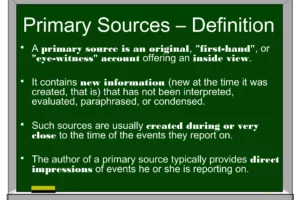
In a quiet living room, an elderly woman leans toward a microphone. She begins to tell a story about her childhood, her voice crackling with emotion. A tape recorder spins, capturing not just the words but the pauses, the laughter, and the trembling. This is oral history—a technique that preserves the voices and memories of people who lived through events, giving future generations a direct, personal connection to the past. As the Smithsonian’s guide explains, oral history is “a technique for generating and preserving original, historically interesting information – primary source material – from personal recollections through planned recorded interviews.” It is a practice that stems from the ancient tradition of passing down knowledge, but in the modern era it has become a rigorous method for creating archival evidence.
What Happened?
Oral history as a formal practice emerged in the mid-20th century, when historians and archivists realized that the voices of ordinary people—workers, immigrants, women, and minorities—were largely absent from written records. The method involves planned, recorded interviews with individuals who have firsthand knowledge of historical events or daily life. The Smithsonian’s guide outlines the “Six R’s” of oral history interviewing: research, relationship, restraint, reciprocity, respect, and repetition. These principles ensure that interviews are conducted ethically and produce reliable primary sources.
The Oral History Association (OHA) has codified best practices, emphasizing four key elements: preparation, interviewing, preservation, and access. Preparation includes locating an appropriate repository to house the finished oral histories, ensuring they will be preserved and made accessible. Interviewing requires training and careful question design. Preservation involves storing recordings and transcripts in archival conditions. Access means making the materials available to researchers and the public, often through digital platforms.
The process typically involves:
- Researching the topic and the narrator’s background
- Preparing open-ended questions that invite detailed answers
- Recording the interview in a quiet, comfortable setting
- Creating a transcript or index for research use
- Depositing the recording and transcript in a repository
The Library of Congress teacher’s guide suggests that students analyzing oral histories should observe details, reflect on the narrator’s point of view, and consider the historical significance of the story. This analytical approach is essential for using oral histories as primary sources.
How It Was Seen at the Time
Practitioners and scholars have long regarded oral history as a way to democratize history. The Smithsonian guide calls it a “tool we can all use to engage with and learn from family members, friends, and the people we share space with,” capturing their unique history and perspective in their own words. The Oral History Association emphasizes that oral history “preserves the voices, memories and perspectives of people in history.” This view reflects a belief that oral histories are not just recollections but primary sources that provide an emotional and personal dimension missing from official records.
“Oral history is a technique for generating and preserving original, historically interesting information – primary source material – from personal recollections through planned recorded interviews.” – Smithsonian Institution Archives, How to Do Oral History (2020)
At the time of their creation, oral histories were seen as a way to fill gaps in the historical record, especially for communities that left few written documents. They were also viewed as a means to give voice to the marginalized, and to capture the texture of daily life that official records often omit.
Historical Snapshot
| Aspect | Detail |
|---|---|
| Date | Formalized in the mid-20th century; contemporary best practices codified in 2018 (OHA) and 2020 (Smithsonian) |
| Place | Global, with major centers in the United States (Library of Congress, Smithsonian) and worldwide |
| People | Oral historians, narrators (interviewees), archivists, researchers |
| What Happened | Development of a method to record, preserve, and access personal recollections as primary sources |
| Why It Mattered | Expanded the historical record to include voices often overlooked, and gave future generations a direct emotional connection to the past |
What People Knew at the Time
| What People Knew Then | What We Know Now |
|---|---|
| Oral histories are valuable for preserving memories and voices. | Oral histories are recognized as primary sources that require careful analysis for bias and memory distortion. |
| Interviews should be recorded and stored. | Preservation standards now emphasize digital preservation and access, with attention to ethical and legal agreements. |
| Oral histories are often used to supplement written records. | Oral histories are now seen as a distinct genre with its own interpretive frameworks, not just a supplement. |
Contemporary Terminology
Understanding the language of oral history is essential for analysis. Key terms include:
- Oral history – A planned, recorded interview that preserves a person’s recollections as primary source material.
- Narrator – The person being interviewed; the storyteller.
- Interviewer – The person conducting the interview and asking questions.
- Transcript – A written version of the interview, often verbatim.
- Repository – An archive or institution that preserves and provides access to the oral history.
- Informed consent – The process of obtaining permission from the narrator to record and preserve their story.
What People Feared
One of the earliest fears about oral history was that it would be too subjective, that memories would be unreliable, or that narrators might exaggerate or misremember events. The Oral History Association’s best practices address these fears by emphasizing rigorous preparation, the importance of contextualizing the interview, and the need to treat oral histories as one of many sources. Another fear was that oral histories might be lost or destroyed if not properly preserved, which is why the OHA stresses the need for repositories and access.
What the Sources Got Wrong
Early oral history projects often assumed that a single interview could capture a definitive truth. Later, researchers recognized that memory is fallible and that oral histories are shaped by the interviewer, the setting, and the narrator’s later experiences. The Library of Congress guide encourages students to ask, “What do you think was happening when it was recorded?” and “What can you tell about the person telling the story, and about that person’s point of view?” This acknowledges that oral histories are not transparent windows but constructed narratives. Another misconception is that oral histories are only useful for famous people; in reality, they are invaluable for capturing everyday life and marginalized voices.
Key Documents
- Library of Congress Teacher’s Guide: Analyzing Oral Histories – A guide for educators and students to analyze oral histories, with sample questions.
- Smithsonian Institution Archives: How to Do Oral History (2020) – A practical guide covering the Six R’s, preparation, interviewing, and recording.
- Oral History Association: Principles and Best Practices (2018, updated 2025) – The definitive ethical and procedural standards for oral history work.
Common Misconceptions
Related Primary Sources
- Library of Congress Oral History Collections – https://www.loc.gov/collections/
- Smithsonian Oral History Program – https://siarchives.si.edu/
- Oral History Association – https://oralhistory.org/
FAQ
What is oral history?
Oral history is a technique for generating and preserving original, historically interesting information – primary source material – from personal recollections through planned recorded interviews. It is a method used to capture the voices, memories, and perspectives of people in history.
How do I analyze an oral history?
The Library of Congress recommends observing details such as the format, accent, background noises, and the narrator's point of view. Ask questions about the purpose of the oral history, what was happening when it was recorded, and its personal or historical significance.





Leave a Reply