Short Answer
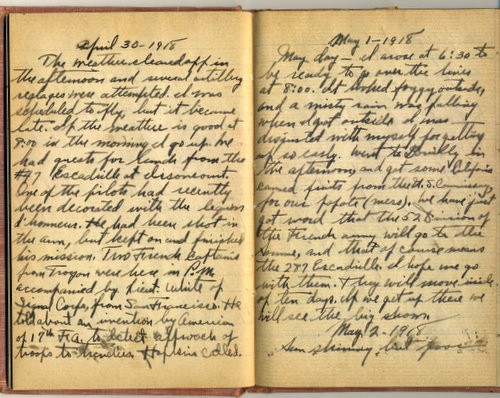
In a quiet reading room at the Library of Congress, a researcher presses play on a decades-old tape. A voice crackles to life—a Dust Bowl farmer, a soldier in Iraq, a seamstress in a wartime factory—describing a world that no longer exists. The oral history, captured in the moment of an interview, is a primary source like no other: it is the past speaking directly, yet it is also a constructed artifact, shaped by memory, by the interviewer’s questions, and by the listener’s ear. This article examines how to read oral histories as primary sources—what methods scholars use and what pitfalls await the unwary.
What Happened?
Oral history is both the oldest and the newest method of preserving the past. For millennia, communities preserved their histories through spoken words, passed from generation to generation. As the Handbook of Interview Research notes, oral history is “the oldest and newest method”—ancient in its reliance on word of mouth, modern in its academic form. In the twentieth century, researchers began to conduct recorded interviews specifically to collect firsthand testimony, capturing “an outpouring of words” that helps define community identity.
The Library of Congress has codified a structured approach to analyzing oral histories, guiding readers through observation and reflection. The U.S. Army Center of Military History published its Army Guide to Oral History in 2006, written by Stephen J. Lofgren, to train military personnel in the field. The guide traces its lineage to a concept developed in the mid-1980s, reflecting the Army’s growing recognition of oral history as a tool for documenting combat and service. The cover of the guide shows a 2005 interview conducted along the Baghdad International Airport Road—a reminder that oral histories are often collected under fire, not in a quiet archive.
Oral histories take several forms: audio recordings, video or film, and written transcripts. Some are formal interviews; others are casual conversations. The format itself shapes how the source is read—whether the narrator’s accent is heard or only their words remain on the page.
How It Was Seen at the Time
Contemporaries understood oral history as a way to bridge the gap between the past and the present. The Handbook of Interview Research describes the encounter as one in which “collectively generated popular understandings of the past enter scholarly discourse in a verbatim record accessible for scholarly” analysis. Researchers believed they were capturing living memory before it vanished.
The Library of Congress teacher’s guide encourages readers to approach the source with a set of probing questions: “What do you notice first?” “Are any words unfamiliar to you?” “Do you notice any accent?” “What format is used for the oral history you are examining now?” These questions reflect a belief that an oral history is not merely a container of facts but a rich artifact of speech, tone, and point of view.
“What can you tell about the person telling the story, and about that person’s point of view?” — Library of Congress, Analyzing Oral Histories
The prevailing mood was one of urgency and optimism: eyewitnesses were aging, and their memories would be lost unless recorded. The oral history was seen as a way to democratize history, giving voice to ordinary people alongside the powerful.
Historical Snapshot
| Aspect | Detail |
|---|---|
| Date | Formal academic oral history emerged in the mid-20th century; the U.S. Army guide was published in 2006 |
| Place | Library of Congress; U.S. Army Center of Military History; University of Maryland Libraries |
| People | Oral historians, military officers, teachers, students, and the narrators themselves |
| What Happened | The development of structured methods for recording and analyzing oral histories |
| Why It Mattered | Oral histories preserve firsthand testimony and make the past accessible to future generations |
What People Knew at the Time
| What People Knew Then | What We Know Now |
|---|---|
| Oral history was seen as a direct, unmediated line to the past | Oral histories are recognized as constructed artifacts shaped by memory, interviewer, and context |
| The interviewer’s questions were seen as neutral prompts | The interviewer’s perspective shapes the narrative; the Library of Congress guide asks readers to consider the creator’s point of view |
| The transcript was considered the complete record of the interview | Transcripts lose accent, tone, and background noise; the Library guide explicitly asks “Do you notice any accent?” and “Do you notice any background noises?” |
| Oral history was a simple act of remembering | Memory is fallible; the Library method encourages readers to “generate and test hypotheses” about the purpose and reliability of the testimony |
Official Reports
The U.S. Army Guide to Oral History (2006) is a notable official document. Written by Stephen J. Lofgren of the Center of Military History, it provides field guidance for military personnel conducting oral history interviews. The guide’s foreword explains that the Army Center of Military History first developed the concept for an oral history handbook in the mid-1980s, with the objective of providing Department of the Army personnel with a practical resource.
The cover photograph illustrates the reality of military oral history: Maj. Jack McKenna of the 126th Military History Detachment interviews Capt. David Stone and an unidentified combat engineer about improvised explosive devices along the Baghdad International Airport Road in Iraq, December 2005. The image underscores that oral histories are often gathered in dangerous, chaotic environments—not in quiet archives—and that the conditions of recording shape the testimony itself.
Common Misconceptions
Related Primary Sources
- Library of Congress: Analyzing Oral Histories teacher’s guide and the Library’s oral history collections
- U.S. Army Center of Military History: Army Guide to Oral History and field recordings
- University of Maryland Libraries: Gordon W. Prange Collection oral histories
- University of California, Santa Barbara: oral history project materials
- National Archives: military oral history collections
FAQ
What is an oral history as a primary source?
An oral history is a recorded interview that captures a person's firsthand testimony about past events or experiences. It can take the form of an audio recording, a video, or a written transcript. As a primary source, it provides direct evidence of how individuals understood and experienced their world, though it must be read critically because it is shaped by memory, the interviewer's questions, and the context of the recording.
How do you analyze an oral history?
The Library of Congress recommends a two-part approach: first, observe details—what you notice first, unfamiliar words, accent, format, background noises—and then reflect on the source: What was its purpose? What was happening when it was recorded? What can you tell about the person telling the story and their point of view? The reader should move back and forth between observation and reflection, generating and testing hypotheses about the source.
What are the main pitfalls in using oral histories?
Key pitfalls include treating a transcript as a complete record (it loses accent and tone), assuming the interviewer is neutral (their questions shape the narrative), and treating one oral history as sufficient evidence. Memory is fallible, and the Library of Congress method emphasizes comparing multiple sources and critically evaluating the narrator's point of view.


Leave a Reply