Short Answer
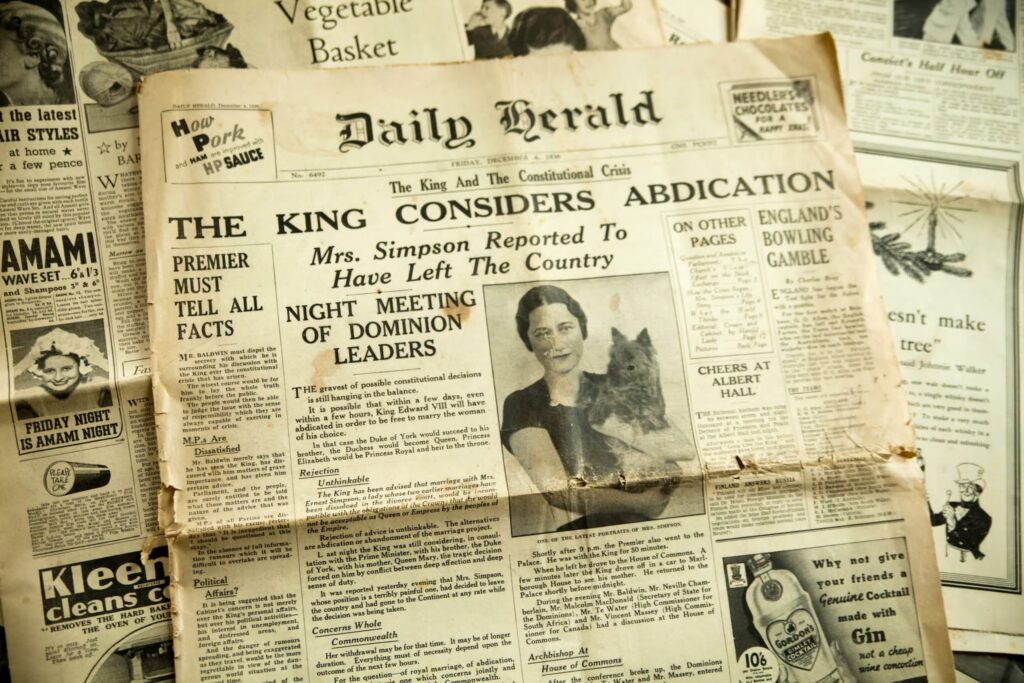
In the quiet of a research library, a historian gently unfolds a newspaper from a century ago. The paper is brittle, the ink faded, but the headlines still scream with the urgency of a long-gone day. To the untrained eye, it is a simple record of events. Yet the Library of Congress tells us that a newspaper is a complex artifact—a product of its time, a business, a platform for advertisements, and a mirror of community concerns. Reading it properly requires a careful set of questions: What do you notice first? What text draws your eye? How is the page arranged? These are not idle queries; they are the first steps in a rigorous method of primary source analysis. This guide, grounded in the practices of the Library of Congress and academic libraries, will teach you how to read old newspapers with the skill of a historian, to see beyond the surface and into the very fabric of a past society.
What Happened?
The core act of reading an old newspaper is not a passive exercise; it is an active investigation. As the University of Illinois tutorial notes, newspapers are not always the best sources for establishing what happened in the past, but they are invaluable for understanding how events were perceived and framed. The process typically begins with an article, especially in digitized collections, and it proceeds through several distinct steps. First, identify the article’s byline—the line that names the author. As the tutorial explains, “All newspaper and magazine articles have authors, but the authors are not always identified. Many articles are unsigned.” When a byline is present, it may include the author’s affiliation, such as a staff reporter or a wire service like the Associated Press, which shapes the perspective. Next, examine the placement and arrangement of text on the page. The Library of Congress advises asking: What details indicate when and where this was published? What text do you notice first? The arrangement of headlines, columns, and advertisements reveals the priorities of the editor. Finally, consider the newspaper as a whole: its social context, its target audience, and its business model. As Florida State University’s guide states, “We may think of newspapers as sources of objective reporting, but they are so much more complex!” The newspaper is a filtered version of events, shaped to meet the goals of the paper and to capture the attention of its readers.
How It Was Seen at the Time
Contemporaries understood newspapers not as neutral recorders but as voices in a conversation. The Library of Congress instructs students to ask: “Who do you think was the audience for this publication? What can you tell about what was important at the time and place of publication?” The newspaper itself was a participant in the daily life of its community, reflecting and shaping public opinion. Florida State University explains that newspapers “record historical events, but they do so in a way that reflects the concerns, opinions, and debates of their communities.” The prevailing mood was one of trust and skepticism in equal measure—readers knew that newspapers were partisan, sensational, or commercial, yet they still relied on them for the latest news. A contemporary reader would not have questioned the authority of the printed word as we do today; they saw the newspaper as the voice of their town or nation, a source of pride and identity. The language of the time often used phrases like “the latest intelligence” or “publick prints” to refer to the paper, reflecting a sense of collective reading and shared information.
Historical Snapshot
| Aspect | Detail |
|---|---|
| Date | Primarily 18th–20th centuries, with the heyday of the printed newspaper in the 19th century |
| Place | Europe and North America, with local, national, and international papers |
| People | Editors, reporters, printers, advertisers, and a broad readership |
| What Happened | Newspapers evolved from elite political organs to mass-circulation dailies, covering everything from wars to local gossip |
| Why It Mattered | Newspapers are primary sources that reveal the values, fears, and daily life of a society, as well as the business of information |
What People Knew at the Time
To read a newspaper effectively, one must distinguish between what contemporaries knew and what we know now. The Library of Congress suggests asking: “What can you tell about what was important at the time and place of publication?” This is a different question from “What actually happened?”. For example, a newspaper may report a battle with patriotic fervor, but modern historians might have the casualty figures and the strategic context. The following table contrasts the contemporary view with the modern understanding.
| What People Knew Then | What We Know Now |
|---|---|
| News was delivered by telegraph, with a delay of hours or days, and often was fragmented. | We have instant global communication, but we also have access to digitized archives that allow us to compare multiple papers and accounts. |
| Newspapers were often partisan, openly supporting a political party or candidate. | We recognize the bias and can analyze it as a source of perspective, not just as fact. |
| Advertisements were a primary source of revenue and often dominated the page, even more than news. | We study advertisements to understand consumer culture, prices, and social norms. |
Contemporary Newspaper Coverage
Newspapers covered themselves, of course, but more importantly, they covered the events of their day. The Library of Congress’s guide emphasizes the importance of identifying details such as the byline. As the University of Illinois tutorial states, “The part of a newspaper article that identifies the author or authors is called the byline, which you can see in the example below.” This byline often includes the author’s affiliation—whether a staff writer or a newswire service like the Associated Press—which gives a clue to the article’s origin and potential bias. The tone of coverage varied widely: some papers were sensationalist, others staid. The Florida State guide notes that newspapers “are also a business, a platform for advertisements, and a commodity for sale,” so the coverage was shaped to attract readers. For example, a local newspaper might exaggerate a fire or a scandal to increase circulation. The Library of Congress suggests asking “How is the text and other information arranged on the page?” to see what the editor deemed most important. The front page of a 19th-century paper often featured serialized novels and advertisements, not just hard news.
“What do you notice first? What text do you notice first? What do you see other than news articles?” — Library of Congress, Analyzing Newspapers
What the Sources Got Wrong
Newspapers are not infallible. They often contain errors, exaggerations, and outright falsehoods. The University of Illinois tutorial warns that newspapers are “not always the best sources for establishing what happened in the past.” A common error is the misreporting of casualty figures during wars, or the misattribution of quotes. For example, a paper might report a speech incorrectly due to shorthand errors or deliberate editorializing. The Library of Congress encourages students to “generate and test hypotheses about the source” and to ask “What can you tell about the point of view of the people who produced this?” This point of view can lead to deliberate distortion, such as exaggerating an enemy’s losses or downplaying a local scandal. Later historians, with access to multiple papers and official records, can often correct these errors. For instance, a newspaper may have reported a battle as a victory when it was actually a defeat, but the official military dispatches would reveal the truth. The key is to treat every newspaper claim as a hypothesis, not a fact, and to cross-reference with other sources.
Contemporary Terminology
Newspapers of the past used a vocabulary that has since evolved or become obsolete. The most obvious term is byline—the line that names the author. As the University of Illinois explains, many articles are unsigned, meaning the author remains anonymous. Another term is newswire—a service like the Associated Press that supplied news to multiple papers. The term penny press refers to the cheap, mass-circulation papers of the 1830s. Extra was a special edition printed for breaking news. Classified ads were called “want ads” or “personals.” The word editorial was used for opinion pieces. The word scoop meant an exclusive story. These terms, when encountered in old newspapers, must be understood in their historical context. For example, a newspaper might call itself a gazette or intelligencer, reflecting its role as a purveyor of intelligence. Some terms, like negro or Indian, are now offensive and must be handled with scholarly detachment, noting the historical usage.
How Historians See It Today
Modern historians treat newspapers as a rich but complex primary source. The approach has evolved from simply mining newspapers for facts to a more nuanced analysis of the entire publication. According to Florida State University, historians now consider the social context of the newspaper, its role as a business, and its audience. This is a shift from the early 20th century, when newspapers were often used uncritically. The current method is to read the newspaper as a text that reveals the ideology, the fears, and the aspirations of its time. The Library of Congress’s framework of questions—who, what, when, where, why, how—has become standard in classrooms. The emphasis is on the process of inquiry, not just the answers. Historians today also use digital tools to analyze patterns across many newspapers, such as word frequencies, to detect changes in language and sentiment. This modern approach recognizes that a newspaper is not a window to the past but a lens that distorts and focuses, and the historian’s task is to understand the lens itself.
Conclusion
Reading an old newspaper is an act of historical imagination, but it is also a rigorous discipline. The primary sources—the newspapers themselves—are not dead letters but living records of human thought. They teach us that the past was not a simple narrative of events, but a complex web of perceptions, biases, and daily concerns. By applying the questions of the Library of Congress and the critical awareness of the University of Illinois, we can transform a brittle page into a vibrant conversation with the past. The newspaper, with its bylines, advertisements, and unsigned articles, becomes a key to unlock the world of our ancestors, not as a mirror of fact, but as a window into their souls.
FAQ
Why are old newspapers considered primary sources?
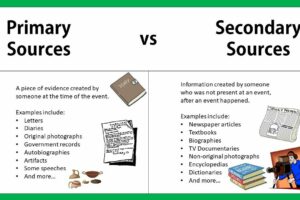
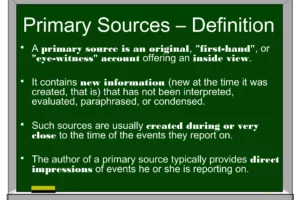
Newspapers are primary sources because they are original documents produced at the time of the events they report, reflecting the perspective of their era. They are not secondary interpretations but direct records of how contemporaries saw and reported the world.
How can I tell if a newspaper article is reliable?
Reliability is not a simple yes/no. You must examine the byline, the affiliation, the placement on the page, and the newspaper's overall bias. Cross-reference with other newspapers and official records. The Library of Congress suggests asking questions about the audience and point of view to evaluate the article's reliability.

Leave a Reply