
Short Answer
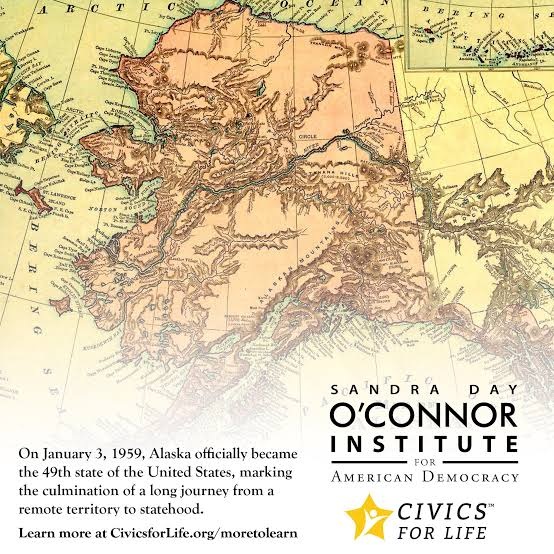
At high noon on Saturday, January 3, 1959, President Dwight D. Eisenhower stood before a cluster of microphones in the White House to sign the proclamation admitting Alaska as the 49th state of the Union. The ceremony had not been performed in nearly half a century, and the President, visibly moved, declared, “I think that all of us recognize this as an historic occasion.” For the thousands of Alaskans who had fought for decades for statehood—and for the millions of Americans who had long dismissed the territory as a frozen, worthless “Seward’s Folly”—the moment was a vindication. This was no longer a distant, icy outpost; it was now a full partner in the American experiment, the first new state since Arizona in 1912. The air in Washington was cold and bright, but the excitement was warmer than any frontier sun. The 49th star on the American flag was about to be sewn.
What Happened?
The story of Alaska’s statehood begins long before 1959. In 1867, Secretary of State William Seward negotiated the purchase of Alaska from Russia for $7.2 million—about $153 million in today’s dollars—less than 2 cents per acre. The acquisition was immediately ridiculed as “Seward’s Folly.” The New York World sneered, “Russia has sold us a sucked orange!” But the territory grew in strategic and economic importance, and by the mid-20th century the push for statehood gained momentum.
On January 3, 1959, President Eisenhower signed the proclamation admitting Alaska into the Union as the 49th state. The White House press release, issued at 12:00 noon, included the President’s remarks and the executive order designating a new U.S. flag with 49 stars. The same day, William A. Egan, a Democrat, was elected as the first governor of the State of Alaska. On January 26, the first Alaska State Legislature convened in Juneau.
- January 3, 1959: Eisenhower signs the proclamation; Alaska becomes the 49th state.
- January 3, 1959: William A. Egan becomes the first governor.
- January 26, 1959: The 1st Alaska State Legislature is established.
How It Was Seen at the Time
Contemporary observers framed Alaska’s admission as a triumph over a long history of neglect and doubt. The President’s own words captured the mood: “To the State itself, to its people, I extend on behalf of all their sister States, best wishes and hope for prosperity and success.” The press, which had once mocked the territory, now celebrated the “Last Frontier” as a land of promise. The New York Times ran a story on January 3, 1959, with the headline “Alaska Becomes the 49th State,” noting the historic nature of the event.
“I think that all of us recognize this as an historic occasion. Certainly for myself I feel very highly privileged and honored to welcome the forty-ninth state into the Union. Such a ceremony has not taken place in almost half a century, so at least I have the feeling of self-gratification that I am not just one of a group in this kind of ceremony.” — President Dwight D. Eisenhower, January 3, 1959
For Alaskans, statehood meant an end to territorial status and a voice in Congress. For the rest of the country, it was a symbol of America’s expansion into the far north, a place of gold, fish, and oil—a risky investment that had finally paid off.
Historical Snapshot
| Aspect | Detail |
|---|---|
| Date | January 3, 1959 |
| Place | White House, Washington, D.C. |
| People | President Dwight D. Eisenhower; William A. Egan, first governor; the 1st Alaska State Legislature |
| What Happened | Alaska was admitted as the 49th state of the Union. |
| Why It Mattered | Ended territorial status, gave Alaskans full representation in Congress, and expanded the nation’s geographic and economic frontier. |
Contemporary Newspaper Coverage
The press covered Alaska’s admission as a moment of national celebration. The New York Times ran a front-page story on January 3, 1959, with the headline “Alaska Becomes the 49th State.” The article described the signing ceremony and quoted Eisenhower’s remarks. The tone was solemn and proud, emphasizing the historical nature of the event—the first new state in over four decades.
“Alaska Becomes the 49th State” — The New York Times, January 3, 1959
The Smithsonian Magazine, in a retrospective, noted that the state had been “one of America’s riskiest investments,” but by 1959 the country had long recognized its natural riches. The purchase price of $7.2 million was now seen as a bargain, with Alaska rich in petroleum, seafood, and literal gold.
Eyewitness Accounts
The most direct eyewitness account comes from President Eisenhower himself, whose remarks at the signing ceremony were recorded in the White House press release. He spoke of the historic nature of the occasion and his personal honor in welcoming the new state.
“Certainly for myself I feel very highly privileged and honored to welcome the forty-ninth state into the Union. Such a ceremony has not taken place in almost half a century, so at least I have the feeling of self-gratification that I am not just one of a group in this kind of ceremony.” — President Eisenhower, January 3, 1959
William A. Egan, the first governor, later recalled that Alaskans had waited for this moment for years, and that the state’s first legislature met on January 26 to begin the work of building a new government.
Official Reports
The official White House press release of January 3, 1959, is the definitive primary document of the event. It contains the President’s remarks and the executive order designating the new 49-star flag. The release emphasizes that the ceremony was a “historic occasion” and extends the best wishes of the United States to the new state. It also lists the state officials present, including the newly elected governor and federal representatives.
The release notes that the President signed the proclamation at 12:00 noon on Saturday, January 3, 1959, and that the new flag was designed to add the 49th star to the Union. This official record is the cornerstone for all accounts of the statehood ceremony.
What People Expected Would Happen Next
In January 1959, Americans expected Alaska to develop rapidly. The state was rich in natural resources—petroleum, seafood, and gold—and had already attracted $5.6 billion in tourism spending each year. The Smithsonian later noted that Alaska “is a gold mine, rich in natural resources.” Contemporaries believed that statehood would bring federal investment, infrastructure, and population growth.
There were also concerns: many questioned whether the vast, sparsely populated territory could sustain a state government. But the prevailing mood was optimistic. The New York Times and other papers predicted that Alaska would become a crucial military and economic outpost during the Cold War.
Aftermath
Immediately after the signing, Alaska began to organize its state government. On January 26, 1959, the 1st Alaska State Legislature convened in Juneau. William A. Egan was sworn in as governor. The new state quickly set to work on issues of land, oil, and transportation. The first state flag was unfurled, and the 49-star American flag became official. The transition from territory to state was not without challenges, but the foundation was laid for the modern state of Alaska, which would later become a major oil producer.
How Historians See It Today
Modern historians have framed Alaska’s statehood as the culmination of a long struggle and a significant moment in America’s frontier history. The Smithsonian Magazine, in a 2025 retrospective, described Alaska as “one of America’s riskiest investments” that ultimately paid off. Historians today emphasize that the 1959 statehood was not merely a bureaucratic event but a recognition of Alaska’s strategic and economic importance. They also note that the statehood movement was driven by Alaskans themselves, who saw territorial status as a form of second-class citizenship.
While contemporaries celebrated the event with a sense of triumph, historians now also examine the complexities: the displacement of Native Alaskans, the environmental costs of resource extraction, and the ongoing challenges of governing a vast and remote state. Yet the primary sources from 1959—the President’s words, the press coverage, and the enthusiasm of the new state’s leaders—remain essential to understanding how Americans saw the “Last Frontier” at the moment it became a state.
In the end, the primary sources from January 3, 1959, show a nation embracing a new state with hope and pride. Eisenhower’s speech, the press coverage, and the establishment of the first legislature all speak to a belief that Alaska was not just a land of ice and gold, but a future of promise. The state’s history since then has been complex, but the moment of statehood remains a touchstone of American expansion.
FAQ
Why did Alaska become a state in 1959?
Alaska had been a territory since 1912, and its residents had long sought statehood for full representation and self-government. After years of lobbying, Congress passed the Alaska Statehood Act, and President Eisenhower signed the proclamation on January 3, 1959, making Alaska the 49th state.
Who was the first governor of Alaska?
William A. Egan, a Democrat, was elected as the first governor of the State of Alaska on January 3, 1959. He had previously been a territorial legislator and was a strong advocate for statehood.













Leave a Reply