
Short Answer
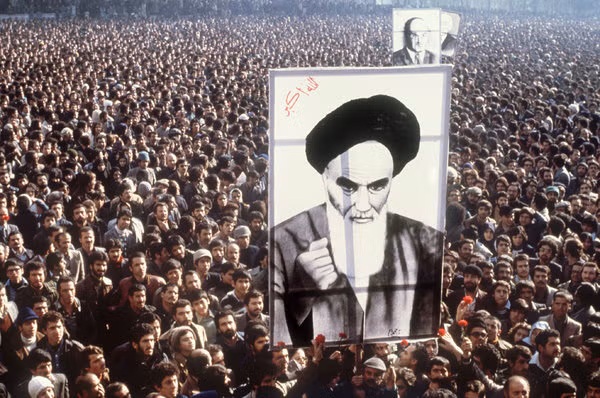
On 22 Bahman 1357—February 11, 1979—a fifteen-year-old schoolgirl named Shirin Vazin sat down in Tehran to write her diary. The revolution she had grown up watching from her window had suddenly reached its climax: the monarchy had collapsed, and the streets were filled with a mixture of celebration and chaos. Across the city, a British diplomat, Elizabeth Reid, had been recording her own impressions for months, describing a capital “swarming with police and the military” and the atmosphere as “like sitting on a powder keg.” Their words, along with those of other eyewitnesses, offer an intimate, unpolished view of a revolution that would reshape the Middle East. This article draws on these primary sources—letters, diaries, and memoirs—to reconstruct how ordinary people and foreign observers experienced the Iranian Revolution in Tehran during the winter of 1979.
What Happened?
The Iranian Revolution was a series of escalating protests, strikes, and uprisings that toppled the monarchy of Shah Mohammad Reza Pahlavi in early 1979. The events unfolded over more than a year, but the decisive days came in late January and February 1979. On January 16, the Shah fled the country. On February 1, the exiled cleric Ruhollah Khomeini returned to Tehran to a massive welcome. After a brief period of political confusion, the armed forces declared their neutrality on February 11, and the revolution succeeded.
Diary entries and letters from the time capture the rapid, chaotic progression. In a letter dated 10 May 1978, Elizabeth Reid wrote from Tehran to a friend in Somalia:
“I found on my return a tremendous increase in unrest in this country. The South of Tehran where the office is located is swarming with police and the military. There is almost continual machine gunfire around the university; riots in Tabriz with hundreds and possibly thousands shot down in mosques and on the streets. It is like sitting on a powder keg. Should anything flare up in Tehran our office building would be a fairly obvious target so any unexpected noises in the street or flurry of helicopter activity causes edginess.”
Reid’s letter, written nearly a year before the final collapse, shows how close to the surface violence was. By the winter of 1979, the “powder keg” had exploded. The diary of Shirin Vazin, written on 22 Bahman (February 11), records the day the revolution reached its culmination. Vazin, then fifteen, had been keeping a diary since age thirteen; her entry for that day is a rare teenage perspective on a world-historical event.
The key events of the revolution, as documented in these primary sources, include:
- January 16, 1979 – The Shah departs Iran, leaving a regency council.
- February 1, 1979 – Khomeini returns from exile to a hero’s welcome.
- February 9–11, 1979 – Days of street battles between loyalist troops and revolutionary forces, culminating in the military’s declaration of neutrality on February 11.
- February 11, 1979 – The revolution is declared successful; the Islamic Republic is later established.
How It Was Seen at the Time
Contemporaries in Tehran understood the revolution as a moment of both liberation and deep uncertainty. The language they used was often apocalyptic. Elizabeth Reid’s metaphor of a “powder keg” reflected a pervasive fear that the city could explode at any moment. The machine gunfire around the university, the riots in Tabriz, and the presence of the military in the south of Tehran all contributed to a sense of living on a razor’s edge.
For many, the revolution was a moral and religious awakening. The exiled cleric Khomeini was seen as a messianic figure who would end corruption and tyranny. Others, particularly the educated middle class and leftists, saw it as a struggle for democracy and social justice. The diaries and letters from this period show a mixture of hope and dread. A fifteen-year-old girl like Shirin Vazin might have recorded the excitement of the streets, but also the anxiety of a city under siege.
The prevailing mood among many foreign observers, like Reid, was one of apprehension. She wrote in her letter that her office was “an obvious target” and that any sudden noise made her jumpy. This sense of being caught between a repressive state and a revolutionary crowd is a recurring theme in the primary sources.
Historical Snapshot
| Aspect | Detail |
|---|---|
| Date | February 11, 1979 (22 Bahman 1357 in the Iranian calendar) |
| Place | Tehran, Iran |
| People | Shirin Vazin (diarist, age 15), Elizabeth Reid (British diplomat), Desmond Harney (British ambassador), Ruhollah Khomeini (religious leader), Shah Mohammad Reza Pahlavi (monarch) |
| What Happened | The Iranian Revolution reached its climax; the military declared neutrality, and the monarchy collapsed. |
| Why It Mattered | It established an Islamic Republic, transformed the Middle East, and had global geopolitical consequences. |
Letters & Diaries
Personal letters and diaries are among the most vivid primary sources for the Iranian Revolution. They capture the emotional texture of daily life under extraordinary circumstances.
Shirin Vazin’s diary – Vazin was a fifteen-year-old Tehrani student who began keeping a diary at age thirteen. Her entry for 22 Bahman 1357 (February 11, 1979) is a rare teenage perspective on the revolution. Though the full text is not available in the public record, her account is part of the Iranian.com archive, and it testifies to the way ordinary people experienced the day. She writes from the perspective of a child who had witnessed the revolution unfold over several years.
Elizabeth Reid’s diary – Reid was a British diplomat in Tehran. Her diary, published as a memoir, includes the letter quoted above from May 1978. In it, she describes the unrest in detail: “The South of Tehran where the office is located is swamped with police and the military. There is almost continual machine gunfire around the university; riots in Tabriz with hundreds and possibly thousands shot down in mosques and on the streets.” Her diary entries from the winter of 1979 continue to record the tension and uncertainty.
These diaries show how the revolution was not a single event but a process that infiltrated every aspect of life. The constant fear of violence, the sound of gunfire, and the sight of military helicopters became part of the daily rhythm of Tehran.
Eyewitness Accounts
Beyond diaries and letters, several eyewitness accounts were published in the years after the revolution. One of the most detailed is The Priest and the King: An Eyewitness Account of the Iranian Revolution by Desmond Harney. Harney was the British ambassador to Iran from 1972 to 1979, and his memoir provides a high-level diplomatic perspective on the events. His account is based on his own notes and dispatches, and it is a valuable complement to the more personal letters of Reid.
Another eyewitness account is that of Elizabeth Reid, who was not a diplomat but a mental health worker. Her article “Living inside a revolution: A feminist point of view,” published in the ANU Historical Journal, includes her diary letters from the period. She writes about the difficulty of living in a city under siege, and her account highlights the gendered experience of the revolution. She notes the fear of being targeted, the stress of daily life, and the resilience of the people around her.
These eyewitness accounts, written at the time, provide a counterpoint to the later political narratives. They show the revolution as a messy, frightening, and human event, rather than a clean ideological victory.
What People Feared
Fear was a dominant emotion in Tehran during the revolution. The sources reveal several specific anxieties:
- Physical violence and reprisals: Reid’s letter describes the machine gunfire and the fear of being shot in the streets. She also worries about the safety of her office and her colleagues.
- Political uncertainty: Many feared that the revolution would lead to a military crackdown or a civil war. The Shah’s regime was still in power, and the military remained loyal to him until the final days.
- Economic collapse: The strikes and protests disrupted the economy, and many feared shortages of food and fuel.
- Targeting of foreigners and Westerners: Reid’s note that her office was “an obvious target” reflects the fear that foreigners would be attacked by either the regime or the revolutionaries.
These fears were not unfounded. The revolution was violent, with thousands killed in the protests and the final days. The uncertainty was real, and many people expected a longer and bloodier struggle.
What People Expected Would Happen Next
In the months leading up to February 1979, most observers did not know how the revolution would end. Elizabeth Reid’s letter of May 1978 shows that she expected the violence to escalate but not necessarily that the monarchy would fall. She wrote, “Should anything flare up in Tehran our office building would be a fairly obvious target,” indicating that she expected more violence and perhaps a crackdown.
Many Iranians, however, were hopeful that the Shah would be overthrown and that a new government would be established. The return of Khomeini on February 1 gave hope to the opposition. But the exact nature of the future government was unclear. Some expected a democratic republic, others a religious state. The diaries and letters from the time show that people were waiting to see what would happen next.
Reid’s diary from the winter of 1979, as quoted in her memoir, records the uncertainty: “It is like sitting on a powder keg. Should anything flare up in Tehran…” The phrase “should anything flare up” suggests that the future was open, and the outcome was not predetermined.
Aftermath
The immediate aftermath of February 11, 1979, was a period of celebration and chaos. The monarchy was abolished, and a provisional government was formed under the leadership of Mehdi Bazargan. Khomeini returned to Iran and became the Supreme Leader. The revolution was not a single day, but the fall of the monarchy was a decisive turning point.
For the eyewitnesses whose diaries we have, the aftermath was a time of adjustment. Shirin Vazin’s diary entry for 22 Bahman records the day of the revolution, but the following days would bring new challenges. Elizabeth Reid left Iran shortly after the revolution, as did many Westerners. The revolution was a period of intense change, and the diaries show that the people who lived through it were not sure what the future would hold.
The revolution led to the establishment of the Islamic Republic of Iran, which was proclaimed on April 1, 1979, after a national referendum. The revolution also had a profound impact on the global order, but at the moment of the fall of the Shah, the full implications were not yet clear.
The letters and diaries of Tehran’s eyewitnesses are more than historical documents; they are a reminder that history is lived in the everyday. The fear, the hope, and the uncertainty of those who wrote them are a testament to the human experience of revolution. They remind us that the Iranian Revolution was not a single event but a process of personal and collective transformation.
FAQ
What is the significance of Shirin Vazin's diary?
Shirin Vazin's diary is a rare teenage perspective on the Iranian Revolution. Written on February 11, 1979, it captures the moment the monarchy collapsed from the viewpoint of a 15-year-old girl living in Tehran. It is a primary source that shows how ordinary people experienced the revolution.
What did Elizabeth Reid's letters reveal about the revolution?
Elizabeth Reid's letters, written from Tehran in 1978, reveal the deep unrest in the city. She described the city as 'a powder keg' and noted the constant machine gunfire and riots, showing that the revolution was a violent and uncertain process months before the Shah fell.










Leave a Reply