
Short Answer
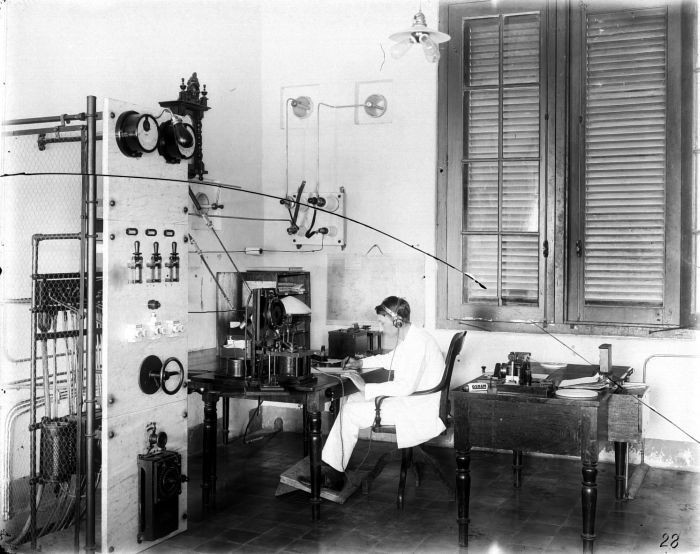
The office is thick with the clatter of brass keys and the steady tick of sounders. A young man in a high-collared shirt sits at a wooden desk, fingers resting on a polished key. With a flick of his wrist, he sends a burst of electrical pulses along a copper wire — three short, three long, three short — and somewhere a hundred miles away, another operator hears the same rhythm and writes down the letter. This is the world of the Victorian telegraph operator, the ‘wizard of the wire,’ a figure who made swift, global communication a reality before telephones, before radio, before anything ‘wireless’ existed. To the Victorians, the telegraph was not just a machine; it was a marvel that shrank the world, and the men and women who mastered its code were the new priests of the electric age.
What Happened?
The electric telegraph emerged in the 1830s, and with it a new occupation: the telegraph operator. Telegrams were sent as coded pulses over telegraph wires, and a new occupation was created to send them. The telegrapher learned to send messages using a special code, known as Morse code, which transmitted pulses over the wires in combinations of short and long pulses, represented on paper as ‘dots’ and ‘dashes.’ The most famous combination was the distress signal, ‘SOS,’ coded as three dots, three dashes, and three dots — already in use for ships at sea using flashing light, and still understood today.
Telegraphers depressed a metal key on a tapping machine to create the pulses and became extremely proficient at sending messages very quickly. At the receiving end, the message was recorded, decoded, transferred to paper, and delivered without delay, usually by a telegram ‘boy.’ In the city, telegram boys might walk to a destination, but in the suburbs and regional areas, a bicycle or horse was usual.
The profession spanned more than a century, from roughly the 1830s to the 1950s. Telegraph operators typically earned between $1,200 and $2,500 annually, a respectable wage for the time. But the role began to decline in the mid-20th century with the advent of more advanced communication technologies, such as the telephone and, later, the internet. These innovations allowed for instantaneous voice communication and data transmission, rendering the telegraph system and its operators largely obsolete. The rise of digital communication further accelerated this decline, as messages could be sent and received without the need for specialized operators, leading to the eventual phasing out of telegraph services altogether.
How It Was Seen at the Time
Contemporaries regarded the telegraph operator as a figure of near-mystical skill. The operator was the human link in a chain that connected continents, and the ability to send and receive Morse code at speed was a source of professional pride. A Victorian-era source captured the wonder of the age:
“Before telephones, before radio, before anything ‘wireless’ existed, it was the telegraph that made swift, global communication a reality.”
The phrase ‘wizard of the wire’ was not hyperbole; it reflected a genuine awe for the operator’s command of an invisible force. Operators were known to recognize each other by their ‘fist’ — the unique rhythm and style of their tapping — and veteran telegraphers were celebrated in their communities. The occupation was seen as a respectable and even glamorous career, a step into the modern industrial world.
Historical Snapshot
| Aspect | Detail |
|---|---|
| Date | c. 1830s – 1950s |
| Place | Telegraph offices across the world, from Britain and North America to Australia |
| People | Telegraph operators, telegram boys, engineers, and the public |
| What Happened | Operators sent and received messages using Morse code over electric wires |
| Why It Mattered | The telegraph was the first system to allow instant communication across distances, transforming commerce, journalism, and personal life |
Daily Life
The telegraph operator’s day was a blend of routine and intensity. In a busy city office, the operator sat at a desk equipped with a brass key, a sounder, and a reel of paper tape. Messages arrived in a continuous stream, and the operator had to decode them rapidly, often while sending other messages simultaneously. The work demanded intense concentration, and the pressure was constant — a misread dot or dash could cause a train to be missed or a business deal to fail.
The office itself was often noisy, filled with the clatter of keys and the ticking of sounders. Operators developed a ‘hand’ — a personal style of sending — and the most skilled could send and receive messages at astonishing speeds. The work was so specialized that operators could recognize their colleagues by the rhythm of their tapping. A veteran telegrapher, Lavina Shaw, who worked in Canada in the mid-20th century, recalled the excitement of the craft in a live demonstration at Calgary’s Heritage Park, where she and her husband Earl, both in their 80s, showed their Morse code skills against college students with smartphones. The transmitted message was read aloud within seconds, proving that the old skill still had its edge.
When a message arrived at the receiving office, it was decoded and written on a form. Then came the telegram boy — often a young teenager on foot, bicycle, or horse — who carried the message to its destination. In the city, the boy might walk; in the suburbs and rural areas, a bicycle or horse was the usual means. The speed of delivery was paramount, and the telegram was a matter of urgency, a sign of news that could not wait.
Numbers at the Time
| Statistic | Value | Source |
|---|---|---|
| Years active | c. 1830s – 1950s | Jobs Museum |
| Typical annual earnings | $1,200 – $2,500 | Jobs Museum |
| Morse code signals | Dots and dashes | Old Treasury Building |
| SOS signal | Three dots, three dashes, three dots | Old Treasury Building |
| Delivery methods | Walking, bicycle, horse | Old Treasury Building |
Contemporary Terminology
The telegraph world had its own vocabulary, a jargon that was a mark of the profession. The telegraph itself referred to the entire system of transmitting messages over electric wires. Morse code was the language of the wire, a code of dots and dashes representing letters and numbers. The sounder was the device that turned electrical pulses into audible clicks, allowing the operator to ‘hear’ the message. The key was the metal button pressed to create the pulses. The telegram boy was the messenger who delivered the final message. The term wizard of the wire was a popular nickname for the most skilled operators, reflecting the public’s awe at their abilities. The phrase ‘sent a wire’ was common slang for sending a telegram, a phrase that captured the physical act of transmitting a message along the wire.
Timeline
- c. 1830s: The electric telegraph is developed, and the first telegraph operators begin working.
- 1850s: The telegraph becomes a major communication tool in Britain and North America, spreading rapidly across the world.
- 1860s: The transatlantic cable is successfully laid, connecting Europe and North America.
- 1870s–1880s: The telegraph becomes a standard tool for newspapers, businesses, and governments.
- 1900s: The telephone begins to compete with the telegraph for voice communication.
- 1950s: The telegraph operator’s role declines significantly as telephone networks expand.
- Late 20th century: The rise of the internet and digital communication makes the telegraph obsolete.
How Historians See It Today
Modern historians view the telegraph as a pivotal moment in the history of communication. It was the first time that information could travel faster than a person, and it transformed the world of commerce, journalism, and personal life. The telegraph operator is now studied not just as a romantic ‘wizard of the wire’ but as a skilled worker in a new industrial field, a pioneer of the information age. Historians note that the telegraph was a precursor to the modern internet, and the operator’s role as a ‘gatekeeper’ of information has parallels in modern network engineers and data processors. The profession’s decline with the rise of the telephone and the internet is seen as a case study in technological obsolescence, but the telegraph’s legacy lives on in the instant communication we now take for granted.
The telegraph operator was a pioneer of the electric age, a figure who turned the invisible force of electricity into a tool for human connection. The primary sources — from the tapping of the key to the footsteps of the telegram boy — show a profession that was demanding, skilled, and deeply respected. The ‘wizard of the wire’ was a real person, not a myth, and their story is a reminder that every technological revolution is ultimately a human one. The telegraph may be gone, but the operator’s spirit lives on in every message we send.
FAQ
What was a telegraph operator's job?
A telegraph operator sent and received messages using Morse code over electric wires. They used a metal key to create pulses of short and long signals (dots and dashes), which were transmitted over wires and decoded at the receiving end. They also recorded messages and handed them to a telegram boy for delivery.
How fast could telegraph operators send messages?
Telegraph operators became extremely proficient at sending messages very quickly. Skilled operators could send and receive at a remarkable speed, and their unique 'fist' (style of tapping) was often recognizable to colleagues.
Why did the telegraph operator profession become obsolete?
The profession declined in the mid-20th century with the advent of the telephone and, later, the internet. These technologies allowed for instantaneous voice and data communication without the need for a specialized operator, making the telegraph system obsolete.












Leave a Reply