
Short Answer
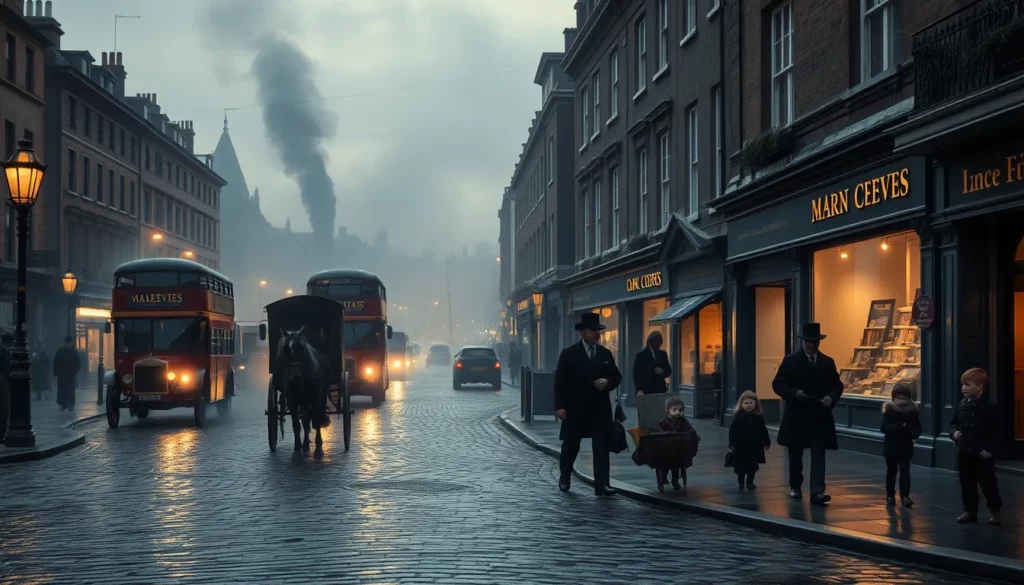
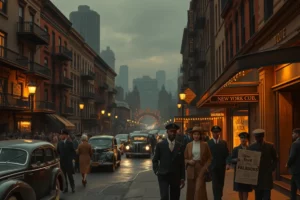
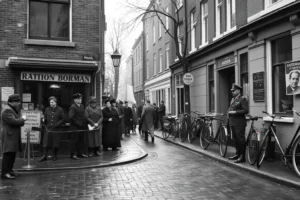
On a damp November morning in 1850, a clerk in a black frock coat steps over a kennel of black water in Cheapside while a costermonger cries potatoes and a crossing-sweeper works the mud with a broom. Nearby, a hansom clatters past; beyond, the Thames carries both barges and refuse. Charles Dickens fixed the mood in Bleak House (1852–53): “As much mud in the streets as if the waters had but newly retired from the face of the earth.” This article treats “Everyday Life in Victorian London” as the daily experience of the metropolis during Queen Victoria’s reign, 1837–1901, across classes and districts—not merely the famous events, but work, housing, food, transport, health, leisure and fear. It draws on contemporary reports, diaries, newspapers, sanitary investigations and social surveys to recover what Londoners knew, argued about and endured. The city was then the largest in the world, the centre of an empire, a port, a manufacturing workshop and a laboratory of modern urban life. For contemporaries it was both a wonder and a warning: a place of unprecedented wealth and opportunity, and of overcrowding, disease and insecurity.
What Happened?
Victorian London was not a single event but a sixty-four-year urban transformation. On 20 June 1837 Victoria acceded; by her death on 22 January 1901 London had become a metropolis of over four and a half million people, served by sewers, railways, gas lamps, police, hospitals and board schools. The following developments shaped everyday life.
- 1837–1840s: rapid population growth, railway building, Irish famine migration and cholera outbreaks put pressure on housing, water and drainage.
- 1842–1848: Edwin Chadwick’s sanitary report and the Public Health Act made drainage, ventilation and water supply public questions.
- 1851: the Great Exhibition in Hyde Park drew over six million visitors; the census recorded about 2.36 million Londoners.
- 1855–1858: the Metropolitan Board of Works was created; the “Great Stink” of 1858 forced Parliament to fund Joseph Bazalgette’s sewer scheme.
- 1863: the Metropolitan Railway opened between Paddington and Farringdon, the world’s first underground passenger railway.
- 1870–1889: the Education Act, the creation of the County of London (1888) and the London County Council (1889) expanded municipal government.
- 1888: the Whitechapel murders and the “Jack the Ripper” panic focused attention on East End poverty and policing.
These changes did not affect all Londoners equally. Wealth flowed through the City and West End; insecurity and overcrowding concentrated in parts of the East End, Southwark and the riverside districts.

How It Was Seen at the Time
Contemporaries did not agree on what London was. For civic boosters it was the capital of progress, the “modern Babylon” of commerce and empire; for moralists and sanitary reformers it was a “great wen” or “monster city” whose poverty threatened the nation. The language of the period mixed pride with alarm: “respectability” and “improvement” on one side, “dangerous classes” and “submerged tenth” on the other. Observers often wrote as if the city were a natural phenomenon—an ocean, a wilderness, a fever—because its scale defeated ordinary description.
“A town, such as London, where a man may wander for hours together without reaching the beginning of the end, without meeting the slightest hint which could lead to the inference that there is open country within reach, is a strange thing.” — Friedrich Engels, The Condition of the Working Class in England (1845)
“the annual loss of life from filth and bad ventilation are greater than the loss from death or wounds in any wars in which the country has been engaged in modern times.” — Edwin Chadwick, Report on the Sanitary Condition of the Labouring Population (1842)
Such reports were not neutral; they were arguments for reform. Yet they also preserve the vocabulary in which Victorian Londoners understood their city: as a place of opportunity, danger, disease and moral test.
Daily Life
Daily life depended on class, gender, age and district. A West End household might begin with fires lit by servants and a breakfast of tea, bread, butter and eggs; a casual labourer’s family might begin with bread and weak tea in a crowded lodging house. Water came from standpipes, wells or water companies, often intermittently; sanitation before the 1850s meant cesspools, night-soil collectors and open drains. Chadwick’s 1842 report and the 1848 Public Health Act made drainage a public question, but not until the Metropolitan Board of Works (1855) and Bazalgette’s sewer scheme did the Thames begin to be embanked and the worst filth carried away.
Work was equally varied. The docks, building sites, railways, tailoring workshops, dressmaking rooms, matchbox factories and domestic service absorbed thousands. Henry Mayhew’s London Labour and the London Poor (1851) recorded costermongers, mudlarks, crossing-sweepers, street musicians and sellers of everything from ham sandwiches to birds’ nests. Wages were irregular and often depended on weather, trade and the season. Food was bread, tea, beer, potatoes, pickles and cheap meat; adulteration was a standing complaint. Clothing was second-hand or home-mended for many, while the wealthy changed dress with fashion, servants and the Season.
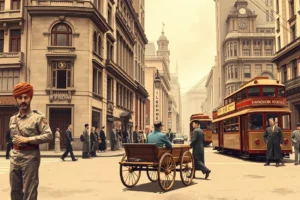
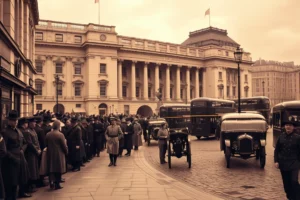
Leisure was commercial and crowded: pubs, music halls, theatres, pleasure gardens, parks, the Crystal Palace and railway excursions to the seaside. Transport ranged from walking—still the commonest means—to the horse omnibus, the hansom cab and, after 1863, the underground railway. Everyday life was therefore not one experience but a web of routines shaped by income, neighbourhood and respectability.
Different Perspectives
West End and Court
For aristocratic and court circles, London was a stage for the Season: drawing rooms, dinners, clubs, parks and charitable bazaars. They saw the capital as the centre of empire and fashion, though they were also increasingly aware of the poor districts that supplied their servants and tradesmen.
Middle-Class Suburbia
Middle-class Londoners prized domestic respectability, separate spheres and self-help. Many moved to suburbs such as Camberwell, Clapham or Hackney and commuted by railway or omnibus. Their diaries and household manuals record anxieties about servants, school fees, illness and the cost of keeping up appearances.
East End and Casual Poor
For the casual poor, London was a labour market of short engagements, pawnshops and lodging houses. Mayhew’s interviews and Charles Booth’s later poverty maps show overcrowded rooms, irregular earnings and constant fear of the workhouse. Irish migrants after the 1840s famine and Jewish refugees from Russia and Poland in the 1880s faced discrimination but also built churches, synagogues, charities and mutual aid.
Contemporary Terminology
- Rookery: an overcrowded slum court or district, often with poor drainage and shared water.
- Costermonger: a street seller of fruit, vegetables or fish, often working from a barrow.
- Mudlark: a person who scavenged the Thames foreshore at low tide for coal, metal and other saleable items.
- Penny dreadful: cheap serial fiction, often sensational and aimed at a mass readership.
- Pea-souper: a thick, yellow-green fog or smog, made worse by coal smoke.
- Submerged tenth: a late-Victorian phrase, popularised by William Booth, for the poorest class thought to be outside regular employment and respectable society.
- Workhouse: a Poor Law institution for the destitute; the threat of the workhouse shaped working-class life.
- Omnibus: a horse-drawn passenger vehicle running on fixed routes.
Terms such as “street arab” were used for homeless or street-working children; they are offensive today but appear in contemporary reports and should be read as evidence of Victorian attitudes, not as neutral description.
What People Feared
Fear was a daily companion. Cholera epidemics in 1832, 1848–49, 1853–54 and 1866 killed thousands, and many believed the disease travelled in “miasma” or bad air, although John Snow’s 1854 Broad Street pump investigation showed contaminated water could carry it. The “Great Stink” of 1858 made the Thames seem a public menace. Crime fears focused on the “dangerous classes,” and the garrotting panic of 1862 produced exaggerated newspaper alarms about street robbery. The Whitechapel murders of 1888 intensified fears about poverty, immigration and policing in the East End.
Some fears were rational: overcrowding, contaminated water, fire and unemployment were real dangers. Others were inflamed by press sensation and moral panic, especially where crime or foreign communities were concerned.
Numbers at the Time
| Measure | Figure | Source/Year |
|---|---|---|
| Population of London (Metropolitan Police District) | c. 2.36 million | Census, 1851 |
| Population of County of London | 4,536,541 | Census, 1901 |
| Crude death rate in London | c. 24 per 1,000 | Registrar-General, 1850s |
| Visitors to the Great Exhibition | 6,039,195 | Official returns, 1851 |
| Metropolitan Railway route, 1863 | c. 3.5 miles, Paddington to Farringdon | Metropolitan Railway, 1863 |
Figures like these were compiled for government, reform and publicity, and definitions of “London” varied between the City, the metropolis and the County of London.
How Historians See It Today
Historians no longer treat Victorian London as a single Dickensian stage set. Since the 1970s social and cultural historians have reconstructed the city through class, gender, space and consumption. Gareth Stedman Jones’s Outcast London (1971) analysed casual labour and the “residuum”; Judith Walkowitz’s City of Dreadful Delight (1992) explored gender, narrative and danger; Lynda Nead’s Victorian Babylon (2000) examined visual culture and urban modernity; Jerry White’s London in the Nineteenth Century (2007) synthesised everyday life across the metropolis.
Modern scholarship stresses diversity and agency: the poor were not merely victims, suburban respectability mattered, and consumer culture, philanthropy and municipal reform shaped daily experience. It also reads contemporary surveys by Mayhew, Booth and Chadwick critically, as documents shaped by reformist purposes and literary conventions rather than transparent windows.
Primary sources leave no doubt that Victorian London was experienced as both opportunity and ordeal. The city’s streets, homes, workshops, sewers, omnibuses and music halls were arenas of constant negotiation between private life and public order. What survives—census returns, sanitary reports, newspaper columns, diaries, photographs and social surveys—shows a metropolis not of one Victorian age but of many overlapping lives. That is why everyday life remains the most revealing way into the Victorian past: it restores the texture of ordinary experience, and the human consequence of urban change, to a period too often reduced to fog, poverty and famous events.
FAQ
What was everyday life like for the poor in Victorian London?
Primary sources such as Henry Mayhew’s interviews, Edwin Chadwick’s sanitary reports and Charles Booth’s poverty maps describe irregular casual work, overcrowded lodging houses, shared standpipes, pawnshops and constant fear of the workhouse. Conditions varied by district and season, but insecurity was a defining feature of working-class life.
How did Victorian Londoners deal with sewage and water?
Before the 1850s many households relied on cesspools, night-soil collectors and intermittent water supplies. Chadwick’s 1842 report and the 1848 Public Health Act made drainage a public issue. After the Great Stink of 1858, the Metropolitan Board of Works funded Joseph Bazalgette’s sewer scheme, which transformed the Thames and public health infrastructure.
What did Victorian Londoners do for leisure?
Contemporary accounts record pubs, music halls, theatres, parks, pleasure gardens, the Crystal Palace and railway excursions to the seaside. Leisure was commercial and class-specific: West End clubs and drawing rooms for the wealthy, music halls and street entertainment for many working people.

Leave a Reply