Short Answer
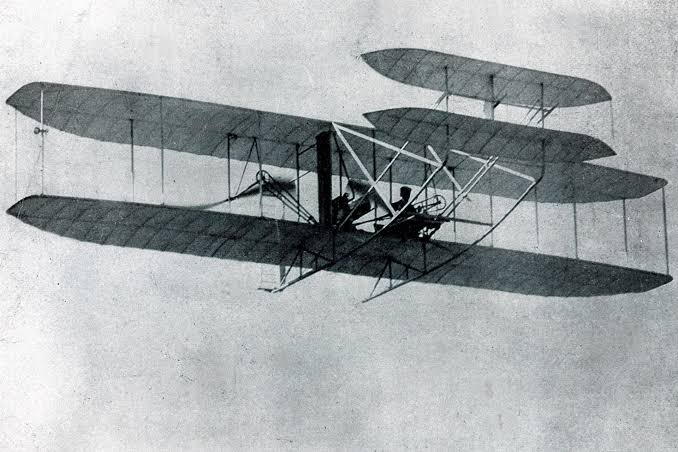
On the morning of December 17, 1903, the wind howled across the Outer Banks of North Carolina. At Kill Devil Hills, a few miles south of Kitty Hawk, two brothers from Dayton, Ohio, prepared for a final attempt at powered, controlled flight. The air was bitter, with a wind of 27 miles per hour—harder than they would have liked, since their predicted cruising speed was only 30–35 mph. Wilbur and Orville Wright, dressed in coats and ties—a touch of private ceremony for an event that would alter the world—signaled the volunteers from the nearby lifesaving station by waving a bed sheet. The engine roared, and Orville lay on the lower wing. The flyer lifted off the rail and flew for 12 seconds, covering 120 feet. It was the first time a heavier-than-air machine had carried a man in powered, sustained, and controlled flight. Yet the world did not learn of it that day. The news would travel first through a telegraph, then through a flawed newspaper story, and eventually through the brothers’ own accounts.
What Happened?
On December 17, 1903, the Wright brothers had repaired the flyer after Wilbur’s unsuccessful attempt three days earlier. At 10:35 a.m., Orville took the controls, with Wilbur running alongside. The flight lasted 12 seconds and covered 120 feet. They made three more flights that day, the longest covering 852 feet in 59 seconds. The wind was 27 mph, and the brothers knew this might be their last chance of the season. After the flights, they sent a telegraph to their family in Dayton, Ohio, from the Kitty Hawk Weather Bureau. The telegraph operator, John Dosher, sent the message. As they were about to leave, a return message came from Jim Gray, the telegraph operator in Norfolk, asking if he could inform his local newspaper. The Wrights refused, wanting the story to come out of Dayton. But Gray ignored their request and told his friend Ed Dean, a reporter at the Norfolk Virginian-Pilot.
How It Was Seen at the Time
At the time, the flight was not immediately accepted as the breakthrough it was. The Wright brothers themselves were cautious, and the local press initially reported it with skepticism. The Virginian-Pilot of Norfolk, Virginia, published the first account on December 18, 1903, but it was filled with errors. The paper later admitted the story was “riddled with errors.” The brothers had wanted the story to come out of Dayton, and their father Milton and brother Lorin were primed to act as press agents. But the Virginian-Pilot scooped them, despite the Wrights’ refusal. The tone of the first reports was sensational, but many readers doubted the claim. The flight was not widely reported in other newspapers, and even some who read the story dismissed it as a hoax. The brothers themselves were reserved, and their own account would not be published for months.
Historical Snapshot
| Aspect | Detail |
|---|---|
| Date | December 17, 1903 |
| Place | Kill Devil Hills, near Kitty Hawk, North Carolina |
| People | Orville and Wilbur Wright; John Dosher (telegraph operator); Jim Gray (Norfolk telegraph operator); Ed Dean (reporter, Virginian-Pilot) |
| What Happened | First powered, sustained, controlled flight; four flights made, the longest lasting 59 seconds and covering 852 feet. |
| Why It Mattered | It proved that man could fly a powered, heavier-than-air machine, opening the era of aviation. |
Contemporary Newspaper Coverage
The first newspaper to report the flight was the Norfolk Virginian-Pilot on December 18, 1903. The story was based on a telegraph sent from Kitty Hawk by the Wrights to their family in Dayton. The telegraph operator, Jim Gray, bypassed the Wrights’ wishes and informed his friend Ed Dean, a reporter. Dean and his editor rushed to print a story, but it contained many inaccuracies. The article described the flight in dramatic terms but got many details wrong—the flight time, the distance, and even the name of the town. The paper later acknowledged these errors, but at the time, it was the only major newspaper to cover the event. The Wrights themselves had hoped to control the narrative, but the Virginian-Pilot scooped them. The story was picked up by other papers, but many remained skeptical. The New York Times, for instance, did not report the flight until much later, and even then with doubt.
“The Wrights politely refused, they wanted the story to come out of Dayton.” — from the account of the telegraph exchange, as recorded in the Wright Brothers’ own history.
The Virginian-Pilot story, despite its errors, was the first to tell the world that man had flown. But its inaccuracies would later be corrected, notably in a 2003 anniversary correction published by the paper.
What the Sources Got Wrong
The Virginian-Pilot story of December 18, 1903, was riddled with errors, as the paper itself later acknowledged. According to NPR’s 2003 report, the paper published a correction a century later. The errors included incorrect details about the flight—the distance, the duration, and even the location. The paper also misreported the brothers’ names and the sequence of events. The Wrights were understandably upset, as they had wanted the story to come out of Dayton, not through a sensationalized Norfolk report. The errors were not corrected until the paper made amends a century later. This incident highlights the challenge of reporting breaking news in the early 20th century, when telegraphic messages were relayed quickly but verification was difficult.
Aftermath
Immediately after the flights, the Wright brothers sent a telegraph to their father Milton in Dayton, Ohio, announcing their success. The telegraph was sent from the Kitty Hawk Weather Bureau and relayed to Norfolk, where it was leaked to the Virginian-Pilot. The Wrights returned to Dayton, where they continued to refine their aircraft, but they did not publicly fly again for several years. The world was slow to recognize their achievement. Many newspapers, including the New York Times, doubted that flight had occurred. The Wrights themselves were secretive about their work, fearing that others would steal their ideas. It was not until 1908 that they performed public flights in France and the United States, which convinced the world. The Virginian-Pilot story, though flawed, was the first spark that eventually ignited public interest. The correction issued in 2003 by the paper was a symbolic act of historical honesty.
The story of how the world learned of the Wright brothers’ flight is a testament to the power of the press and the fragility of breaking news. The first account was flawed, but it planted the seed of an idea that would grow into the aviation industry. The primary sources—the telegraph, the newspaper story, and the brothers’ own letters—reveal how a world-changing event can be initially misunderstood, yet still transform the future.
FAQ
What did the first newspaper report get wrong?
The Virginian-Pilot story of December 18, 1903 contained numerous inaccuracies, including incorrect flight duration, distance, and details about the Wright brothers. The paper itself later admitted the story was 'riddled with errors' and published a correction in 2003.
Why did the Wright brothers not want the Norfolk paper to report the story?
The Wrights wanted the story to break in Dayton, Ohio, where their family and press agents were prepared to handle the publicity. They feared that a sensational or inaccurate report would damage their credibility and their patent applications.




Leave a Reply