
Short Answer
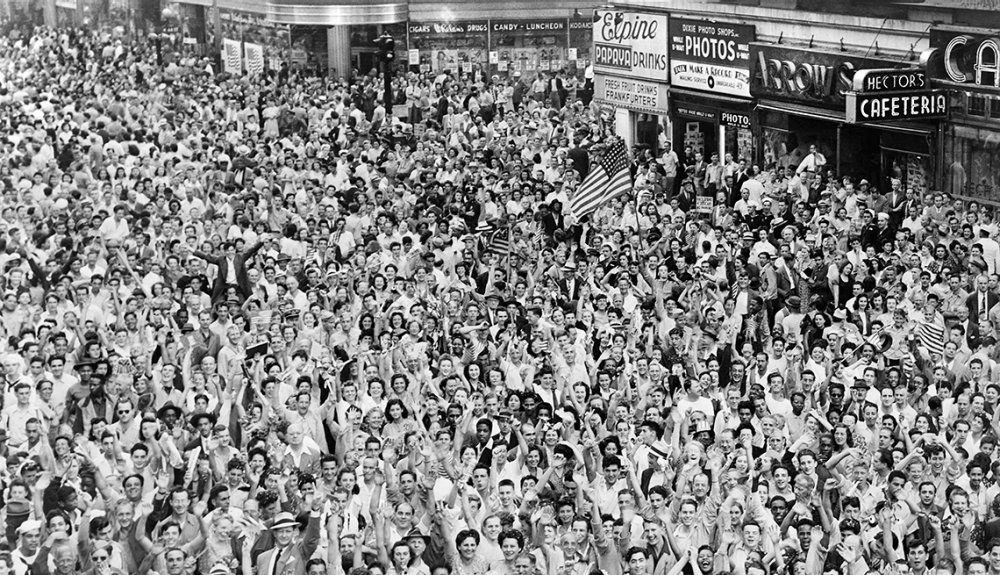
On the evening of August 14, 1945, at 7 p.m. Eastern War Time, President Harry S. Truman stepped before reporters at the White House and announced that Japan had accepted the Allied surrender terms with no “qualification.” Within minutes, the word was out: the war was over. The New York Post’s front page roared “WAR OVER!” while the Seattle Times proclaimed “Peace!” In Times Square, in downtown Seattle, in the streets of Washington, D.C., crowds surged into the night, their relief and joy exploding after nearly four years of conflict. But Truman’s aides were quick to add a caveat: Japan would not have capitulated, they said, until responsible Japanese leaders signed the surrender terms. V-J Day would not be proclaimed until that formality was completed. Americans were caught in a strange, suspended moment—the war was ending, but the peace was not yet signed. The celebration was real, but the formal surrender was still days, even weeks, away.
What Happened?
The announcement of August 14, 1945, was the climax of a rapid and devastating sequence of events. On August 6, the United States dropped an atomic bomb on Hiroshima; on August 9, a second atomic bomb fell on Nagasaki, and the Soviet Union declared war on Japan. The Japanese government, torn between factions that wanted to fight on and those who recognized the futility of continued resistance, moved toward surrender. On August 14, Tokyo Radio declared that “the imperial decision was granted,” and described a scene of grief and desolation in the enemy capital. The Japanese people were pictured as prostrating themselves before the Emperor’s palace and wailing, “Forgive us, O Emperor; our efforts were not enough” (New York Post, Aug. 14, 1945).
At 7 p.m., President Truman announced that Tokyo had accepted the Allied capitulation terms and that Allied forces had been ordered to cease firing. Gen. Douglas MacArthur, “the man who came back,” was named supreme Allied commander to receive the formal Japanese surrender. That same evening, for the first time in history, Emperor Hirohito broadcast directly to his people, describing the “cruel bomb” the Allies had turned upon the Japanese homeland and warning that they faced “great hardships and suffering” (UPI, Aug. 14, 1945).
The formal surrender was not signed until September 2, 1945, aboard the USS Missouri in Tokyo Bay. The Seattle Times, covering that ceremony, described a scene of Allied power: “More than 800 planes—parading in one final display of Allied aerial might over the battered Japanese homeland—dipped and turned over the great Allied armada jamming Tokyo Bay.”
How It Was Seen at the Time
The prevailing mood in American cities was one of overwhelming relief and jubilation. The UPI wire report declared: “Japan surrendered unconditionally tonight, bringing peace to the world after the bloodiest conflict mankind has known.” The language of the era was absolute and triumphant. Japan had surrendered “unconditionally,” a phrase of immense political weight, and the UPI report emphasized that Tokyo had accepted the terms with no “qualification.” This detail mattered to Americans who had feared a negotiated peace that might leave Japan’s militarist government intact.
“Peace!” — The Seattle Times, front-page headline, August 1945
“WAR OVER!” — The New York Post, front-page headline, August 14, 1945
The New York Post’s report noted that “Mr. Truman’s aides at the White House emphasized that despite the [surrender], V-J Day will not be proclaimed until the latter part of the week. Japan will not have capitulated, they said, until responsible Japanese leaders have signed the surrender terms.” This careful distinction between the announcement and the formal surrender was a central theme of the coverage.
Historical Snapshot
| Aspect | Detail |
|---|---|
| Date | August 14, 1945 (announcement); September 2, 1945 (formal signing) |
| Place | Washington, D.C. (Truman’s announcement); Tokyo Bay, Japan (signing ceremony); American cities nationwide |
| People | President Harry S. Truman; Gen. Douglas MacArthur; Emperor Hirohito |
| What Happened | Japan accepted the Allied surrender terms; Truman announced the surrender at 7 p.m. E.W.T.; Allied forces ordered to cease firing; formal surrender signed September 2 |
| Why It Mattered | Brought an end to World War II, the deadliest conflict in human history; marked the beginning of the Allied occupation of Japan |
Contemporary Newspaper Coverage
The New York Post of August 14, 1945, is perhaps the most iconic American newspaper front page of the era. Its headline, “WAR OVER!,” captured the moment of Truman’s announcement. The paper reported that “Tokyo Radio declared today that ‘the imperial decision was granted,’ and described a scene of grief and desolation in the enemy capital.” It also relayed the Emperor’s broadcast and the White House’s caution that V-J Day would not be proclaimed until the signing.
The Seattle Times, covering the September 2 surrender ceremony, used a rare front-page photograph to mark the occasion. The paper’s headline was simply “Peace!” The accompanying dispatch from Tokyo described the scene: “More than 800 planes—parading in one final display of Allied aerial might over the battered Japanese homeland—dipped and turned over the great Allied armada jamming Tokyo Bay. Bright rays of sunshine broke through the overcast as the ceremony went off with smooth efficiency.”
The UPI wire report from August 14, 1945, was a model of wartime journalism: “Japan surrendered unconditionally tonight, bringing peace to the world after the bloodiest conflict mankind has known.” The report also noted that the surrender had come at 7 p.m. (E.W.T.) and that MacArthur had been named to receive the formal surrender.
What People Expected Would Happen Next
Contemporaries expected the formal surrender to come quickly. Truman’s aides said V-J Day would be proclaimed “until the latter part of the week,” and the UPI report estimated the signing would occur “probably in two or three days.” In fact, the formal signing took place on September 2, 1945, aboard the USS Missouri—some nineteen days after the announcement. The delay was due to the logistics of arranging the ceremony in Tokyo Bay and the need to have responsible Japanese leaders present.
Emperor Hirohito’s broadcast warned his people to expect “great hardships and suffering,” and the expectation of a difficult post-war period was widespread in both American and Japanese coverage. The Seattle Times’ dispatch from Tokyo Bay noted the ceremony’s “smooth efficiency,” but the underlying message was that the peace would be long and uncertain.
Different Perspectives
American Perspective
American newspapers and eyewitness accounts reflected a mood of celebration and triumph. The New York Post’s “WAR OVER!” and the Seattle Times’ “Peace!” captured the jubilation of cities where crowds gathered spontaneously. The UPI report described the moment as “the bloodiest conflict mankind has known” coming to an end, and the naming of MacArthur as “the man who came back” was a symbol of American determination and pride.
Japanese Perspective
The Japanese perspective, as reported by Tokyo Radio and the UPI, was one of grief and desolation. The Japanese people were described as “prostrating themselves before the Emperor’s palace and wailing, ‘Forgive us, O Emperor; our efforts were not enough’” (New York Post). Emperor Hirohito’s broadcast, the first time in history he had spoken directly to his people, described the “cruel bomb” that had been used against Japan and warned of “great hardships and suffering.” This perspective—captured in American sources—reveals the deep shock and mourning in Japan at the moment of surrender.
What the Sources Got Wrong
- Timing of the signing: The UPI report estimated the formal surrender would occur “probably in two or three days.” In fact, the ceremony did not take place until September 2, 1945, nearly three weeks later. This was not an error of fact but an optimistic expectation that the logistics of the signing would be faster than they were.
- “WAR OVER!” was premature: The New York Post’s headline, while emotionally accurate, was technically premature. The war was not formally over until the surrender documents were signed on September 2. Truman’s aides had explicitly warned that Japan would not have capitulated until the signing.
- V-J Day dates: The Seattle Times coverage of September 2 referred to that day as “V-J Day,” but the announcement of surrender was August 14, and V-J Day was celebrated on both dates in different places. The formal proclamation was made on September 2, but the public celebration began on August 14.
How Historians See It Today
Modern historians recognize that August 14, 1945, was the announcement of surrender, not the formal end of the war. The formal surrender occurred on September 2, 1945, aboard the USS Missouri. Historians also note that the “unconditional” surrender was not entirely unconditional—the Allies had allowed the Japanese to keep the Emperor, a detail not prominently featured in contemporary coverage. The primary sources from August 1945 show a moment of genuine joy and relief, but also the careful distinction between the announcement and the formal signing. The Seattle Times’ “Peace!” and the New York Post’s “WAR OVER!” were both expressions of the same truth: the war was ending, and the world was changing. Historians today view this as a pivotal moment that shaped the post-war order, including the occupation of Japan and the start of the Cold War.
The primary sources of August 1945 reveal a moment of overwhelming joy and deep uncertainty. The headlines “WAR OVER!” and “Peace!” captured the relief of a war-weary nation, but the careful words of Truman’s aides and the Emperor’s warning of “great hardships and suffering” reminded readers that the peace was fragile and the future uncertain. The newspapers of that week did not just report history—they made it, shaping how Americans understood the end of the deadliest conflict in human history. The sources teach us that even in the most joyful moments, the full meaning of events is never simple.
FAQ
When was V-J Day officially celebrated?
V-J Day was celebrated on August 14/15, 1945, when Japan announced its surrender, and again on September 2, 1945, when the formal surrender was signed. The official U.S. proclamation was made after the signing on September 2, but the public celebration began on August 14.
What did the New York Post headline say on August 14, 1945?
The New York Post headline read 'WAR OVER!' on August 14, 1945, reporting President Truman's announcement that Japan had accepted the surrender terms.
Why was V-J Day not proclaimed immediately on August 14?
Truman's aides emphasized that Japan would not have capitulated until responsible Japanese leaders signed the surrender terms. The formal signing ceremony took place on September 2, 1945, and V-J Day was officially proclaimed after that.


Leave a Reply