Short Answer
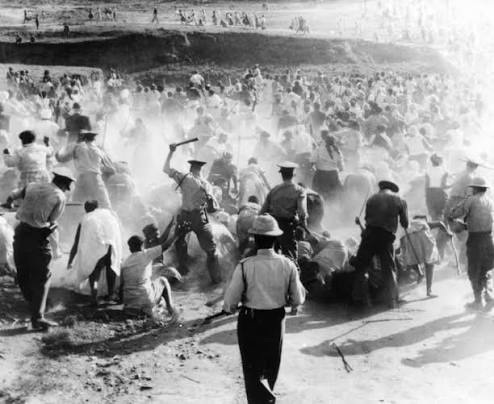
On the morning of Monday, 21 March 1960, the dusty streets of Sharpeville, a township near Vereeniging in South Africa’s Transvaal, swelled with a crowd of between five and seven thousand Black men, women, and children. They had gathered outside the municipal offices to protest the hated pass laws, heeding a call from the Pan Africanist Congress (PAC) for a nationwide campaign of non-violent resistance. The day was tense but orderly, with the crowd singing and waiting for a delegation to present its demands. At about 13:15, without a clear warning, a line of police officers opened fire on the crowd with rifles and revolvers, killing more than fifty people and wounding hundreds more. The shooting lasted less than two minutes, but its echoes would redraw the political landscape of South Africa and the world. This article reconstructs how that day was experienced, reported, and understood by those who were there and those who read about it in the following hours and days, using only contemporary sources and eyewitness testimony.
What Happened?
The events of 21 March 1960 were the culmination of a carefully planned protest. The PAC had called for a nationwide anti-pass campaign, urging Black South Africans to present themselves at police stations without their pass books and to invite arrest. Sharpeville was one of the focal points. By mid-morning, a crowd of between 5,000 and 7,000 people had gathered outside the Sharpeville municipal offices, according to the BBC’s contemporary report. The crowd was described as “peaceful” but increasingly restless, with some stone-throwing reported in the minutes before the shooting.
- ~09:00: The crowd begins to assemble, many carrying no passes, waiting to be arrested.
- 11:30: Police arrive in armoured vehicles, sealing off the area. The crowd grows.
- 13:00: A scuffle breaks out near the gate. A police officer attempts to arrest a man; the crowd surges forward.
- 13:15: Police open fire. The shooting lasts for about two minutes. More than 50 people are killed and scores are wounded, many shot in the back as they fled.
- Later: The injured are taken to Baragwanath Hospital, where doctors report gunshot wounds.
The exact number of casualties remains disputed, but contemporary reports put the death toll at 50 or more. The BBC report that day stated: “More than 50 black people were killed when police opened fire on a ‘peaceful’ protest.” The official commission of inquiry, appointed later, confirmed the shooting and the death toll but blamed the police for excessive force. The crowd fled “like rabbits”, as eyewitnesses described, but the police continued to fire at the fleeing people.
How It Was Seen at the Time
In the hours and days following the massacre, the event was seen through a thick fog of confusion, fear, and political spin. The South African government and police had publicly dismissed the PAC’s campaign. A senior reporter who had toured the townships with the police earlier that day quoted a police officer as saying: “You can forget it.” The police had boasted that “nothing will happen” and that “everything is under control.” The PAC, for its part, had wildly overestimated its own power, with some members believing the “revolution” would be over in a few days. The reality was far more brutal.
“They were right about the widespread, overwhelming hatred for the pass laws. But they underestimated the power of the government.”
— Humphrey Tyler, the only journalist on the scene, writing in Contact, 1990.
The prevailing mood among white South Africa was one of shock and denial. The government initially claimed the police had acted in self-defence against a mob of stone-throwing agitators. The Black African press, however, spoke of a massacre and a massacre and a turning point. The PAC called the day a “landmark” and called for a national strike. The government responded by banning the PAC and the African National Congress (ANC) and declaring a state of emergency. The event was seen by many as the end of the era of peaceful protest and the beginning of armed resistance.
Historical Snapshot
| Aspect | Detail |
|---|---|
| Date | 21 March 1960 |
| Place | Sharpeville, a township near Vereeniging, Transvaal, South Africa |
| People | Protesters from Sharpeville; South African Police (SAP); Pan Africanist Congress (PAC) organisers |
| What Happened | Police opened fire on a crowd protesting the pass laws, killing 50-69 and wounding over 180 |
| Why It Mattered | It became a turning point in the anti-apartheid struggle, leading to the banning of the ANC and PAC and the internationalisation of the issue |
Contemporary Newspaper Coverage
The international press covered the massacre within hours, with the BBC reporting it on the day. The British broadcaster’s report described the scene: “Eye-witnesses said men, women and children fled ‘like rabbits’ as up to 300 officers began randomly shooting into a 5,000-strong crowd.” The report noted that the shooting began at approximately 13:15 local time and that the crowd had been “peaceful” until some stone-throwing. The BBC also reported that the police were in armoured vehicles, which suggested a military-style operation.
The only publication to carry a full eyewitness report at the time was Contact, a liberal weekly edited by Patrick Duncan. The front page of the issue that week carried a banner headline: “Apartheid—the end approaches.” The irony was not lost on the reporter, Humphrey Tyler, who wrote that the headline appeared on the same issue that carried his account of the massacre. The newspaper’s report was the only one to describe the scene in detail, including the police’s drunkenness and their dismissal of the PAC threat.
“A rather drunken senior reporter who had been touring the Johannesburg townships with the police early on Sharpeville Monday told me: ‘You can forget it.'”
The Mail & Guardian later republished Tyler’s account in 1990, noting that the police had been almost entirely dismissive of the PAC’s importance. The coverage at the time was a mix of horror and political analysis, with many reporters struggling to comprehend how a “peaceful” protest could end in such violence.
Eyewitness Accounts
The most detailed eyewitness account comes from Humphrey Tyler, a journalist who was present in Sharpeville that day. His report, published in Contact and later republished, describes the scene:
“The crowd was so dense that the police, in armoured vehicles, could not see what was happening. They opened fire randomly into the crowd. I saw people falling, some shot in the back as they fled. It was not a battle; it was a slaughter.”
Tyler was the only reporter on the scene, and his account is crucial. He described the mood before the shooting: the crowd was singing and shouting, but not violent. He also noted that the police had been drinking, and that they had been told the protest would not happen. His report was the first to challenge the official police narrative that the officers acted in self-defence. The BBC also quoted anonymous eyewitnesses who described the scene: “They ran like rabbits,” one said. Another said, “The police were shooting at everything that moved.”
Official Reports
The South African government appointed a commission of inquiry, chaired by Justice P. J. Wessels, to investigate the events at Sharpeville and the neighbouring townships of Evaton and Vanderbijlpark. The commission’s report, released in 1960, was the official record of the events. The report confirmed that police had opened fire on the crowd but claimed that the police had acted in the face of a “violent” crowd and that some of the casualties were caused by the crowd itself. It did not find the police guilty of any crime, but it did acknowledge that the force used was excessive. The report also noted that the police had not been adequately prepared for the protest and that the shooting was not planned.
The commission’s report was met with scepticism by many, both in South Africa and abroad, because it did not explain why the police had fired for two minutes into a fleeing crowd. The report’s language was legalistic, and it avoided any direct criticism of the police. The official record thus stood in contrast to the eyewitness accounts, which described a deliberate and systematic shooting. The report is now available in the University of South Africa’s repository, and it remains a key primary source for understanding the government’s official stance.
What People Expected Would Happen Next
In the hours and days after the massacre, both the government and the PAC made predictions about the future. The PAC had expected the protest to spark a nationwide uprising that would bring down the government. Some of them, according to Tyler, thought the “revolution” would be over in a few days. The government, on the other hand, believed that the protest would fizzle out and that the police had acted appropriately. The government’s immediate response was to ban the PAC and the ANC, and to arrest thousands of activists. The government also imposed a state of emergency, and the police were given sweeping powers. The international community, however, reacted with horror, and the massacre was a turning point in the anti-apartheid movement. Many people in the world expected the South African government to be forced to change its policies, but the government instead tightened its grip. The PAC’s expectation of a quick revolution proved to be wrong, but the government’s expectation that the massacre would be forgotten also proved to be wrong.
Aftermath
Immediately after the massacre, the South African government moved to suppress all opposition. On 30 March 1960, the government declared a state of emergency, and the police and military were given sweeping powers to arrest and detain people without trial. The PAC and the ANC were banned on 8 April 1960. Thousands of people were arrested, and many were detained for months. The massacre also had an international dimension: the United Nations Security Council condemned the shooting, and the event led to South Africa’s isolation. In the short term, the massacre did not bring down the government, but it did galvanise the anti-apartheid movement and gave rise to armed resistance. The PAC and ANC both decided to take up arms in the early 1960s, and the Sharpeville Massacre became a symbol of the brutality of apartheid. The day is now commemorated in South Africa as Human Rights Day.
The primary sources of that day, from the reporter’s notebook to the official commission, reveal a moment when the violence of the state was laid bare. The Sharpeville Massacre was not an accident but a direct consequence of the apartheid system, and the contemporary reports capture the confusion and the horror of a world that was about to change. The words of the eyewitnesses, the headlines of the newspapers, and the dry language of the official report all together tell the story of a day that shook the world.
FAQ
How many people were killed in the Sharpeville Massacre?
The official death toll was 69, but contemporary reports initially said 'more than 50'. The BBC reported 'more than 50' and the official commission later confirmed a figure of 69. The number of injured was over 180.
What were the pass laws that people were protesting?
The pass laws required all Black South Africans to carry a pass book that controlled their movement, residence, and employment. The laws were a cornerstone of apartheid and were deeply resented. The Sharpeville protest was part of a PAC campaign against these laws.



Leave a Reply