
Short Answer
Quick Snapshot
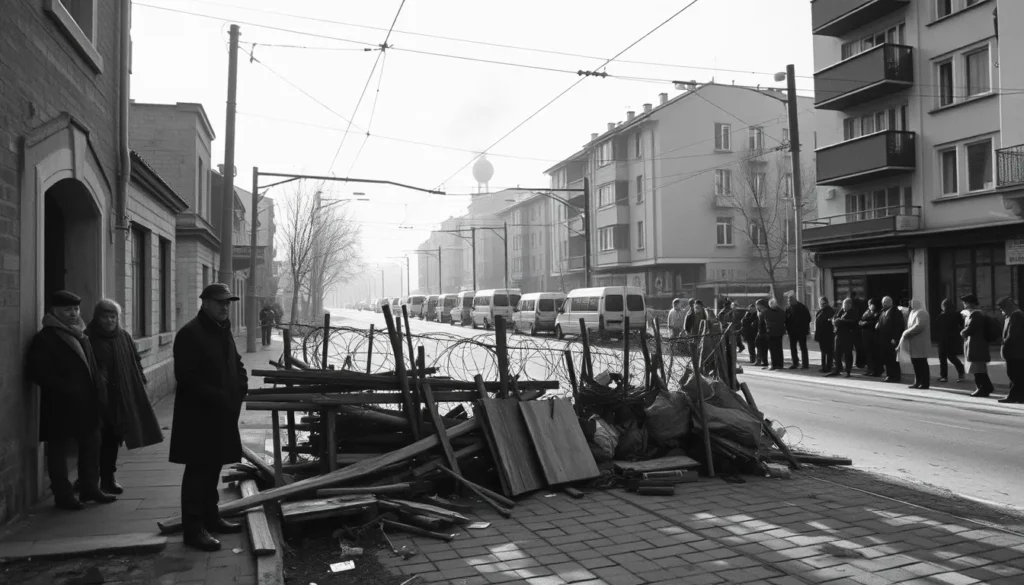
In early 1992 Sarajevo still looked and felt like a modern European city: tram wires crossed the Miljacka river valley, students filled the University of Sarajevo, and the 1984 Winter Olympics seemed a recent memory. Yet the Yugoslav crisis had already reached the city. Bosnia and Herzegovina’s independence referendum on 29 February–1 March 1992 was boycotted by the main Serb parties, and makeshift barricades appeared almost at once. For many Sarajevans, the barricades seemed a dangerous but temporary gesture rather than the beginning of war.
On 5–6 April 1992, that illusion collapsed. A peace demonstration was fired upon, two women were killed on a bridge near the parliament, and armed men, JNA units and improvised checkpoints divided streets and neighbourhoods. From that moment the city entered the opening phase of what became a 44-month siege. Civilian testimony is central to this story because the siege was not only a military encirclement but a transformation of daily life: queues for bread, cellars used as shelters, water and electricity cut, neighbours separated by front lines, and rumours travelling faster than official news.
This article focuses on Sarajevo city and the beginning of the siege in 1992, especially through civilian accounts, journalists’ eyewitness reports and contemporary documents. It does not attempt to narrate the whole 1992–1995 war, but to explain how ordinary Sarajevans experienced the shift from political crisis to urban siege.
Sarajevo in 1992
Sarajevo lies in a narrow valley along the Miljacka river, surrounded by steep hills and mountains, including Trebević and Igman. The geography that made the city attractive also made it vulnerable: high ground overlooked roads, apartment blocks and the old Ottoman bazaar of Baščaršija, while Austro-Hungarian boulevards and socialist-era neighbourhoods spread along the valley floor. The climate in early 1992 was still cool and damp, with late-winter chill in the mornings and smoke hanging over the valley.
The atmosphere was tense and deeply uncertain. Sarajevo was famous for its mixed population and for a civic identity that many residents valued above ethnic labels. But politics had become increasingly nationalised. The referendum posters, the barricades at the bottom of streets and the presence of armed men in improvised uniforms made the outside world’s diplomatic language — recognition, sovereignty, territorial defence — feel dangerously abstract. In March many people believed that the crisis could be contained; by April they were learning the geography of snipers’ alleys, cellars and checkpoints.
Population & Economy
According to the 1991 census, Sarajevo’s wider urban area had roughly half a million inhabitants, with about 360,000 in the central urban municipalities. The city was ethnically mixed: Bosnian Muslims, Serbs, Croats and people who identified as Yugoslavs lived in the same blocks, schools and workplaces. Mixed marriages and neighbourly ties were common, which made the sudden hardening of national categories in 1992 especially painful.
Sarajevo’s pre-war economy rested on administration, education, health care, culture and large industrial combines. Yugoslavia’s economic crisis had already brought inflation, falling living standards and uncertainty. In 1992 the war economy replaced normal commerce: factories stopped or slowed, supplies were interrupted, cash lost value, and black-market exchange and barter became more important. Humanitarian aid was limited in the first months. Civilians recalled surviving on bread, jam and chicken paste, while people in some districts collected plums from gardens and relied on neighbours. No stable consumer price list can capture the period, because shortages and checkpoints mattered as much as money.
Government & Politics
At the republic level, Bosnia and Herzegovina’s presidency, led by Alija Izetbegović, pursued independence and international recognition. The referendum produced a large majority for independence among those who voted, but Bosnian Serb leaders, above all Radovan Karadžić and his Serb Democratic Party, rejected the result and opposed separation from Belgrade. The European Community recognised Bosnia and Herzegovina on 6 April 1992, the same day that armed conflict became unmistakable in Sarajevo.
At the city level, Mayor Muhamed Kreševljaković presided over a municipality whose authority was rapidly eroded by armed formations and by the Yugoslav People’s Army, or JNA. General Milutin Kukanjac publicly denied that the JNA was involved in shooting in the city, a denial that many civilians found impossible to reconcile with what they saw. Political power fragmented into competing commands and neighbourhood control. The old civic idea of Sarajevo did not disappear, but it was now forced to coexist with barricades, uniforms and the politics of separation.
Industry
Sarajevo’s industrial landscape was dominated by large socialist-era combines such as UNIS, Energoinvest, Šipad, Zrak and Famos. These enterprises had produced metal goods, electronics, furniture, optical equipment, engines and engineering services, and they employed thousands of workers. The city’s economy also depended on transport, construction, publishing and public administration.
In 1992 the industrial system was not simply damaged; it was cut apart. Workers could not reach factories, supplies could not move through barricades, and plants were vulnerable to shelling or requisition. Some enterprises tried to continue with reduced staff, but the priorities of the city shifted to survival: water, electricity, food distribution and shelter. The factories that had once symbolised Sarajevo’s modernity became part of the frozen pre-war landscape.
Education
The University of Sarajevo, founded in 1949, was the city’s major educational institution, alongside numerous primary and secondary schools. Literacy was high by Yugoslav standards, and Sarajevo had a strong tradition of professional and cultural education. In early 1992 classes continued amid political tension, but the April fighting disrupted schooling almost immediately.
Schools became improvised shelters, distribution points or simply unsafe buildings. Some teachers and pupils tried to keep lessons going in basements or private flats, but the opening phase of the siege was marked more by interruption than by reform. For children, the sudden loss of routine — classrooms, friends, playgrounds — became one of the most enduring civilian experiences of the war.
Transportation
Before 1992 Sarajevo was served by trams, trolleybuses, buses, a railway line and the nearby airport. The tram network was a familiar part of daily life, carrying workers and students through the valley. Roads connected the city to the rest of Bosnia, and the airport linked it to the outside world.
In 1992 these systems were swiftly disrupted. Barricades blocked main routes, armed checkpoints controlled movement between neighbourhoods, and shelling made open streets dangerous. Trams and buses stopped or ran sporadically; the airport later became a UN-controlled lifeline rather than a normal civilian gateway. People walked when they dared, used side streets and learned which bridges and intersections were exposed. Movement itself became a form of risk.
Everyday Life
Daily life in Sarajevo in 1992 was organised around the apartment block and the cellar. Families stored water in containers, kept candles and torches ready, and moved mattresses away from windows. Electricity and water were unreliable or cut, and the basement became a social space as well as a shelter. People cooked what they had, shared food with neighbours and listened to the radio for news of barricades, ceasefires and aid convoys.
Food was a constant concern. Bread queues could become targets, and the absence of fresh supplies forced people to rely on humanitarian rations, preserves and garden produce. Clothing was practical: layers, sturdy shoes, dark colours. Entertainment shrank to conversation, radio, television when it worked, and small acts of normal life. Civilians in mixed neighbourhoods helped one another across ethnic lines, even as political leaders insisted that those lines were absolute. Daria Sito-Sučić recalled that her parents survived in Grbavica thanks to plums from gardens and food shared by Serb neighbours, although they were not allowed to shop in the local market.
Major Events
The decisive sequence began with the independence referendum of 29 February–1 March 1992. Serb parties boycotted the vote, and barricades were set up in Sarajevo soon afterwards. In March many residents still hoped the crisis would pass. On 5 April a peace demonstration was held; shots were fired, and two women were killed on a bridge near the parliament. The next day, 6 April, EC recognition of Bosnia and Herzegovina coincided with the consolidation of armed conflict.
On 7 April, Bosnian fighters patrolled the streets and civilians began to flee or divide their lives between neighbourhoods. In May, Grbavica was cut off from the rest of Sarajevo, separating families for months or years. On 27 May 1992 a mortar attack on a bread queue in the city killed 22 people and became one of the most notorious civilian tragedies of the opening phase. By June the airport was under UN control and humanitarian airlifts were beginning, but the siege had already become a daily reality.
What Newspapers Were Reporting
Sarajevo’s main daily, Oslobođenje, together with other local papers and radio and television broadcasts, reported the referendum, the barricades, the demonstrations and the first deaths. Surviving issues and later recollections show a press struggling to describe events that moved faster than official statements. Reports described armed men ordering neighbours indoors, barricades near the Miljacka bridges and crowds moving towards the parliament.
Official denials competed with eyewitness accounts. When a caller described shooting in Ljubljanska Street, JNA General Milutin Kukanjac responded on air:
“There are no JNA forces in Ljubljanska Street.”
For many listeners, such statements deepened the sense that the city was on its own. Newspapers could report the facts of barricades and deaths, but they could not yet explain how long the siege would last.
What People Were Talking About
Conversations in Sarajevo in 1992 were dominated by rumours: which bridge was blocked, which building had been taken, whether the JNA would protect civilians or arm one side, and which neighbours had changed uniforms. Many people refused to believe that war was possible in their city until they saw it under their windows. Others spoke of the past — the 1984 Olympics, old friendships, mixed marriages — as if trying to hold the city together by memory.
One of the most telling civilian accounts describes a neighbour telling a mother:
“They unloaded weapons and ammunition and gave them to the Serbs.”
Another recalled a drunk neighbour stumbling down an empty street with a gun, shouting:
“Chetniks, come out!”
Such stories reveal fear, bravado and confusion rather than clear political understanding. People also talked about small kindnesses: a Serb neighbour carrying a wounded Muslim man over a barricade to hospital, or families sharing food in cellars. These conversations are central evidence because they show how national categories were being imposed on a society that had not lived by them in everyday life.
Historical Photographs
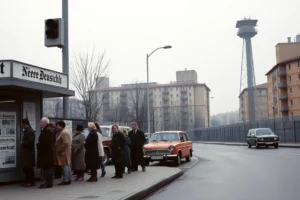
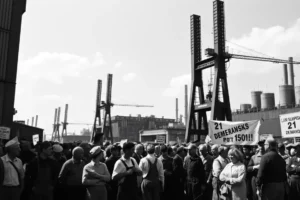
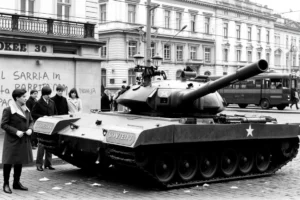
Photographs from April 1992 preserve the visual shock of the transition. EPA photographer Mike Persson’s image of Bosnian fighters patrolling Sarajevo on 7 April 1992 shows armed men in the streets of a city that had recently been ordinary. Other photographs record makeshift barricades of wood, wire and paving stones, civilians queuing for bread, broken windows, smoke over rooftops and people moving cautiously past exposed intersections.
Television footage and newspaper photographs also captured the peace demonstration and the first funerals. These images are not neutral illustrations; they were made under pressure and often shaped by what was safe or possible to photograph. Together with civilian snapshots and later documentary photography, they show the siege’s opening as both a military event and a rupture in everyday urban life.
Documents & Primary Sources
Historians studying Sarajevo in 1992 rely on a wide range of primary sources. The 1991 census provides the demographic baseline. Oslobođenje and other newspapers, radio transcripts and television footage record public statements and early reports. UN and humanitarian agency documents trace aid, displacement and the airport operation. ICTY testimony and exhibits include eyewitness accounts of barricades, shootings and the separation of neighbourhoods.
Personal diaries and memoirs are especially important for civilian experience. Zlata Filipović’s diary, begun before the war and continued through the siege, gives a child’s perspective on school closures, fear and family life. Zlatko Dizdarević’s Sarajevo: A War Journal and Ivana Maček’s anthropological study Sarajevo Under Siege draw on close observation of everyday survival. Photographs, maps of front lines and records of the Sarajevo municipality add spatial detail to these accounts.
1992 Timeline
| Date | Event |
|---|---|
| 29 Feb–1 Mar 1992 | Independence referendum in Bosnia and Herzegovina; Serb parties boycott; barricades appear in Sarajevo. |
| 3 Mar 1992 | Bosnia and Herzegovina declares independence. |
| 5 Apr 1992 | Peace demonstration in Sarajevo; shots fired; two women killed near the parliament. |
| 6 Apr 1992 | EC recognises Bosnia and Herzegovina; armed conflict becomes open; the siege’s opening phase is dated from this moment. |
| 7 Apr 1992 | Bosnian fighters patrol Sarajevo; civilians flee or are separated as neighbourhoods harden. |
| May 1992 | Grbavica is cut off from the rest of the city; families are divided. |
| 27 May 1992 | Mortar attack on a bread queue kills 22 civilians. |
| Jun 1992 | UN takes control of Sarajevo airport; humanitarian airlift begins. |
What Changed Next
The opening of the siege in 1992 set the pattern for the next three years. Shelling, sniping, shortages and the division of neighbourhoods became routine, while international humanitarian operations tried to keep the city alive. The siege lasted until February 1996, and the war ended with the Dayton Agreement in December 1995. Sarajevo was eventually reunified, but the human cost was enormous: deaths, displacement, trauma and the destruction of much of the city’s mixed social fabric.
In the following years, historians and courts used civilian testimony to reconstruct what happened in 1992. The barricades of March and the shootings of April were no longer seen as isolated incidents but as the threshold of a longer campaign against the city. For Sarajevans, the memory of 1992 remains tied to the moment when neighbours became categories, streets became front lines and ordinary life became a form of endurance.
Sources
- Marcus Tanner, “Barricades at Dawn: Watching the Siege of Sarajevo Begin,” Detektor, 5 April 2022, https://detektor.ba/2022/04/05/barricades-at-dawn-watching-the-siege-of-sarajevo-begin/?lang=en
- Daria Sito-Sučić, “The first days of the siege: ‘I did not believe that war was possible in Sarajevo’,” Vijesti, 6 April 2012, https://en.vijesti.me/world-a/balkan/323434/in-the-first-days-of-the-siege%2C-I-did-not-believe-that-war-was-possible-in-Sarajevo
- Robert J. Donia, Sarajevo: A Biography (Ann Arbor: University of Michigan Press, 2006).
- Ivana Maček, Sarajevo Under Siege: Anthropology in Wartime (Philadelphia: University of Pennsylvania Press, 2009).
- Zlatko Dizdarević, Sarajevo: A War Journal (New York: Fromm International, 1993).
FAQ
What was the population of Sarajevo in 1992?
The 1991 census recorded roughly 500,000 people in the wider Sarajevo area, with about 360,000 in the central urban municipalities. The 1992 wartime population soon began to change through displacement.
What major events happened in Sarajevo in 1992?
The independence referendum of 29 February–1 March was followed by barricades. On 5–6 April a peace protest was fired upon, two women were killed, and the siege’s opening phase began. Grbavica was cut off in May, and a bread-queue mortar attack killed 22 people on 27 May.
What primary sources are available for studying Sarajevo in 1992?
Key sources include Oslobođenje and other newspapers, radio and television transcripts, the 1991 census, UN and humanitarian records, ICTY testimony, maps, photographs, and civilian diaries such as Zlata Filipović’s diary and Zlatko Dizdarević’s war journal.
How did daily life in Sarajevo in 1992 differ from today?
In 1992 daily life was dominated by shortages, cellars used as shelters, unreliable water and electricity, barricades and the risk of shelling or sniping. Movement was restricted, food queues were dangerous, and normal schooling, transport and commerce were radically disrupted.





Leave a Reply